


Velvet Ribbon Roll: Roll length and packaging use
Velvet Ribbon Roll: what to check on material, width, finish, and handling before placing a ribbon order
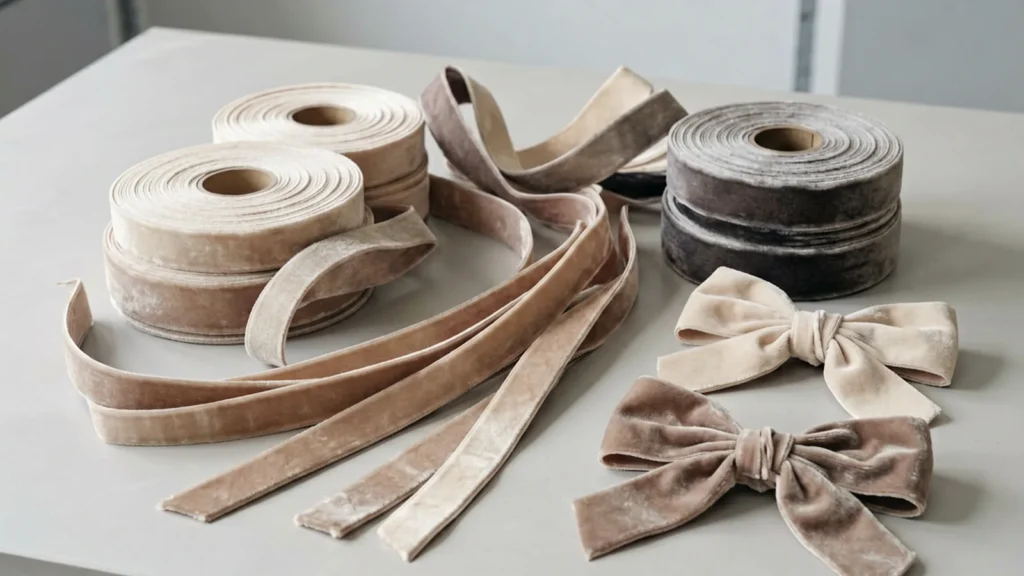
Before you can decide whether Velvet Ribbon Roll fits the use case, specs, MOQ, sample approval path, and supplier quote process, the specification has to say enough for a supplier to price the same job you have in mind.
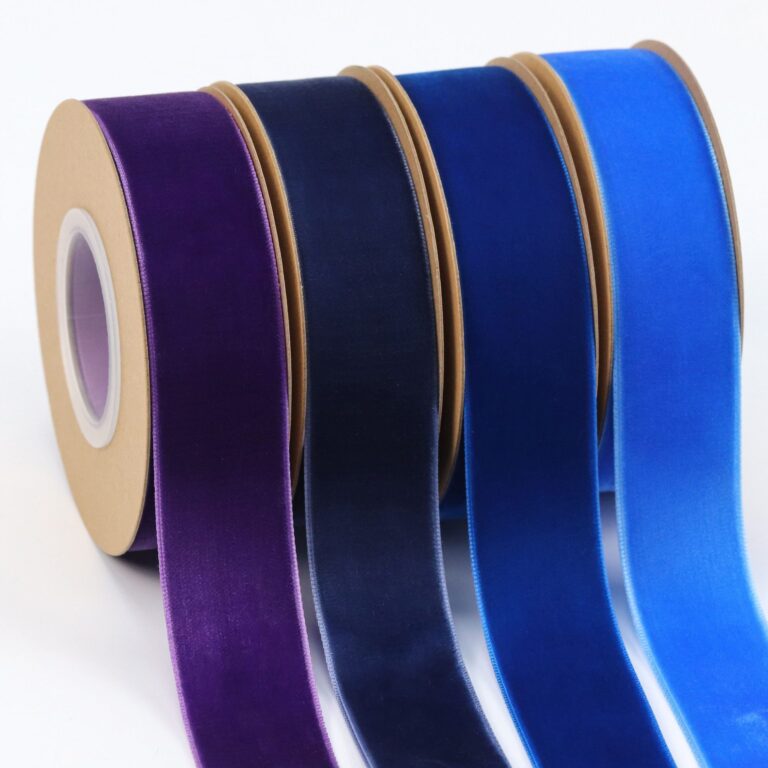
Velvet is wound loosely to protect the pile, so a velvet roll holds less than a satin roll of the same diameter.
Direct answer: For velvet ribbon roll, buyers should decide whether Velvet Ribbon Roll fits the use case, specs, MOQ, sample approval path, and supplier quote process.
When velvet ribbon roll fits bulk or custom orders
Velvet buys a surface, and the surface is the part that travels badly. Before the quantity question, decide whether the packaging job puts the pile under pressure or leaves it alone, because that answer changes the roll format, the minimum you should ask for, and where quality inspection has to happen.
| Use case | Best fit when | Trade-off | Verification check before ordering |
|---|---|---|---|
| Rigid gift box banding | The bow is tied once and the box is not stacked face down | Pile crushes where the knot sits | Tie a sample, leave it boxed for a week, then look at the knot |
| Seasonal retail dressing | Display units are handled by staff rather than customers | Handling marks show on dark shades first | Handle a length repeatedly and inspect under store lighting |
| Wine and spirits neck ties | Short lengths, premium presentation, low stacking | Cost per piece is higher than satin at the same width | Compare cost per finished piece, not per yard |
| High-volume carton banding | Rarely a fit for velvet | Pile flattens under carton pressure and does not recover | Run a compression test before committing to the material |
Two of these four are decided by pressure rather than appearance. If the packaging puts weight on the ribbon at any point, the sample has to be tested under that weight before the minimum order quantity is even discussed. The risk of skipping that test is a material that photographs well and arrives flattened.
Key specs buyers should compare
A velvet quote needs five inputs before it can be compared with another. Four are the same as any ribbon; the fifth is the one buyers most often leave out.
- Width and roll length. Give the width and state how many yards per roll suit your cutting plan. Velvet offcuts cannot be re-used the way a plain tape offcut sometimes can, so roll length has a direct cost impact here.
- Backing construction. Say whether the reverse is woven, satin-backed, or bonded. It decides how the ribbon folds, how it takes a knot, and how the cost is built.
- Pile direction marking. This is the input that gets skipped. Ask whether rolls are marked for pile direction, because two rolls wound in opposite directions read as two different shades in the same display.
- Shade reference. Send a physical swatch. Velvet reads darker or lighter with the angle of light, so a screen colour is even less useful here than on a flat tape.
- Quantity and lead time. Standard production runs 15 to 20 business days once specifications are approved, with sampling and dye lot approval outside that window. Ask the supplier which of those steps is already booked, because the risk of assuming they run in parallel is a shelf date missed by the approval rather than by production.
Where the packaging job would tolerate a flat face, comparing the quote against satin ribbon at the same width is worth doing before the velvet minimum is confirmed. The difference in cost per finished piece is usually larger than the difference per yard suggests.
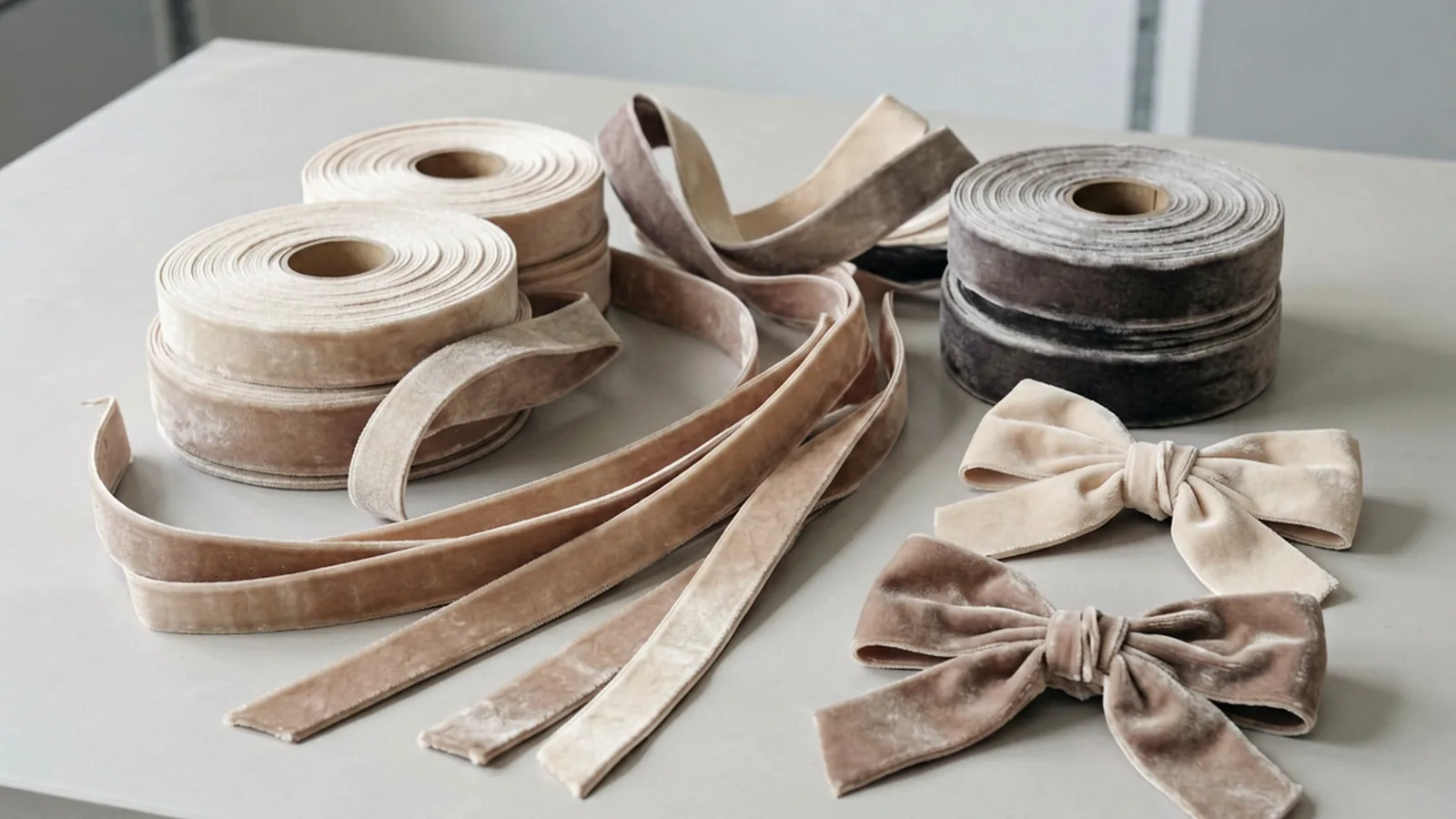
Material, finish, and use-case decision table
Four specifications decide how a velvet roll performs in packaging, and each has a check that belongs in sample approval rather than in an email. Agree all four in writing before sampling starts, because changing one of them afterwards restarts the approval instead of adjusting it. The pile behaviour in particular cannot be judged from a flat swatch: it only appears once the ribbon has been tied, boxed, or stacked the way the program will actually use it.
| Spec | Acceptable range to agree | Risk if left open | Verification check | Buyer follow-up |
|---|---|---|---|---|
| Pile height and density | Named against a reference sample | Shade reads differently between rolls | Compare two rolls side by side, pile running the same way | Sign one reference piece |
| Backing construction | Woven, satin-backed, or bonded | Knot behaviour and cost both change | Tie a sample and inspect the fold | Write the construction into the RFQ |
| Roll length and core | Yards per roll and core diameter | Offcut waste rises on short rolls | Check against your cutting plan | Confirm packing in writing |
| Crush recovery | Agreed by sample rather than a figure | Flattened pile at the knot after transit | Box a tied sample for several days, then inspect | Make it a named rejection point |
Development work on a non-standard pile or backing runs through OEM and ODM ribbon development, where the crush test sits inside the sampling step rather than after the first shipment.
Common selection mistakes
The mistakes below account for many velvet packaging complaints. Each one is cheap to check before the order and expensive to discover after the cartons arrive.
| Check point | What goes wrong | How to verify it | Approval standard to agree |
|---|---|---|---|
| Pile direction across rolls | Two rolls wound opposite ways read as different shades | Lay lengths from both rolls side by side, pile running the same way | One reference piece signed by both sides |
| Crush at the knot | Pile flattens where the bow is tied and does not recover | Tie, box, and leave a sample for several days before inspecting | A named rejection point in the approval record |
| Shade under store light | Velvet reads darker under warm light than under a desk lamp | Compare against the signed swatch in the display lighting | The lighting condition written into the approval |
| Edge and cut behaviour | Cut ends shed or fray in handling | Handle a cut length repeatedly and inspect the end | The edge type named in the specification |
| Roll condition on arrival | A crushed roll creases every piece cut from it | Inspect the first carton before releasing the balance | Packing method confirmed in writing |
Two of the five deserve extra weight on a first order. Pile direction is invisible until two rolls sit next to each other, so it is the defect most likely to reach a display before anyone notices it. Crush recovery is the one that cannot be judged at all from a sample made the same week it ships, which is why the storage step matters more than the inspection itself. Each row returns a physical result rather than an opinion, which is what makes them usable as an approval record. For gift and retail programs these five sit inside gift and retail packaging ribbon solutions, where sampling and approval are handled as records rather than assurances.
When to request samples or a quote
A sample request is worth making as soon as the packaging job is defined, because velvet questions are answered by handling rather than by specification. The questions below are the ones that decide whether a supplier can serve the program at all.
- Can you supply two rolls marked for pile direction? A supplier who marks direction has thought about how the ribbon is used downstream. One who has not will send rolls that look mismatched on the display through no fault of the dye lot.
- What does the pile look like after a week boxed? Ask for a tied sample that has been stored, not one made the morning it ships. The risk of accepting a fresh sample is approving a surface you will never receive again.
- Which backing is quoted, and can I have both? Woven and bonded backings differ in knot behaviour and in cost. Comparing them in the hand takes one sample request and saves a repricing later.
- What roll length suits my cutting plan? Give the plan and let the supplier propose the roll length that leaves the least offcut. Velvet waste is expensive because the material is.
- Where does inspection happen on this material? Ask for an inspection record from a comparable velvet run rather than a general quality certificate.
Ask for one pre-production sample against the agreed specification, with its lot marking intact, and approve it in writing. On velvet that signed piece settles the two disputes that actually happen: shade between rolls and pile recovery at the knot.
In conclusion
The output of this decision is a material choice with a test attached, not a product code. A velvet ribbon roll suits packaging that presents the surface once and leaves it alone; it is the wrong choice wherever cartons stack on the bow. Settle which of those two the program is before comparing any supplier quote.
Where the packaging tolerates a flat face, the cost comparison usually favours satin. Where the surface is the point, the route is velvet ribbon, and the extra cost buys an appearance that has to survive the trip. Choosing it without a crush test carries the risk of paying for a surface that arrives flattened.
Send the packaging job and the cutting plan to two or three suppliers and ask each for a tied velvet sample that has been boxed for several days, with its lot marking intact. Verify the pile at the knot, approve it in writing, and keep the piece for the reorder.
Velvet ribbon roll FAQ
What should buyers confirm before ordering Velvet Ribbon Roll?
Confirm the width, the backing construction, the yards per roll and core, and whether rolls are marked for pile direction. Then confirm the shade against a physical swatch rather than a screen. Velvet reads differently with the angle of light, so the reference has to be a piece you can hold.
How should buyers compare MOQ, lead time, and quote terms?
Compare by production route rather than as one number. Plain stock ribbon starts at 1,500 yards per color from existing colors and widths, while printed ribbon starts at 3,000 yards per design and formed pieces carry their own count. Production then runs 15 to 20 business days after approval, with sampling and dye lot approval outside that window.
What sample, quality, or supplier checks reduce risk?
Tie a sample, box it for several days, then inspect the knot for crushed pile. Lay lengths from two different rolls side by side with the pile running the same way. Keep the approved piece with its lot marking so the reorder has something physical to match.
Keep exploring
Recommended buyer guides
 Wholesale Foil Printing vs Screen Printing Ribbon: Buyer Comparison
Foil printing vs screen printing ribbon: side-by-side on artwork files, print method, color target, and sample approval. Pick…
Explore guide
Wholesale Foil Printing vs Screen Printing Ribbon: Buyer Comparison
Foil printing vs screen printing ribbon: side-by-side on artwork files, print method, color target, and sample approval. Pick…
Explore guide
 Organza Ribbon Sheer Finish and Print Comparison for Custom Orders
 — the checks that decide whether a quote,…
Explore guide
Organza Ribbon Sheer Finish and Print Comparison for Custom Orders
Organza Ribbon Sheer Finish and Print Comparison for Custom Orders — the checks that decide whether a quote,…
Explore guide
 Velvet Ribbon Pile and Finish Comparison for Custom Orders Buyer
: what to confirm on material, MOQ, sample checks,…
Explore guide
Metallic Ribbon Finish Comparison for Custom Orders: Buyer Checklist
Metallic Ribbon Finish Comparison for Custom Orders: what to confirm on material, dimensions, finish, and handling before you…
Explore guide
Velvet Ribbon Pile and Finish Comparison for Custom Orders Buyer
Velvet Ribbon Pile and Finish Comparison for Custom Orders Buyer: what to confirm on material, MOQ, sample checks,…
Explore guide
Metallic Ribbon Finish Comparison for Custom Orders: Buyer Checklist
Metallic Ribbon Finish Comparison for Custom Orders: what to confirm on material, dimensions, finish, and handling before you…
Explore guide
Leave a comment
Share a sourcing question or feedback on this guide. The Lude team reviews submissions before following up.