


Organza Ribbon Sheer Finish and Print Comparison for Custom Orders
Organza Ribbon Sheer Finish and Print Comparison for Custom Orders — the checks that decide whether a quote, sample, or shipment can be approved
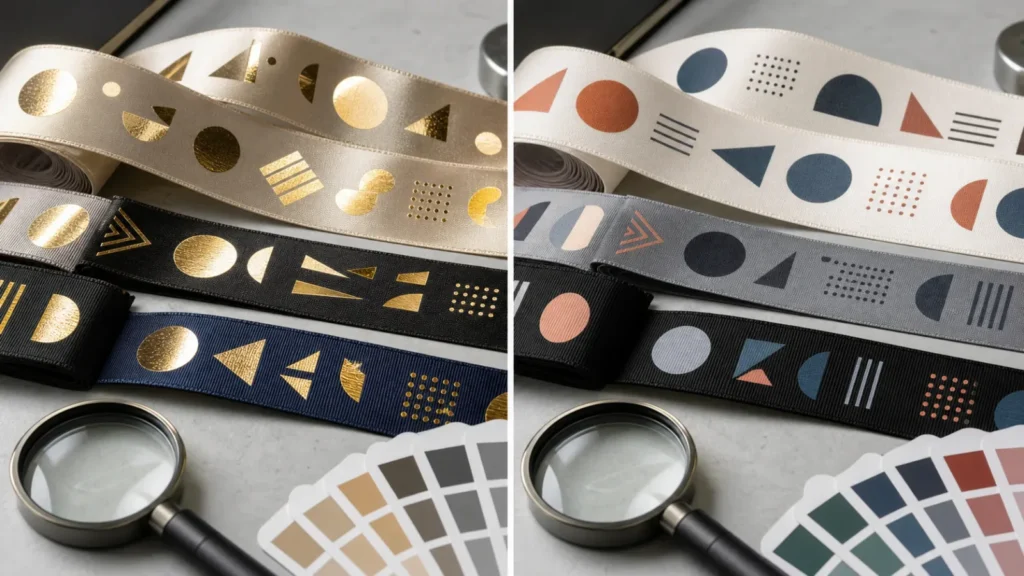
The sourcing record for organza ribbon sheer finish and print is incomplete until it confirms the right product type, structure, material, or specification.
Printing on sheer fabric means the ink is visible from both sides. That single fact changes how the artwork should be prepared.
Direct answer: For organza ribbon sheer finish and print, buyers should choose the right product type, structure, material, or specification.
Define the Buyer Decision for Organza Ribbon Sheer Finish Print Comparison
| Option | Best fit | Trade-off | Risk to avoid | Verification | Follow-up |
|---|---|---|---|---|---|
| Crisp crystal organza with digital print | High-definition logos on structured sheer ribbon for retail packaging | Crisp finish resists fraying but digital print may show white edges on dark colors | Sheer finish mismatch between sample and bulk run due to fabric tension variation | Request a strike-off on the exact production roll before bulk approval | Confirm the supplier's digital print resolution and color fastness test results |
| Soft sheer organza with screen print | Draped bows or gift wrap where hand feel and opacity matter | Screen print holds color well but soft finish may stretch during production cutting | Ink bleed on soft sheer fabric if print pressure is not calibrated per batch | Inspect a production sample under natural light for ink migration and edge sharpness | Document the approved print pressure and drying time on the spec sheet |
| Custom-dyed sheer organza with no print | Solid-color event ribbons where print is not required but color match is critical | No print risk but dye lot variation across production runs can exceed 1-2 shade tolerance | Unapproved dye lot may shift color after storage or under UV exposure | Ask for a dye lot lab dip against your Pantone reference before bulk production | Include an overrun allowance for shade rejection in the purchase order |
For crisp crystal organza with digital print, a poor decision can mean sheer finish mismatch between sample and bulk run due to fabric tension variation. Request a strike-off on the exact production roll before bulk approval, then confirm the supplier's digital print resolution and color fastness test results.
For organza ribbon sheer, preserve the crisp crystal organza with digital print decision under one revision number: keep the supplier response, marked sample, approved specification, quotation, and approval owner together. If the evidence conflicts with the approved record, hold the quote, sample, or production release until the deviation is explained in writing. Carry that signed the decision criteria record into the purchase order, production handoff, shipment release, and later reorder review so every team works from the same baseline.
Supplier proof to verify
Request a signed spec sheet that lists the sheer finish type, print method, and fabric GSM. Ask for a production sample that matches the approved strike-off. Check that the supplier can provide a dye lot or print run record for traceability. Without these documents, the bulk order may deviate from the approved sample.
Use cases that fit
Crisp crystal organza with digital print works for retail hang tags and gift boxes where sharp logos are needed. Soft sheer organza with screen print suits wedding favor wraps and event bows that require a draped look. Custom-dyed solid organza fits corporate gift packaging where color consistency across multiple SKUs is critical.
RFQ and sample checks
In the RFQ, specify the sheer finish type, print method, and acceptable color tolerance (e.g., buyer-approved color tolerance). Request a strike-off on the exact production fabric before sample approval. Confirm the MOQ per finish and print combination, as it varies by material and method. Document the approval gate for bulk production start.
Confirm Product and Order Scope
| Criteria | Baseline option | Confirmed option | Buyer meaning | Risk to avoid | Follow-up |
|---|---|---|---|---|---|
| Specification details | Crisp crystal organza with defined sheer finish | Softer drape organza with subtle sheer finish | Crystal organza holds print sharpness; softer organza may blur fine text or logos. | Choosing the wrong finish can cause print misalignment or rejected samples. | Request a print test on both substrates before final spec sign-off. |
| Approval risk | Lower approval risk with documented spec sheet | Higher approval risk if finish is not clearly defined | Crystal organza specs are easier to lock; softer finish needs explicit tolerance notes. | Unclear finish specs can cause sign-off delays and order stoppage. | Document finish type, GSM, and print method on the spec sheet before approval. |
| Verification method | Visual and tactile check against approved reference sample | Requires light-box test for sheer transparency consistency | Crystal organza can be verified by hand feel; softer organza needs light transmission check. | Skipping verification may lead to bulk ribbon that does not match the approved sample. | Use a calibrated light box to measure sheer percentage on first production piece. |
For specification details, a poor decision can mean choosing the wrong finish can cause print misalignment or rejected samples. Request written proof and compare it with the approved sample or specification, then request a print test on both substrates before final spec sign-off.
For organza ribbon sheer, preserve the specification details decision under one revision number: keep the supplier response, marked sample, approved specification, quotation, and approval owner together. If the evidence conflicts with the approved record, hold the quote, sample, or production release until the deviation is explained in writing. Carry that signed Confirm Product and Order Scope record into the purchase order, production handoff, shipment release, and later reorder review so every team works from the same baseline.
Decision criteria to confirm
Before you approve a custom organza ribbon order, confirm the sheer finish type. A crisp crystal organza holds print detail better than a softer drape. The wrong choice can cause print blur or rejected samples. Ask your supplier for a print test on both substrates before you sign off on the spec sheet.
Production handoff details
At production handoff, verify that the factory has the approved spec sheet and a physical sample. For softer organza, request a light-box test for sheer consistency. For crystal organza, a visual and tactile check is enough. This step prevents bulk ribbon that does not match the approved sample, especially when using custom printed ribbon.
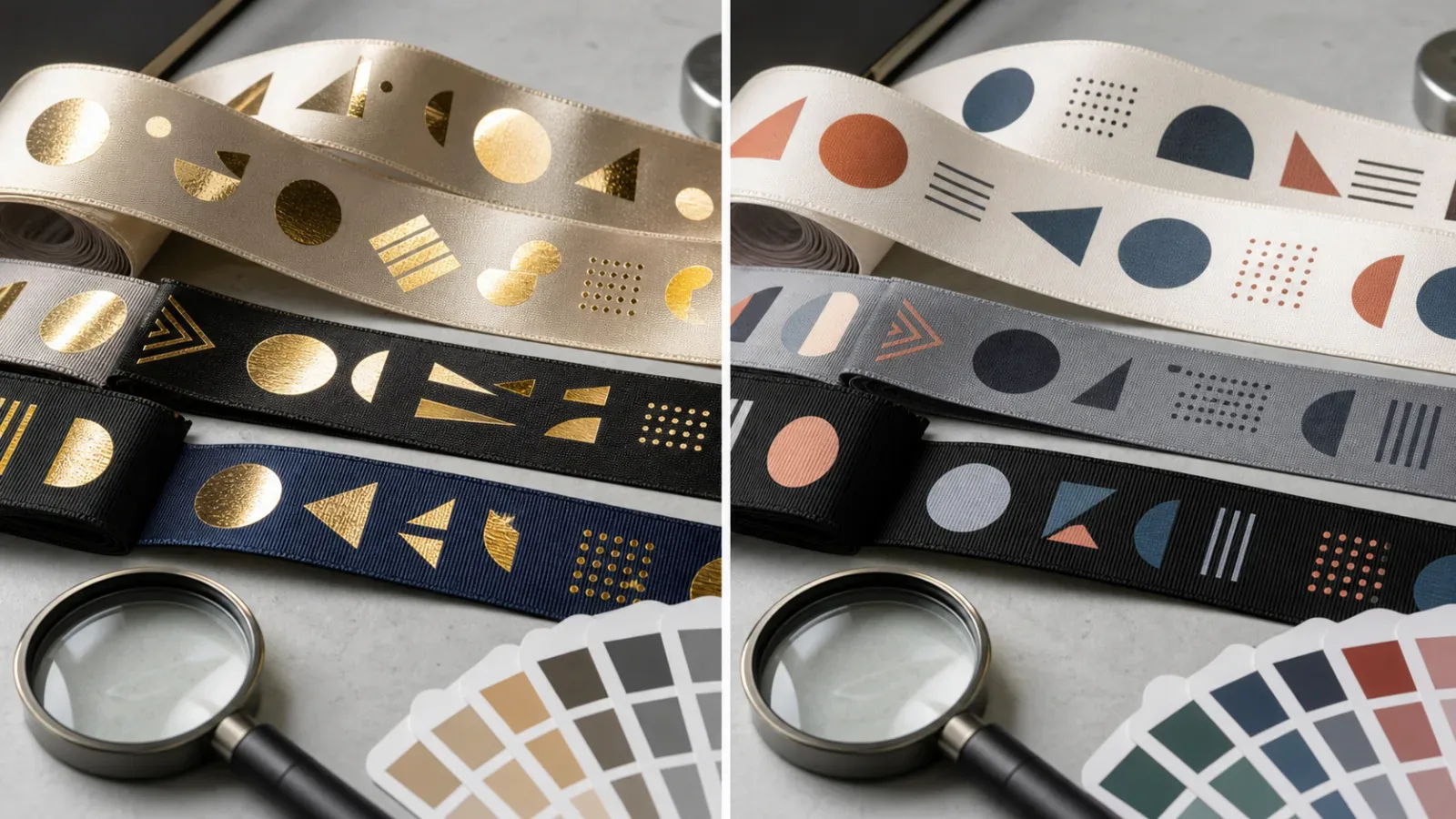
Build the Verification Checklist
Before approving a custom organza ribbon order, confirm that the sheer finish and print method match your quality and cost requirements. Use this checklist to verify each decision point with your supplier.
- Specs: Confirm the ribbon width, weave density, and sheer level (e.g., transparent vs. semi-sheer) in the RFQ. Ask for a written spec sheet before sampling.
- Cost or MOQ: Request a cost breakdown per print method (e.g., screen print vs. digital print) and the minimum order quantity for each. Verify that the MOQ aligns with your project volume.
- Production risk: Identify common defects for your chosen print method—such as ink bleeding on sheer fabric or misalignment on narrow widths. Ask the supplier how they mitigate these risks.
- Factory execution: Request a pre-production sample and a production timeline. Confirm that the factory has experience with organza ribbon and the specific print technique.
- quote request/sample handoff: Ensure the quote request includes all visual references (e.g., Pantone codes, print placement diagrams) and that the sample approval process is documented in writing.
Use the table below to compare print methods against key verification criteria.
| Print Method | Sheer Finish Compatibility | Cost per Yard | Production Risk |
|---|---|---|---|
| Screen Print | High (opaque ink on sheer base) | Medium | Ink bleeding on thin fabric |
| Digital Print | Medium (ink may reduce sheerness) | Low | Color shift on different batches |
After completing the checklist, you will have a verified set of requirements that can be handed off for sampling. For more on custom ribbon development, see our OEM and ODM ribbon development.
Compare Quote and Production Assumptions
Without a locked spec for sheer finish and print method, your quote may shift after sample approval, and production assumptions can lead to costly rework. A buyer who confirms the finish type—crystal or silk-like—and the print technique—foil, screen, or digital—before quote request avoids hidden cost adjustments and delivery delays.
Supplier Proof Check
Request a proof that matches your confirmed finish and print combination. Ask: Does the proof reflect the exact sheer transparency and print registration you require? A mismatch here means the quote basis is invalid.
Sample Approval Check
During sample review, verify that the print clarity and hand feel align with the approved spec. Use a simple table to track key attributes against your requirement.
| Attribute | Your Requirement | Sample Result |
|---|---|---|
| Sheer finish type | Crystal or silk-like | Confirmed |
| Print method | Foil / screen / digital | Confirmed |
| Print clarity | Sharp, no bleeding | Pass |
Reorder Control Check
Before reorder, confirm that the original spec sheet and sample are archived. Ask: Is the same finish and print method still available? This prevents production drift and ensures consistent quality across batches.
Run the Review Before Approval
At this stage, the record needed before the next stage is a finalized spec sheet with confirmed finish type, print method, and color tolerance signed off by both buyer and supplier. Without this, production cannot begin reliably.
Questions to send back to the supplier
- What is the confirmed sheer finish type (e.g., matte, semi-sheer, high-sheer) and its corresponding light transmission percentage?
- Which print method will be used (e.g., screen, digital, foil) and what is the maximum color count per design?
- What is the minimum order quantity (MOQ) for the selected finish and print combination?
- What is the cost per unit at the confirmed minimum order, including any setup fees for print plates or screens?
- What is the lead time from sample approval to shipment?
When to revise, escalate, or reject
If the supplier cannot provide a clear answer on finish type or print method, escalate to a technical review. Revise the spec sheet if the proposed finish does not match the intended application (e.g., high-sheer for layered bows vs. semi-sheer for standalone use). Reject the quote if the supplier claims a print method that cannot achieve the required color accuracy or if the minimum order exceeds your budget without a cost-breakdown justification.
| Specification | Buyer Verification Question | Supplier Response Required |
|---|---|---|
| Sheer finish type | What is the light transmission percentage for the proposed finish? | Numerical value within agreed tolerance |
| Print method | Can the print method reproduce Pantone colors within the buyer-approved color tolerance? | Yes/No with proof |
| MOQ | What is the MOQ for this finish-print combination? | Exact number |
| Cost per unit | What is the unit cost at MOQ, including all setup fees? | Breakdown |
| Lead time | How many calendar days are committed for production and shipment after sample sign-off? | Days |
Use this table as a decision matrix: if any supplier response is missing or unclear, do not approve the order. Escalate to a senior buyer or technical lead for resolution. Reject the quote if the supplier cannot meet the minimum requirements within two revision cycles.
For more on our quality control process, visit Lude Ribbon factory.
Move from Review to RFQ or Sample
Before proceeding to an quote request or sample request, confirm that the sheer finish and print method are locked against a verified measurement record. For example, a buyer may provide a swatch with a documented width tolerance and a print opacity target measured by a densitometer. This record makes the decision verifiable and prevents guesswork in production.
Inputs to include in the next message
- Confirmed sheer finish type (e.g., matte or gloss) with a reference sample or spectrophotometer reading.
- Print method specification (e.g., screen vs. digital) and a color target (Pantone or L*a*b* values).
- Width tolerance and print opacity percentage as agreed upon with the factory.
- Cost or minimum order implications: ask the factory for a price break at the verified tolerance and opacity levels.
- Production risk note: any deviation from the confirmed spec may cause a rework delay.
Ownership and sign-off for the next gate
The buyer or spec owner must sign off on the spec sheet before the factory proceeds. The factory then assigns a production lead who owns the sample execution. Use the table below to track the handoff.
| Gate | Owner | Deliverable |
|---|---|---|
| Spec confirmation | Buyer | Signed spec sheet with tolerance and opacity |
| RFQ issuance | Procurement | RFQ with confirmed spec and MOQ |
| Sample production | Factory | Sample with measurement report |
After sign-off, the factory executes the sample under the agreed parameters. Any change in sheer finish or print method at this stage resets the approval sequence.
Source check: ISO 2859-1 sampling inspection standard; 7/8" Sheer Organza Custom Printed Satin Ribbon – Brand It Promo….
In conclusion
The sourcing choice between a crisp crystal organza and a softer sheer finish directly impacts print clarity, cost, and lead time for custom orders. To avoid rework, buyers should compare supplier spec sheets that document both finish type and print method, verify that the chosen combination aligns with the intended end use, and shortlist only those suppliers who can provide a clear approval gate for the production sample. Request a quote that includes finish and print parameters to ensure the factory can execute the order within the standard 15–20 business day production window after spec confirmation.
To request a quote for organza ribbon sheer, use organza ribbon to confirm the final specification, quote assumptions, sample approval, QC evidence, approval risk, and supplier follow-up before bulk order.
Organza Ribbon Sheer Finish Print Comparison FAQ
What should buyers confirm first?
It depends on whether the sheer finish is a crisp crystal organza or a softer silk-like organza, as this directly affects print adhesion and edge fraying. Buyers should verify the exact finish type and print method (digital vs. screen) in the spec sheet, then request a strike-off sample to confirm color accuracy and hand feel before committing to cost and minimum order.
Which proof should be retained for approval and reorders?
The approved production sample and the signed-off spec sheet that includes finish type, print method, width tolerance, and color codes must be retained. For reorders, compare the new bulk run against this archived sample to catch any drift in sheer transparency or print registration, and document the comparison with dated photos in your QC log. Ask for a sample, specification confirmation, or QC evidence before approval.
Which warning signs should stop the order?
Stop the order if the supplier cannot provide a clear spec sheet showing finish type and print method, or if the sample shows ink bleeding, uneven opacity, or edge fraying beyond your tolerance. Also flag any supplier that refuses a pre-production sample or cannot confirm lead time after spec approval, as these signal production risk that will delay your packaging timeline.
quote request handoff: Send Specs for Review.
Keep exploring
Recommended buyer guides
 Wholesale Foil Printing vs Screen Printing Ribbon: Buyer Comparison
Foil printing vs screen printing ribbon: side-by-side on artwork files, print method, color target, and sample approval. Pick…
Explore guide
Wholesale Foil Printing vs Screen Printing Ribbon: Buyer Comparison
Foil printing vs screen printing ribbon: side-by-side on artwork files, print method, color target, and sample approval. Pick…
Explore guide
 Velvet Ribbon Pile and Finish Comparison for Custom Orders Buyer
: what to confirm on material, MOQ, sample checks,…
Explore guide
Velvet Ribbon Pile and Finish Comparison for Custom Orders Buyer
Velvet Ribbon Pile and Finish Comparison for Custom Orders Buyer: what to confirm on material, MOQ, sample checks,…
Explore guide
 Metallic Ribbon Finish Comparison for Custom Orders: Buyer Checklist
Metallic Ribbon Finish Comparison for Custom Orders: what to confirm on material, dimensions, finish, and handling before you…
Explore guide
Metallic Ribbon Finish Comparison for Custom Orders: Buyer Checklist
Metallic Ribbon Finish Comparison for Custom Orders: what to confirm on material, dimensions, finish, and handling before you…
Explore guide
 Award Ribbon Production Options: When to Custom Order Instead of DIY
Compare Award Ribbon Production Options by format, event timing, artwork placement, and packing before RFQ for retail packaging,…
Explore guide
Award Ribbon Production Options: When to Custom Order Instead of DIY
Compare Award Ribbon Production Options by format, event timing, artwork placement, and packing before RFQ for retail packaging,…
Explore guide
Leave a comment
Share a sourcing question or feedback on this guide. The Lude team reviews submissions before following up.