


Award Ribbon Production Options: When to Custom Order Instead of DIY
Compare Award Ribbon Production Options by format, event timing, artwork placement, and packing before RFQ for retail packaging, branding, or event orders
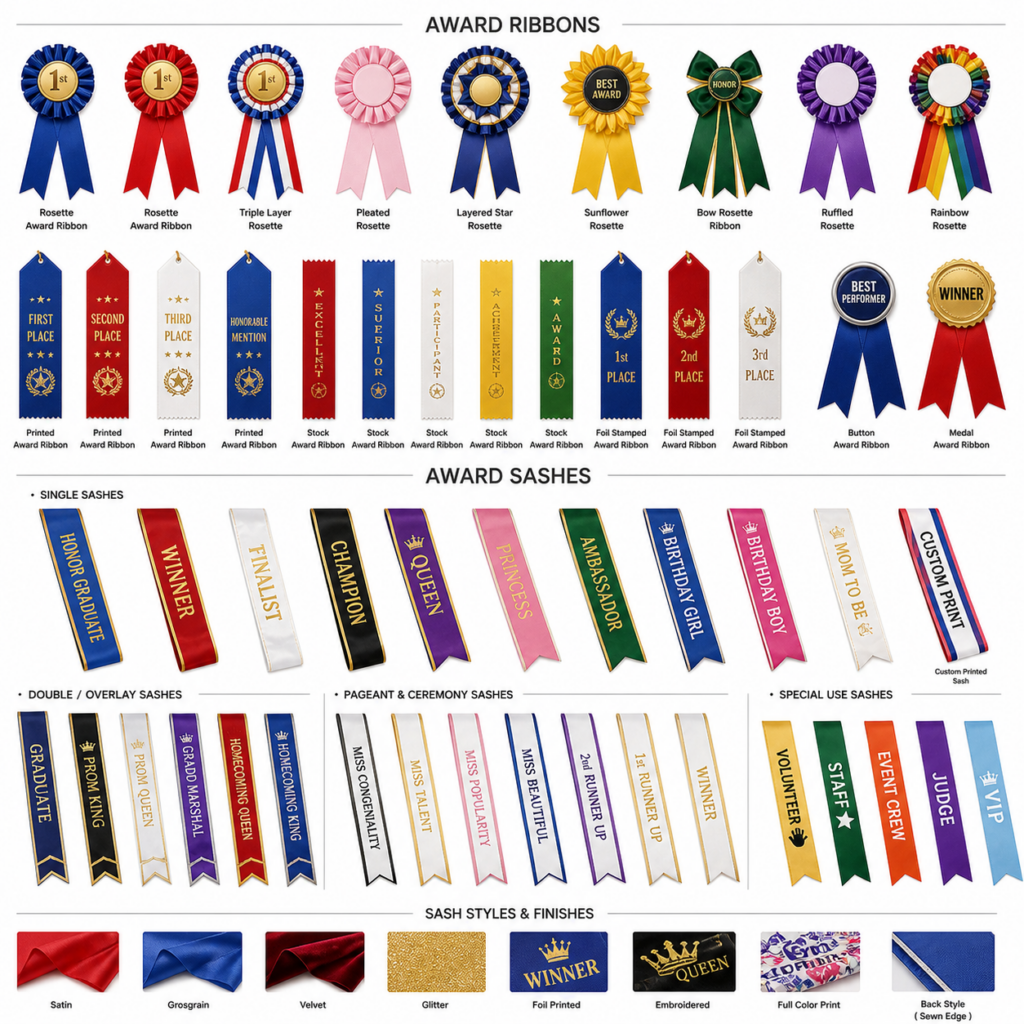
Choose a custom-production route for award ribbons when business orders need repeatable materials, colors, artwork, packing, or reorder records; reserve DIY assembly for prototypes where manual variation is acceptable.
The sections below compare stock and custom options, then turn the selected route into sample checks and RFQ inputs.
Direct answer: For award ribbon production, the real decision is whether the locked specification, factory proof, and signed sample result, quotation assumptions, and approval owner describe the same order.
Print or copy this record into the RFQ file. Every checked item should point to the same revision before the order is released.
- ☐ Final specification and intended use
- ☐ Supplier feasibility and documented exceptions
- ☐ Sample or inspection evidence
- ☐ Commercial assumptions, owner, decision, and date
The order moves forward only when the output from one gate becomes the written input to the next. An unresolved exception sends the order back one gate instead of being carried into bulk production.
When this option fits B2B orders
| Option | Best fit | Trade-off | Risk to avoid | Verification | Follow-up |
|---|---|---|---|---|---|
| Plain stock ribbon from existing inventory | Orders requiring immediate production start with confirmed color and width from supplier's standard range | Limited to pre-dyed colors and standard widths; no custom Pantone match or bespoke construction | Color drift from expected shade if supplier's stock dye lot differs from prior order | Request a material swatch from the current stock lot and compare under daylight to your approved reference | Confirm the stock color code and width tolerance in writing before sample approval |
| Custom-dyed or custom-width ribbon by RFQ | Orders needing a specific Pantone color or non-standard width not held in existing inventory | Requires RFQ confirmation of MOQ and lead time; no immediate production start | Dye lot variation between sample and bulk if the factory does not lock the color formula | Ask the supplier to submit a dyed swatch against your Pantone target and retain a sealed reference | Document the approved color target and width tolerance in the RFQ revision before bulk release |
| Printed ribbon with custom logo or design | Orders requiring brand names, event text, or logos on ribbon for awards or ceremonies | Higher MOQ per design and longer lead time for artwork setup and print proof | Print misregistration or ink adhesion failure if the print method is not matched to the ribbon material | Request a print test on the actual substrate and perform a rub test for ink adhesion before sample sign-off | Approve the print proof and signed sample before authorizing bulk production |
| Woven-edge ribbon for cut-to-length awards | Orders where ribbon ends must not fray after cutting, such as pre-cut award lengths | Woven-edge construction may limit available widths and increase unit cost versus cut-edge ribbon | Cut-edge ribbon used instead of woven-edge leads to fraying and rejects at the award assembly stage | Confirm the edge type on the supplier's spec sheet and inspect a sample edge under magnification | Specify woven-edge construction in the RFQ and verify on the pre-production sample |
For plain stock ribbon from existing inventory, a poor decision can mean color drift from expected shade if supplier's stock dye lot differs from prior order. Request a material swatch from the current stock lot and compare under daylight to your approved reference, then confirm the stock color code and width tolerance in writing before sample approval. For custom-dyed or custom-width ribbon by RFQ, a poor decision can mean dye lot variation between sample and bulk if the factory does not lock the color formula. Ask the supplier to submit a dyed swatch against your Pantone target and retain a sealed reference, then document the approved color target and width tolerance in the RFQ revision before bulk release. For printed ribbon with custom logo or design, a poor decision can mean print misregistration or ink adhesion failure if the print method is not matched to the ribbon material. Request a print test on the actual substrate and perform a rub test for ink adhesion before sample sign-off, then approve the print proof and signed sample before authorizing bulk production.
For the plain stock ribbon from existing inventory checkpoint in make award ribbons, keep the supplier response, marked sample, approved specification, quotation, and approval owner under the same revision number. If the evidence conflicts with the approved record, hold the quote, sample, or production release until the deviation is explained in writing. Carry the signed decision record into the purchase order, production handoff, shipment release, and later reorder review so every team works from the same baseline.
Best-fit buyer scenarios
Buyers with a confirmed specification package and a single RFQ revision benefit from comparing material, width, print method, and edge type against supplier capability. This approach suits orders where sample approval, color control, and reorder consistency are critical. It fits B2B buyers who need documented evidence before bulk production release.
Cases where another option is safer
When the buyer lacks a complete specification package or has not verified the supplier's MOQ and lead time, a direct comparison may misalign expectations. If the order requires immediate shipment from stock without sample approval, the decision matrix adds unnecessary delay. In those cases, confirm the supplier's standard stock availability first.
Key specs buyers should compare
For award ribbon production, compare the key specs below against one RFQ revision. Each row should identify the requirement, approval evidence, and buyer action before production.
| Specification | Quality control | Verification method | Risk to avoid | Buyer action |
|---|---|---|---|---|
| Material / substrate | Verify substrate type matches RFQ: satin, grosgrain, or velvet. | Request a material swatch; compare to spec under daylight. | Substrate mismatch causes print failure or color drift in bulk. | Obtain material swatch and confirm substrate type in RFQ. |
| Width or size tolerance | Measure ribbon width at 3 points with calibrated ruler. | Check width against spec tolerance; record deviation. | Width variation misaligns printing or packing; rework cost. | Ask supplier for width tolerance; measure sample before approval. |
| Sample approval | Approve sample only after all specs verified: color, print, width. | Inspect sample under daylight, compare to Pantone, measure width. | Early sample sign-off leads to bulk defects and reorder drift. | Sign off sample only after full check; store approved sample. |
For award ribbon production, use the key specs table as the decision scope. Read the rows as one approval sequence. Start with material / substrate because substrate mismatch causes print failure or color drift in bulk. Verify it by requesting a material swatch and comparing it to spec under daylight. Then resolve width or size tolerance, because width variation misaligns printing or packing; ask the supplier for width tolerance and measure the sample before approval. Finish with sample approval: inspect the sample under daylight, compare it to Pantone, measure width, and sign off only after the full check; store the approved sample.
Keep the make award ribbons supplier response, marked sample, and approval owner under the same revision number. If any proof conflicts with the approved record, hold the quote, sample, or production release until the supplier explains the deviation in writing. Before closing the checkpoint, reconcile the latest drawing, sample, quotation, and approval comments, identify which record controls if they disagree, and document the resolution. Carry the signed key specs table into the purchase order and production handoff so the same checks support quote comparison, sample approval, shipment release, and later reorders.
Before comparing suppliers, review award and ceremony ribbon solutions for the related product or solution route.
RFQ checkpoint
Check the product route for sizes, structures, materials, finishes, and RFQ details before sampling make award ribbons.
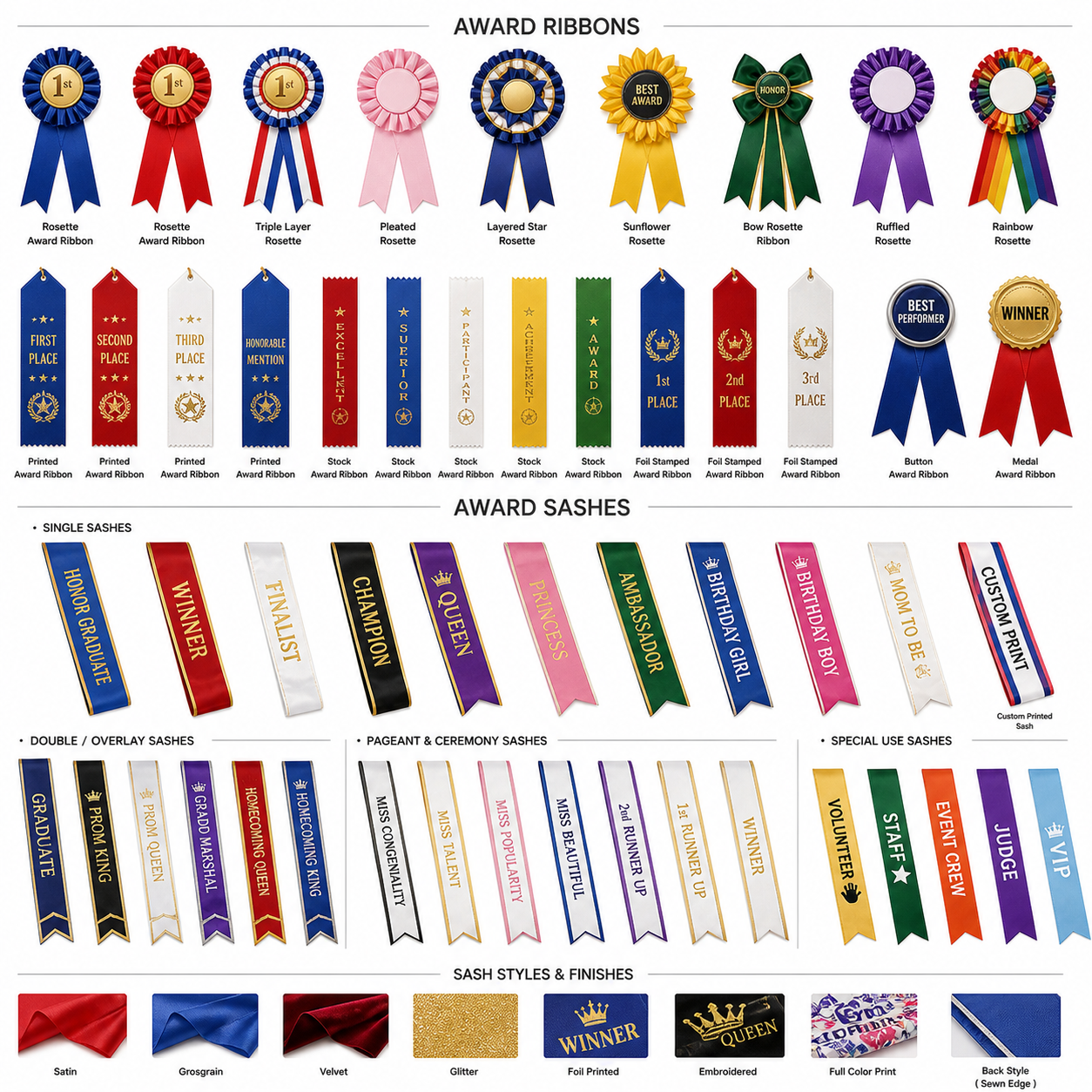
Material, finish, and use-case decision table
For award ribbon production, this section connects material, finish, and use-case table with artwork files, material choice, finish proof, sample sign-off, and production repeatability.
How to read the comparison
Without a clear specification package, a bulk ribbon order can lead to mismatched color, inconsistent width, or print misregistration—each adding costly rework or event-day embarrassment. This table compares common material-finish combinations so you can align your RFQ with actual production capability.
| Material & Finish | Typical Use Case | Key Spec to Confirm in RFQ | Production Risk to Verify |
|---|---|---|---|
| Satin ribbon, matte finish | Formal awards, ceremonies | Color fastness to light and handling | Dye lot variation across rolls |
| Grosgrain ribbon, textured | Durable daily-wear medals | Ribbon width tolerance (ask for ± tolerance) | Edge fraying after cutting |
| Printed polyester, gloss | Event-specific branding | Print registration accuracy | Ink adhesion and scratch resistance |
MOQ and lead-time assumptions behind each option
Every material-finish pair carries different minimum order quantities and production lead times. For satin matte, the dyeing process requires a full production run; confirm your required quantity with the factory before quoting. Grosgrain textured ribbons often allow smaller starts but may need additional edge sealing. Printed polyester gloss can be produced faster if artwork is pre-approved, but always request a lead-time estimate based on your specific roll length and color count.
Sample checks before bulk approval
Before approving bulk production, verify three items on your sample: measure the ribbon width at three points along the roll to confirm tolerance; hold the ribbon under natural light to check for dye lot consistency; and perform a simple rub test on printed areas to ensure ink adhesion. Document these checks in your approval record and share results with the factory. This step prevents surprises and aligns both parties on quality expectations.
For related specifications, sample inputs, and RFQ details, review custom printed ribbon.
Common selection mistakes
When buyers evaluate make award ribbons, the most frequent failure mode is treating unit price as the sole decision criterion. This approach ignores that material composition, print method compatibility, and reorder consistency directly affect ribbon appearance and durability. To prevent this, buyers must apply a structured RFQ checklist that includes material specification, print method verification, and sample control protocols.
Choosing by unit price only
Selecting a supplier based solely on the lowest per-ribbon cost often leads to hidden expenses: inconsistent color reproduction, ribbon fraying, or print adhesion failure. A low unit price may indicate thinner material or lower-quality ink that fails during handling or storage. Instead, compare total cost of ownership by evaluating material grade, print method (e.g., screen printing vs. heat transfer), and the supplier’s quality assurance process.
Ignoring material and print-method fit
Not all ribbon materials accept every print method. For example, grosgrain ribbon works well with screen printing, while satin may require heat transfer or dye sublimation for sharp detail. Mismatching material and print method increases production risk—such as ink bleeding, poor adhesion, or color shift. The RFQ should specify both material type and intended print method, and the supplier must confirm compatibility before sampling.
Skipping sample and reorder controls
Proceeding to bulk production without an approved sample is a common mistake. The sample serves as the reference for color, texture, and print alignment. Without documented sample approval and reorder controls, subsequent batches may deviate in shade or finish. Include in the RFQ a requirement for a pre-production sample, a written approval step, and a reorder specification sheet that locks in material source, print settings, and quality checkpoints.
For a deeper look at the custom ribbon development process, see OEM and ODM ribbon development.
When to request samples or a quote
Request samples or a quote once the buyer has compiled a specification package and identified potential suppliers. The output required before proceeding to sampling is a confirmed RFQ that includes verified material, width, color target, print method, and quantity. Without this, subsequent steps risk misalignment.
Quote-ready inputs to prepare
- Specify the ribbon material—e.g., satin, grosgrain, or woven edge—based on the award’s intended use and durability requirements.
- Define the width in inches or millimeters; confirm with the supplier their standard width range.
- Provide a color target, referencing Pantone, CMYK, or a physical sample.
- State the print method—screen, hot stamp, or woven—and the number of colors per design.
Additional RFQ items include the total quantity needed and whether it will be a single order or recurring.
Sample approval checks
When the sample arrives, verify these critical attributes against the RFQ.
The RFQ should also cover color accuracy: Compare sample to Pantone reference under controlled lighting. Print alignment: Inspect text and graphics for centering, sharpness, and registration. Material feel: Assess hand feel, thickness, and edge finish for consistency with specification.
Document any deviations and request a revised sample if needed. Only move to bulk after all checks pass.
Bulk production and reorder controls
For bulk production, confirm that the supplier’s process aligns with the approved sample. Ask the supplier how they maintain consistency across rolls—e.g., dye lot control and tension settings. For reorders, require the same material specification and color target as the original approval. A single reference file, such as a PDF with Pantone codes and dimensions, avoids drift between batches. Always request a pre-production sample if the order quantity exceeds a threshold agreed upon in the RFQ.
Source check: Illustrated Guide. Record the acceptance rule, evidence owner, and approval step in the RFQ or quality file.
In conclusion
For award ribbon production, the final approval depends on whether the specification package, supplier proof, and sample evidence describe the same order. Before shortlisting a supplier, verify that the material, width tolerance, color target, and print method are documented in the RFQ and confirmed against the supplier’s MOQ and lead time. Compare the sample to your Pantone swatch under daylight, measure width at three points, and perform a rub test for ink adhesion. Retain a signed proof and QC record to ensure reorder consistency. Only approve the sample when all checks pass, then proceed to bulk production with the same baseline.
To shortlist a supplier, visit award ribbons and sashes and confirm the final specification, quote assumptions, sample approval, QC evidence, approval risk, and supplier follow-up before bulk order.
Make award ribbons FAQ
What should buyers know about make award ribbons?
Buyers should know that make award ribbons require a complete specification package—material, width, color target, print method, and packing—before requesting a quote or sample. Confirm the MOQ and lead time with the supplier; plain stock ribbon starts at a minimum quantity, while printed ribbon and custom colors require an RFQ for accurate pricing and production scheduling. Verify the sample against your Pantone swatch and width tolerance under daylight, and retain a signed proof for reorder consistency. Document the supplier’s quality control plan and ensure bulk production conditions match the approved sample to avoid dye lot variation or print misalignment.
How do I choose the right option for make award ribbons?
To choose the right option, compare key specs—material, width tolerance, print method, and color target—across one RFQ revision. Request a material swatch and print test on the actual ribbon substrate to confirm compatibility; for example, screen printing works well on grosgrain but may crack on satin. Measure the sample width at three points, check color under natural light, and perform a rub test for ink adhesion. Shortlist suppliers that provide a clear lead time of 15–20 business days after specification approval and a sample proof to validate quality before bulk production.
What affects the cost or quality of make award ribbons?
Cost and quality are affected by material choice, print method, and order quantity. Plain stock ribbon from existing inventory starts at a lower MOQ, while custom colors or widths require an RFQ and may increase unit cost. Printed ribbon starts at a higher minimum yardage per design, and the printing method—ink, heat transfer, or foil—must be matched to the material for durability. Quality risk includes dye lot variation, width inconsistency, and print registration misalignment; mitigate these by requesting a pre-production sample, inspecting it against your approved reference, and documenting the approval with a signed proof and QC record.
What mistakes should I avoid with make award ribbons?
Avoid fixating on unit price alone, as low cost can mask poor material quality, inconsistent color, or substandard print registration that erodes award value. Instead, evaluate total cost per usable ribbon, factoring in waste and rework risk. Another mistake is skipping a pre-production sample; without it, reorders may drift in color, width, or print quality. Always request a print test on the actual material, compare the sample to your Pantone swatch and width tolerance, and retain a signed proof for reorder consistency. Document these checks in your approval record to prevent costly reprints and ensure consistent quality across batches.
Keep exploring
Recommended buyer guides
 Wholesale Foil Printing vs Screen Printing Ribbon: Buyer Comparison
Foil printing vs screen printing ribbon: side-by-side on artwork files, print method, color target, and sample approval. Pick…
Explore guide
Wholesale Foil Printing vs Screen Printing Ribbon: Buyer Comparison
Foil printing vs screen printing ribbon: side-by-side on artwork files, print method, color target, and sample approval. Pick…
Explore guide
 Organza Ribbon Sheer Finish and Print Comparison for Custom Orders
 — the checks that decide whether a quote,…
Explore guide
Organza Ribbon Sheer Finish and Print Comparison for Custom Orders
Organza Ribbon Sheer Finish and Print Comparison for Custom Orders — the checks that decide whether a quote,…
Explore guide
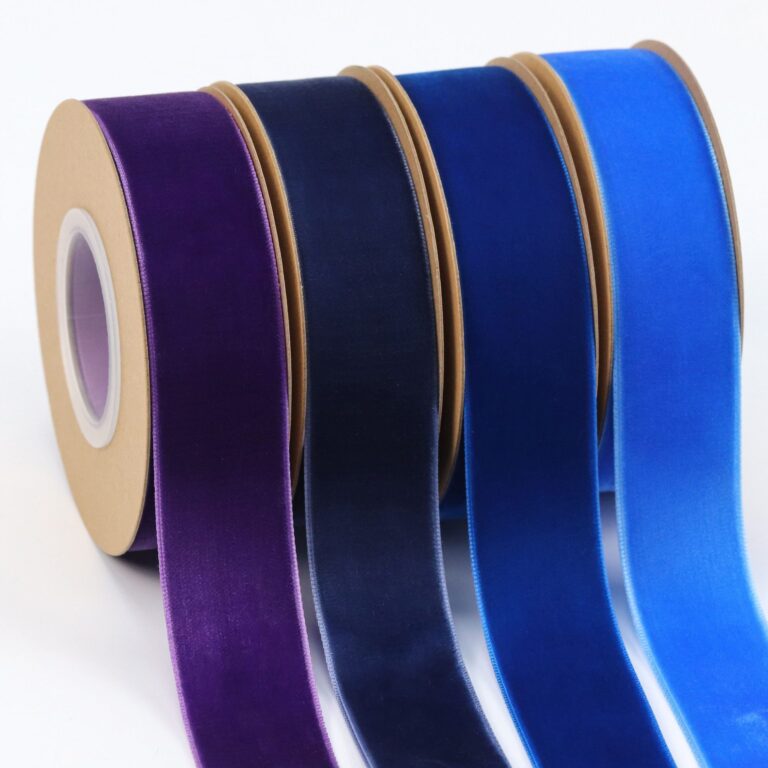 Velvet Ribbon Pile and Finish Comparison for Custom Orders Buyer
: what to confirm on material, MOQ, sample checks,…
Explore guide
Metallic Ribbon Finish Comparison for Custom Orders: Buyer Checklist
Metallic Ribbon Finish Comparison for Custom Orders: what to confirm on material, dimensions, finish, and handling before you…
Explore guide
Velvet Ribbon Pile and Finish Comparison for Custom Orders Buyer
Velvet Ribbon Pile and Finish Comparison for Custom Orders Buyer: what to confirm on material, MOQ, sample checks,…
Explore guide
Metallic Ribbon Finish Comparison for Custom Orders: Buyer Checklist
Metallic Ribbon Finish Comparison for Custom Orders: what to confirm on material, dimensions, finish, and handling before you…
Explore guide
Leave a comment
Share a sourcing question or feedback on this guide. The Lude team reviews submissions before following up.