


Velvet Ribbon For Christmas: Holiday packaging planning
Shortlist Velvet Ribbon For Christmas suppliers by sample approval, color tolerance, QC checks, and material. See which options fit your project specs
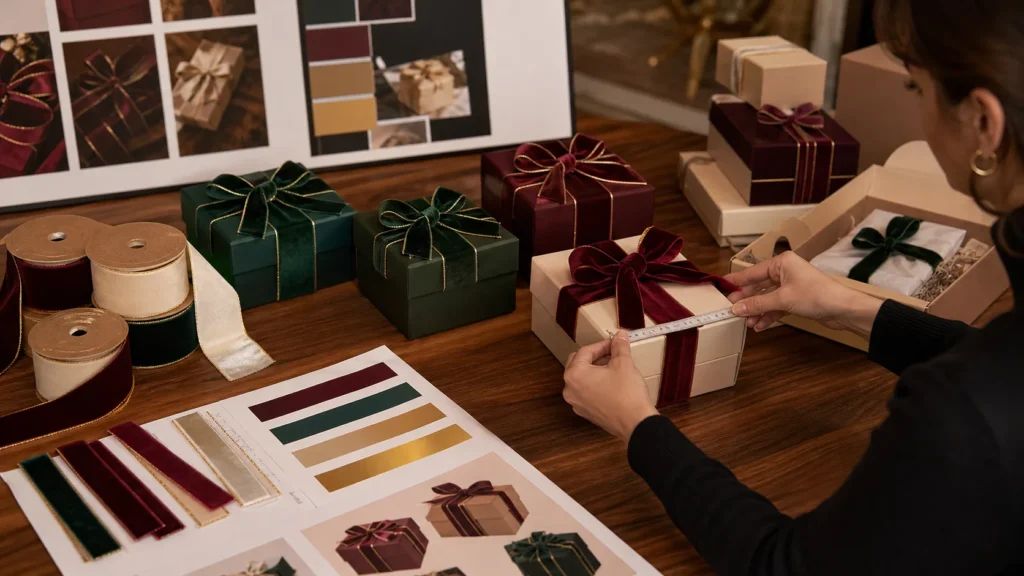
Direct answer: For velvet ribbon for christmas, buyers should use velvet ribbon for premium gift boxes and indoor holiday displays where pile, color depth, and shape matter; choose satin or grosgrain for faster, lower-risk high-volume packing.
Where velvet ribbon christmas fits event projects
| Application | Fit condition | Risk to avoid | Specification or proof | Follow-up |
|---|---|---|---|---|
| Event gift wrapping and favor assembly | Single-face velvet ribbon, 5/8" to 1.5" width, stock red or green color | Width mismatch with pre-cut bow machines or tying fixtures | Confirm width tolerance (the buyer-approved tolerance) and yardage per roll | Request a width gauge sample card before bulk order |
| Christmas tree garland and stair swags | Double-face velvet ribbon, 2.5" to 4" width, custom dyed to match decor theme | Color shift between dye lots across multiple production runs | Submit a lab dip against the approved Pantone target | Hold the lab dip against your decor sample under event lighting |
| Corporate gift box toppers and branded packaging | Printed velvet ribbon with foil logo, 1" to 2" width, stock or custom color | Foil adhesion failure on velvet pile causing logo flaking | Request a heat-transfer test strip on the exact velvet substrate | Run a finger-rub test on the proof strip before approving production |
| Church pew bows and ceremony aisle markers | Pre-tied velvet ribbon bows, 4" to 6" loop, stock burgundy or ivory | Bow shape collapse under ambient humidity or storage pressure | Request a crush-resistance test on three sample bows after 24-hour storage | Store the test bows in your actual event environment before final approval |
For event gift wrapping and favor assembly, a poor decision can mean width mismatch with pre-cut bow machines or tying fixtures. Request written proof and compare it with the approved sample or specification.
Preserve the event gift wrapping and favor assembly decision under one revision number: keep the supplier response, marked sample, approved specification, quotation, and approval owner together. If the evidence conflicts with the approved record, hold the quote, sample, or production release until the deviation is explained in writing. Once the buyer and designated technical authority have accepted the evidence, carry the signed Where velvet ribbon christmas fits event projects record into the purchase order, production handoff, shipment release, and later reorder review so every team works from the same baseline.
Best-fit buyer scenarios
Velvet ribbon for Christmas works best when the application demands a soft, non-reflective finish and a tactile premium feel. Common fits include gift wrapping, tree garlands, pew bows, and corporate packaging. The pile height and width must match the tying or bow-making equipment to avoid production delays.
Cases where another ribbon option is safer
If the event requires outdoor exposure to rain, snow, or high humidity, velvet ribbon absorbs moisture and loses its nap. For outdoor Christmas displays, choose grosgrain or satin ribbon with a water-resistant finish. Velvet also compresses under heavy stacking, so avoid it for tightly packed gift boxes or long-term storage.
Material, finish, and format decisions
- Supplier cannot produce velvet ribbon with consistent pile height across dye lots: Uneven pile height creates visible shading differences on Christmas packaging and bows, causing rejected finished goods and reorder delays. Request a pile-height tolerance statement and ask how the supplier controls nap direction during slitting. Provide a pile-height measurement record from the last three production lots of similar velvet ribbon. Compare the submitted tolerance against your Christmas program's acceptable shading range before sample approval.
- No written approval gate for custom printed ribbon color match against velvet substrate: Ink absorption differs on velvet versus smooth ribbon, so a printed design may appear dull or shifted without a substrate-specific proof. Require a printed velvet ribbon strike-off on the actual velvet material before bulk production. Submit a signed color-match approval form with the strike-off attached. Hold the production start until the strike-off is approved in writing.
- Supplier offers only one width option for velvet ribbon without confirming die or slitting capability: A single width may not fit your Christmas bow format or packaging insert, forcing a last-minute redesign or additional slitting cost. Ask for a list of available velvet ribbon widths and confirm whether custom widths require a new slitting die. Request a width specification sheet showing all standard and custom options with lead time for new dies. Select the width that matches your bow machine or packaging insert and confirm the die availability before order.
- Supplier cannot provide a physical velvet ribbon sample before bulk order: Without a physical sample, you cannot verify hand feel, color depth, or how the ribbon ties in a Christmas bow—leading to costly returns. Insist on a production-matched sample from the same dye lot and slitting run. Request a sample swatch with a lot number and a signed quality checklist from the QC department. Use the sample to test bow tying, color matching, and packaging fit before approving the full quantity.
How material choice affects appearance and handling
Velvet ribbon for Christmas projects must balance pile height and density. A high-pile velvet looks luxurious but can crush under bow-forming pressure, while a low-pile velvet holds shape better for gift packaging. Request a sample to test how the ribbon handles folding, tying, and heat sealing before committing to bulk production.
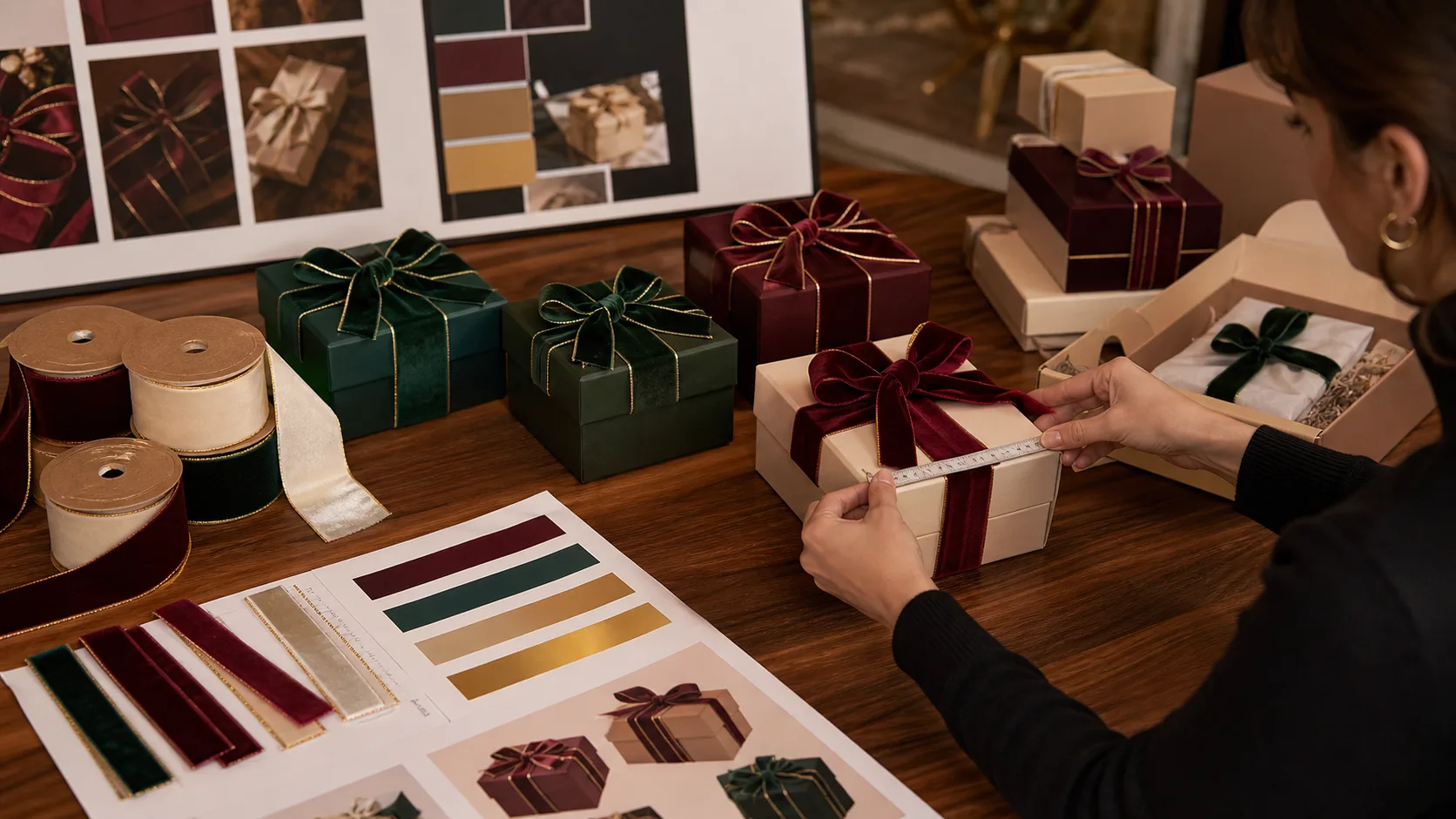
Application and display requirements
| Option | Best fit | Trade-off | Risk to avoid | Verification | Follow-up |
|---|---|---|---|---|---|
| Current specification: 1/4" double-faced polyester velvet ribbon, stock red | Retail gift packaging and holiday display where color consistency and tight width tolerance are critical | Limited to stock colors and widths; custom Pantone or wider format requires RFQ and longer lead time | Accepting a stock red that shifts hue under store lighting; verify against approved display sample before bulk order | Request a production sample under your display lighting; document L*a*b* or Pantone reference | Approve sample in writing, then release plain stock ribbon order at the 1,500-yard minimum per color |
| Custom option: 1/2" printed velvet ribbon with foil-stamped holiday motif | Limited-edition cosmetic or award packaging where brand logo and seasonal design drive differentiation | Printed ribbon starts at 3,000 yards per design; foil stamp adds setup cost and approval cycle | Artwork registration drift on velvet pile; verify print alignment and foil adhesion on a production proof | Request a foil-stamped strike-off on the actual velvet substrate; check for pile distortion and color bleed | Approve artwork and foil proof, then release printed ribbon order at 3,000 yards minimum per design |
| Safer fallback: 1/4" stock black velvet ribbon, plain finish | Event display and OEM and ODM ribbon development where neutral color and immediate availability reduce program risk | Black may not match holiday theme; consider adding a separate printed tag or bow for seasonal accent | Accepting a fallback color without verifying it works with existing packaging or display fixtures | Place a stock-minimum trial order to confirm color neutrality under mixed lighting; check width consistency across rolls | If trial passes, release the plain stock ribbon order; schedule seasonal accent add-on separately |
For current specification: 1/4" double-faced polyester velvet ribbon, stock red, a poor decision can mean accepting a stock red that shifts hue under store lighting; verify against approved display sample before bulk order. Request a production sample under your display lighting; document L*a*b* or Pantone reference.
Preserve the current specification: 1/4" double-faced polyester velvet ribbon, stock red decision under one revision number: keep the supplier response, marked sample, approved specification, quotation, and approval owner together. If the evidence conflicts with the approved record, hold the quote, sample, or production release until the deviation is explained in writing. Once the buyer and designated technical authority have accepted the evidence, carry the signed Application and display requirements record into the purchase order, production handoff, shipment release, and later reorder review so every team works from the same baseline.
Retail, gift, cosmetic, wine, holiday, award, or event details
For Christmas velvet ribbon, the display environment drives width and finish choice. Retail shelf lighting, gift box contrast, and wine bottle neck diameter all affect how the ribbon reads. Verify your display fixture dimensions and lighting color temperature before selecting width or pile height. A sample under actual display conditions prevents color mismatch and width misalignment.
Handling, storage, and presentation risks
Velvet ribbon pile is sensitive to pressure and humidity. Store rolls upright in a climate-controlled area to avoid crush marks and moisture damage. During handling, avoid tight winding or stacking heavy boxes on ribbon rolls. Request interleaving or tissue wrap for custom dyed or printed velvet to protect the pile during transit and storage.
MOQ, lead time, and sample planning
Build the RFQ around velvet ribbon pile height and density against your project specification. Match every listed buyer input to written supplier confirmation, approval evidence, and the risk that would hold the quote.
- Confirm velvet ribbon pile height and density against your project specification. Pile height affects how the ribbon ties, lies flat, and resists crushing during packaging or display. Ribbon may appear thin or uneven after tying, causing rework or rejected finished goods. Approve a physical sample against a written specification before bulk production.
- Document the exact color target using a Pantone reference or physical swatch. Velvet ribbon absorbs dye differently than satin; a digital image alone cannot guarantee color match. Color mismatch leads to costly re-dyeing or order rejection at final inspection. Send a physical color swatch or approved Pantone code with the quote request.
- Verify the supplier-confirmed quantity against your program volume and MOQ rules. Ordering below the supplier's confirmed minimum triggers price breaks or delays. Your order may be rejected or re-priced after production starts, causing budget overruns. Request a written MOQ confirmation for your exact width, color, and construction before signing.
- Require path-specific timing in the supplier's written quotation for sample and bulk. Standard production windows vary by material and order complexity; a generic estimate hides bottlenecks. Late delivery disrupts seasonal campaigns and incurs expedite fees or lost sales. Ask the supplier to state sample turnaround and bulk production timing as separate line items in the quote.
- Check that the sample approval process includes a written sign-off gate before bulk release. Without a formal approval, production may start on an unverified sample, risking full-batch rejection. You may receive non-conforming goods that require rework or reorder at your cost. Establish a sample approval form that requires dated signatures from both buyer and supplier QC.
What to confirm before ordering
Before placing a velvet ribbon order, confirm the pile height, color target, and width against your project specification. Each variable affects how the ribbon performs in tying, display, or packaging. A physical sample approved against a written spec prevents mismatches that cause rework or rejection. Document every decision in the quote request to lock in the supplier's commitment.
How to avoid last-minute project delays
Avoid delays by requiring path-specific timing in the supplier's written quotation. Separate sample turnaround from bulk production timing so you can plan seasonal launches accurately. Confirm the quantity against your program volume early. Establish a formal sample approval gate with dated signatures to prevent production starting on unverified materials. These steps keep your Christmas project on schedule.
Buyer checklist before RFQ
Use a release rule: approve only when the supplier evidence matches the written requirement.
- Confirm velvet ribbon pile height and density against Christmas display use: Pile height that is too high can crush under gift weight; too low may not reflect light for a festive look. Request a pile-height measurement card and density swatch set from the supplier before bulk cutting. Ribbon that looks flat or matted on arrival, causing last-minute reorders and display delays. Document the approved pile height range and attach it to the quote request as a pass/fail gate.
- Verify color fastness to indoor Christmas lighting and handling: Velvet ribbon near warm lights or handled repeatedly can fade or transfer dye to packaging. Ask for a crocking test report and a 24-hour lightfastness swatch under a 60-watt bulb. Color bleeding onto white gift boxes or customer hands, triggering a quality complaint. Set a written color-fastness threshold and require the supplier to sign off before production.
- Document the approved pile direction for consistent sheen across all rolls: Velvet ribbon has a nap; mismatched pile direction creates visible color shifts in finished displays. Run your hand along the sample; mark the direction with an arrow on the cutting ticket. A mixed-lot shipment where half the rolls look darker, forcing a costly re-sort at your warehouse. Require the supplier to cut all rolls in the same pile direction and label each roll with an arrow.
Project details to send the supplier
When requesting a quote for this Christmas order, include the exact display environment—indoor or outdoor, lighting conditions, and handling frequency. Specify pile height preference (low for tight bows, high for plush look), color target with Pantone reference, and width. Also state whether you need edge finishing, and the expected order quantity to help the supplier plan dye lots and cutting setup.
Sample approval and repeat-order controls
Once the sample passes your pile height, color, and width checks, lock the approved swatch in a sealed bag with a date and sign-off. For repeat orders, require the supplier to pull the archived swatch and run a pre-production check against it. This prevents drift between batches and keeps your Christmas ribbon consistent year after year.
In conclusion
For your Christmas velvet ribbon program, the final approval step is to compare the supplier’s written quote against your confirmed pile height, width, color target, and display application. Verify that the minimum order and lead time match your production schedule, and document the approved pre-production sample before bulk release. This check ensures the specification, cost, and quality risk are all locked before the order moves forward.
To request a quote for the current product, use velvet ribbon to confirm the final specification, quote assumptions, sample approval, QC evidence, approval risk, and supplier follow-up before bulk order.
Velvet ribbon christmas FAQ
What should buyers confirm before ordering Velvet Ribbon For Christmas?
Before ordering velvet ribbon for Christmas, confirm the pile height, width, and color target against your display or packaging requirement. For custom colors or widths, request a written quote to verify feasibility and cost, as these specifications require quote request confirmation rather than assuming standard stock availability. Confirm minimum order and order quantity by color, width, artwork, and packing route. Confirm production lead time after specifications and sample approval are fixed. Ask how QC will check the sample, color, finish, packing, and bulk order. Ask the supplier to confirm factory capability and who owns follow-up.
How should buyers compare MOQ, lead time, and quote terms?
Compare minimum order and lead time by specifying whether you need plain stock ribbon from existing inventory or custom-dyed widths. Standard production takes 15–20 business days after specification confirmation, while custom orders require a separate quote request to determine exact terms. Always document the supplier’s written quote for cost, minimum order, and delivery timing before proceeding. Ask how QC will check the sample, color, finish, packing, and bulk order.
What sample, quality, or supplier checks reduce risk?
Reduce risk by requesting a pre-production sample that matches your approved pile height, color, and width. Verify the sample against your specification before approving bulk production, and document the approval in writing. For printed velvet ribbon, also confirm artwork alignment and color accuracy during the sample stage to avoid costly rework. Confirm production lead time after specifications and sample approval are fixed. Ask the supplier to confirm factory capability and who owns follow-up.
Keep exploring
Recommended buyer guides
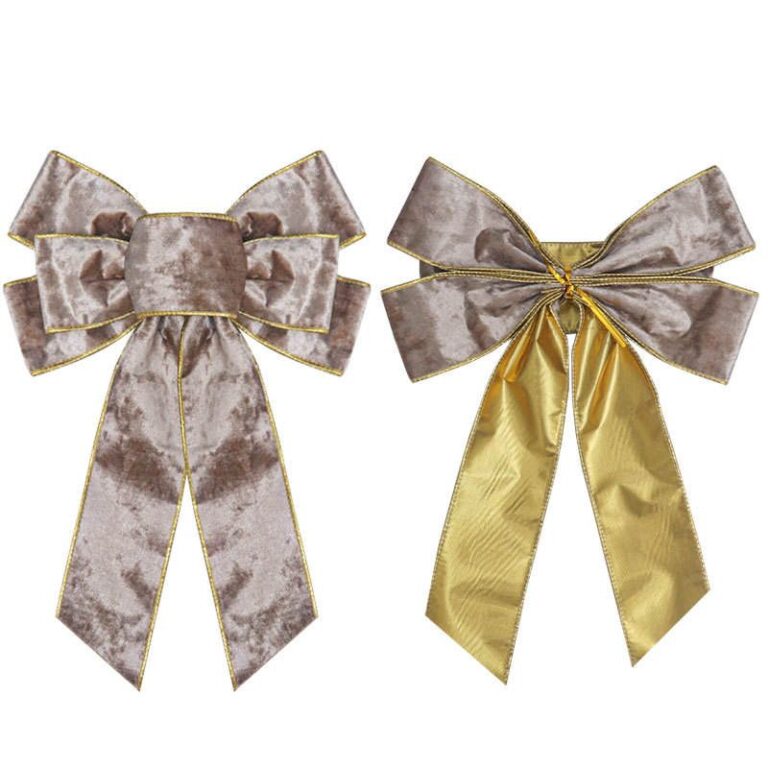 Pre-Tied Bows for Retail Packaging: When They Reduce Labor and Rework
See when pre-tied bows reduce retail packaging labor, improve consistency, and simplify bulk packing, SKU planning, and reorders
Explore guide
Pre-Tied Bows for Retail Packaging: When They Reduce Labor and Rework
See when pre-tied bows reduce retail packaging labor, improve consistency, and simplify bulk packing, SKU planning, and reorders
Explore guide
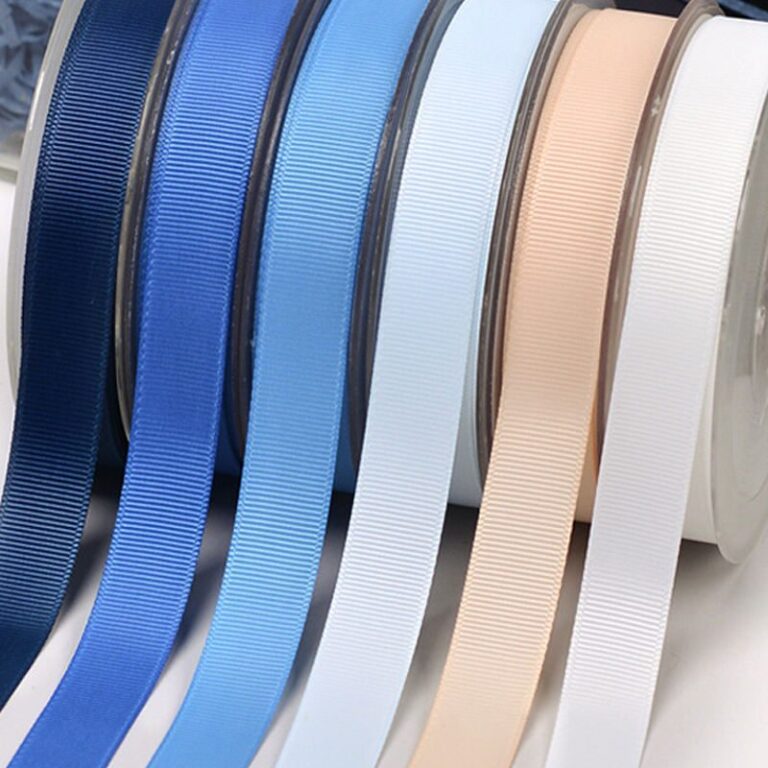 Wholesale Grosgrain Ribbon Rolls: Specs, Roll Length, and RFQ Checks
Buying Grosgrain Ribbon Rolls? Verify sample approval, color tolerance, QC checks, and material to reduce quoting errors and…
Explore guide
Wholesale Grosgrain Ribbon Rolls: Specs, Roll Length, and RFQ Checks
Buying Grosgrain Ribbon Rolls? Verify sample approval, color tolerance, QC checks, and material to reduce quoting errors and…
Explore guide
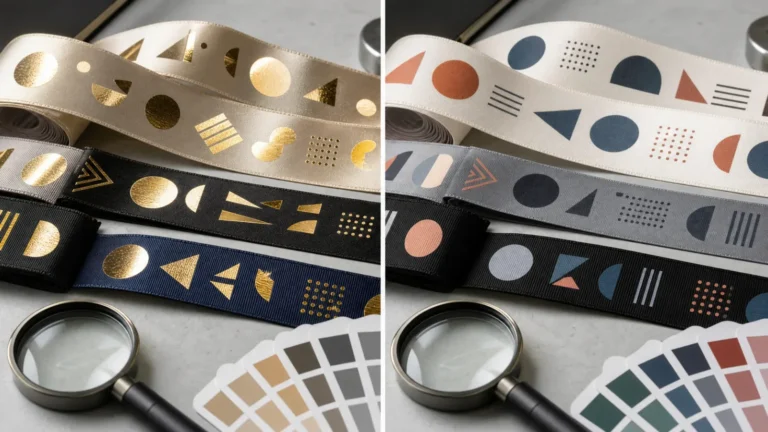 Wholesale Foil Printed Ribbon: Use-Case Fit and RFQ Checklist
Buying foil printed ribbon: buyer use-case fit checklist? Verify artwork files, print method, and color target to reduce…
Explore guide
Wholesale Foil Printed Ribbon: Use-Case Fit and RFQ Checklist
Buying foil printed ribbon: buyer use-case fit checklist? Verify artwork files, print method, and color target to reduce…
Explore guide
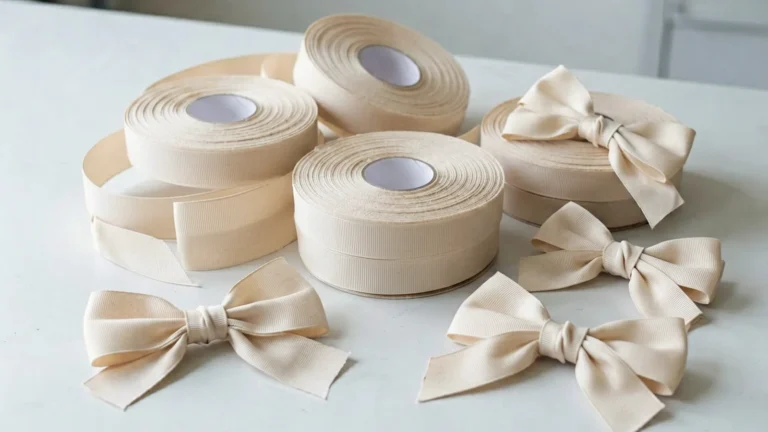 Grosgrain Ribbon Width Guide: Width choice for packaging and bows
Grosgrain Ribbon Width Guide: what to check on artwork files, print method, color target, and material before placing…
Explore guide
Grosgrain Ribbon Width Guide: Width choice for packaging and bows
Grosgrain Ribbon Width Guide: what to check on artwork files, print method, color target, and material before placing…
Explore guide
Leave a comment
Share a sourcing question or feedback on this guide. The Lude team reviews submissions before following up.