


Wholesale Foil Printed Ribbon: Use-Case Fit and RFQ Checklist
Buying foil printed ribbon: buyer use-case fit checklist? Verify artwork files, print method, and color target to reduce quoting errors and approval rework
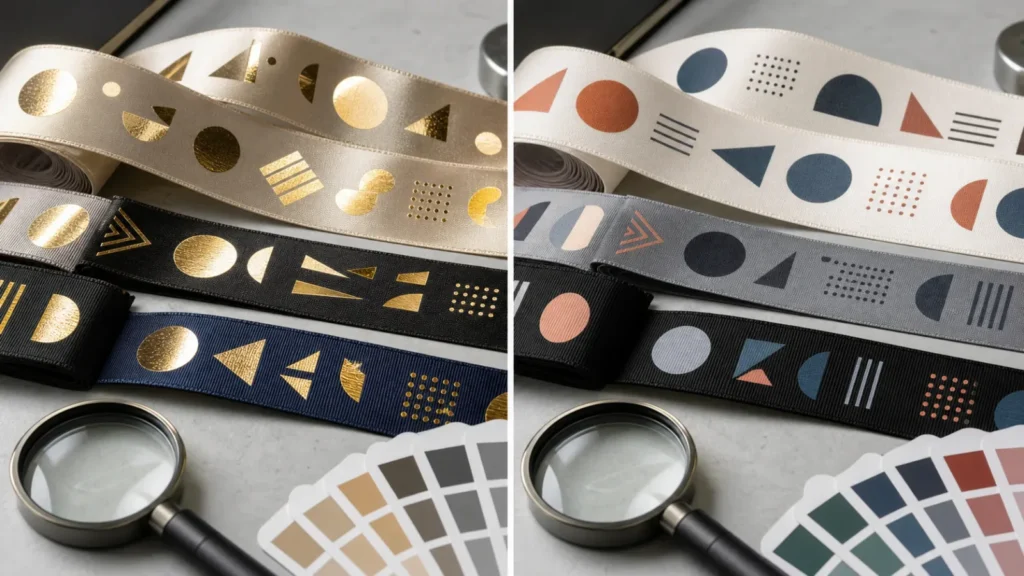
The sourcing record for foil printed ribbon: buyer use-case fit is incomplete until it supports this Translate an industry use case into packaging specs, risks, and RFQ questions.
Foil printing suits short text and simple shapes. Deciding whether your artwork qualifies comes before comparing any suppliers.
Direct answer: For foil printed ribbon: buyer use-case fit, buyers should translate an industry use case into packaging specs, risks, and RFQ questions.
Define the Buyer Requirement
| Application | Fit condition | Risk to avoid | Specification or proof | Follow-up |
|---|---|---|---|---|
| Retail packaging ribbon with metallic logo | Polyester satin ribbon with hot-stamped foil; foil adhesion tested on sample | Foil flakes off during handling or in transit | Sample approved for foil adhesion and abrasion resistance | Request a strike-off sample and run a rub test before bulk order |
| Event or ceremony ribbon with custom text | Grosgrain ribbon with foil print; edge finish prevents fraying | Text smudges or edges fray during cutting and tying | Proof of edge sealing and print registration on production rolls | Ask for a production sample and verify edge finish after cutting |
| Luxury gift wrap ribbon for high-end brand | Velvet ribbon with foil stamp; soft hand and consistent color | Foil cracks on velvet pile, or color varies between dye lots | Color standard (Pantone) and foil coverage sample | Approve a pre-production sample against your color standard |
| Seasonal or promotional ribbon with short lead time | Polypropylene or polyester ribbon with foil; standard width and roll length | Reorder delays due to foil stock or print setup | Confirmed lead time and reorder quantity by RFQ | Confirm reorder lead time and minimum order quantity with supplier |
Evaluate Define the Buyer Requirement as one decision scope. Use this application fit table as an approval sequence, not as a supplier claim. For retail packaging ribbon with metallic logo, a poor decision can mean foil flakes off during handling or in transit. Request written proof and compare it with the approved sample or specification.
For foil printed ribbon, preserve the retail packaging ribbon with metallic logo decision under one revision number: keep the supplier response, marked sample, approved specification, quotation, and approval owner together. If the evidence conflicts with the approved record, hold the quote, sample, or production release until the deviation is explained in writing. Once the buyer and designated technical authority have accepted the evidence, carry the signed Define the Buyer Requirement record into the purchase order, production handoff, shipment release, and later reorder review so every team works from the same baseline.
- Foil print must match approved color and placement. Pre-production sample with foil swatch and placement ruler. Supplier sample room Color shift or misregistered foil in bulk run. Approve sample in writing before production.
- Ribbon width and material meet spec. Spec sheet with width tolerance and material composition. Supplier QC or sales engineer Width variance affects packaging fit and presentation. Verify spec sheet against your packaging dimensions.
- Foil adhesion survives handling and bow tying. Abrasion and bend test results on sample. Supplier QC lab Foil flakes or cracks, ruining unboxing experience. Ask for test data or run a quick rub test on sample.
- Supplier can handle your order volume and schedule. Production capacity and lead time quote by quote request. Supplier sales or production planner Late delivery or inability to scale for reorders. Confirm lead time and capacity before PO.
- Quality checks are done on every batch. Inspection report or QC checklist per lot. Supplier QC team Defects slip through, causing returns or rework. Request sample inspection report or third-party check.
Compare the Available Routes
Start with a foil-strike sample on your exact ribbon width and substrate. A the approved tolerance strike proves whether the foil adhesion survives folding, tying, and heat sealing—before you commit to a production run. That sample is the verifiable record that separates a decorative ribbon from a packaging-grade failure.
Route Comparison Checklist
- Specs: Confirm foil type (metallic, holographic, or matte), ribbon material (satin, grosgrain, or polyester), and width tolerance (the buyer-approved tolerance). Ask for a strike test on your substrate.
- Production risk: Check for foil flaking on sharp folds and edge-to-edge coverage. Ask how the factory controls temperature and pressure during stamping.
- quote request/sample handoff: Send your Pantone foil reference, ribbon width, and a bend test requirement. Ask for a dated sample and a written specification sheet.
Use this checklist as a gate: if a supplier cannot provide a strike sample or a clear MOQ breakdown, move to the next route. For a deeper fit analysis, see our custom printed ribbon.
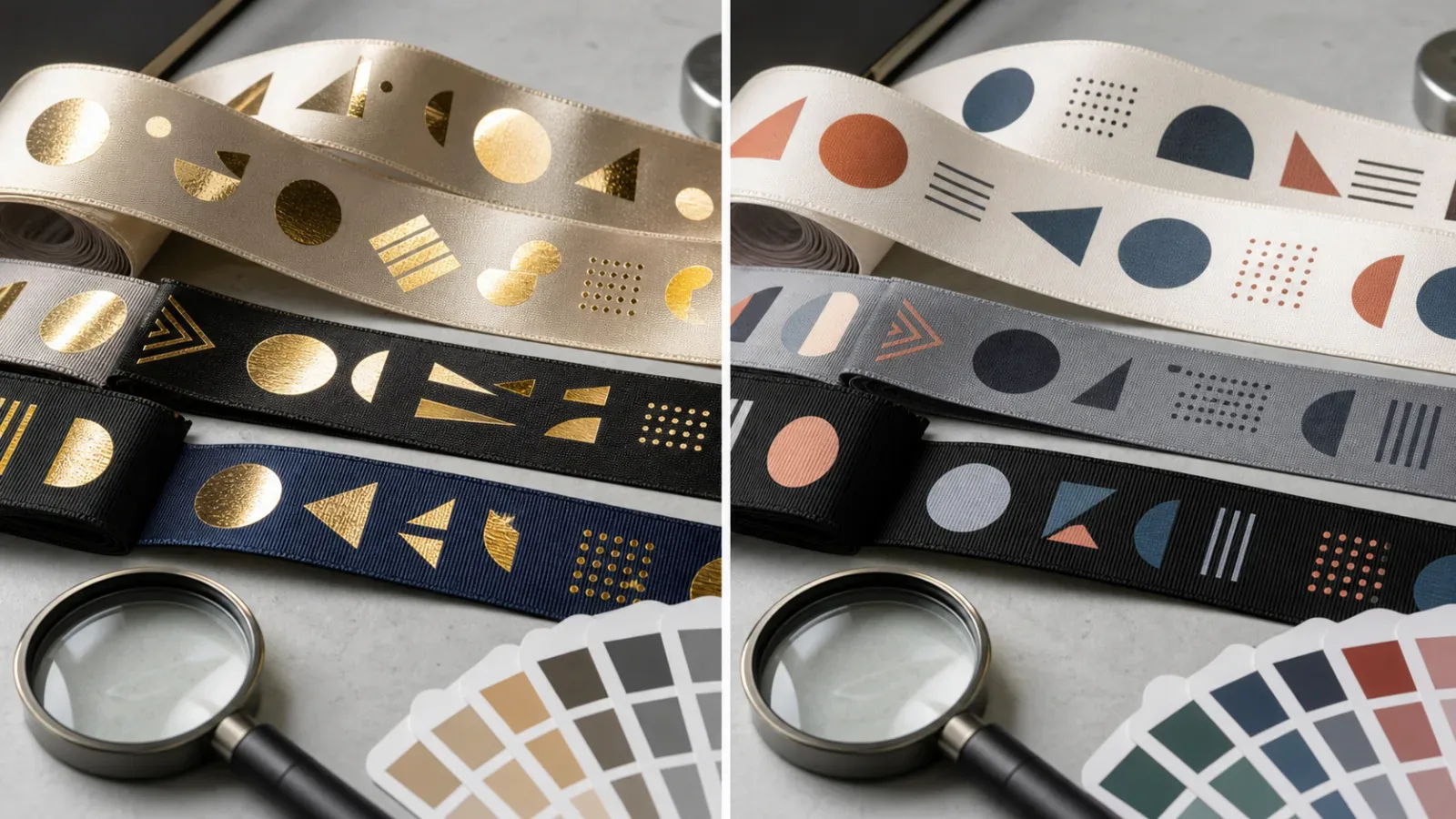
Review the Required Proof
For foil printed OEM and ODM ribbon development, use a release rule: approve only when the supplier evidence matches the written requirement.
- Retail packaging and event programs where foil printed ribbon must match a brand's metallic accent. Confirm foil type, ribbon width, substrate, and print placement on a strike sample. Foil adhesion and reflectivity vary by ribbon material; a mismatch breaks the visual effect. Request a foil-strike sample on your exact ribbon width and approve before bulk.
- High-volume ribbon orders for seasonal or promotional campaigns with tight deadlines. Verify the supplier's quality control process for foil adhesion, color consistency, and edge finish. Defects like flaking foil or misaligned prints become costly when repeated across thousands of yards. Ask for a pre-production sample and a QC checklist covering foil adhesion and print registration.
- Custom ribbon programs where order quantity drives unit cost and lead time. Confirm MOQ by material, print method, width, packing, and order schedule. MOQ varies with these factors; assuming a single number can delay your order or inflate cost. Get a written MOQ quote for your exact specifications before sample approval.
- Buyer follow-up after sample approval to keep production on schedule. Document the approved sample, artwork files, and any color or foil references. Without a clear approval record, bulk production can drift from the sample you signed off. Send a written approval with photos and reference codes to the supplier.
- Approval risk when foil printed ribbon is part of a larger packaging launch. Check that the supplier's proof and sample match your brand's color and finish standards. A rejected batch at final inspection can delay your launch and incur rework costs. Review a production sample against your brand guidelines and approve in writing.
Build the Decision Asset
When you compare foil printed ribbon quotes, the real risk is approving a sample that looks right but fails in production—color shift, foil flaking, or width variance. The control is a three-part decision asset: supplier proof, sample approval, and reorder control. Each check converts a vague promise into a measurable gate.
Supplier evidence to request
Ask for production evidence, not just a quote. Confirm the foil type (metallic, holographic, or matte) and the ribbon substrate (satin, grosgrain, or polyester) in writing. Request a pre-production strike on your exact width and material. Verify that the supplier can hold foil registration within a stated tolerance—typically the buyer-approved tolerance for edge-to-edge foil. If they cannot state a tolerance, treat that as a red flag.
Sample approval evidence
Use a structured sample sign-off. Test the foil adhesion by rubbing the printed area firmly; no flaking or transfer is acceptable. Measure the width at three points along a 10-meter length; deviation should be within the buyer-approved tolerance. Compare the color against a Pantone reference under daylight. Document the results on a sample approval form that both you and the supplier sign.
Reorder control records
Before placing a bulk order, define how reorders will be managed. Specify that the same foil batch and ribbon lot must be used for repeat orders, or require a new pre-production sample if the batch changes. Agree on a defect rate threshold (e.g., ≤a supplier-confirmed variance for visual defects) and a return/rework policy. This prevents drift in quality over time.
Use the table below to score each supplier against these checks before you commit to an quote request.
| Check | What to verify | Pass criteria |
|---|---|---|
| Supplier proof | Foil type, substrate, tolerance statement | Written confirmation and tolerance ≤the buyer-approved tolerance |
| Sample approval | Foil adhesion, width, color | No flaking, width the buyer-approved tolerance, color matches Pantone |
| Reorder control | Batch consistency, defect rate, policy | Same batch or new sample, ≤a supplier-confirmed variance defects, clear policy |
Once you have this decision asset, you can move to quote request with confidence. For more on supplier qualification, see our guide on bulk custom printed ribbon orders and custom ribbon wholesale supplier checks. If you are sourcing for gift or retail packaging, explore our gift and retail packaging ribbon solutions.
Prepare Comparable RFQ Inputs
At the quote request stage, the output that must exist before supplier comparison is a structured specification sheet that removes guesswork. Without it, quotes for foil printed ribbon vary in width tolerance, foil type, and packaging, making price comparisons meaningless.
Use the following checklist to standardize your quote request inputs:
- Substrate and width: Specify ribbon material (e.g., satin, grosgrain) and exact width in millimeters, including the buyer-approved tolerance.
- Foil type and finish: Define metallic color (gold, silver, custom) and finish (gloss, matte, holographic). Ask the supplier to verify the combination on the selected substrate.
- Print pattern and repeat: Provide artwork with exact repeat length, alignment, and edge-to-edge coverage. Indicate if the foil should cover the full width or only a stripe.
- Performance requirements: State the intended handling and end-use conditions, then turn each one into a sample check.
- Packaging and unit quantity: Specify roll length, inner core diameter, and packaging type (poly bag, box) so every quote uses the same packing basis.
When you send the same specification to multiple suppliers, you can compare like-for-like. For production risk, request a pre-production sample on your exact substrate and width before committing to bulk. Approve it against the written performance and appearance criteria rather than a visual impression alone.
For factory execution, ask suppliers to record the process settings they will control for the approved foil and ribbon combination. During quote request and sample handoff, include a written approval form that lists the agreed specifications and sample status. This creates a clear reference for bulk production and reorders.
For additional company context, see Lude Ribbon factory.
Source check: ISO 2859-1 sampling inspection standard; Custom Color Hot Stamping Foil Printing Ribbon Your Best Choice…; Buy Foil Printed Ribbon for All Events, Weddings & More.
In conclusion
The foil printed ribbon decision narrows to a single approval gate: the pre-production sample on your exact substrate and width. Before you shortlist a supplier, validate the spec against your end-use environment, then compare quotes that itemize material, print method, and minimum order. Approve only when the sample matches your artwork registration and color density, and the supplier can document consistent reproduction across production runs.
Document the approved sample, the agreed lead time, and the reorder risk in your quote request handoff. This checklist turns a decorative purchase into a repeatable sourcing decision, so the final approval rests on verified quality, not on the foil’s shine.
To request a quote for foil printed ribbon, use foil printed ribbon to confirm the final specification, quote assumptions, sample approval, QC evidence, approval risk, and supplier follow-up before bulk order.
Frequently Asked Questions
How should a b2b buyer match industry use case?
Match your use case by defining the ribbon’s end-use environment first. Check if the foil print must withstand repeated handling, bending, or heat exposure, and confirm the substrate width and material (satin, grosgrain, organza, or velvet) against your packaging or event application. Shortlist suppliers who can produce a foil-strike sample on your exact ribbon width and substrate, then verify that their standard production lead time of 15–20 business days after specification confirmation fits your schedule; add artwork review and shipping time when planning.
Compare cost and minimum order by requesting a quote that itemizes material, print method, width, packing, and order schedule, since minimum order is negotiable but must be confirmed per those variables. Document your use-case fit checklist with measurable criteria—such as foil adhesion, color match, and edge definition—and use it to score each supplier before sending an quote request. Approving the wrong structure or supplier proof can create quality, cost, or delivery problems.
Which supplier proof should buyers request for foil printed ribbon?
Request proof that the supplier can consistently reproduce the foil print on your specified ribbon width and substrate. Ask for a foil-strike sample on your exact material and width, and verify that the sample matches your approved artwork in color, placement, and adhesion. Check that the supplier documents their QC process for foil print defects, such as flaking, smudging, or misalignment, and confirm they can provide a production sample before bulk runs.
For supplier risk, ask for references or case studies from similar industries—such as gift packaging, events, or retail—and confirm their standard lead time of 15–20 business days after specifications are confirmed. Include a sample approval step in your quote request, and verify that the supplier can handle reorders with consistent quality by defining reorder terms in your contract.
What should buyers lock before approving buyer use-case fit checklist?
Lock the specification details before approving the checklist: ribbon width, material type, print method (foil stamping), foil color, artwork file format, and any finishing requirements like edge sealing or cutting. Confirm the minimum order and cost per unit with the supplier, since these depend on material, print method, width, packing, and order schedule—ask for a written quote that breaks down these variables. Also confirm the lead time of 15–20 business days after specifications are confirmed, and add buffer for artwork review and sample approval.
Verify supplier risk by requesting a pre-production sample on your exact substrate and width, and check that their QC process includes foil adhesion and color consistency checks. Document your approval criteria in the checklist, and after sample approval, send a formal quote request that includes your specification sheet, sample reference, and reorder terms to ensure consistent quality on bulk orders.
quote request handoff: Send Specs for Review.
Keep exploring
Recommended buyer guides
 Grosgrain Ribbon Bows: Packaging Buyer Checklist
Use this grosgrain ribbon bows checklist to confirm structure, finish, packing, MOQ, samples, and RFQ details before bulk…
Explore guide
Grosgrain Ribbon Bows: Packaging Buyer Checklist
Use this grosgrain ribbon bows checklist to confirm structure, finish, packing, MOQ, samples, and RFQ details before bulk…
Explore guide
 Christmas Ribbon Bows for Retail Packaging: Seasonal Order Checklist
A buyer's checklist for Christmas Ribbon Bows for Retail Packaging — covering sample approval, color tolerance, QC checks,…
Explore guide
Christmas Ribbon Bows for Retail Packaging: Seasonal Order Checklist
A buyer's checklist for Christmas Ribbon Bows for Retail Packaging — covering sample approval, color tolerance, QC checks,…
Explore guide
 Wholesale Grosgrain Ribbon Rolls: Specs, Roll Length, and RFQ Checks
Buying Grosgrain Ribbon Rolls? Verify sample approval, color tolerance, QC checks, and material to reduce quoting errors and…
Explore guide
Wholesale Grosgrain Ribbon Rolls: Specs, Roll Length, and RFQ Checks
Buying Grosgrain Ribbon Rolls? Verify sample approval, color tolerance, QC checks, and material to reduce quoting errors and…
Explore guide
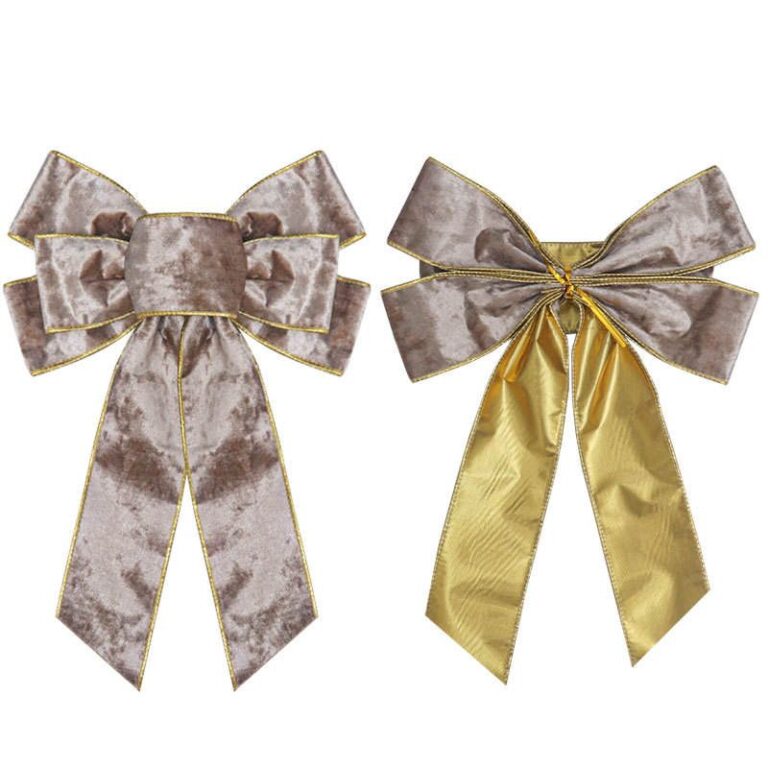 Pre-Tied Bows for Retail Packaging: When They Reduce Labor and Rework
See when pre-tied bows reduce retail packaging labor, improve consistency, and simplify bulk packing, SKU planning, and reorders
Explore guide
Pre-Tied Bows for Retail Packaging: When They Reduce Labor and Rework
See when pre-tied bows reduce retail packaging labor, improve consistency, and simplify bulk packing, SKU planning, and reorders
Explore guide
Leave a comment
Share a sourcing question or feedback on this guide. The Lude team reviews submissions before following up.