


Grosgrain Ribbon Width Guide: Width choice for packaging and bows
Grosgrain Ribbon Width Guide: what to check on artwork files, print method, color target, and material before placing a ribbon order
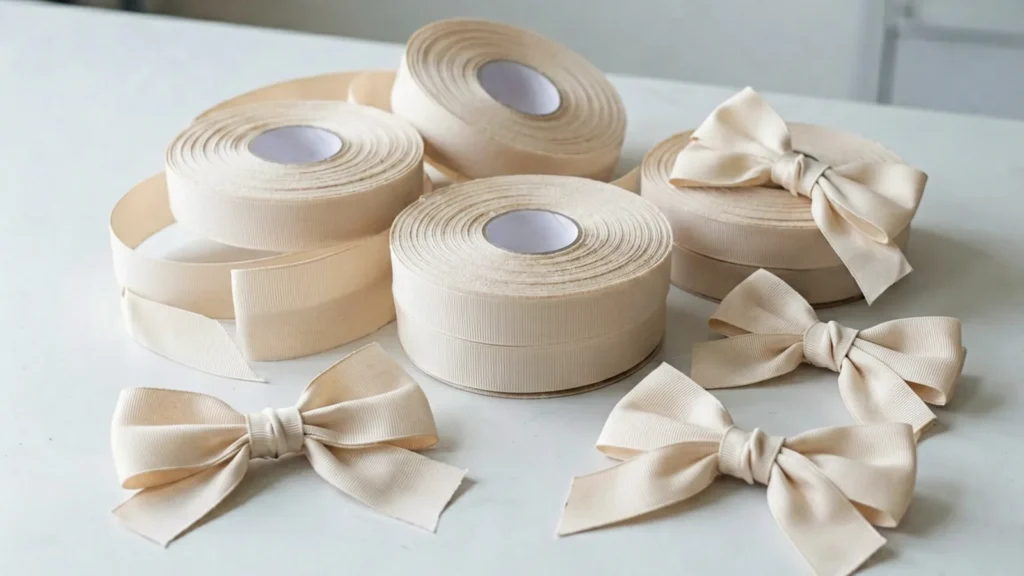
Before you can map product choices to real applications, usage scenarios, buyer constraints, and project outcomes, the specification has to say enough for a supplier to price the same job you have in mind.
Grosgrain width is chosen against the box edge and against the bow loop, and those two often want different numbers.
Direct answer: For grosgrain ribbon width, buyers should map product choices to real applications, usage scenarios, buyer constraints, and project outcomes.
When grosgrain ribbon width guide is the right size or format
Width is woven, not cut. A grosgrain tape leaves the loom at its finished width, which is why a supplier will quote some widths from stock and treat others as a separate production run. Asking for a width because it looks right on a drawing is how a program picks up a cost it never planned for.
| Width band | Best fit | Trade-off | Verification check before ordering |
|---|---|---|---|
| Narrow | Small retail cartons, tags, and neck ties where the bow must stay in proportion | Loops look thin on anything larger | Tie a sample on the actual pack and judge the proportion |
| Mid | General gift and retail banding, the width most often held in stock | Rarely the most striking option on a display | Confirm it is a stock width before pricing the alternatives |
| Wide | Large boxes, hampers, and display work that must read from a distance | Yardage per bow rises steeply with width | Compare cost per finished bow rather than per yard |
| Non-standard | A brand specification that no stock width matches | Treated as its own production run, with its own minimum | Ask what changes in the quote before committing to the figure |
The last row is the one worth checking first. If the width is not one the supplier already weaves, the quantity question changes shape entirely, and the risk of discovering that after design sign-off is a specification you cannot afford to keep.
Width, roll length, material, and finish choices
Four specifications decide what a grosgrain width actually costs to run, and each has a check that belongs in sample approval rather than in an email. Agree all four in writing before sampling, because changing one afterwards restarts the approval instead of adjusting it. Width in particular is not a free variable: it is set on the loom, so moving it by a small amount can move the program from a stock item to a scheduled production run.
| Spec | Acceptable range to agree | Risk if left open | Verification check | Buyer follow-up |
|---|---|---|---|---|
| Finished width | The exact width and the tolerance either side | Yardage and price both drift | Measure the returned sample across the rib | Write both figures into the RFQ |
| Rib density at that width | Named against a reference sample | Bows read differently between widths | Compare two widths tied side by side | Sign one reference per width |
| Roll length and core | Yards per roll and core diameter | Offcut waste rises on short rolls | Check against the cutting plan | Confirm packing in writing |
| Face and finish | Plain, printed, or coated | Print behaves differently across widths | Review artwork at the production width | Approve the proof at that width |
Where the face carries artwork, review it at the width you will actually run. A design proofed on a wider tape and produced on a narrower one loses detail that no amount of press adjustment recovers, which is why custom printed ribbon keeps artwork approval tied to a named width.
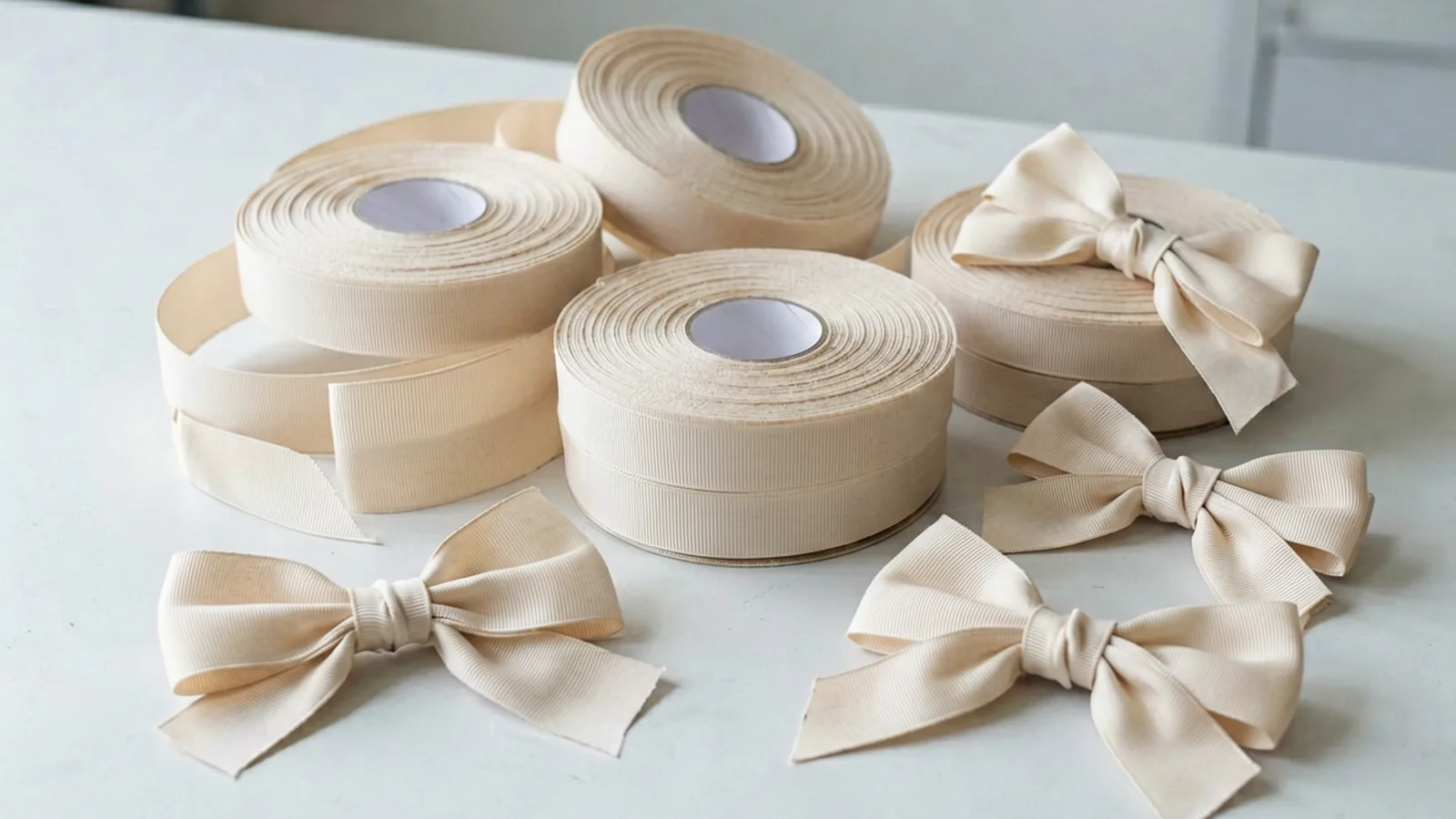
Printing, bow-making, and packing limits
Three limits move with width, and a quote should name them rather than let the buyer discover them. Leaving any of the three open is the risk that turns a width change into a repricing. Two are production limits; the third is a lead time question that decides whether a seasonal date holds.
| Quote input | Question for the supplier | Buyer follow-up |
|---|---|---|
| Printing across the width | Which print method is used at this width, and what minimum order quantity applies | Printed ribbon starts at 3,000 yards per design, so treat each width as its own program |
| Bow forming | At what finished diameter is this width formed, and is forming in-house | Ready-made bows and award ribbons start at 1,000 pieces per style |
| Packing and carton fill | How many formed bows per inner carton at this width | Check the freight assumption before comparing unit prices, and confirm where inspection happens |
Lead time sits outside all three. Standard production runs 15 to 20 business days once specifications are approved, and artwork sign-off, sampling, and courier time are counted separately. A buyer working back from a seasonal delivery date should book those steps on their own; folding them into the production window is the usual reason a width change turns into a missed date. Where a width is not already woven, the development work runs through OEM and ODM ribbon development rather than a catalogue order.
MOQ, sample, and reorder planning
Five checks belong in the approval record for a width decision, because each returns a result that can be written down rather than argued about later.
- Measured width against the specification. Measure the returned sample across the rib rather than reading the label. A width quoted nominally and delivered slightly under changes the yardage per bow and the price with it.
- Bow proportion at the production width. Tie a sample on the actual pack. A width that reads well flat can look wrong once it is formed, and the defect is a design problem rather than a quality one.
- Rib appearance across widths. If the program uses two widths, compare them tied. Rib density does not always scale, and a mismatch is visible where both sit on the same display.
- Edge condition after handling. Handle a cut length and inspect the edge. Wider tapes show a poor cut more readily than narrow ones.
- Reorder reference. Keep the approved piece with its lot marking. Plain stock ribbon starts at 1,500 yards from existing colors and widths, so a reorder at the same width needs something physical to match against.
For gift and retail programs that run more than one width across a range, these five sit inside gift and retail packaging ribbon solutions, where sampling and approval are handled as a record rather than an exchange of assurances.
Quote checklist for this specification
The questions below are the ones that change a width quote. Sent together they produce prices that can be compared; sent as a width alone they produce prices built on different assumptions. The risk of leaving any of them open is a quote that is repriced after the order is placed.
- Is this width one you already weave? A stock width and a scheduled width carry different minimums and different lead times. Ask directly rather than inferring it from the price.
- What tolerance applies at this width? Ask for the figure the supplier is willing to hold, then measure the sample against it. A tolerance agreed in writing is what an inspection can later use.
- What finished bow diameter does this width form to? Request a formed sample at the intended diameter. A supplier who sends the ribbon out for forming carries a schedule they do not control, and that shows up as a delivery risk rather than a quality one.
- How many yards per roll at this width? Roll length changes with width. Give your cutting plan and ask which roll length leaves the least offcut.
- Where does quality inspection happen for this run? Ask for an inspection record from a comparable width rather than a general certificate.
Ask for one pre-production sample at the production width, with its lot marking intact, and approve it in writing. That signed piece is what a later inspection is measured against, and on a width decision it settles the two arguments that actually occur: measured width and bow proportion.
Source check: ISO 2859-1 sampling inspection standard; Custom Grosgrain Ribbon – Wrapping Guide – CUNY Pressbooks Netw…; Grosgrain Ribbon for Packaging Programs: 3 B2B Cases on Cost, L….
In conclusion
The output of a width decision is a written figure with a tolerance and a route attached, not a preference. Settle whether the width is one the supplier already weaves, because that answer sets the minimum, the lead time, and how much room there is to adjust later.
Where the program can sit on a stock width, it usually should; the saving is larger than a per-yard comparison suggests once minimums and scheduling are counted. Where the brand specification genuinely needs its own width, the route is grosgrain ribbon quoted as a production run, and the risk of treating it as a catalogue item is a cost that appears at order confirmation.
Send the width, the tolerance, and the cutting plan to two or three suppliers and ask each for a formed sample at the intended bow diameter, with its lot marking intact. Measure what comes back across the rib, verify the proportion on the real pack, approve in writing, and keep the piece for the reorder.
Grosgrain ribbon width FAQ
What should buyers confirm before ordering Grosgrain Ribbon Width Guide?
Confirm the exact width and the tolerance, whether that width is already woven or scheduled as its own run, the rib reference at that width, and the yards per roll. Then tie a sample on the actual pack. Width is woven rather than cut, so a small change can move the program onto a different production route.
How should buyers compare MOQ, lead time, and quote terms?
Compare by production route rather than as one figure. Printed ribbon, for example, starts at 3,000 yards per design and each width counts as its own program, while stock shades and formed pieces carry separate thresholds. Production then runs 15 to 20 business days after approval, with artwork sign-off and sampling outside that window.
What sample, quality, or supplier checks reduce risk?
Measure the sample across the rib instead of reading the label, tie it on the real pack to judge proportion, and compare two widths side by side if the range uses both. Keep the approved piece with its lot marking so the reorder has a physical reference.
RFQ handoff: Send Specs for Review.
Keep exploring
Recommended buyer guides
 Grosgrain Ribbon Bows: Packaging Buyer Checklist
Use this grosgrain ribbon bows checklist to confirm structure, finish, packing, MOQ, samples, and RFQ details before bulk…
Explore guide
Grosgrain Ribbon Bows: Packaging Buyer Checklist
Use this grosgrain ribbon bows checklist to confirm structure, finish, packing, MOQ, samples, and RFQ details before bulk…
Explore guide
 Christmas Ribbon Bows for Retail Packaging: Seasonal Order Checklist
A buyer's checklist for Christmas Ribbon Bows for Retail Packaging — covering sample approval, color tolerance, QC checks,…
Explore guide
Christmas Ribbon Bows for Retail Packaging: Seasonal Order Checklist
A buyer's checklist for Christmas Ribbon Bows for Retail Packaging — covering sample approval, color tolerance, QC checks,…
Explore guide
 Wholesale Grosgrain Ribbon Rolls: Specs, Roll Length, and RFQ Checks
Buying Grosgrain Ribbon Rolls? Verify sample approval, color tolerance, QC checks, and material to reduce quoting errors and…
Explore guide
Wholesale Grosgrain Ribbon Rolls: Specs, Roll Length, and RFQ Checks
Buying Grosgrain Ribbon Rolls? Verify sample approval, color tolerance, QC checks, and material to reduce quoting errors and…
Explore guide
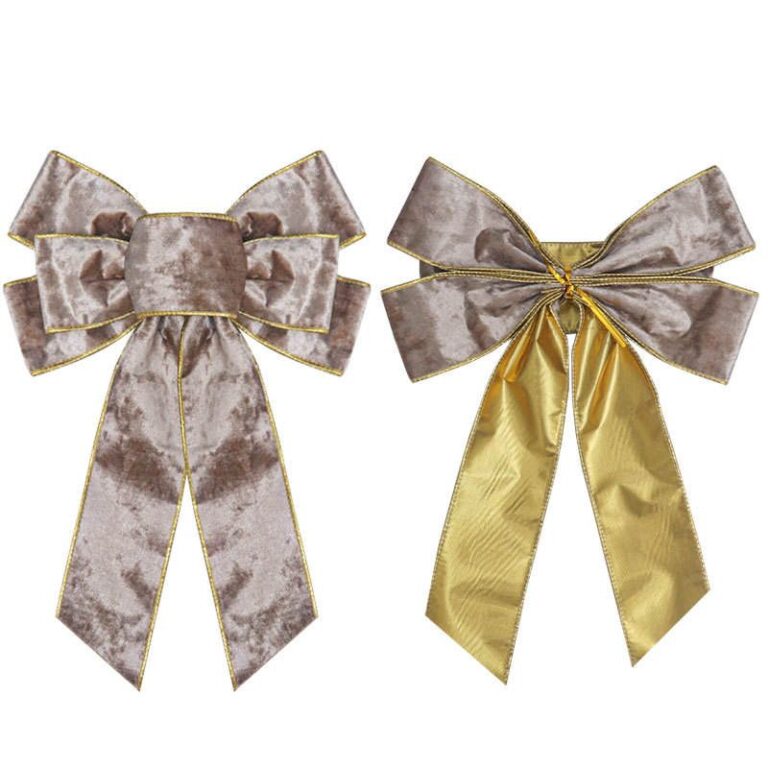 Pre-Tied Bows for Retail Packaging: When They Reduce Labor and Rework
See when pre-tied bows reduce retail packaging labor, improve consistency, and simplify bulk packing, SKU planning, and reorders
Explore guide
Pre-Tied Bows for Retail Packaging: When They Reduce Labor and Rework
See when pre-tied bows reduce retail packaging labor, improve consistency, and simplify bulk packing, SKU planning, and reorders
Explore guide
Leave a comment
Share a sourcing question or feedback on this guide. The Lude team reviews submissions before following up.