


Small Ribbon Bows: Small bow order fit
Shortlist Small Ribbon Bows suppliers by sample approval, color tolerance, QC checks, and bow shape. See which options fit your project specs and order

Small ribbon bows need a written specification before the buyer can map product choices to real applications, usage scenarios, buyer constraints, and project outcomes; otherwise suppliers may quote different product and approval assumptions.
Small bows carry a large labor share, so design often moves the price more than material does.
Direct answer: For small ribbon bows, lock measurable specifications, application constraints, supplier evidence, and the next approval action before comparing options.
When small ribbon bows fit brand packaging or event projects
| Application | Fit condition | Risk to avoid | Specification or proof | Follow-up |
|---|---|---|---|---|
| Gift box lid accent for retail packaging | Pre-tied small ribbon bow, buyer-approved narrow ribbon width, satin or grosgrain construction | Bow size mismatch with box lid depth or adhesive surface area | Confirm bow loop diameter and tail length against lid dimensions; request a physical sample for fit test | Submit box lid dimensions and preferred adhesive method to RFQ for sample approval |
| Event favor tie or place card detail | Custom printed small ribbon bow with event logo or date, buyer-approved narrow ribbon width, polyester or satin | Printed artwork distortion on narrow bow loops or inconsistent color across production lots | Artwork proof on bow shape, color match standard (Pantone reference), and print registration tolerance | Supply vector artwork and Pantone code; request a strike-off sample before bulk production |
| Small product hang tag or bottle neck accent | Pre-tied organza or sheer small ribbon bow, buyer-approved narrow ribbon width, with wire edge for shape retention | Wire edge poking through packaging or bow losing shape during transit | Wire gauge specification and bow shape retention test after simulated shipping vibration | Request a wire-edge bow sample and run a 24-hour shape retention check in your packaging |
| Bulk retail display for seasonal promotions | Ready-made small ribbon bow, buyer-approved narrow ribbon width, stock color satin, packed in polybag with header card | Bow tangling during packing or color variation between production runs | Packing method (individual vs. bulk), color lot tolerance, and bow count per bag | Confirm packing specification and request a pre-production sample from the intended production lot |
For gift box lid accent for retail packaging, a poor decision can mean bow size mismatch with box lid depth or adhesive surface area. Request written proof and compare it with the approved sample or specification.
Preserve the gift box lid accent for retail packaging decision under one revision number: keep the supplier response, marked sample, approved specification, quotation, and approval owner together. If the evidence conflicts with the approved record, hold the quote, sample, or production release until the deviation is explained in writing. Once the buyer and designated technical authority have accepted the evidence, carry the signed approval record into the purchase order, production handoff, shipment release, and later reorder review so every team works from the same baseline.
Best-fit buyer scenarios
Small ribbon bows work best when the application requires a consistent, pre-tied accent that saves labor and ensures uniform appearance. Common fits include retail gift boxes, event favors, product hang tags, and seasonal display packaging. The buyer should match bow width, material, and tail length to the package dimensions and attachment method before ordering.
Cases where another ribbon option is safer
If the packaging requires a bow that must hold a heavy tag or withstand repeated handling, a pre-tied small bow may not provide enough strength. For high-volume automated packaging lines, loose ribbon spools or die-cut ribbon strips often feed more reliably than pre-tied bows. Evaluate the production line speed and attachment method before committing to bows.
Material, finish, and format decisions
Before approving a bow program, lock the ribbon material, finished loop and tail dimensions, attachment method, and packing clearance. Ask the supplier to return a marked sample plus a written specification so appearance and fit can be checked before bulk production.
- Supplier cannot match your bow dimensions and ribbon material: Bows that are too large or too small for your packaging cause fit failures and returns. Send a dimensioned drawing or sample box with your RFQ and ask for a pre-production sample. A sample bow made from your specified ribbon material and width, measured against your drawing. Compare the sample bow to your packaging and approve or request a size adjustment before bulk production.
- No color approval step for custom printed ribbon: Color variation between your artwork and the finished bow leads to brand inconsistency and rejected shipments. Require a digital color proof and a physical strike-off before the supplier cuts any ribbon. A signed color approval form and a physical ribbon swatch under your store lighting. Document the approved color reference and attach it to the purchase order as a quality benchmark.
- Supplier cannot provide a packing test for the finished bows: Bows that crush or shift in transit arrive flattened and unusable, increasing your replacement cost. Ask the supplier to pack a sample bow in your exact carton and ship it to you for inspection. A photo or video of the packed bow after a simulated shipping drop test. Approve the packing method in writing and include it as a line item in the production spec.
- No documented QC check for bow loop consistency: Uneven loops make your bows look cheap and unprofessional, damaging your brand perception. Ask the supplier to describe their loop-size gauge and the pass/fail tolerance they use on the line. A QC record showing loop measurements from the last three production runs of similar bows. Add a loop-consistency clause to your purchase order and request a random sample from the first production samples.
- Supplier cannot confirm MOQ for your bow format and custom printed ribbon: Ordering below the supplier's minimum triggers a price increase or a delayed production slot. State your exact bow quantity and custom printed ribbon yardage in the RFQ and ask for a written MOQ confirmation. A signed quote that lists the MOQ in pieces and yards for your specific bow style and ribbon type. If your order is below the minimum order, negotiate a trial run or ask about stock ribbon options that meet your volume.
How material choice affects appearance and handling
Satin ribbon gives the finished bows a glossy, elegant finish but can be slippery to tie. Grosgrain offers a matte, textured surface that holds shape better for packaging. Organza is sheer and lightweight, ideal for gift boxes. Velvet provides a soft, plush look but may crush during shipping. Match the material to your application to avoid handling or appearance issues.
Application and display requirements
| Option | Best fit | Trade-off | Risk to avoid | Verification | Follow-up |
|---|---|---|---|---|---|
| Wire-edge ribbon bow for shaped, crush-resistant display | Wine bottles, premium cosmetic sets, or open-shelf displays where the bow must hold a sculpted form | Wire edge adds material cost and may require manual shaping; less suitable for automated bow-tying machines | Exposed wire ends can scratch packaging or injure handlers if not trimmed or capped | Inspect wire ends on 10 random samples; confirm trim length tolerance in the QC checklist | Document wire-end trim specification in the purchase order and review during first-article inspection |
| Organic cotton ribbon bow, unbleached or dyed | Eco-conscious cosmetic or gift packaging where the fibre specification must match a sustainability brief | No third-party organic certification available; colour range narrower than polyester; higher per-yard cost | Buyer may assume certified organic status; mislabeling could trigger compliance issues in regulated markets | Request the supplier's fibre purchase invoice and a signed declaration of organic cotton origin | Route certification questions to the RFQ; do not claim GOTS or OEKO-TEX in packaging copy |
| OEM and ODM ribbon development for custom bow size, colour, and construction | Large programs requiring a proprietary bow design, matched to a specific box or display fixture | Development sample takes 7–14 business days after specs and artwork; minimum order of 1,000 pieces per style/colour | Spec changes after sample approval can reset the production queue and delay delivery | Sign a written spec sheet with loop size, tail length, and ribbon width before sample cutting | Submit a design brief with target dimensions and request a development sample timeline |
For wire-edge ribbon bow for shaped, crush-resistant display, a poor decision can mean exposed wire ends can scratch packaging or injure handlers if not trimmed or capped. Ask the supplier to inspect wire ends on 10 random samples; confirm trim length tolerance in the qc checklist.
Preserve the wire-edge ribbon bow for shaped, crush-resistant display decision under one revision number: keep the supplier response, marked sample, approved specification, quotation, and approval owner together. If the evidence conflicts with the approved record, hold the quote, sample, or production release until the deviation is explained in writing. Once the buyer and designated technical authority have accepted the evidence, carry the signed approval record into the purchase order, production handoff, shipment release, and later reorder review so every team works from the same baseline.
Retail, gift, cosmetic, wine, holiday, award, or event details
The end-use environment determines the bow's required loop size, ribbon width, and material finish. A glossy satin bow suits cosmetic cartons, while a matte organic cotton bow fits eco-friendly gift boxes. Wine neck tags need a printed bow that stays legible after handling. Holiday and award programs often require a consistent colour across thousands of units, so a sealed master sample is essential before bulk production begins.
Handling, storage, and presentation risks
Pre-tied bows compress during packing and may not recover their shape on the shelf. Store finished bows in a dry, temperature-stable area to prevent satin from yellowing or wire from rusting. For open-display packaging, verify that the bow does not shed fibres or lose colour under retail lighting. A transit test on a filled carton reveals whether the bow stays intact through the supply chain.
MOQ, lead time, and sample planning
For small ribbon bows, build the quote request around the minimum order, your forecasted order quantity, and inventory budget. Match every listed buyer input to written supplier confirmation, approval evidence, and the risk that would hold the quote.
- Check the minimum order against your forecasted order quantity and inventory budget. minimum order determines whether the supplier can produce at your volume without premium pricing or leftover stock. For ready-made bows, the minimum order is 1,000 pieces per style and color; custom printed ribbon requires 3,000 yards per design. You commit to a volume you cannot sell, or the supplier refuses a short run. Shortlist suppliers whose minimum order aligns with your first order and reorder cycle.
- Identify the primary cost driver: material, custom printing, or bow assembly complexity. Cost drivers affect unit price and reorder economics; a small spec change can raise the price sharply. Wire-edge ribbon bows cost more than flat ribbon bows due to additional forming labor. You approve a design that is too expensive to reorder at your target margin. Request a cost breakdown per component and confirm which variables are negotiable at volume.
- Confirm the quality control checkpoints: sample approval, color tolerance, and packing inspection. QC gates catch defects before bulk shipment; missing checks lead to inconsistent bows and returns. A pre-production sample must match the approved color standard under buyer-approved viewing conditions before production starts. Bulk bows arrive with color variation, loose loops, or damaged packaging that you cannot sell. Document the QC checklist in the purchase order and schedule a mid-production inspection.
What to confirm before ordering
Before sending an quote request for small ribbon bows, document the exact bow dimensions, ribbon width, material, and color target. These specifications lock the tooling and material cost. For gift and retail packaging ribbon solutions solutions, also confirm the minimum order for your chosen style and lead time including sample approval. Missing these details leads to mismatched quotes and project delays.
How to avoid last-minute project delays
To avoid last-minute delays, verify the lead time includes artwork review, sample approval, and shipping. Standard production runs 15–20 business days after spec confirmation, but custom colors or complex bows require longer. Always request a written schedule and compare it against your launch date. A pre-production sample approval gate prevents surprises during bulk production.
Buyer checklist before RFQ
- Confirm bow dimensions and ribbon width match the intended packaging or display use. A bow that is too large or too small for the box or garment tag will cause rework or waste. Compare the supplier's spec sheet against your packaging cavity or display fixture drawing. Bows that do not fit require costly re-cutting or replacement, delaying shipment. Send a dimensioned drawing or sample box with the quote request for the supplier to confirm fit.
- Verify the bow construction type: pre-tied, wire-edge, or hand-tied. Construction determines shape retention, crush resistance, and packing method. Request a construction sample and a packing test: compress the bow, then check recovery. Pre-tied bows may flatten in transit and not recover, leading to customer complaints. Document the required construction type in the quote request and approve a packing trial before bulk.
- Check the ribbon material and color fastness against the end-use environment. Satin, grosgrain, and velvet each react differently to light, moisture, and handling. Ask for a color-fastness test report or run a simple rub test on the sample. Color bleeding or fading during storage or use can ruin the product appearance. Specify the required material and fastness level in the quote request; approve only after sample test.
- Inspect the bow's stitching and glue points for loose ends or weak bonds. Loose threads or failing glue cause bows to unravel during packing or unboxing. Pull gently on each tail and loop of the sample; check for any separation or fraying. Unraveled bows are unsellable and increase return rates. Document acceptable stitch count and glue type in the quality agreement; reject any sample with loose ends.
Project details to send the supplier
Before sending the quote request, gather the exact bow dimensions, ribbon material, color target (PMS or hex code), construction method, and packing spec. Include your end-use environment—gift box, garment tag, or event decoration—so the supplier can match the bow's shape retention and color fastness to your real conditions.
Sample approval and repeat-order controls
Before approving the first sample, run a packing test to confirm the bow holds its shape after compression. Document the approved sample with photos and measurements. For repeat orders, require the supplier to send a pre-production sample matching the original approval. This avoids drift in ribbon color, bow size, or stitch quality over time.
In conclusion
For small ribbon bows, the final approval comes down to verifying that your specification sheet, cost expectations, and supplier’s production capabilities are aligned before any commitment. Check the minimum order against your forecast, compare the lead time against your launch calendar, and document the exact bow dimensions, ribbon material, color target, and packing requirements in your quote request. Once you have shortlisted a supplier, request a pre-production sample to validate the bow shape, loop consistency, and ribbon color accuracy before approving the bulk run.
To request a quote for small ribbon bows, use pre-tied bows to confirm the final specification, quote assumptions, sample approval, QC evidence, approval risk, and supplier follow-up before bulk order.
Small ribbon bows FAQ
What should buyers confirm before ordering Small Ribbon Bows?
Confirm the bow dimensions, ribbon material (satin, grosgrain, organza, or velvet), color target, and whether you need a wire edge for shape retention. Check the minimum order against your forecast—ready-made bows typically require a minimum quantity per style and color, so verify that number in the quote request. Also confirm the lead time includes artwork review, sample approval, and shipping, not just production days.
How should buyers compare MOQ, lead time, and quote terms?
Compare quotes by documenting the exact bow specifications and quantity first, then request pricing per piece and the minimum order per style/color. Ask whether the minimum order can be split across colorways or if it applies per design. Confirm the lead time in business days after specification approval, and verify if sample production and courier time are separate. Document all terms in the quote request to avoid surprises at reorder.
What sample, quality, or supplier checks reduce risk?
Request a pre-production sample to check bow shape, loop consistency, ribbon color accuracy, and wire-edge retention if applicable. Run a packing test to confirm the bow holds its form during transit. Verify the supplier’s social audit or quality management approach—ask for their amfori BSCI rating or equivalent. After sample approval, document the approval in writing and confirm the bulk production lead time starts from that date.
Keep exploring
Recommended buyer guides
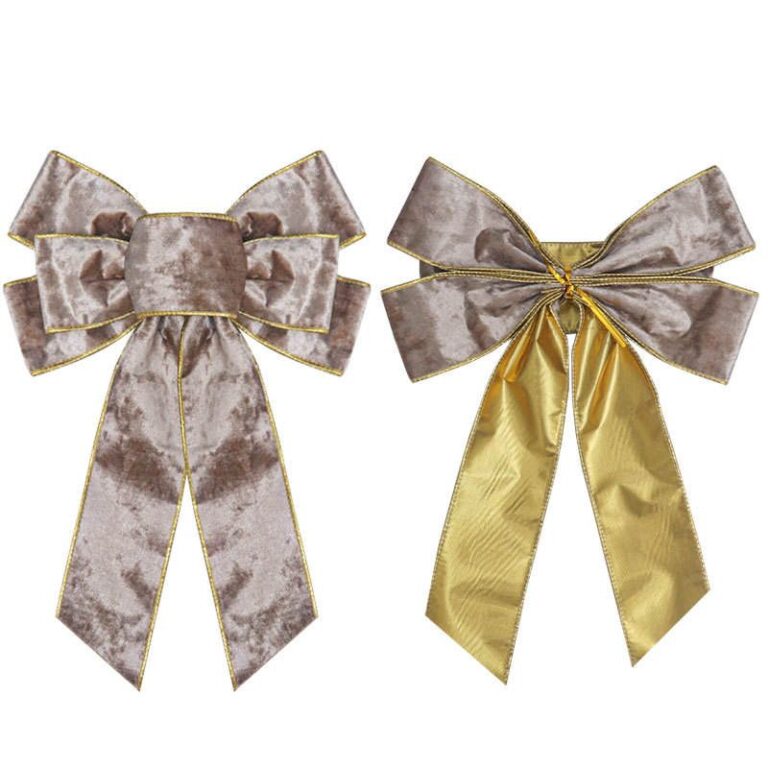 Pre-Tied Bows for Retail Packaging: When They Reduce Labor and Rework
See when pre-tied bows reduce retail packaging labor, improve consistency, and simplify bulk packing, SKU planning, and reorders
Explore guide
Pre-Tied Bows for Retail Packaging: When They Reduce Labor and Rework
See when pre-tied bows reduce retail packaging labor, improve consistency, and simplify bulk packing, SKU planning, and reorders
Explore guide
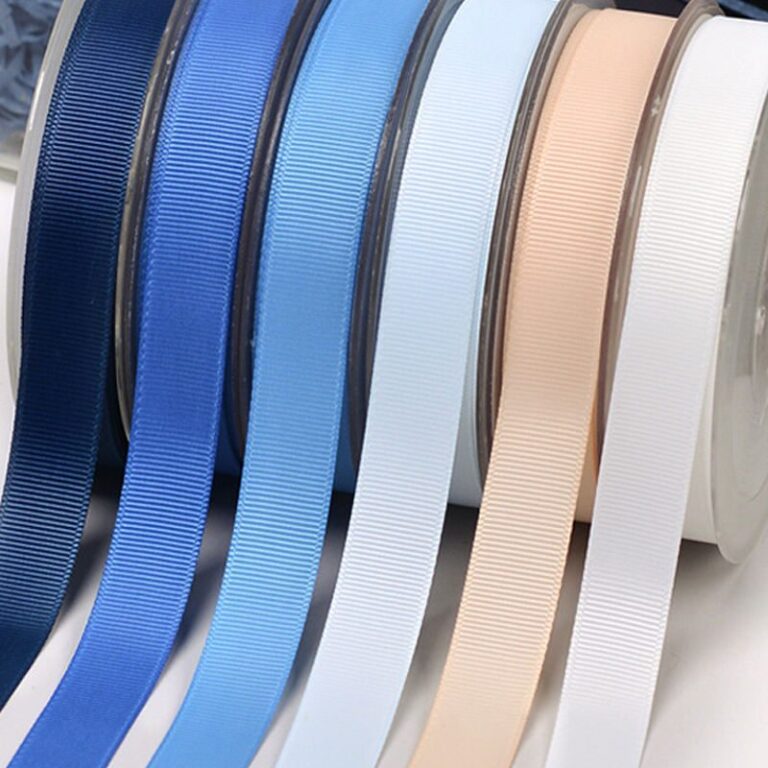 Wholesale Grosgrain Ribbon Rolls: Specs, Roll Length, and RFQ Checks
Buying Grosgrain Ribbon Rolls? Verify sample approval, color tolerance, QC checks, and material to reduce quoting errors and…
Explore guide
Wholesale Grosgrain Ribbon Rolls: Specs, Roll Length, and RFQ Checks
Buying Grosgrain Ribbon Rolls? Verify sample approval, color tolerance, QC checks, and material to reduce quoting errors and…
Explore guide
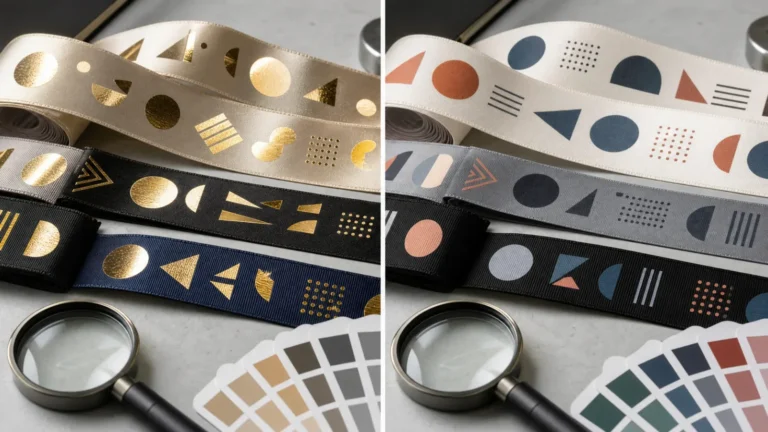 Wholesale Foil Printed Ribbon: Use-Case Fit and RFQ Checklist
Buying foil printed ribbon: buyer use-case fit checklist? Verify artwork files, print method, and color target to reduce…
Explore guide
Wholesale Foil Printed Ribbon: Use-Case Fit and RFQ Checklist
Buying foil printed ribbon: buyer use-case fit checklist? Verify artwork files, print method, and color target to reduce…
Explore guide
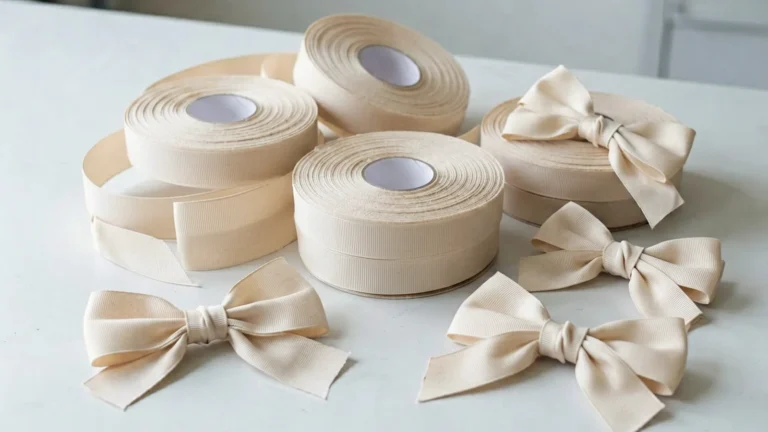 Grosgrain Ribbon Width Guide: Width choice for packaging and bows
Grosgrain Ribbon Width Guide: what to check on artwork files, print method, color target, and material before placing…
Explore guide
Grosgrain Ribbon Width Guide: Width choice for packaging and bows
Grosgrain Ribbon Width Guide: what to check on artwork files, print method, color target, and material before placing…
Explore guide
Leave a comment
Share a sourcing question or feedback on this guide. The Lude team reviews submissions before following up.