


Satin Ribbon Rolls: Roll length and reorder planning
Satin Ribbon Rolls: what to check on material, width, finish, and handling before placing a ribbon order
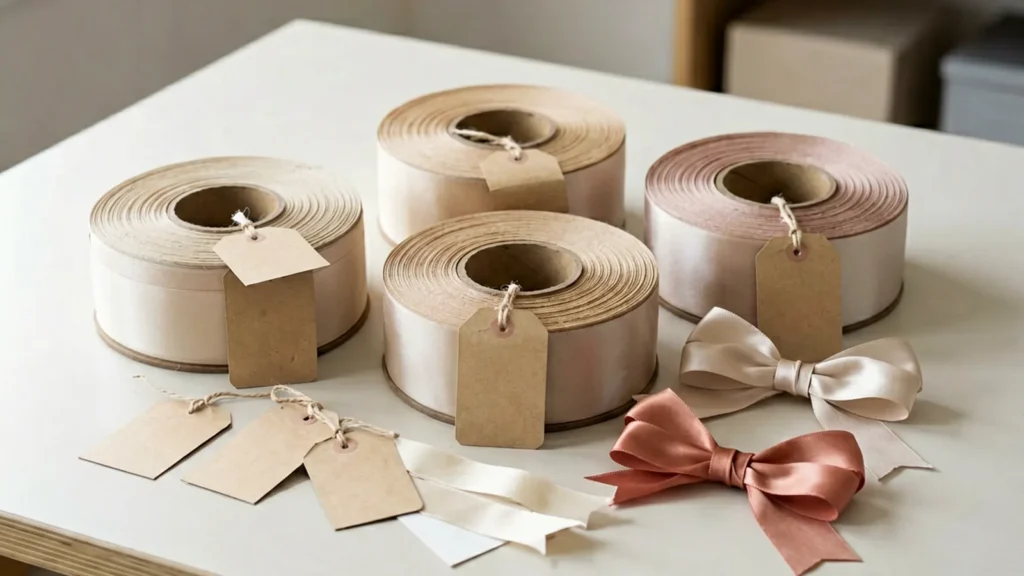
Before you can decide whether Satin Ribbon Rolls fits the use case, specs, MOQ, sample approval path, and supplier quote process, the specification has to say enough for a supplier to price the same job you have in mind.
Roll length decides how much you waste at every cut point, and that usually outweighs a small saving on unit price.
Direct answer: For satin ribbon rolls, buyers should decide whether Satin Ribbon Rolls fits the use case, specs, MOQ, sample approval path, and supplier quote process.
When satin ribbon rolls fit or custom orders
Buying satin by the roll turns a material decision into an inventory one. The roll length you accept decides how much you write off at each changeover and how often you have to reorder, and those two numbers usually matter more to the annual cost than the price per yard does.
| Route | Best fit | Trade-off | Verification check |
|---|---|---|---|
| Stock rolls, standard length | Steady usage across one or two shades | Roll length is set by the supplier, not your cutting plan | Divide the roll length by your cut length and look at the remainder |
| Stock rolls, split to order | Mixed pack sizes and short runs | A splitting charge, and cut ends to manage | Ask what the split costs against the waste it saves |
| Custom roll length | High volume on one repeated cut | Ties the program to one supplier’s winding | Confirm the length is repeatable at reorder |
| Custom shade on custom rolls | Brand colour plus a fixed cut plan | Two variables to approve and a longer first cycle | Approve shade and roll format in the same sample |
The trade-off is between flexibility and waste. A stock roll costs less and fits nobody exactly; a custom length fits your plan and locks you into the supplier who winds it. Decide which you are buying before comparing quotes, because the two are not the same product, and the risk of skipping that decision is a price comparison between two different jobs.
Key specs buyers should compare
Five inputs decide what a satin roll costs to use rather than to buy. The first two are the ones buyers most often leave to the supplier.
- Yards per roll, stated not approximate. Roll length interacts with the minimum order quantity, because a shorter roll means more rolls to reach the same yardage. Ask for the figure the supplier will hold and why it matters: your cut plan is measured against it, and an approximate length cannot be planned. The risk of accepting “about” is a remainder on every roll that nobody costed.
- Core diameter. Ask which core the roll is wound on. It affects line feeding and how much ribbon is unusable at the centre, and it is the cheapest specification to get wrong.
- Face and width. State single face or double face and the exact width. On satin the reverse shows wherever the ribbon folds.
- Shade route and lot marking. Plain stock ribbon starts at 1,500 yards from existing colors and widths. Ask that every roll carries its lot reference so a reorder can be matched rather than guessed.
- Reorder cycle. Standard production runs 15 to 20 business days once specifications are approved, so the lead time on a repeat sets where the reorder point sits, plus approval time on any new shade.
Where a program carries artwork, each design is quoted separately and the roll question compounds: see custom printed ribbon for the per-design threshold before deciding how many variants the range really needs.
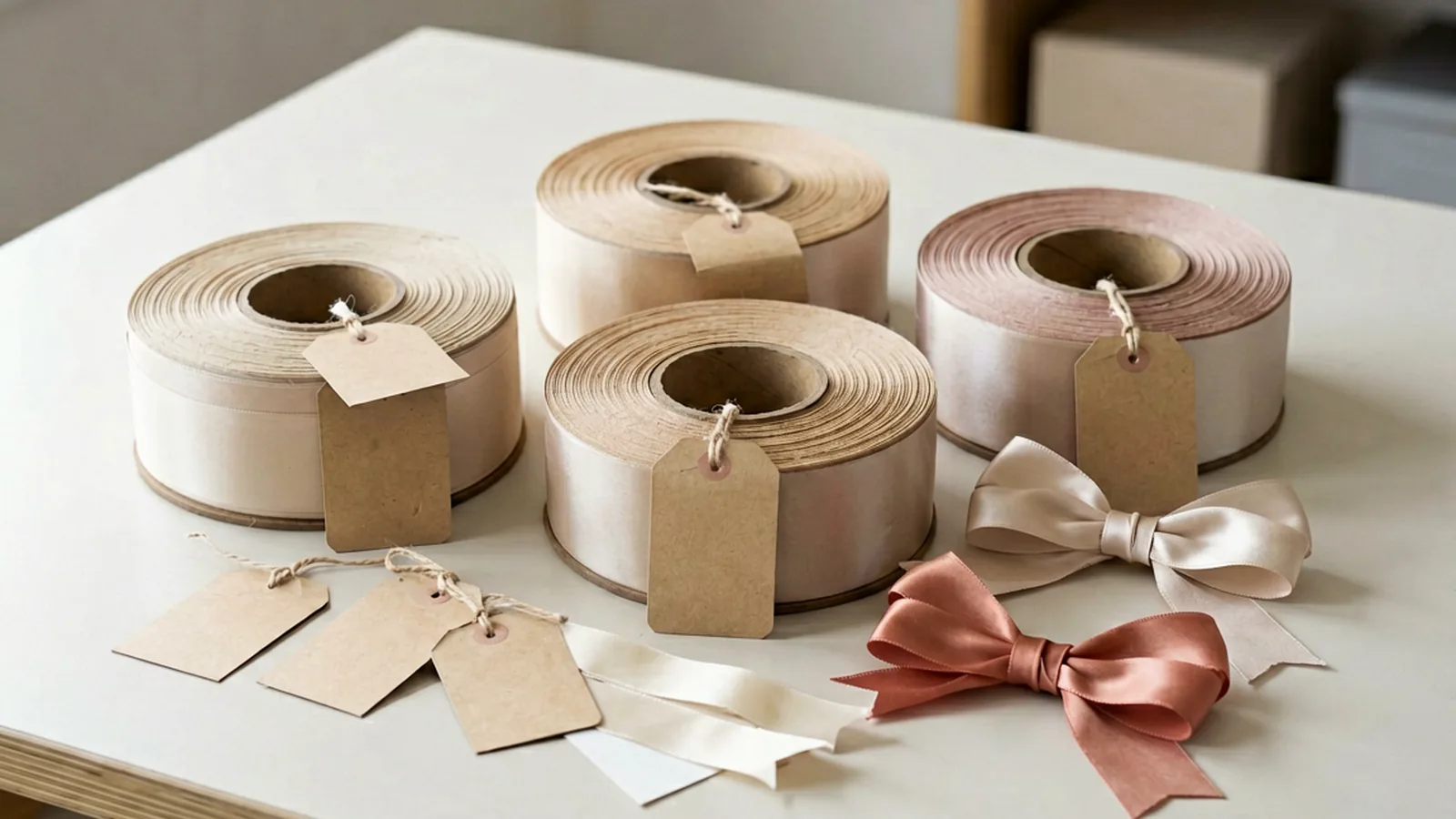
Material, finish, and use-case decision table
Four specifications decide how a satin roll performs once it is in use, and each carries a check that belongs in sample approval rather than in an email exchange. Agree all four in writing before sampling starts, because changing one afterwards restarts the approval rather than adjusting it. Roll format in particular is easy to treat as packaging detail and expensive to correct: it is set at winding, so a change means a new run rather than a repack.
| Spec | Acceptable range to agree | Risk if left open | Verification check | Buyer follow-up |
|---|---|---|---|---|
| Yards per roll | The figure the supplier will hold | Remainder waste on every roll | Measure one roll from the first delivery | Write the figure into the RFQ |
| Core diameter | Named size matched to your equipment | Feed problems and unusable centre | Test-feed one roll before the balance ships | Confirm the core in writing |
| Face and width | Single or double face, exact width | The reverse showing on folded work | Inspect both faces on one cut length | Sign one reference piece |
| Shade and lot marking | One signed standard, marking on each roll | No reference at reorder | Compare two rolls against the standard | Archive the approved piece |
Where a roll format is not one the supplier already winds, that development runs through OEM and ODM ribbon development rather than a catalogue order, and the winding trial belongs inside sampling.
Common selection mistakes
The mistakes below cost money quietly, over a year of reorders rather than on one invoice. Each has a check that takes minutes at the sample stage.
| Check point | What goes wrong | How to verify it | Approval standard to agree |
|---|---|---|---|
| Roll length against cut plan | A remainder too short to use on every roll | Divide the stated length by your cut length | The roll length recorded with the cut plan |
| Core diameter | Unusable ribbon at the centre, or feed problems | Test-feed one roll on your own equipment | Core size named in the specification |
| Lot marking on each roll | Cartons from two lots mixed on one line | Check the marking is present and legible | Marking required on every roll, in writing |
| Shade between rolls | Drift visible where two rolls feed one display | Compare rolls from opposite ends of the delivery | One signed standard held by both sides |
| Roll condition on arrival | A crushed roll creases every piece cut from it | Inspect the first carton before releasing the balance | Packing method confirmed in writing |
Two of these five only appear after a reorder, which is why they are worth writing into the record on the first order rather than the second. The quality inspection point matters as much as the specification here: a roll that fails on arrival is cheaper to reject than to cut. For gift and retail programs the same record covers both, as set out in gift and retail packaging ribbon solutions.
When to request samples or a quote
Request a sample as soon as the cut plan exists, not when the shade is chosen. Bring the width, the core specification, and the cut length with you; those three define the roll more than the material does. The questions below decide whether a supplier can serve the roll requirement at all, and they are cheaper to ask before a quote than after one.
- What roll lengths do you actually wind? A supplier who winds three standard lengths can serve most plans; one who winds a single length will make you carry the remainder. The risk of not asking is a quote that fits their equipment rather than your line.
- Can you split rolls, and what does it cost? Splitting can be cheaper than waste. Ask for the charge and compare it against the remainder your cut plan generates.
- Does every roll carry its lot marking? This is a supplier capability question as much as a paperwork one. A factory that marks rolls has thought about how buyers reorder.
- How are rolls packed for transit? Ask what protects the roll edge. Crushed rolls crease every cut piece, and the damage is discovered at your line rather than theirs.
- What lead time applies to a straight repeat? A repeat of an approved shade should be faster than a new one. Ask for both figures so the reorder point can be set correctly.
Verify the roll before the balance ships: measure the length, check the core diameter against your equipment, and confirm the marking is legible. Ask for one pre-production sample plus a full roll from the same run, with its lot marking intact. The sample answers the shade question and the roll answers the format one, and approving both in writing is what makes the second order a repeat rather than a new development.
In conclusion
The decision behind satin ribbon rolls is an inventory one dressed as a material one. Roll length against cut length sets the waste; lot marking sets whether a reorder is a repeat or a new approval. Settle both before comparing price per yard.
Where the range is stable and the shade repeats, the route is satin ribbon on a stock roll with an archived reference piece, and the cost driver is the remainder rather than the rate. Where the cut plan is fixed and the volume justifies it, a custom roll length removes that waste but ties the programme to one supplier’s winding, which is a risk worth naming rather than discovering.
Send your cut plan to two or three suppliers and ask each for a pre-production sample plus one full roll with its lot marking intact. Measure the roll, test-feed it, verify the shade against your standard, approve in writing, and archive the piece for the reorder.
Satin ribbon rolls FAQ
What should buyers confirm before ordering Satin Ribbon Rolls?
Confirm the yards per roll as a figure rather than an approximation, the core diameter, the face and width, and that every roll carries its lot marking. Divide the roll length by your cut length before agreeing anything; the remainder is the part nobody quotes.
How should buyers compare MOQ, lead time, and quote terms?
Compare by production route rather than as one number. Plain stock ribbon starts at 1,500 yards from existing colors and widths, printed ribbon starts at 3,000 yards per design, and formed pieces are counted individually. Production then runs 15 to 20 business days after approval, with dye lot approval outside that window.
What sample, quality, or supplier checks reduce risk?
Ask for a full roll from the same run as the sample, test-feed it on your own equipment, and inspect the first carton for crush damage. Compare rolls from opposite ends of the delivery against one signed shade standard, and archive the approved piece.
RFQ handoff: Send Specs for Review.
Keep exploring
Recommended buyer guides
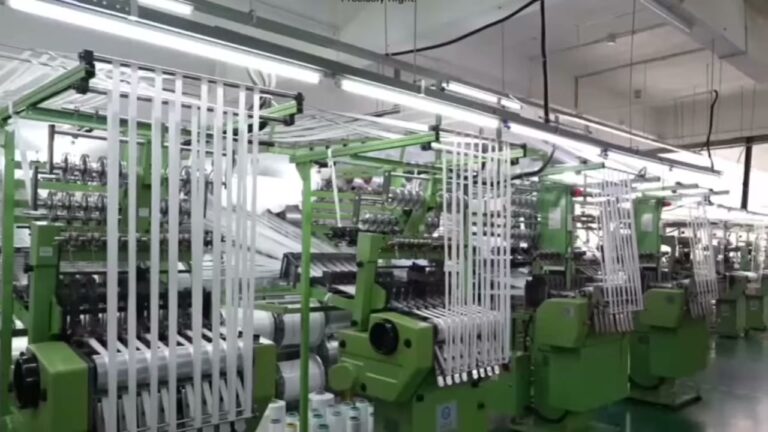 Wholesale Foil Printing vs Screen Printing Ribbon: Buyer Comparison
Foil printing vs screen printing ribbon: side-by-side on artwork files, print method, color target, and sample approval. Pick…
Explore guide
Wholesale Foil Printing vs Screen Printing Ribbon: Buyer Comparison
Foil printing vs screen printing ribbon: side-by-side on artwork files, print method, color target, and sample approval. Pick…
Explore guide
 Organza Ribbon Sheer Finish and Print Comparison for Custom Orders
 — the checks that decide whether a quote,…
Explore guide
Organza Ribbon Sheer Finish and Print Comparison for Custom Orders
Organza Ribbon Sheer Finish and Print Comparison for Custom Orders — the checks that decide whether a quote,…
Explore guide
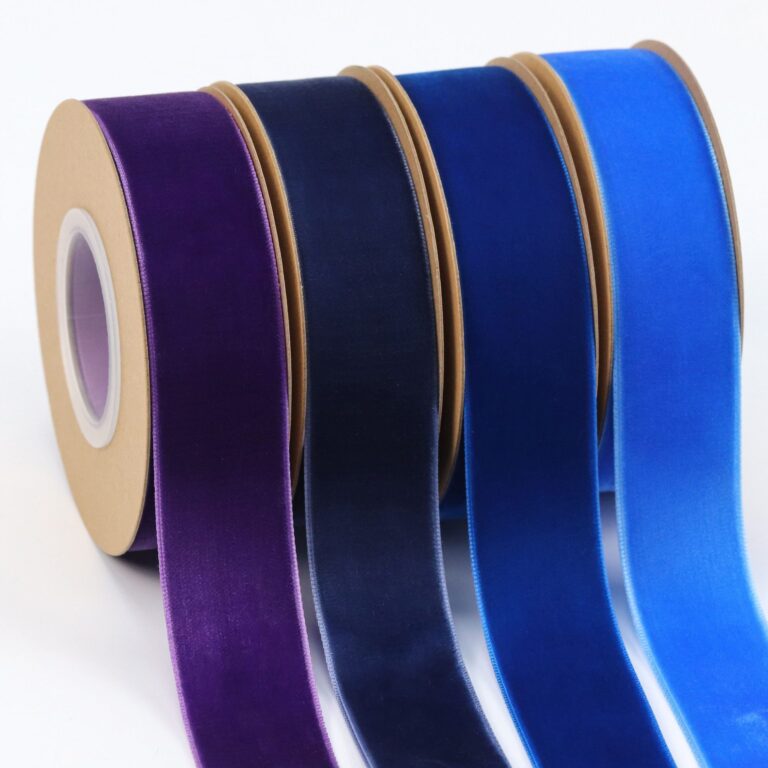 Velvet Ribbon Pile and Finish Comparison for Custom Orders Buyer
: what to confirm on material, MOQ, sample checks,…
Explore guide
Metallic Ribbon Finish Comparison for Custom Orders: Buyer Checklist
Metallic Ribbon Finish Comparison for Custom Orders: what to confirm on material, dimensions, finish, and handling before you…
Explore guide
Velvet Ribbon Pile and Finish Comparison for Custom Orders Buyer
Velvet Ribbon Pile and Finish Comparison for Custom Orders Buyer: what to confirm on material, MOQ, sample checks,…
Explore guide
Metallic Ribbon Finish Comparison for Custom Orders: Buyer Checklist
Metallic Ribbon Finish Comparison for Custom Orders: what to confirm on material, dimensions, finish, and handling before you…
Explore guide
Leave a comment
Share a sourcing question or feedback on this guide. The Lude team reviews submissions before following up.