


Satin Ribbon For Retail Packaging: Retail packaging order checks
Which satin ribbon options for retail packaging deserve an RFQ? Compare sample approval, color tolerance, QC checks, and material to find the right
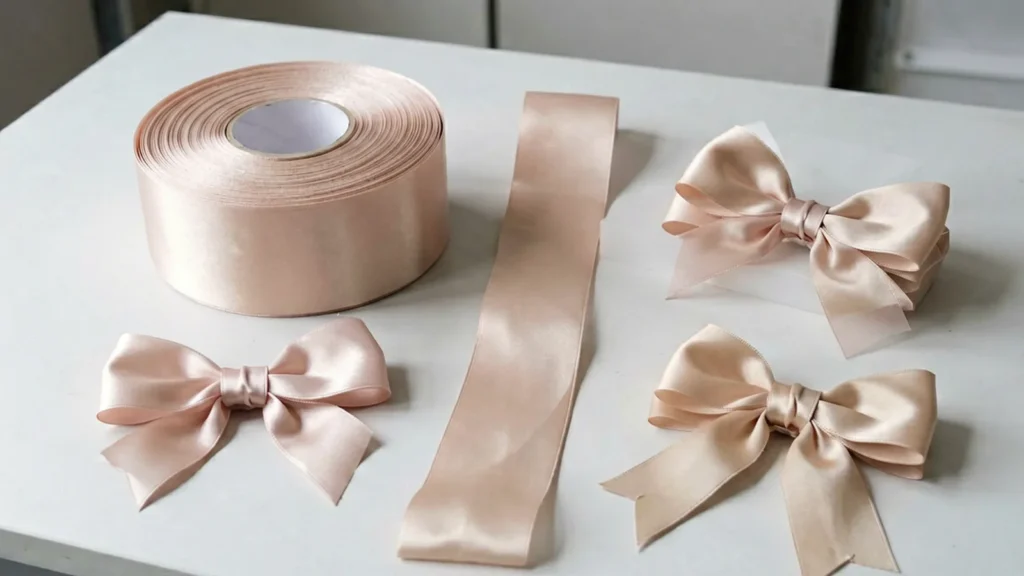
Before you can map product choices to real applications, usage scenarios, buyer constraints, and project outcomes, the specification has to say enough for a supplier to price the same job you have in mind.
Retail satin is judged under store lighting rather than daylight. Approving the color anywhere else builds in a dispute.
Direct answer: For satin ribbon for retail packaging, buyers should map product choices to real applications, usage scenarios, buyer constraints, and project outcomes.
Where satin ribbon retail packaging fits event projects
Retail is the hardest environment satin gets used in, because the shopper touches the product before buying it. A ribbon that photographs beautifully in a studio picks up finger marks on a shelf, and the difference between the two shows up in returns rather than in the sample review.
| Application | Fits when | Risk to watch | Verification check before ordering |
|---|---|---|---|
| Sealed gift boxes on shelf | The pack is boxed and handled by staff only | Creasing where the box is stacked | Stack a sample pack for several days, then inspect the bow |
| Open-display gift sets | Presentation matters more than handling volume | Finger marks show on dark shades first | Handle the sample repeatedly under store lighting |
| Counter and impulse items | Small pieces, high touch, low unit value | Cost per finished piece outweighs the visual gain | Compare against grosgrain at the same width |
| Seasonal window dressing | Seen from a distance, rarely touched | Shade drift between reorders shows across a display | Compare two lots against one signed swatch |
The trade-off is consistent across all four: satin buys appearance and pays for it in handling tolerance. Where the pack is touched often, the honest comparison is against a more forgiving construction rather than against a cheaper satin. Ask the factory which of these four applications the sample was made for, because a sample room piece made for a photograph will not answer the handling question.
Material, finish, and format decisions
Four signals mean a satin retail order will disappoint, and each is checkable before production.
| Warning sign | Why it matters | Verification check | Risk if ignored |
|---|---|---|---|
| Single face quoted where the reverse shows | Bows on open display show both sides | Ask for a cut length and look at both faces | A finished bow with a dull reverse facing the shopper |
| Sample shown flat, never tied | Satin creases at the knot, not on the flat | Ask for a tied sample on the actual pack | Creasing that appears only after assembly |
| No mention of where quality inspection happens | Surface defects are found by looking, not by testing | Ask for an inspection record from a comparable run | Marked goods reaching the shelf |
| Supplier capability described, not shown | Satin sheen depends on dyeing and finishing control | Ask which steps run in-house | Quality answers that stop at their own supplier |
Retail programs live or die on the second row. A flat swatch approval is a common reason a satin bow looks wrong on the shelf, and adding one tied sample to the approval costs nothing. The full sequence sits in gift and retail packaging ribbon solutions.
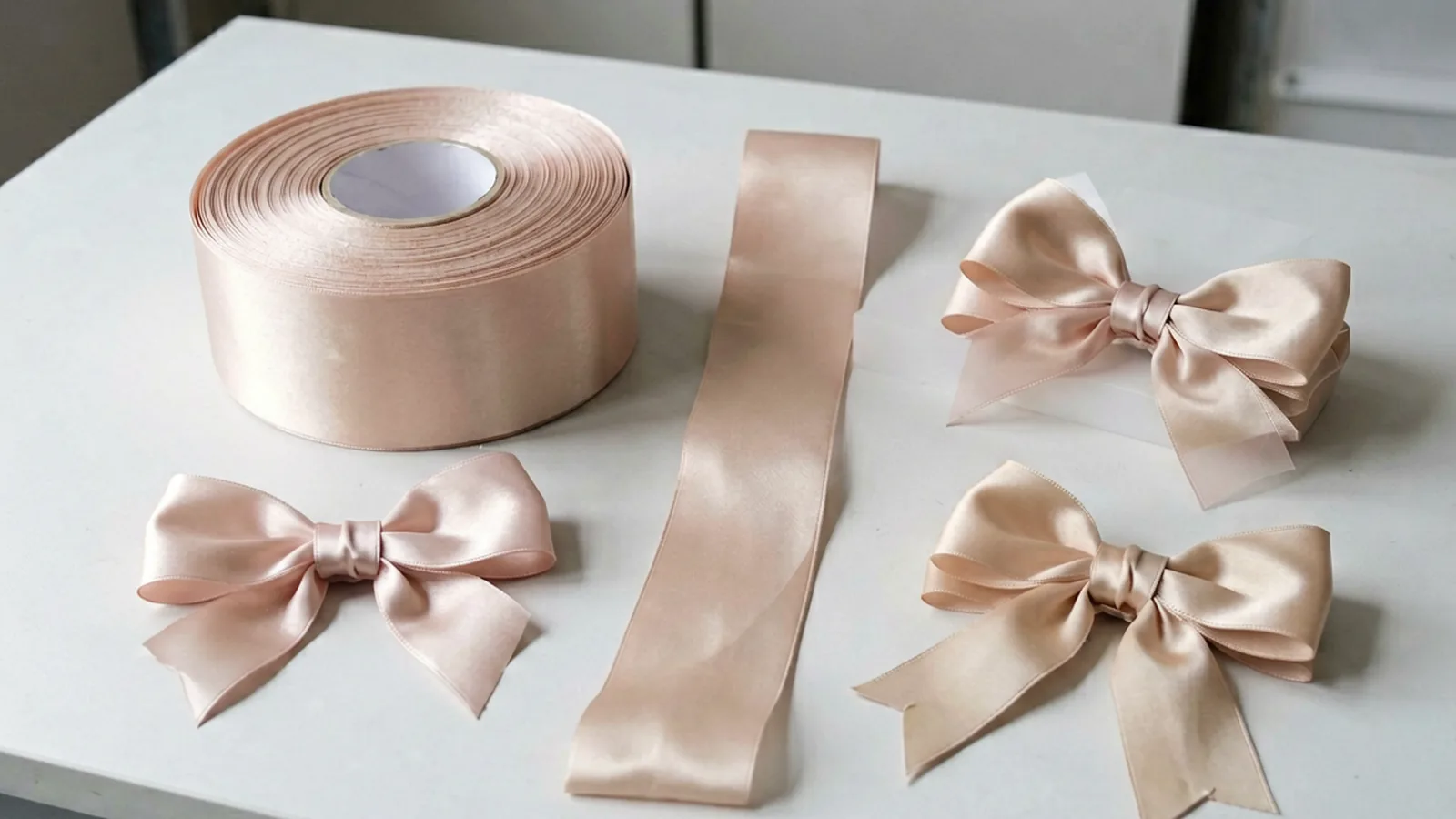
Application and display requirements
Three formats put satin onto a retail pack, and they carry different labour, consistency, and cost profiles.
| Format | Best fit | Trade-off | Risk to verify |
|---|---|---|---|
| Pre-formed bows applied in-store or at pack | High volume, one bow size | Shape recovery after boxing decides the shelf look | Ask for bows boxed several days before inspecting |
| Ribbon on the roll, tied at pack | Mixed pack sizes, premium presentation | Labour cost and knot-to-knot variation | Have three people tie the same length and compare |
| Printed satin band | The brand mark carries the display | Artwork approval and a per-design minimum | Proof the artwork at the production width |
The cost driver is rarely the ribbon itself. On a counter item the labour of tying at pack usually exceeds the material cost, which is why pre-formed bows win at volume even when the unit price looks higher. Where the mark matters more than the tie, custom printed ribbon moves the decision to artwork approval and its own threshold.
MOQ, lead time, and sample planning
Five inputs make retail satin quotes comparable. Each one moves the price more than the campaign quantity usually does.
- Face and width. State single face or double face and the exact width. On open display the reverse is visible, and double face costs more for a reason. Ask the supplier which face the price covers; the risk of leaving it open is a quote that turns out to be for the cheaper construction.
- Format. Say whether you are buying ribbon or finished bows. Ready-made bows and award ribbons start at 1,000 pieces, while material is quoted by the yard.
- Colour route. Plain stock ribbon starts at 1,500 yards from existing colors and widths; a brand match is confirmed by quote request and carries a dye lot approval step.
- Artwork, if any. Printed ribbon starts at 3,000 yards per design, so a range of four pack variants is four programs rather than one.
- Dates. Standard production runs 15 to 20 business days once specifications are approved. Sampling, artwork sign-off, and dye lot approval sit outside that window and have to be booked separately.
Where a pack needs a construction or a bow shape that is not held in stock, that work runs through OEM and ODM ribbon development and the development time belongs ahead of the season rather than inside it.
Buyer checklist before RFQ
Five checks belong in the approval record, each returning a physical result. Run them on the sample you intend to approve, and record what you saw rather than that you were satisfied.
- Tied appearance after boxing. Tie the bow on the production pack, box it, leave it several days, then inspect the knot and loops. The defect is creasing that only appears after transit, and the approval standard is the boxed sample rather than the fresh one.
- Both faces on one cut length. Check the reverse where the display shows it. The defect is a dull back face on a bow the shopper sees from two angles.
- Handling marks under store lighting. Handle a length as a shopper would and look at it under the lighting the shelf uses. Dark shades show marks first, which is a quality control question rather than a design one.
- Shade across two lots. Compare pieces from two production dates against one signed swatch. Retail ranges reorder often, and drift between lots is visible when both sit on the same fixture.
- Edge condition at the cut. Handle a cut end and inspect for fraying. Verification here is a handled sample, not a fresh cut.
Ask for one pre-production sample against the approved specification with its lot marking intact, and approve it in writing. That signed piece is what any later inspection is measured against, and on a retail programme it is also what settles a shade dispute between two reorders.
In conclusion
The decision behind satin ribbon for retail packaging is how much handling the pack will take. Sealed and shelved is one job; open display in a busy store is another, and the same satin specification does not serve both equally well.
Where appearance carries the pack and handling is limited, the route is satin ribbon with a tied-sample approval and a signed shade standard. Where the pack is touched constantly, the honest answer is often a more forgiving construction, and the cost driver that decides it is usually labour at pack rather than the ribbon itself. Skipping that comparison carries the risk of paying a premium for a surface the shopper will mark.
Send the pack, the width, and the shade standard to two or three suppliers and ask each for a tied sample boxed for several days, with its lot marking intact. Verify the knot, check both faces, approve in writing, and keep the piece for the reorder.
Satin ribbon retail packaging FAQ
What should buyers confirm before ordering Satin Ribbon For Retail Packaging?
Confirm single face or double face, the exact width, whether you are buying ribbon or finished bows, and the shade against a physical standard. Then ask for a tied sample rather than a flat swatch, because satin creases at the knot and that is where retail disappointment starts.
How should buyers compare MOQ, lead time, and quote terms?
Compare by production route rather than as one number. Plain stock ribbon starts at 1,500 yards from existing colors and widths, printed ribbon starts at 3,000 yards per design, and formed pieces are counted individually. Production then runs 15 to 20 business days after approval, with sampling outside that window.
What sample, quality, or supplier checks reduce risk?
Box a tied sample for several days before judging it, handle a length under store lighting to see how marks show, and compare two production lots against one signed swatch. Keep the approved piece with its lot marking for the reorder.
RFQ handoff: Send Specs for Review.
Keep exploring
Recommended buyer guides
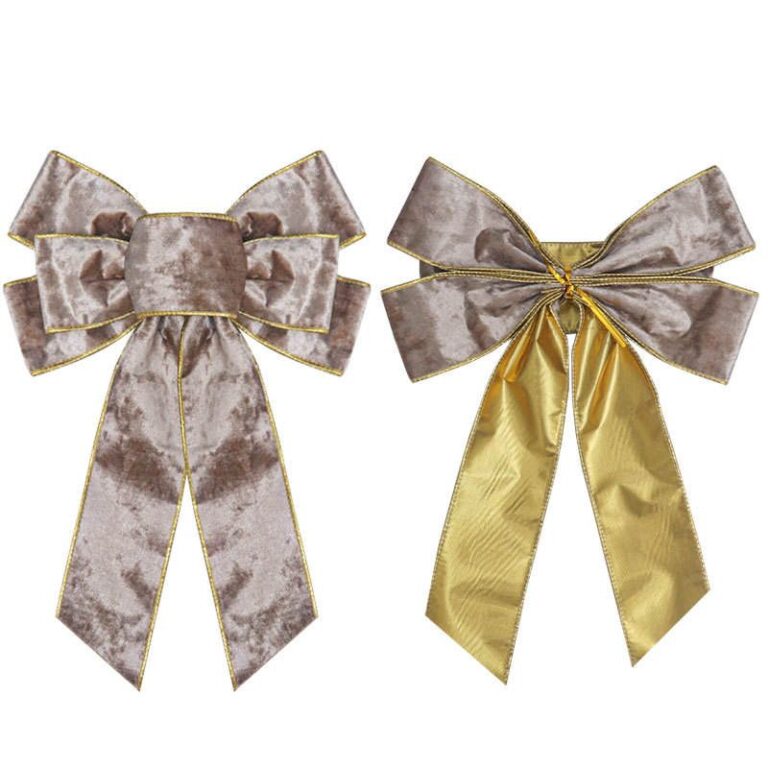 Pre-Tied Bows for Retail Packaging: When They Reduce Labor and Rework
See when pre-tied bows reduce retail packaging labor, improve consistency, and simplify bulk packing, SKU planning, and reorders
Explore guide
Pre-Tied Bows for Retail Packaging: When They Reduce Labor and Rework
See when pre-tied bows reduce retail packaging labor, improve consistency, and simplify bulk packing, SKU planning, and reorders
Explore guide
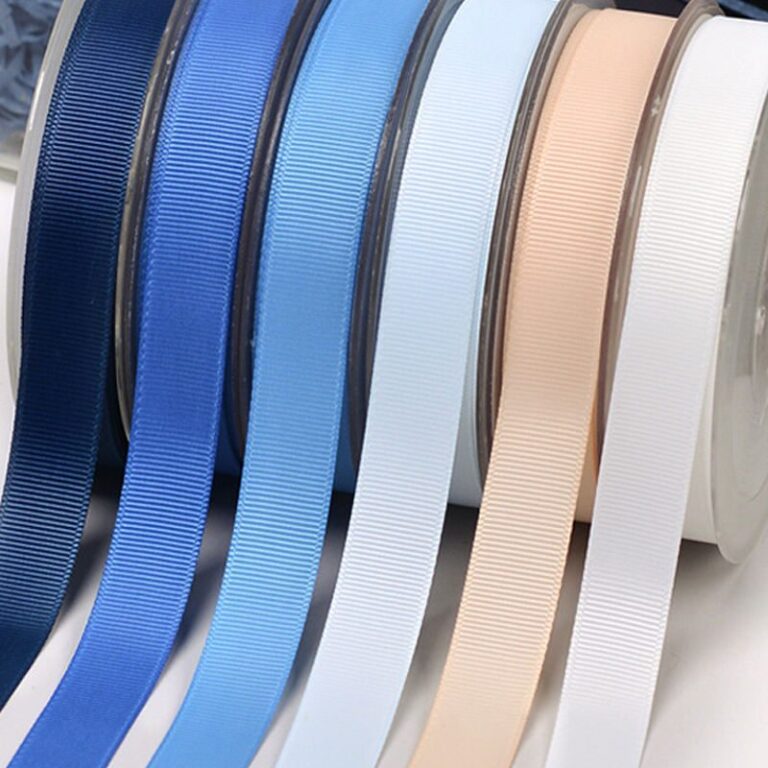 Wholesale Grosgrain Ribbon Rolls: Specs, Roll Length, and RFQ Checks
Buying Grosgrain Ribbon Rolls? Verify sample approval, color tolerance, QC checks, and material to reduce quoting errors and…
Explore guide
Wholesale Grosgrain Ribbon Rolls: Specs, Roll Length, and RFQ Checks
Buying Grosgrain Ribbon Rolls? Verify sample approval, color tolerance, QC checks, and material to reduce quoting errors and…
Explore guide
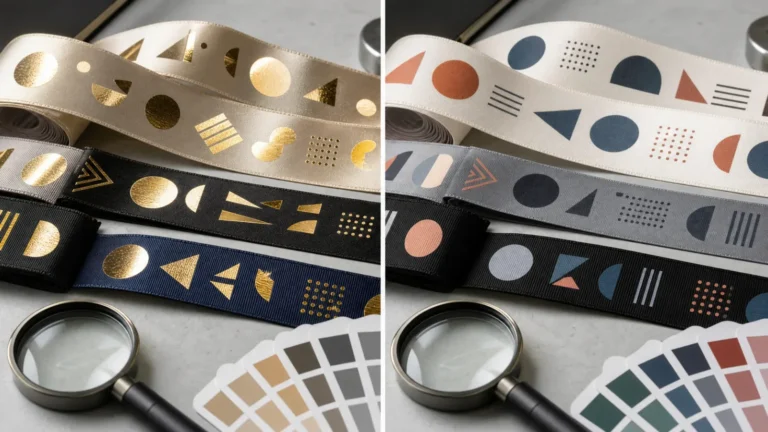 Wholesale Foil Printed Ribbon: Use-Case Fit and RFQ Checklist
Buying foil printed ribbon: buyer use-case fit checklist? Verify artwork files, print method, and color target to reduce…
Explore guide
Wholesale Foil Printed Ribbon: Use-Case Fit and RFQ Checklist
Buying foil printed ribbon: buyer use-case fit checklist? Verify artwork files, print method, and color target to reduce…
Explore guide
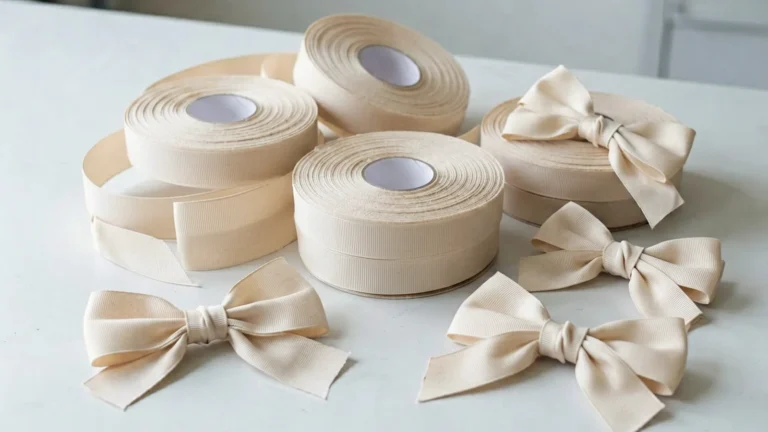 Grosgrain Ribbon Width Guide: Width choice for packaging and bows
Grosgrain Ribbon Width Guide: what to check on artwork files, print method, color target, and material before placing…
Explore guide
Grosgrain Ribbon Width Guide: Width choice for packaging and bows
Grosgrain Ribbon Width Guide: what to check on artwork files, print method, color target, and material before placing…
Explore guide
Leave a comment
Share a sourcing question or feedback on this guide. The Lude team reviews submissions before following up.