


Wholesale Ribbon Roll Lot Traceability Reorder Checklist
Wholesale Ribbon Roll Lot Traceability Reorder Checklist: what to confirm on factory capability, QC proof, lead time, and reorder reliability before you

Export RFQs become hard to compare when specs, quote assumptions, samples, and approval ownership sit in different messages.
A useful factory reply turns the buyer's use case into written specs, sample checks, and quote assumptions.
The sections below turn the topic into buyer checks, supplier proof requests, and RFQ handoff details on one revision.
Direct answer: For ribbon roll label lot traceability reorder checklist, release the order only after the intended use, approved construction, test record, commercial terms, and sign-off responsibility all match. If one item remains unresolved, return it to the responsible buyer or supplier before bulk production.
Copy this ribbon roll label lot traceability reorder checklist approval record into the RFQ file. Keep every checked item on the same revision before releasing the order.
- ☐ Final specification and intended use
- ☐ Supplier feasibility and documented exceptions
- ☐ Sample or inspection evidence
- ☐ Commercial assumptions, owner, decision, and date
Move the ribbon roll label lot traceability reorder checklist order forward only when each gate leaves written evidence for the next. Return an unresolved specification, sample, or quote exception to its owner before bulk production.
Define What Each Roll Label Must Identify
For ribbon roll label lot traceability reorder checklist, compare the checks below against one RFQ revision. Each row should identify the requirement, approval evidence, and buyer action before production.
| Specification | Quality control | Verification method | Risk to avoid | Buyer action |
|---|---|---|---|---|
| Roll length or spool format | Verify actual length against spec; check for consistent winding and no splices | Measure a sample roll; request a winding report from the production lot | Short rolls or irregular spools cause line stoppages and waste | Request RFQ with exact length and spool dimensions; approve sample roll |
| Sample approval | Compare retained pre-production sample against bulk production for color, adhesion, and dimensions | Conduct side-by-side visual and tactile inspection; document with dated photo | Approved sample differs from bulk, breaking traceability and causing rejection | Hold bulk release until sample matches; request revised strike-off if needed |
| Material / substrate | Confirm substrate type, thickness, and coating match the approved spec sheet | Request mill certificate or material declaration from the supplier | Substrate substitution alters adhesive performance and durability | Ask for material data sheet; verify against approved sample before production |
| Finish or color control | Verify color match to Pantone or approved standard under controlled lighting | Request a color measurement report (e.g., spectrophotometer data) from the production lot | Shade variation across rolls breaks brand consistency and customer trust | Approve only with written color tolerance; request a new lab dip if needed |
For ribbon roll label lot traceability reorder checklist, use this table as the decision scope. Read the rows as one approval sequence. Start with roll length or spool format because short rolls or irregular spools cause line stoppages and waste. Verify it by measuring a sample roll and requesting a winding report from the production lot.
Keep the ribbon roll label lot traceability reorder checklist supplier response, marked sample, and approval owner under the same revision number. If any proof conflicts with the approved record, hold the quote, sample, or production release until the supplier explains the deviation in writing. Before closing the checkpoint, reconcile the latest drawing, sample, quotation, and approval comments, identify which record controls if they disagree, and document the resolution. Carry the signed table into the purchase order and production handoff so the same checks support quote comparison, sample approval, shipment release, and later reorders.
Link Color Material and Artwork to a Lot
| Option | Best fit | Trade-off | Risk to avoid | Verification | Follow-up |
|---|---|---|---|---|---|
| Current specification | Matching original material, color, and artwork exactly | No flexibility for cost reduction or alternative sourcing | Supplier may claim capability to reproduce without evidence | Obtain a pre-production sample from the actual lot and compare to retained approved sample | Hold bulk release until sample matches approved record under same revision number |
| Alternative specification | Substituting material or color while maintaining traceability | Requires new sample approval and may shift MOQ or lead time | Lot linking breaks if artwork or material changes are not documented | Ask supplier for a revised specification sheet and a new color measurement report | Update the approval record with the new revision before ordering |
| Custom option | Adding unique lot codes, serial numbers, or barcodes per roll | Increases setup cost and may require new tooling or artwork files | Custom elements may not be reproducible on reorders without documented artwork | Confirm supplier can produce a strike-off with the exact custom marking and test legibility | Include custom artwork file and lot code format in the RFQ and sample approval |
| Safer fallback | Using a standard material and color with minimal customization | Reduces brand differentiation but lowers reorder complexity | Standard options may not meet regulatory or brand traceability requirements | Compare supplier's standard specification sheet against your minimum lot identification needs | Document the fallback baseline and confirm it matches your traceability checklist |
For current specification, a poor decision can mean supplier may claim capability to reproduce without evidence. Request a pre-production sample from the actual lot and compare to retained approved sample, then hold bulk release until sample matches approved record under same revision number.
For the current specification checkpoint in ribbon roll label lot traceability reorder checklist, keep the supplier response, marked sample, approved specification, quotation, and approval owner under the same revision number. If the evidence conflicts with the approved record, hold the quote, sample, or production release until the deviation is explained in writing. Carry the signed decision record into the purchase order, production handoff, shipment release, and later reorder review so every team works from the same baseline.
Use OEM and ODM ribbon development for related sourcing context.
RFQ checkpoint
Confirm the route, specs, proof requirements, and quote step before sampling ribbon roll label lot traceability reorder checklist.

Match Roll Labels to Carton and Packing Lists
Start with evidence for ribbon roll label lot traceability reorder checklist:
- Verify each roll label matches the carton marking and packing list before shipment release. Mismatched labels cause line stoppages, returns, and rework that delay downstream orders. Compare the roll label data—lot number, roll length, spool format—against the carton mark and packing list for every carton in the lot. A single mislabeled roll can halt a production line and trigger a full lot quarantine. Document the comparison result on the inspection record and flag any discrepancy to the supplier for correction before loading.
- Confirm that the lot traceability code on each roll label is legible and scannable. Illegible or missing codes prevent downstream traceability and may violate buyer or regulatory record-keeping requirements. Scan a sample of roll labels from the production lot using the same scanner used at your receiving dock. Unreadable codes force manual data entry, increasing error rates and delaying put-away. Request a reprint of any roll with a damaged or unreadable label before the carton is sealed.
- Check that the packing list quantity matches the actual carton count and roll labels. Quantity discrepancies cause invoice disputes, restocking fees, and production shortages. Count every carton in the lot and compare the total to the packing list; then open a sample carton and verify the roll count against the label. A shortage discovered after shipment leads to costly expedite fees and missed delivery windows. Hold the lot for recount and ask the supplier to issue a corrected packing list before approving the shipment.
- Ensure that the carton marking includes the purchase order number, lot number, and roll count. Missing or incorrect carton marks prevent warehouse staff from routing the order to the correct stocking location. Compare the carton mark against the purchase order and the supplier's packing list for every carton in the lot. Misrouted cartons cause inventory inaccuracies and delay order fulfillment for downstream customers. Require the supplier to re-mark any carton that does not match the purchase order before the container is loaded.
Use custom printed ribbon for related sourcing context.
Keep an Approval Record for Reorders
The main failure mode is approving ribbon roll label lot traceability reorder checklist before the supplier has resolved the listed evidence gaps.
- Supplier cannot trace a finished roll label back to its raw material lot. Without lot traceability, a defective substrate or ink batch cannot be isolated, forcing a full reorder rejection or field failure. Ask the supplier to demonstrate their lot traceability system during a walk-through or video call. Incoming material inspection records linking raw material lot numbers to finished roll labels. Document the traceability gap in the reorder RFQ and require a corrective action plan before order release.
- Supplier uses informal email threads instead of a formal deviation report for changes from the approved sample. Unapproved substitutions in color, adhesive, or substrate can cause mismatched lots, line stoppages, or application failure. Require a written deviation report for any change from the approved sample, including the reason and re-approval evidence. A signed deviation report with dated sample approval for the specific change. Hold the reorder until the deviation report is reviewed and the revised sample is approved in writing.
- Supplier cannot provide a mill certificate or fiber composition test report for the substrate lot used in the reorder. Without material certification, the buyer cannot verify substrate consistency, risking adhesive failure or print quality drift. Request the mill certificate or test report for the specific substrate lot before production. Mill certificate or fiber composition test report matching the lot number on the reorder. Attach the certificate to the reorder RFQ and require it as a mandatory baseline for production release.
- Supplier's pre-production sample for the reorder is not from the actual production batch. A sample from a different batch may not represent the actual production run, leading to color, width, or finish variation. Require the pre-production sample to be taken from the actual production batch that will be shipped. A dated pre-production sample with a batch number matching the production order. Compare the sample against the approved specification under a light box and document the approval before bulk release.
Use gift and retail packaging ribbon solutions for related sourcing context.
Audit Traceability Before Shipment Release
Start with evidence for ribbon roll label lot traceability reorder checklist:
- Traceability from roll label to production batch and raw material lot. Lot traceability record linking each roll label to batch and mill certificate. Supplier quality or production department. Missing traceability leads to line stoppages or recall liability. Request record before shipment release and compare to purchase order.
- Supplier maintains lot separation and reorder consistency. Written SOP for lot changeover and reorder batch record from previous order. Supplier quality manager. Reorders may deviate from approved sample if lot separation is not controlled. Request SOP and batch record during pre-qualification or before first reorder.
- Approval record includes signed sample, inspection report, and commercial terms under one revision. Signed approval record with revision number linking sample, quote, and QC evidence. Buyer and supplier jointly. Missing revision control causes confusion in reorder and potential approval of wrong baseline. Freeze approval record in purchase order and production handoff documentation.
- Hold shipment release until all evidence matches approved baseline. Checklist sign-off by buyer comparing evidence to retained baseline. Buyer procurement team. Releasing without full verification risks line stoppages or customer rejection. Document sign-off and retain in order file for reorder reference.
Conclusion: Release the Order Only After the Evidence Matches the Approved Sample
The final approval decision for a ribbon roll label reorder rests on a single verification: Does the evidence on hand match the approved sample? Before releasing the order, compare the retained sample, the specification sheet, and the supplier’s quotation under the same revision number. Ask the supplier to confirm that each roll label, carton marking, and packing list aligns with that baseline. For cost and lead time, verify that the quoted MOQ and production schedule reference the same specification used for the original order. For quality risk, request a pre-production sample from the actual lot and compare its dimensions, adhesive performance, and die cut registration against the approved standard. Document the approval in writing with a dated record before releasing the bulk order.
To approve a sample, visit quality and color control and confirm the final specification, quote assumptions, sample approval, QC evidence, approval risk, and supplier follow-up before bulk order.
Ribbon Roll Label and Lot Traceability Reorder Checklist FAQ
What drawings and operating inputs should buyers send for ribbon roll label lot review?
Send the current specification sheet, retained pre-production sample approval record, and a dated RFQ revision that references the exact material, color standard, and artwork file. Include the required lot identification data—such as roll length, spool format, and any splice restrictions—so the supplier can confirm MOQ and lead time against the same baseline used for the original order.
Which ribbon roll label lot sample checks and supplier records should buyers approve?
Approve a pre-production sample from the actual production batch, a mill certificate for the substrate lot, and a color measurement report that matches the approved standard. Verify that the sample dimensions, adhesive performance, and die cut registration align with the retained baseline, and document the approval in writing with a dated record before releasing the bulk order. Ask the supplier to confirm factory capability and who owns follow-up.
What ribbon roll label lot settings and traceability details should be frozen for production?
Freeze the approved specification, the signed sample approval record, the supplier’s quotation with confirmed MOQ and lead time, and the lot traceability evidence—including mill certificate and color report—under a single revision number. Carry this frozen record into the purchase order and production handoff so that every reorder uses the same baseline for quote comparison, sample approval, and shipment release.
Next step: Confirm the route, specs, proof requirements, and quote step before sampling ribbon roll label lot traceability reorder checklist. Send Specs for Review.
Keep exploring
Recommended buyer guides
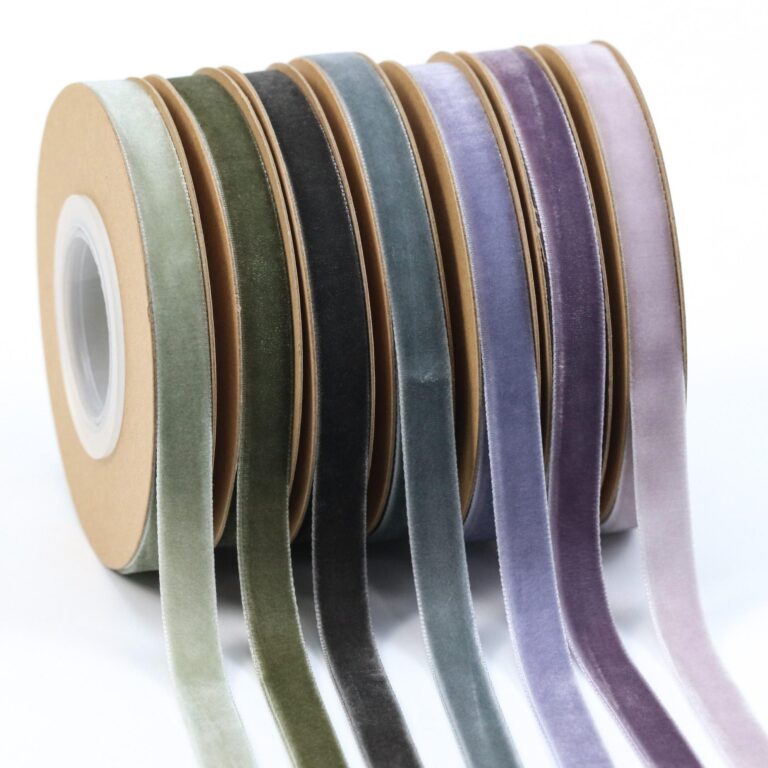 Wholesale Narrow Velvet Ribbon: Specs, Roll Length, and RFQ Checks
Check velvet pile direction, edge finish, cutting, tying, shade, and packout evidence before approving narrow velvet ribbon production.
Explore guide
Wholesale Narrow Velvet Ribbon: Specs, Roll Length, and RFQ Checks
Check velvet pile direction, edge finish, cutting, tying, shade, and packout evidence before approving narrow velvet ribbon production.
Explore guide
 Wholesale Satin Ribbon Sample Approval Workflow: Buyer Checklist
Wholesale Satin Ribbon Sample Approval Workflow — the checks that decide whether a quote, sample, or shipment can…
Explore guide
Wholesale Satin Ribbon Sample Approval Workflow: Buyer Checklist
Wholesale Satin Ribbon Sample Approval Workflow — the checks that decide whether a quote, sample, or shipment can…
Explore guide
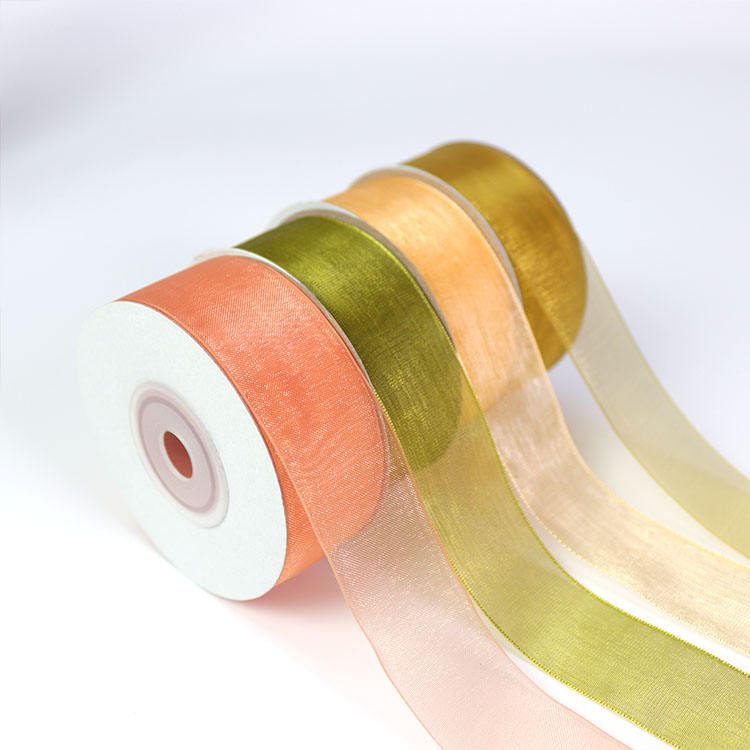 Organza Ribbon Sample Approval Workflow Before Bulk Production Buyer
 — the checks that decide whether a quote, sample,…
Explore guide
Organza Ribbon Sample Approval Workflow Before Bulk Production Buyer
Organza Ribbon Sample Approval Workflow Before Bulk Production Buyer — the checks that decide whether a quote, sample,…
Explore guide
 B2B Foil Ribbon Order Risk: Proof, Registration, Release
Buying foil printed ribbon: order risk control checklist? Verify artwork files, print method, color target, and sample approval…
Explore guide
B2B Foil Ribbon Order Risk: Proof, Registration, Release
Buying foil printed ribbon: order risk control checklist? Verify artwork files, print method, color target, and sample approval…
Explore guide
Leave a comment
Share a sourcing question or feedback on this guide. The Lude team reviews submissions before following up.