


Wholesale Ribbon Importer: What to Settle Before the Quote
Shortlist ribbon importer suppliers by approval timing, production slot, shipping buffer, and reorder date. See which checks to settle before requesting the quote.
A ribbon inquiry that says "quote me satin ribbon" comes back as a price for something the importer did not ask for, because five line items the buyer owns were never sent.
This checklist lists exactly what a ribbon factory needs before it can quote, what each missing line does to the price, and what a sampling round costs before bulk.
Direct answer: Send five things with a ribbon inquiry: width and material per line item, the color reference the factory will match to, the print method and artwork, the put-up and core the destination needs, and the quantity basis. At Lude Ribbon custom printed ribbon is 3,000 yards per design, so the quantity basis decides whether the minimum is met per design or across the order.
Which line items a ribbon quotation actually needs
A ribbon importer sends an inquiry and gets back a price for something slightly different, almost always because five line items were missing. Lude Ribbon has made ribbon in Xiamen since 2006 on 86 machines, and these are the fields a quotation is actually built from.
| Specification | What to state | Risk if it is missing | Verification check | Buyer follow-up |
|---|---|---|---|---|
| Material and construction | Fibre and weave, per line item | A different ribbon quoted at a similar price | Compare two samples side by side | Name both on the order |
| Width | The width required, not a range | A width substituted to fit stock | Measure the sample width | Fix the width per line |
| Color | A physical reference, not a color name | A color argued rather than measured | Hold a sealed counter-sample | Record the reference number |
| Print method and artwork | Method plus the artwork version | Setup cost appearing after the quote | Check a printed sample | State the method and version |
| Put-up and core | Roll length and core size per market | Repacking charged back at destination | Check the put-up on the sample | Fix roll length and core |
Importers should add one more line that suppliers rarely raise: marking. United States guidance on marking of country of origin on imports is worth reading before the first order, because marking is decided at the factory and enforced at the border, and a supplier capability question hides in it: a mill that has marked for your destination before will answer it in one line.
How an incomplete inquiry changes the ribbon price you get
An incomplete inquiry does not produce a wrong price; it produces a price for the supplier default. These are the inputs that decide which default you get.
| RFQ input | Why it matters | Risk if omitted | Question to ask the supplier | Buyer follow-up |
|---|---|---|---|---|
| Quantity basis | Minimums apply per design, not per order | A minimum met on paper and not in fact | How is the minimum counted here? | Get the rule in writing |
| Stock or custom color | Two different rules and two lead times | A custom color priced as stock | Is this color held or dyed to order? | Split the inquiry by rule |
| Delivery date | The clock starts at settled specification | A date quoted against an open question | What must be closed before the clock starts? | Close those first |
| Packing and marking | Decided at the factory, enforced at the border | Relabeling at destination | Have you marked for this market before? | Fix marking on the order |
At Lude Ribbon custom printed ribbon is 3,000 yards per design. Stock colors and ready-made bows follow their own rules, quoted separately. Bulk production runs 15 to 20 business days after specifications are confirmed; an expedited route exists for a surcharge, subject to capacity at order time. Read those per line item rather than per order, because a three-design inquiry is three commitments and the cost of discovering that late is a repricing after approval. Families are listed across the ribbon products page.
One line settles what a correct delivery means. Ribbon orders normally reference the ISO 2859-1 sampling inspection standard as the acceptance basis, and without it a pre-shipment pass has nothing behind it.
Which artwork and color references to lock before quoting
Artwork and color are the two inputs an importer owns entirely, and both need a reference rather than a description.
| Input | Reference to send | Risk if described instead | Verification check | Buyer follow-up |
|---|---|---|---|---|
| Artwork | Versioned file with a version number | A reorder picking up an earlier draft | Quote the version on the order | Print the version on every order |
| Color | Physical reference held by both sides | A color argued rather than measured | Store it with the inspection record | Record the reference number |
| Tolerance | The variation you will accept | A dispute with no agreed range | State it beside the reference | Fix it on the specification |
| Print method | Screen, foil or digital, named | Setup cost appearing after the quote | Rub and flex a printed sample | Record the method used |
Artwork version and color reference
Send artwork as a versioned file and quote that version on every order, so a reorder cannot pick up an earlier draft. Send color as a physical reference held by both sides rather than as a name or a screen value, and state the tolerance you will accept. Verify the approved reference is stored with the inspection record for the approved lot, because a reference nobody can retrieve is a reference nobody can be held to.
Print method
Name the print method rather than sending artwork and asking what is possible. Screen suits solid marks, foil suits metallic, and digital suits many colors or frequent changes; each carries a different setup and a different specification for what the finished ribbon can survive. Check a printed sample rubbed and flexed the way the finished item will be, and record the method against the approved sample. Which of those programs a ribbon suits is set out under gift and retail packaging ribbon solutions.
How quantity and put-up change the ribbon unit price
Two importers ordering the same yardage can pay different prices because they asked for it in different shapes, and the factory winding time is where that difference is created.
Quantity per SKU and roll length
Minimums apply per design and per color rather than to the order total, so an inquiry that meets a minimum in aggregate may not meet it on any single line. State quantity per line item and ask how the minimum is counted before comparing prices. Roll length matters separately: shorter rolls mean more winding and more cores for the same yardage.
Packing unit
State the core size, rolls per carton and carton dimensions, and verify them on a packed sample rather than on a description. A destination warehouse rejects on carton content and weight far more often than on ribbon quality, and the quality control check that prevents it is a photograph of the packed carton from the sample run. Reissue the packing sheet whenever the consignee changes.
What a ribbon sampling round costs before bulk
Sampling is where an importer spends time rather than money, and the time is what moves a launch date.
Which proof, lab dip, and physical sample rounds apply
Three rounds are common and each answers a different question: an artwork proof confirms the design as it will print, a lab dip confirms the color on the actual substrate, and a physical sample confirms the ribbon as it will ship. Skipping the lab dip is the most common shortcut and the one most likely to produce a color dispute, because a color approved on a screen has not been approved on the material.
What lead time does each add
Each round adds review time on both sides, and the buyer side is usually the slower one. Bulk production runs 15 to 20 business days after specifications are confirmed, and that figure does not include the rounds above. An expedited route exists for a surcharge, subject to capacity at order time. Plan them explicitly rather than treating them as slack, and ask which quality control checks apply to the sample so the approved reference is measured rather than admired.
For ribbon importer, use OEM and ODM ribbon development to align the applicable specification, proof record, supplier responsibility, and RFQ handoff before comparing quotes.
In conclusion
A ribbon inquiry gets a comparable price when it carries five things: material and construction, width, a physical color reference, print method with an artwork version, and put-up with core size. An importer should add a sixth, origin marking, because it is settled at the factory and enforced at the border.
Read every minimum per design and per color rather than across the order, and ask what must be closed before the production clock starts, since a date quoted against an open color reference is not a date. Budget the artwork proof, the lab dip and the physical sample as time rather than slack. The supplier capability signal worth watching is whether the factory has marked for your destination before; one that has answers in a line, and one that has not will discover the requirement at your cost.
When the inquiry is complete, take it to the MOQ and lead time page and request the quotation there. That route fits because the minimums, production windows and rush options an importer has to plan against are set out on it, which a product page cannot resolve. Sending a target price alone risks a quotation built on the supplier assumed construction rather than yours.
Ribbon import RFQ FAQ
Which line items must a ribbon importer send before a factory can quote?
Material and construction, width, a physical color reference, print method with the artwork version, and put-up with core size. Add origin marking, because it is decided at the factory and enforced at the border.
How does an incomplete ribbon inquiry change the price that comes back?
It returns a price for the supplier default rather than a wrong price. The defaults that hurt most are a stock color assumed for a custom one and a minimum read across the order instead of per design.
Which artwork and color references should a ribbon importer lock first?
A versioned artwork file quoted on every order, and a physical color reference held by both sides with a stated tolerance. Verify the reference is stored with the inspection record for the approved lot.
What does a ribbon sampling round cost an importer before bulk?
Mostly time. Budget an artwork proof, a lab dip on the actual substrate and a physical sample, and treat none of them as included in the quoted production window.
quote request handoff: Send Specs for Review.
Keep exploring
Recommended buyer guides
 Wholesale Foil Printing vs Screen Printing Ribbon: Buyer Comparison
Foil printing vs screen printing ribbon: side-by-side on artwork files, print method, color target, and sample approval. Pick…
Explore guide
Wholesale Foil Printing vs Screen Printing Ribbon: Buyer Comparison
Foil printing vs screen printing ribbon: side-by-side on artwork files, print method, color target, and sample approval. Pick…
Explore guide
 Organza Ribbon Sheer Finish and Print Comparison for Custom Orders
 — the checks that decide whether a quote,…
Explore guide
Organza Ribbon Sheer Finish and Print Comparison for Custom Orders
Organza Ribbon Sheer Finish and Print Comparison for Custom Orders — the checks that decide whether a quote,…
Explore guide
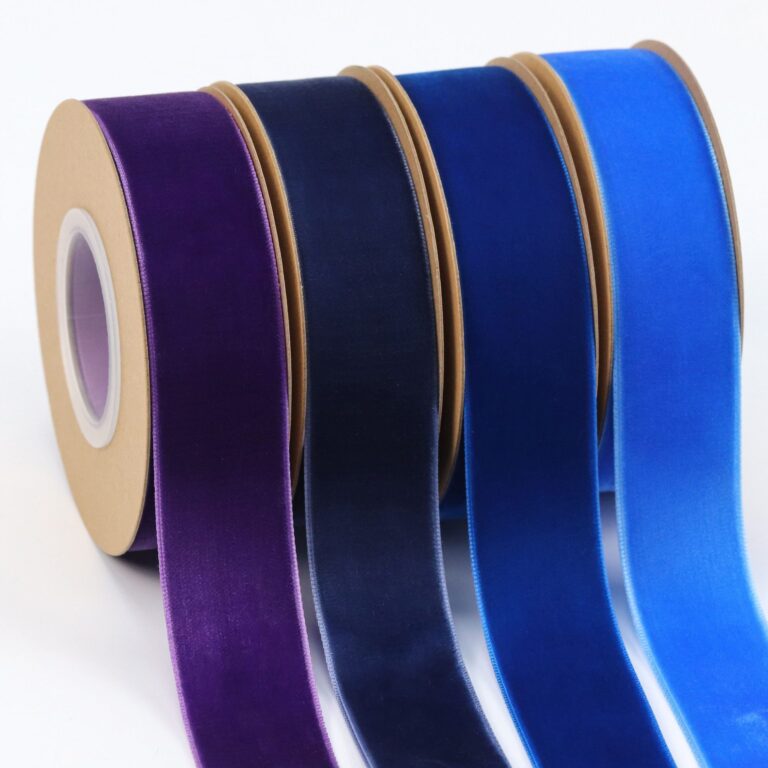 Velvet Ribbon Pile and Finish Comparison for Custom Orders Buyer
: what to confirm on material, MOQ, sample checks,…
Explore guide
Metallic Ribbon Finish Comparison for Custom Orders: Buyer Checklist
Metallic Ribbon Finish Comparison for Custom Orders: what to confirm on material, dimensions, finish, and handling before you…
Explore guide
Velvet Ribbon Pile and Finish Comparison for Custom Orders Buyer
Velvet Ribbon Pile and Finish Comparison for Custom Orders Buyer: what to confirm on material, MOQ, sample checks,…
Explore guide
Metallic Ribbon Finish Comparison for Custom Orders: Buyer Checklist
Metallic Ribbon Finish Comparison for Custom Orders: what to confirm on material, dimensions, finish, and handling before you…
Explore guide
Leave a comment
Share a sourcing question or feedback on this guide. The Lude team reviews submissions before following up.