


Ribbon for Packaging: Retail, Gift, Cosmetic, Wine, and Ecommerce Use Cases Hub
Shortlist Ribbon for Packaging suppliers by sample approval, color tolerance, QC checks, and use case. See which options fit your project specs and order

For gift packaging buyers, gift shops and gift basket sellers, e-commerce sellers and marketplace brands, retail packaging buyers, retail chains and store operations teams, cosmetics and perfume brands, wine and festive decoration buyers, floral shops and seasonal decoration businesses, event accessory companies, event agencies and promotional product distributors, award and ceremony organizers, importers, wholesalers, distributors, private label brands, ribbon for packaging becomes expensive when the buyer only compares surface details. A vague spec, missing quote input, weak sample check, or unclear supplier responsibility can change cost, delay approval, or create reorder problems.
Expert note: The Lude Ribbon editorial team works with ribbon manufacturing, sampling, printing, quality control, and export service specialists to create practical buying guides for importers, brands, wholesalers, and procurement teams.
This article helps you pick the best-fit option for a real project, not the most generic best item. You will see what to check, why it matters commercially, what risk to watch for, and what action to take before quote, sample, or bulk order approval.
When ribbon for packaging fits brand packaging or event projects
| Use case | Recommended choice | Spec note | Risk note | Follow-up |
|---|---|---|---|---|
| Brand packaging for retail shelves where ribbon is a primary decorative element and color consistency across batches is critical | Plain stock ribbon from existing inventory colors and widths | Select from existing inventory colors and widths; MOQ starts at 1,500 yards per color | Custom dyeing for non-stock colors adds lead time and MOQ negotiation risk; color drift possible without Pantone target | Request stock color swatch set and confirm inventory availability before quoting |
| Event packaging for a single-use promotion where ribbon is a secondary accent and exact color match is less critical | Printed ribbon with standard ink colors | Printed ribbon MOQ starts at 3,000 yards per design/program; standard production lead time 15–20 business days after approval | Artwork approval and color target confirmation required before bulk production; reorder color consistency depends on retained artwork | Submit artwork and Pantone target for quote and sample approval before bulk order |
| High-volume packaging program with multiple SKUs requiring consistent ribbon across production runs | Custom color ribbon via RFQ | Custom color or custom width ribbon MOQ negotiable; confirm by RFQ based on color, width, construction, and production program | No fixed MOQ; lead time and pricing depend on dye lot size and color target; color drift risk across batches without retained swatch | Submit color target, width, and estimated annual volume for RFQ and sample development |
| Packaging for luxury goods where ribbon finish and hand feel are brand-critical | Velvet or grosgrain ribbon from stock inventory | Stock velvet and grosgrain ribbon available in standard colors and widths; the MOQ confirmed in the RFQ per color/width | Custom velvet or custom width requires RFQ; hand feel and pile direction may vary between dye lots | Request stock swatch set and confirm inventory availability for target color |
| Packaging for e-commerce unboxing experience where ribbon is a branded insert | Printed ribbon with logo or brand message | Printed ribbon MOQ 3,000 yards per design; standard production lead time 15–20 business days after approval | Artwork approval and color proof required before bulk; reorder lead time same as initial order | Submit artwork file and Pantone target for quote and digital proof |
| Seasonal or event-specific packaging where ribbon quantity is below standard MOQ | Plain stock ribbon from existing inventory | Stock ribbon MOQ 1,500 yards per color; no custom color or printing required | If below 1,500 yards, no standard option; custom MOQ negotiation required via RFQ | Confirm exact yardage needed; if below MOQ, request RFQ for possible partial or mixed-color order |
Best-fit buyer scenarios
Check the physical sample against the dieline, material specification, and product-fit requirement. Record the accepted tolerance or revision so production and QC use the same reference.
Cases where another ribbon option is safer
Set the buyer acceptance rule in writing: name the approved sample or standard, keep the evidence record, assign the approval owner, and require supplier confirmation before bulk production.
Material, finish, and format decisions
| Risk signal | Why it matters | Buyer response | Proof to request | Follow-up |
|---|---|---|---|---|
| Supplier cannot confirm ribbon material construction (woven vs. printed vs. dyed) in writing. | Material type drives appearance, handling, and cost; ambiguity leads to wrong bow formation, poor knot retention, or color mismatch at packing. | Request a material specification sheet listing fiber content, weave type, and finish (e.g., satin, grosgrain, velvet, organza). | Manufacturer's material data sheet or a signed specification confirmation on supplier letterhead. | Reject quote until material spec is provided; escalate to sourcing manager if supplier refuses. |
| Supplier offers a single width and roll length without discussing packing fit or bow format requirements. | Ribbon that does not fit the packaging insert, bow machine, or carton dimension causes production delays, waste, and rework. | Confirm required width, roll length, and bow format (e.g., pre-made bow, hand-tie bow, spool) before quoting. | Packing diagram or carton layout showing ribbon placement and clearance; supplier's written confirmation of width and length match. | Send supplier the exact packaging insert dimensions and bow format spec; hold quote until fit is confirmed. |
| Supplier describes logo printing broadly but cannot confirm the approved artwork review, sampling, and production approval steps. | Unclear artwork control leads to poor ink adhesion, color shift, or registration error, adding setup cost, rework cost, and launch delay. | Ask for the artwork review path, sample approval step, and production record used for the selected ribbon material. | Approved artwork proof, printed ribbon sample, and supplier-side production note showing edge definition and color accuracy. | If proof is not available, require a sampling run before bulk production; do not waive on verbal claims alone. |
| Supplier has no documented quality control plan for ribbon color, width, and print registration. | Without QC checks, color variation, width drift, or print misregistration will pass through to packing, causing customer rejections. | Request their QC plan: in-inspection points (e.g., incoming material, in-process, final), AQL level, and color tolerance standard. | Written QC plan or inspection checklist; recent inspection report showing pass/fail rates for ribbon orders. | If no plan exists, require a third-party inspection at supplier's cost before shipment; include this in contract. |
| Supplier offers no sampling or artwork approval step before bulk production. | Without sample approval, bulk production may produce ribbon that does not match artwork, color, or bow format, causing full order reject. | Insist on a two-step approval: artwork proof (digital) then production sample (physical) before bulk run. | Signed artwork approval form and a physical sample approval report with photos and measurements. | Hold production start until both approvals are signed; do not waive on verbal OK. |
| Supplier cannot provide a standard lead time or MOQ for custom ribbon or printed ribbon. | Without MOQ and lead time, you cannot plan inventory, packing, or launch dates; risk of stockout or late delivery. | Ask for MOQ per product type (plain, custom, printed) and lead time in business days from spec confirmation. | Written MOQ table and lead time schedule from supplier; cross-check with Lude Ribbon MOQ rules (e.g., plain stock 1,500 yards per color, printed 3,000 yards per design). | If MOQ or lead time is missing, require a formal RFQ response; do not proceed without written numbers. |
How material choice affects appearance and handling
Factory-side judgment: approve the material only after the sample room can match the hand feel, knot behavior, and finish against the packaging dieline. Record the accepted tolerance or revision so production and QC use the same reference.
Width, roll length, bow format, and packing fit
A width that looks close on a loose sample can still fail on carton packing, bow machinery, or a gift-box insert. Treat the packing diagram and approved sample as the production approval gate before quote comparison.
For product context, review custom printed ribbon after the buyer has confirmed specifications, sample records, and RFQ assumptions.
RFQ checkpoint
Help buyers prepare ribbon specifications, artwork, quantity, packaging requirements, and timeline before requesting a quote.

Application and display requirements
| Option | Best fit | Trade-off | Buyer risk | Verification | Follow-up |
|---|---|---|---|---|---|
| Retail, gift, cosmetic, wine, holiday, award, or event details | Custom printed ribbon with Pantone color matching and GS1 barcode-ready packaging | Higher MOQ (3,000 yards per design) and longer lead time for artwork approval | Color mismatch or barcode placement error delays retail shelf placement | Request printed ribbon sample on actual substrate; verify barcode scan on the sample | Submit artwork and Pantone reference for RFQ; confirm barcode placement spec |
| Handling, storage, and presentation risks | Plain stock ribbon from existing inventory colors and widths | Limited color and width options; no custom branding or printing | Ribbon fraying, color bleeding, or crushing during storage or transit | Inspect ribbon roll ends for fraying; request AQL inspection per ISO 2859-1 on first shipment | Specify packing type (e.g., spool, flat pack) and storage conditions (cool, dry) in RFQ |
| Specifications | Custom dyed ribbon to exact Pantone color target for brand consistency | Requires RFQ confirmation; MOQ negotiable but lead time extends for dye lot approval | Dye lot variation between production runs; color drift over time | Request dye lot sample under D65 lighting; retain sealed reference sample | Submit Pantone reference and width requirement for RFQ; request dye lot sample approval |
| Cost Driver | Plain stock ribbon from existing inventory colors and widths at the 1,500-yard minimum per color | No custom color or width; limited to stock availability | Stock ribbon may be discontinued or out of stock for reorders | Confirm current stock availability and reorder lead time with supplier | Request stock availability list and reorder lead time before placing order |
| Buyer Risk | Printed ribbon with artwork approval and color proof before bulk production | Requires 3,000 yards minimum per design; sampling and approval cycle adds time before production | Artwork rejection or color mismatch after bulk production | Require signed off printed sample and color density report before bulk run | Request printed sample on actual ribbon material; approve in writing before production |
| Next Action | Submit RFQ with material, width, color target, quantity, packing, and delivery timing | No action without complete specification; partial info delays quote | Incomplete RFQ leads to incorrect pricing or lead time | Use Lude Ribbon RFQ template to ensure all fields are filled | Complete RFQ form and submit for quote; include sample request if needed |
Retail, gift, cosmetic, wine, holiday, award, or event details
Set the buyer acceptance rule in writing: name the approved sample or standard, keep the evidence record, assign the approval owner, and require supplier confirmation before bulk production.
Handling, storage, and presentation risks
Set the buyer acceptance rule in writing: name the approved sample or standard, keep the evidence record, assign the approval owner, and require supplier confirmation before bulk production.
For product context, review metallic ribbon after the buyer has confirmed specifications, sample records, and RFQ assumptions.
MOQ, lead time, and sample planning
| RFQ input | Quote impact | What to verify | Risk to avoid | Supplier follow-up |
|---|---|---|---|---|
| Confirm final ribbon material, width, color target, and construction details against the supplier’s MOQ table. | MOQ, lead time, and cost all depend on these specs; a change after ordering resets the production clock. | A buyer requesting custom-dyed satin ribbon at a specific width must first verify if that color and width are stock or custom. | Ordering a custom width as if it were stock can cause an RFQ delay and a higher per-yard cost. | Send the spec sheet to the supplier and ask: Is this width and color in your stock MOQ table or does it require an RFQ? |
| Confirm the production lead time window (15–20 business days) before placing the bulk order. | Lead time starts only after all specs, artwork, and sample approvals are locked; a partial approval can push delivery past the project deadline. | A buyer needing ribbon for a June 1 event must have all approvals done by May 1 to stay within the 15–20 business day lead time window. | A last-minute spec change can push delivery past the event date, causing expedite fees or a missed launch. | Ask the supplier: What is the latest date I can approve the sample and still hit my required delivery date? |
| Verify the MOQ for the exact product type: plain stock ribbon (1,500 yards per color), printed ribbon (3,000 yards per design), or ribbon flowers (confirmed by RFQ). | Each product type has a different MOQ floor; ordering below MOQ can cause a requote or a forced upcharge. | A buyer wanting printed ribbon must know the printed ribbon MOQ is 3,000 yards per design. | Ordering printed ribbon without confirming MOQ can result in a rejected order or a surprise price increase. | Check the supplier’s MOQ table for your exact product type and quantity before sending the PO. |
| Confirm the MOQ for custom color or custom width ribbon by RFQ; do not assume a fixed number. | Custom dyeing and custom slitting have variable MOQs based on color, width, and production program; a fixed MOQ does not exist. | A buyer requesting Pantone 18-1663 TPX dyed ribbon at a specific width must get an RFQ before assuming any MOQ. | Assuming a standard stock MOQ for a custom color that actually requires a higher quantity can cause a budget shortfall and a project delay. | Submit the custom color and width details to the supplier for an RFQ-based MOQ confirmation. |
| Confirm the lead time includes sample approval time; sample approval is not part of the 15–20 business day production window. | Sample approval takes time; if not planned, it pushes the production start date. | A buyer who approves a sample on day 10 but counts the production window from the first inquiry will be late. | A missed delivery date can cause a retail shelf stockout or an event cancellation. | Ask the supplier: What is the typical sample approval turnaround time, and how does it affect the production start date? |
| Identify the main cost driver: material type, width, color complexity, printing method, or quantity. | Each cost driver has a different impact on MOQ and lead time; knowing which one drives cost helps prioritize spec trade-offs. | A printed ribbon with a 4-color oil ink design costs more per yard than a 1-color heat transfer print and may have a higher MOQ. | Choosing a high-cost driver without understanding it can blow the budget and cause a requote. | Ask the supplier: Which spec change would most reduce the per-yard cost while keeping the MOQ the same? |
What to confirm before bulk ordering
Set the buyer acceptance rule in writing: name the approved sample or standard, keep the evidence record, assign the approval owner, and require supplier confirmation before bulk production.
How to avoid last-minute project delays
Set the buyer acceptance rule in writing: name the approved sample or standard, keep the evidence record, assign the approval owner, and require supplier confirmation before bulk production.
For product context, review OEM and ODM ribbon development after the buyer has confirmed specifications, sample records, and RFQ assumptions.
Buyer checklist before RFQ
Use the table to lock each specification before RFQ, sample approval, or bulk order. It connects quality control, verification method, buyer risk, and next action in one check. Supplier-side judgment: treat the approved sample, artwork record, and packing note as the production approval gate, because a quote that skips them can hide setup cost, rework cost, and reorder budget risk.
| Specification | Quality control | Verification method | Buyer risk | Next action |
|---|---|---|---|---|
| Sample approval | Pre-production sample matches approved color, width, and print. | Compare sample against approved reference under D65 light. | Bulk run may deviate from approved sample without sign-off. | Request pre-production sample before bulk order. |
| Material / substrate | Material type, weave, and finish per spec sheet. | Inspect material certificate and physical swatch. | Substitution may affect appearance or durability. | Confirm material grade and source with supplier. |
| Width or size tolerance | Width within the buyer-approved tolerance of stated dimension. | Measure with calibrated caliper on 10 random samples. | Out-of-tolerance width may cause packaging fit issues. | Request width tolerance range in RFQ. |
| Finish or color control | Color matches Pantone or approved standard within buyer-approved tolerance. | Compare the lab dip and production sample against the approved color reference. | Color drift across batches leads to rejections and replacement cost. | Approve color standard and request the sample approval record. |
| Packing format | Packing matches agreed roll length, core size, and labeling. | Check packing list and measure roll length on supplier-confirmed sample cartons. | Incorrect packing disrupts downstream automation and can change landed cost. | Specify packing format in RFQ and approve sample carton. |
Project details to send the supplier
Transfer the approved sample record into a production handoff that names the final files, material, structure, print, finish, packing, QC checkpoints, quote assumptions, and schedule basis. Ask the supplier to acknowledge the same version before production starts.
Sample approval and repeat-order controls
Set the buyer acceptance rule in writing: the sample owner signs off color, width, artwork placement, packing, and reorder reference before bulk production starts. Keep that approval record with the quote file so repeat orders do not drift in cost, finish, or carton packing.
For product context, review ribbon resources after the buyer has confirmed specifications, sample records, and RFQ assumptions.
Conclusion
Sourcing ribbon for packaging comes down to aligning your exact specifications—material, width, color target, and printing method—with the supplier’s MOQ structure and lead time. For plain stock ribbon, you can start at 1,500 yards per color from existing inventory, while custom colors or widths require an RFQ to confirm feasibility and cost. Printed ribbon programs begin at 3,000 yards per design, and rosettes or sashes start at 1,000 pieces per style. Standard production takes 15–20 business days after specification confirmation. To minimize quality risk, always validate the spec with a physical sample and approve artwork before bulk production. Your next procurement action is to request a quote with your material, width, color target, quantity, packing, and delivery timing ready.
Final buyer checks before moving forward
Set the buyer acceptance rule in writing: name the approved sample or standard, keep the evidence record, assign the approval owner, and require supplier confirmation before bulk production.
Quote-ready inputs to prepare
Set the buyer acceptance rule in writing: name the approved sample or standard, keep the evidence record, assign the approval owner, and require supplier confirmation before bulk production.
Supplier or sample action to take next
Transfer the approved sample record into a production handoff that names the final files, material, structure, print, finish, packing, QC checkpoints, and schedule basis. Ask the supplier to acknowledge the same version before production starts.
To request a quote, visit gift and retail packaging ribbon solutions and confirm the final specification, quote assumptions, sample approval, QC evidence, buyer risk, and next action before bulk order.
FAQs About Ribbon for Packaging
This part shows how ribbon for packaging affects specification fit, cost exposure, production risk, supplier execution, and approval timing.
Which packaging or event use cases fit Ribbon for Packaging best?
Ribbon for packaging is best suited for gift wrapping, retail product embellishment, event decor, and ceremony sashes. It also works for ribbon flowers, rosettes, and custom printed logo ribbons used in branding and promotional packaging programs.
What specs should I test before using Ribbon for Packaging across a full product line?
Before full production, test material composition, width tolerance, colorfastness, and print adhesion. Confirm that the ribbon meets your packaging’s tensile strength and fray resistance requirements. Always approve a sample against your specification sheet before scaling.
When should I choose another ribbon material, width, or finish instead of Ribbon for Packaging?
Choose another ribbon material if your application requires outdoor UV resistance, food-safe contact, or extreme durability beyond standard satin, grosgrain, or organza. Opt for a different width or finish when the ribbon must pass through automated packaging machinery or match a specific brand aesthetic that the current option cannot deliver.
What information should go into the application fit table and red flag list for Ribbon for Packaging?
The application fit table should list material, width, color target, and end-use (e.g., gift wrap vs. event sash). The red flag table must flag mismatches in MOQ, lead time, or print method suitability. The RFQ should connect your program quantity to the supplier’s MOQ rules: plain stock ribbon starts at 1,500 yards per color and printed ribbon at 3,000 yards per design.
How can buyers avoid wrong judgment can create inaccurate quotes, bad samples, quality disputes, delivery delays, reorder variation, or supplier mismatch when sourcing Ribbon for Packaging?
To avoid inaccurate quotes and quality disputes, provide complete specs—material, width, color reference (e.g., Pantone), quantity, and packing details—in the RFQ. Confirm MOQ and lead time (standard is 15–20 business days) before sampling. Approve a production sample and agree on AQL inspection criteria to prevent reorder variation and supplier mismatch.
What should buyers confirm before ordering Ribbon For Packaging?
Buyers should confirm material composition, width, color target (Pantone or physical swatch), quantity, and packing requirements. Verify MOQ against the product type: plain stock ribbon from inventory starts at 1,500 yards per color, custom colors/widths require RFQ confirmation, and printed ribbon starts at 3,000 yards per design. Also confirm standard lead time of 15–20 business days and request a sample for approval before bulk production.
Keep exploring
Recommended buyer guides
 Pre-Tied Bows for Retail Packaging: When They Reduce Labor and Rework
See when pre-tied bows reduce retail packaging labor, improve consistency, and simplify bulk packing, SKU planning, and reorders
Explore guide
Pre-Tied Bows for Retail Packaging: When They Reduce Labor and Rework
See when pre-tied bows reduce retail packaging labor, improve consistency, and simplify bulk packing, SKU planning, and reorders
Explore guide
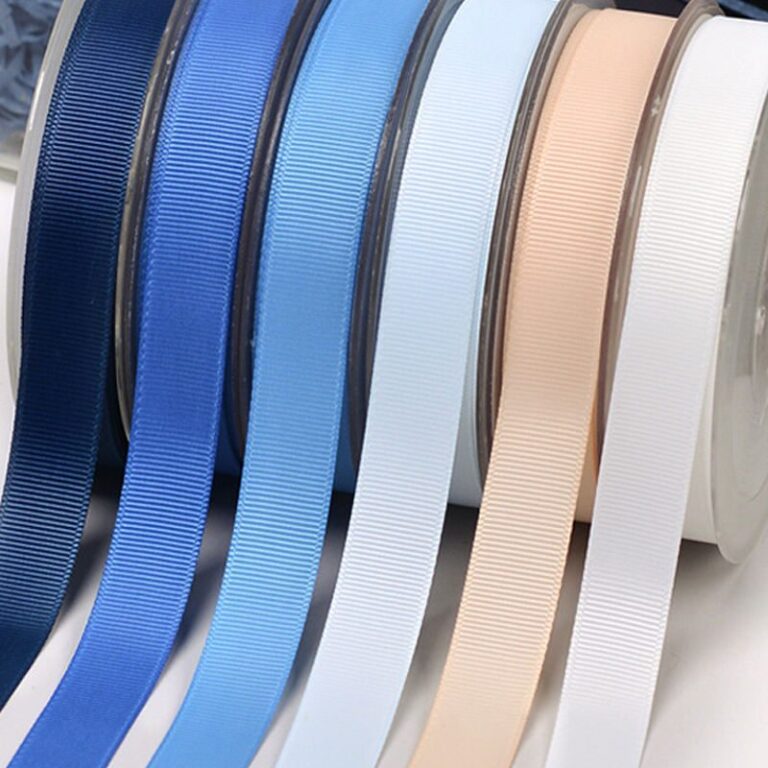 Wholesale Grosgrain Ribbon Rolls: Specs, Roll Length, and RFQ Checks
Buying Grosgrain Ribbon Rolls? Verify sample approval, color tolerance, QC checks, and material to reduce quoting errors and…
Explore guide
Wholesale Grosgrain Ribbon Rolls: Specs, Roll Length, and RFQ Checks
Buying Grosgrain Ribbon Rolls? Verify sample approval, color tolerance, QC checks, and material to reduce quoting errors and…
Explore guide
 Wholesale Foil Printed Ribbon: Use-Case Fit and RFQ Checklist
Buying foil printed ribbon: buyer use-case fit checklist? Verify artwork files, print method, and color target to reduce…
Explore guide
Wholesale Foil Printed Ribbon: Use-Case Fit and RFQ Checklist
Buying foil printed ribbon: buyer use-case fit checklist? Verify artwork files, print method, and color target to reduce…
Explore guide
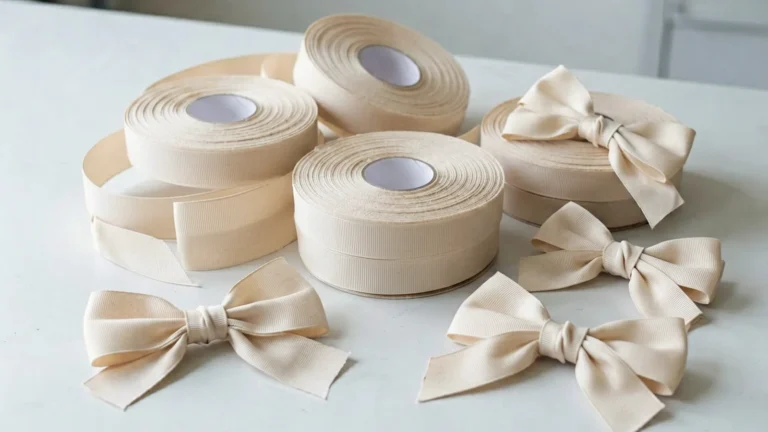 Grosgrain Ribbon Width Guide: Width choice for packaging and bows
Grosgrain Ribbon Width Guide: what to check on artwork files, print method, color target, and material before placing…
Explore guide
Grosgrain Ribbon Width Guide: Width choice for packaging and bows
Grosgrain Ribbon Width Guide: what to check on artwork files, print method, color target, and material before placing…
Explore guide
Leave a comment
Share a sourcing question or feedback on this guide. The Lude team reviews submissions before following up.