


Pre-tied Bow Shape Recovery Sample Checklist Wholesale Buying Guide
Pre-tied bow shape recovery sample checklist: what to check on sample approval, color tolerance, QC checks, and shape before placing a custom order

The sourcing record for pre-tied bow shape recovery is incomplete until it supports this Verify samples, materials, print, tolerances, certifications, and bulk-production risk.
A pre-tied bow spends its life compressed in a carton. Whether it recovers its shape is the whole quality question, and it is testable in advance.
Direct answer: For pre-tied bow shape recovery, buyers should verify samples, materials, print, tolerances, certifications, and bulk-production risk.
What shape recovery actually decides for a bow programme
- Check shape recovery against your packed bow dimensions: A bow that does not spring back to its intended shape after flattening will look crushed in the box, forcing rework or returns. Flatten a production sample, wait 30 seconds, then measure the recovered height and width against the approved spec. Bows arrive flat and stay flat, ruining unboxing appearance and triggering customer complaints. Document the recovery measurement on the sample approval form and set a minimum recovery percentage.
- Verify recovery consistency across multiple samples from the same run: One good sample does not prove the whole batch will recover; ribbon tension and knot tightness vary across the production run. Pull five random bows from the middle and end of the run, flatten each, and compare recovery angles side by side. Mixed recovery means some units look full while others stay flat, creating an inconsistent retail presentation. Require the supplier to submit a recovery consistency report with the pre-production sample.
- Confirm the ribbon material and weave support the required recovery: Satin, grosgrain, and organza each recover differently; a material change mid-order can drop recovery below your threshold. Ask the factory for the ribbon's crease recovery angle test data or run a quick hand-flatten test on the actual material. Bows made from low-recovery ribbon will not hold shape, forcing last-minute material substitution or order rejection. Lock the ribbon spec and recovery test method in the RFQ before sample production begins.
Where flattened bows cost you more than the ribbon
When a pre-tied bow arrives flat, your packing line stops. Workers must fluff each bow by hand, adding labor cost and slowing throughput. Worse, a bow that never recovers fully looks cheap on the shelf, hurting your brand. The real cost is not the ribbon, it is the rework, the rejected cartons, and the lost trust from your retail customer.
Why the sample on your desk is not the test
A hand-tied sample made in the sample room recovers perfectly because it was handled gently and rested for hours. Production bows are machine-tied, compressed in bins, and packed under pressure. The sample tells you what the ribbon can do, not what the process will deliver. You must test recovery on production-representative bows from the actual run, not the polished sample.
How pre-tied bows are packed, and what that does to them
When pre-tied bows arrive compressed in a tight carton, the loops can flatten, crease, or lose their intended volume. This shape recovery failure is a common rejection reason for packaging buyers. The control lies in the packing method: loose fill, compartment trays, or flat-pack each affect recovery differently. Loose fill allows bows to shift and compress unevenly, while compartment trays maintain individual shape but increase per-unit cost. Flat-pack, often used for high-volume orders, requires precise stacking to avoid permanent creasing. The longer bows sit compressed before reaching the shelf, sometimes weeks in transit or warehouse storage, the greater the risk of irreversible deformation. A factory that tests shape recovery after simulated transit and uses internal dividers or custom inserts reduces this risk. During RFQ and sample handoff, request a packed sample that mirrors the final shipping method, and verify recovery within 24 hours of unpacking. This step alone can prevent costly returns and repackaging.
Loose fill, compartment trays, and flat-pack
Loose fill is the lowest-cost option but offers minimal protection; bows may arrive misshapen. Compartment trays add cost but preserve bow geometry, ideal for retail-ready packaging. Flat-pack balances cost and protection when bows are stacked in layers with tissue or paper separators. Each method affects MOQ and unit price, so match the packing type to your bow’s material and loop density.
How long they sit compressed before the shelf
Compression time directly impacts shape memory. Bows stored compressed for more than 30 days may not recover fully. Factories with climate-controlled storage and FIFO inventory management minimize this risk. Request a recovery test at 7, 14, and 30 days during sample approval.
| Packing Method | Shape Recovery Risk | Cost Impact | Best For |
|---|---|---|---|
| Loose fill | High | Low | Low-cost, non-retail |
| Compartment trays | Low | Medium | Retail-ready, premium |
| Flat-pack | Medium | Low-Medium | High volume, standard |
Choosing the right packing method is a factory execution decision that affects both cost and product quality. During the RFQ process, specify the packing type and require a ribbon products after simulated transit. This ensures your pre-tied bows arrive looking as intended, reducing rejection rates and preserving brand reputation.

The compression and recovery test to run on samples
When pre-tied bows arrive compressed in a tight carton, the loops can flatten, crease, or lose their intended volume. The decision rule: any sample that fails to recover at least the agreed share of its original loop height within 30 minutes after unpacking should be rejected. This threshold ensures your packaging maintains its premium appearance on shelf.
Load, duration, and the conditions to state
Specify the compression load applied for the agreed time at the test temperature and the agreed relative humidity. After release, measure recovery at 5, 15, and 30 minutes. Document the load, duration, and environmental conditions in your quote request. This test simulates real shipping stress and separates robust bows from those that will disappoint end users.
What to photograph before and after
Capture a side-view image of the bow against a grid background before compression, then at each recovery interval. Include a ruler for scale. Photograph any creases, loop asymmetry, or ribbon separation. These images become your objective evidence during sample handoff and supplier evaluation.
For factory execution, confirm the supplier uses a calibrated Mecmesin tester and follows ISO 9001 procedures. During quote request handoff, attach your test protocol and request the factory to provide test results with photos. This step reduces production risk and ensures consistent quality across orders.
For further guidance, see our OEM and ODM ribbon development.
Setting a pass basis both sides can hold
When pre-tied bows arrive compressed in a tight carton, the loops can flatten, crease, or lose their intended volume. The buyer must resolve this ambiguity by defining a measurable shape recovery standard, e.g., a set share of the original loop height within a set time after unpacking, before the supplier quotes. Without this control, the factory may ship bows that never fully rebound, leading to rejected orders and costly rework.
Recovery time versus recovered shape
Specify both the elapsed time (e.g., the agreed time at the test temperature) and the dimensional target (e.g., loop height at or above the agreed share of pre-compression measurement). This dual metric prevents disputes: a bow that recovers slowly but eventually reaches shape still fails if the buyer needs immediate display readiness. Include a simple test protocol, compress a sample at the agreed load for the agreed time, then measure recovery, so the factory can replicate conditions.
Writing it so the supplier can quote against it
Translate the recovery spec into a line item on the quote request: “Shape recovery: at or above the agreed share of original loop height within the agreed time post-compression (test per attached method).” This forces the supplier to select materials (e.g., higher-gauge wire, denser gift and retail packaging ribbon solutions) and processes (e.g., pre-steaming) that guarantee performance. During sample handoff, include a signed pass/fail sheet with actual recovery data; both sides keep a copy to anchor the production quality baseline.
| Spec Element | Example | Why It Matters |
|---|---|---|
| Recovery time | the agreed time at the test temperature | Aligns with unpack-to-display window |
| Recovered shape | Loop height at or above the agreed share of original | Prevents subjective “looks okay” disputes |
| Test compression | the agreed load for the agreed time | Simulates worst-case carton stacking |
By locking these parameters into the quote request and sample sign-off, you eliminate the risk of the factory delivering bows that fail in the field. The pass basis becomes a shared contract, not a surprise.
Ribbon and construction factors that change recovery
- Wired ribbon holds shape recovery better than unwired under compression: Side-by-side compression test images at agreed load and elapsed time Supplier quality or sample room Approving unwired bows without recovery data leads to flat loops in carton Add wired vs unwired recovery test to sample approval checklist
- Satin and grosgrain recover differently after carton compression: Recovery angle measurement for each ribbon type using calibrated tester Supplier QC with test report Assuming one recovery spec fits all materials causes rejected shipments Compare recovery angles against your minimum threshold per material
- Velvet ribbon requires longer recovery time than satin or grosgrain: Timed recovery log with photos at 0, 30, and 60 minutes Supplier sample room Short recovery window in packing line causes crushed pile and returns Document agreed recovery time in quote request line item
- Supplier has tested recovery on pre-tied bows using your ribbon construction: Factory test records from prior runs with similar ribbon type and wire gauge Supplier production or quality manager Untested construction leads to shape failure at retail unboxing Request prior test data before sample approval
Wired versus unwired, and what the wire really does
The wire inside a pre-tied bow acts as a memory frame. When the bow is compressed in a carton, the wire helps the loops spring back to the original shape. Unwired bows rely entirely on ribbon stiffness and fiber memory. For recovery-critical packaging, wired ribbon is the safer choice.
Satin, grosgrain, and velvet under compression
Satin ribbon has a smooth, slippery face that recovers quickly but can show crease lines. Grosgrain has a ribbed weave that holds shape well under moderate compression. Velvet has a pile that flattens easily and recovers slowly, often requiring longer decompression time. Each material needs its own recovery spec. Request material-specific test data before approving the bow design.
What to require in the approval record
- Does the supplier have a documented shape-recovery test for pre-tied bows? Without a documented test, recovery claims are unverifiable and the buyer accepts invisible compression damage. Supplier provides a written procedure with pass/fail criteria and a calibrated Mecmesin or equivalent tester. Bows that fail to recover in carton cause returns, repack labor, and lost shelf presence. Request the test procedure and a video of a live recovery check during sample approval.
- How does the supplier retain and label the approved sample for production reference? Without a retained reference, the production team has no physical standard to match against bulk runs. Approved sample is sealed in a clear bag with PO number, date, and recovery spec attached; stored in a controlled sample room. Bulk bows drift from the approved shape because operators rely on memory, not a physical benchmark. Require a photo of the retained sample with its label in the approval record.
- Is there a change-control process if the supplier switches ribbon material or bow construction? A ribbon change (e.g., satin to grosgrain) or construction tweak can alter recovery behavior without notice. Supplier has a written change-notification policy requiring buyer approval before any material or process change. Unexpected recovery failure after a material switch leads to rejected shipments and emergency reorders. Add a change-control clause to the purchase order and verify it during the supplier audit.
Approved sample, retained reference, and photo set
The approval record must include the signed-off sample, a labeled reference bow kept in a sealed bag, and a dated photo set showing front, side, and compressed-then-recovered views. This three-part record gives the QC team a physical and visual standard to compare every production lot against, eliminating guesswork during inspection.
Change control if the supplier switches ribbon
A ribbon change, different weave, finish, or thickness, can shift recovery time and final shape. The approval record should require the supplier to notify the buyer in writing before any material or construction change, and to submit a new recovery test and sample for sign-off. This prevents surprise failures after a production run has started.
Packing choices that protect shape without wrecking freight cost
- Supplier uses standard carton inserts without testing for bow shape retention: Generic inserts may allow bows to shift during freight, causing creases or wire deformation that cannot be reversed, increasing rework or rejection rates. Require the supplier to quote custom compartment inserts with dimensions matched to bow loop diameter and wire gauge, and include a shape retention test after simulated shipping vibration. Test report showing bow shape recovery after 30-minute vibration test per ISTA 3A or equivalent. Approve the insert design only after reviewing the vibration test report and signed-off sample.
- Supplier does not document the ribbon type and wire gauge used in the packing test: A ribbon change (e.g., satin to grosgrain) or wire gauge shift can alter recovery time and packing pressure tolerance, making previous packing choices invalid. Lock the ribbon material, weave, finish, and wire gauge in the packing specification sheet, and require the supplier to re-test if any material changes. Packing specification sheet with ribbon and wire details, plus a re-test protocol for material changes. Include a clause in the purchase order that any material change requires a new packing test approval.
- Supplier quotes a single packing cost without breaking out compartment vs. bulk options: Without cost breakdown, you cannot evaluate whether compartment packing is justified by reduced damage rates, and you may overpay for unnecessary inserts or underpay for inadequate protection. Request a cost comparison for three packing options: bulk layering, compartment inserts, and custom die-cut trays, each with estimated damage rate and recovery test results. Cost comparison table with damage rate estimates and recovery test results for each packing option. Select the packing option that minimizes total cost (packing + expected damage + rework) and lock it in the quote request.
Where compartment packing pays for itself
Compartment trays or molded inserts keep each bow separate during stacking and vibration in transit. Without them, bows compress against each other and flatten loops beyond recovery. The extra insert cost is typically offset by fewer rejected units at retail inspection and lower return rates from shape complaints.
What to ask the supplier to quote alongside the bows
Ask for a separate line item for the compartment tray or insert material, including thickness and material type. Also request a packing diagram showing bow orientation and carton stack height. This lets you compare freight cost with and without the insert, so you can decide where the trade-off lands for your order volume.
In conclusion
For pre-tied bow shape recovery sample checklist, the next procurement action is a written quote request and sample approval record, not only a preferred style or unit price. Confirm the specification, MOQ assumption, artwork version, supplier capability, sample approval method, QC checkpoint, approval risk, and quote follow-up before bulk production.
FAQ
How long should a pre-tied bow stay compressed before the recovery test means anything?
For pre-tied bow shape recovery sample checklist, turn the answer into a written quote request note: intended use, the governing dimensions, material, finish, packing method, and approval owner. Ask the supplier what sample proof or QC record will confirm the same result in production. A vague answer can turn into quote mismatch, sample delay, packing damage, or repeat-order drift.
Does ribbon type change how well a bow recovers its shape?
Yes, satin recovers quickly but can show crease lines, while grosgrain holds shape longer but may need more time to fluff. Verify the ribbon type and weave in your sample approval, and confirm that any material change triggers a new recovery test.
Should the recovery standard be written into the purchase order or just agreed by email?
Write the recovery standard, such as “shape recovery ≥ a specified percentage within 30 minutes of unpacking”, directly into the purchase order or specification sheet. This makes the requirement enforceable during QC inspection and avoids ambiguity if a dispute arises.
What packing method protects bow shape without raising freight cost too much?
Compartment trays or molded inserts keep each bow separate without increasing carton size significantly. Ask your supplier for a line-item cost on the tray material and confirm the MOQ for that packing option, then test a sample carton to verify shape retention.
How often do raw material price fluctuations affect your quotes?
Raw material price changes can affect quotes, especially for custom colors or specialty ribbons. Request a price validity period on your quote request and ask the supplier to notify you of any cost adjustments before sample approval or order confirmation.
quote request handoff: Send Specs for Review.
Keep exploring
Recommended buyer guides
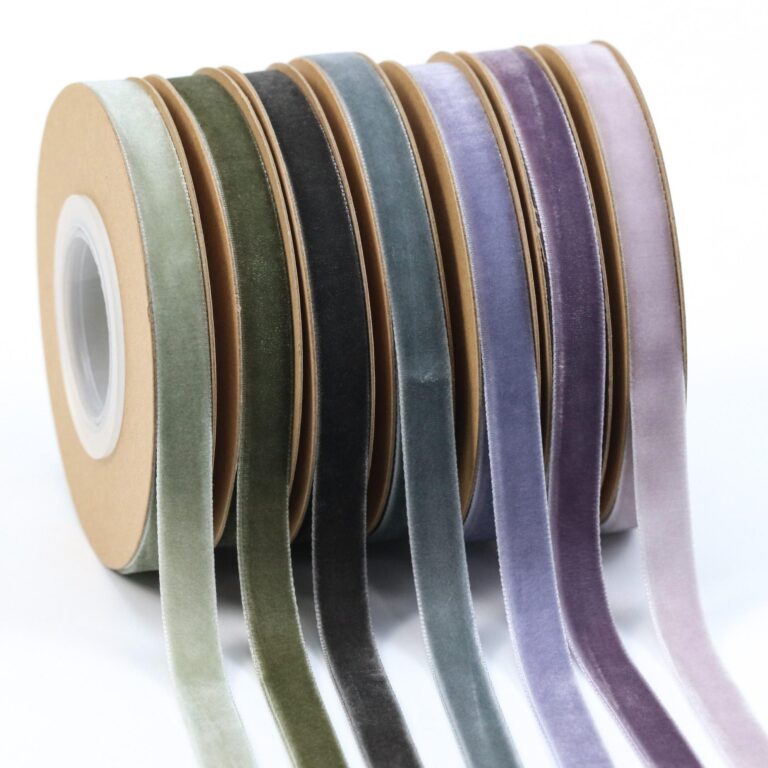 Wholesale Narrow Velvet Ribbon: Specs, Roll Length, and RFQ Checks
Check velvet pile direction, edge finish, cutting, tying, shade, and packout evidence before approving narrow velvet ribbon production.
Explore guide
Wholesale Narrow Velvet Ribbon: Specs, Roll Length, and RFQ Checks
Check velvet pile direction, edge finish, cutting, tying, shade, and packout evidence before approving narrow velvet ribbon production.
Explore guide
 Wholesale Satin Ribbon Sample Approval Workflow: Buyer Checklist
Wholesale Satin Ribbon Sample Approval Workflow — the checks that decide whether a quote, sample, or shipment can…
Explore guide
Wholesale Satin Ribbon Sample Approval Workflow: Buyer Checklist
Wholesale Satin Ribbon Sample Approval Workflow — the checks that decide whether a quote, sample, or shipment can…
Explore guide
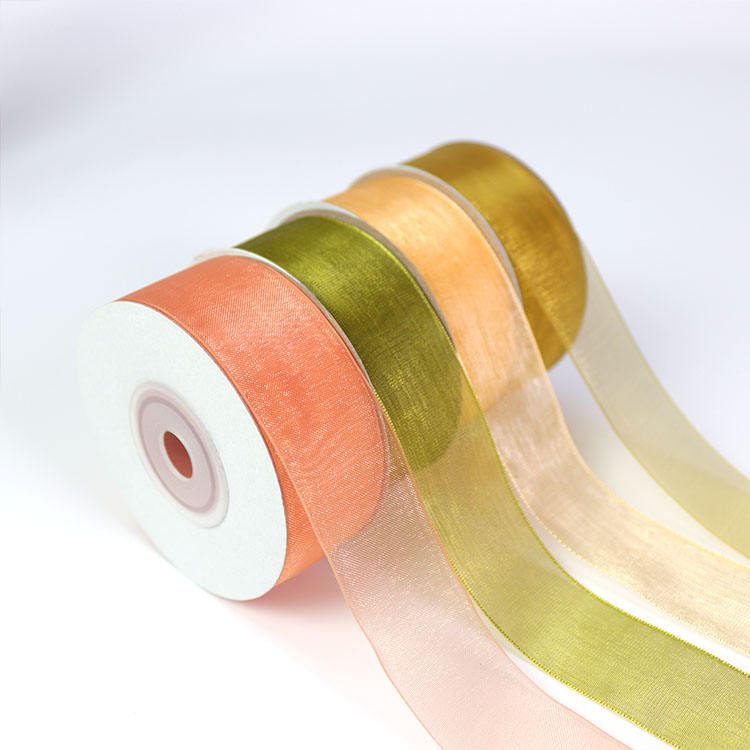 Organza Ribbon Sample Approval Workflow Before Bulk Production Buyer
 — the checks that decide whether a quote, sample,…
Explore guide
Organza Ribbon Sample Approval Workflow Before Bulk Production Buyer
Organza Ribbon Sample Approval Workflow Before Bulk Production Buyer — the checks that decide whether a quote, sample,…
Explore guide
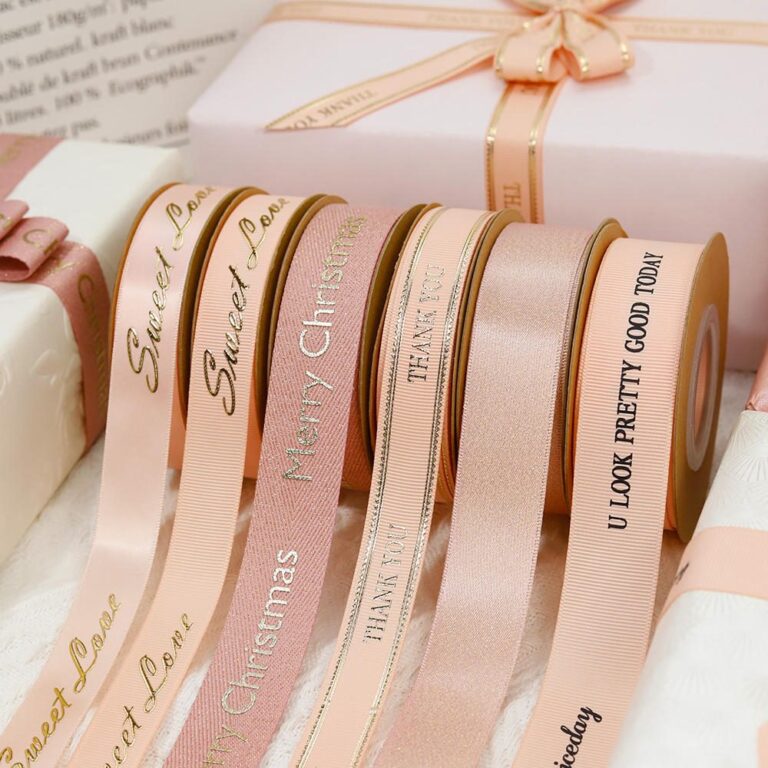 B2B Foil Ribbon Order Risk: Proof, Registration, Release
Buying foil printed ribbon: order risk control checklist? Verify artwork files, print method, color target, and sample approval…
Explore guide
B2B Foil Ribbon Order Risk: Proof, Registration, Release
Buying foil printed ribbon: order risk control checklist? Verify artwork files, print method, color target, and sample approval…
Explore guide
Leave a comment
Share a sourcing question or feedback on this guide. The Lude team reviews submissions before following up.