


Pre-Tied Bow MOQ: Samples, Lead Times & Cost-Saving Tips
Evidence and specification note: Color targets, tolerances, test methods, documentation, acceptance criteria, and remedies must be confirmed for the quoted material and written into the approved sample, specification, and sales agreement. General scenarios in this article are not guaranteed production results. Pricing and example note: Current pricing is quoted to specification. Material, width, color, decoration,…
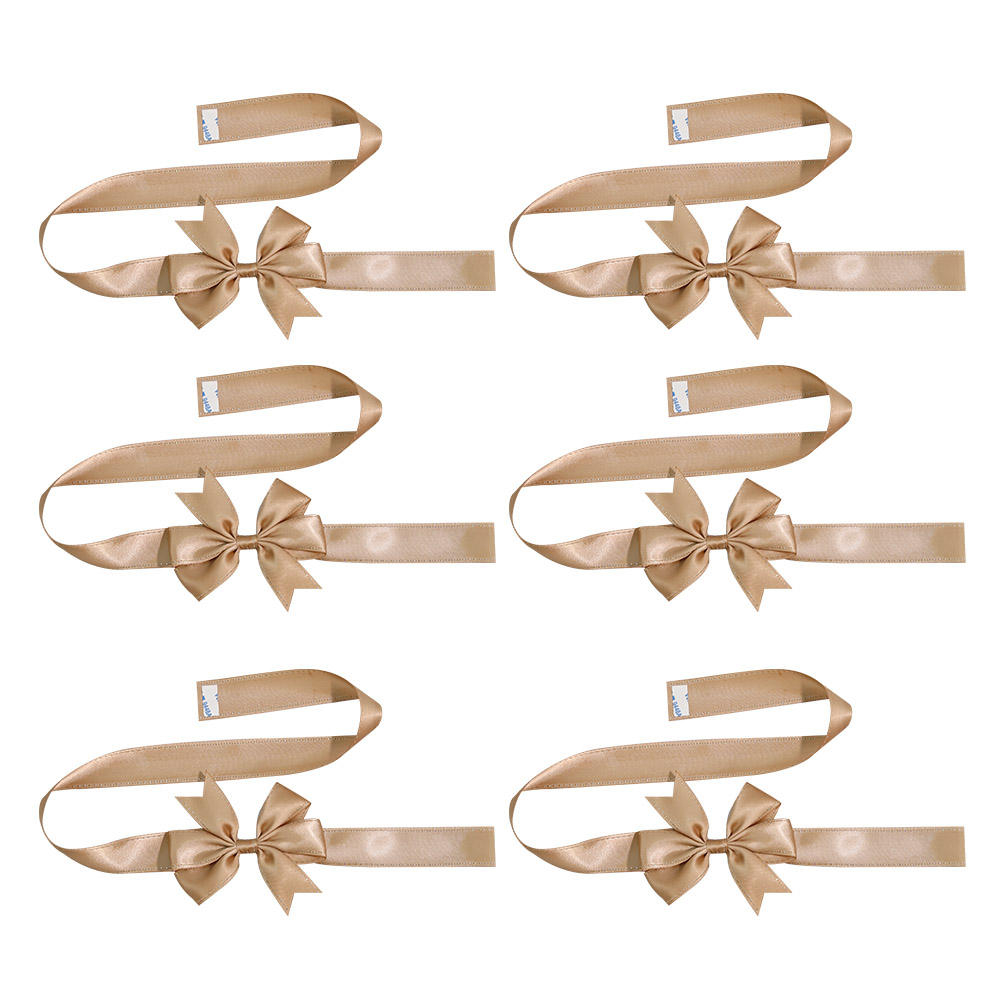
You are planning a graduation ceremony or a corporate gala, and you need 1,500 pre-tied bows in a specific shade of navy blue. The pre-tied bow MOQ is usually around 1,000 pieces per design — which sounds like a lot until you realize that a single event often needs bows for gift bags, award rosettes, and stage decorations combined. The real question is not whether you can hit 1,000 pieces, but how to get the color, shape, and timeline right without blowing your budget.
Any percentage premium, discount, saving, or cost comparison depends on the approved material, width, decoration, quantity, packing, delivery terms, and destination. Compare dated quotations against the same written specification.
What about the common fear that a small order will be rejected or cost more than the ribbons themselves? The pre-tied bow sample lead time runs 7–14 business days after artwork approval, and bulk production takes 15–20 business days after specification and sample approval. Expedited schedules are reviewed against the order specification and still require sample approval. But the single most important step — and the one most first-time buyers skip — is the physical sample. Skipping this step causes many post-production disputes. A digital proof tells you the color is close. A physical sample lets you feel the ribbon weight, check the loop stiffness, and confirm the tails sit correctly. Insist on it, even if the sales rep pushes for digital approval.
There is also a hidden trap in the MOQ structure itself. The real minimum order quantity for custom pre-tied bows is not just about piece count — it is about color and print setups. If you need bows in three different sizes but the same design, a smart supplier will combine them under one MOQ instead of treating each size as a separate run. That keeps setup costs down and your timeline shorter. Always ask: can we batch multiple sizes or colors under a single design setup? The answer determines whether your pre-tied bow factory direct pricing stays reasonable or spikes unexpectedly.
Why MOQ Matters for Pre-Tied Bows: The Hidden Risk
Ordering 300 bows to save money?
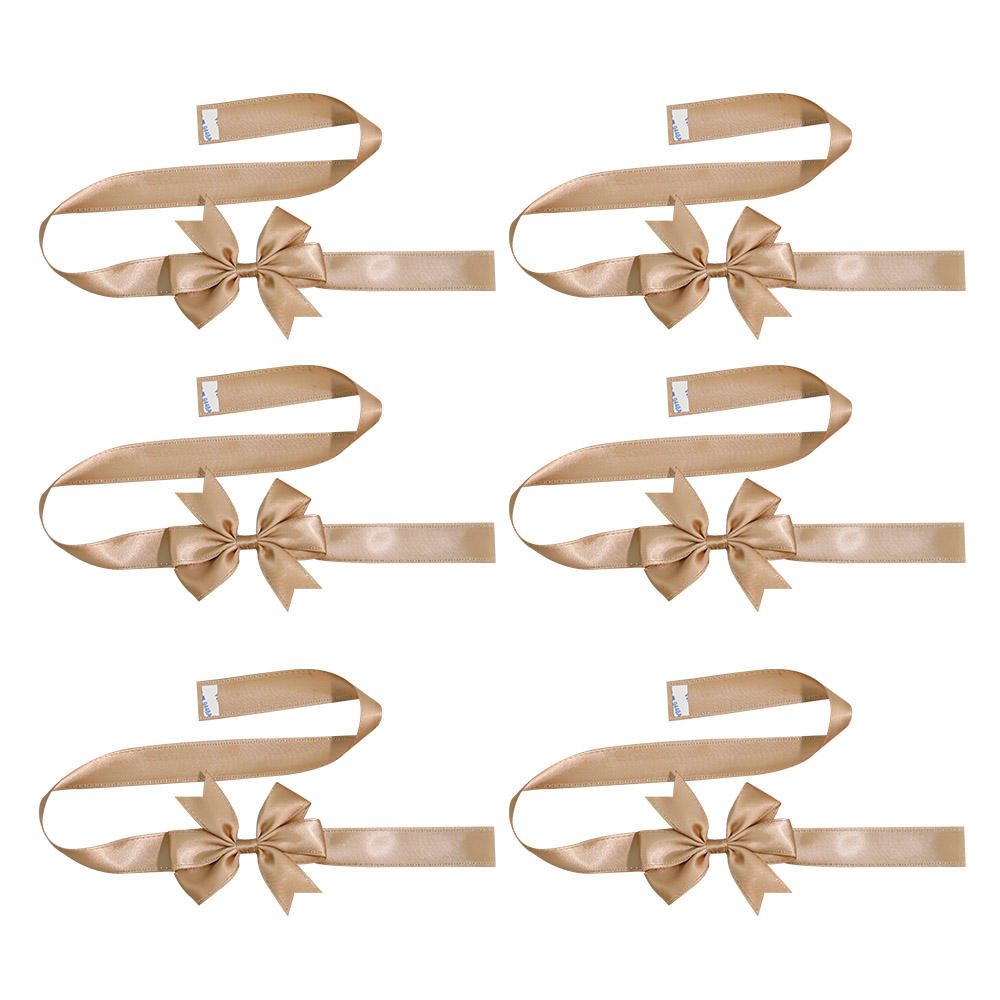
Every custom pre-tied bow order starts with a fixed cost: the die setup for cutting ribbon lengths, stitching the center, and shaping the loops. That cost doesn’t change whether you order 300 or 3,000 bows. When you order below the factory’s minimum order quantity (typically 1,000 pieces per design), you either pay that setup fee as a separate line item, or the supplier buries it in a higher unit price. Either way, you lose the volume advantage that makes custom bows affordable.
- Hand-made inconsistency: Suppliers who accept very low MOQs often tie bows by hand instead of using automated machines. Hand-tied bows vary in loop size, tail length, and knot tightness — noticeable when you place 10 bows side-by-side. Factories with dedicated bow-tying equipment produce identical shapes across the entire run. If you need consistent branding, hand-made is a liability, not a benefit.
Pre-Tied Bow MOQ: Standard Ranges vs Custom Runs
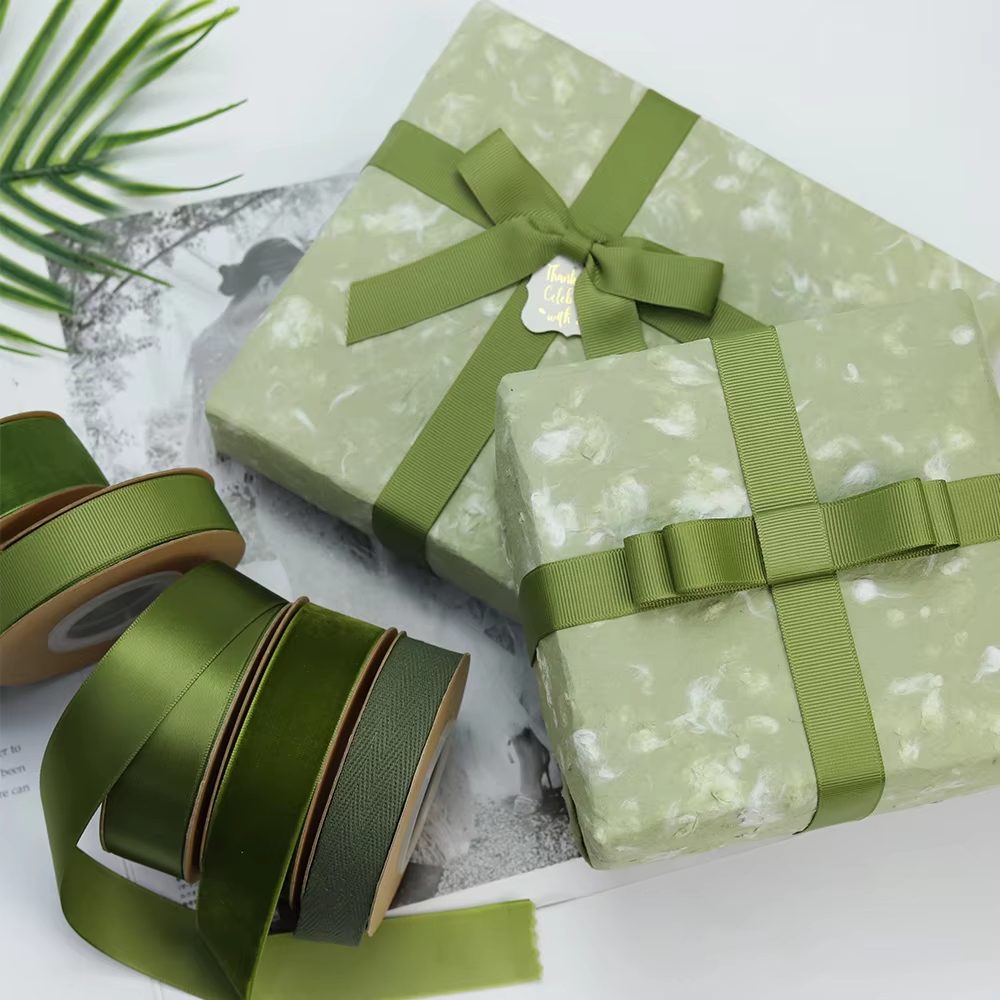
Ready-made bow MOQ is usually around 1,000 pieces, with the final quantity confirmed for the selected material, color, design, attachment, and packing.
Every pre-tied bow order lands in one of three MOQ tiers. The threshold isn’t arbitrary — it reflects the number of production setups needed. Stock colors in standard sizes use existing dye lots and tooling, so the factory can run smaller batches. Custom Pantone-matched colors require cleaning and reprogramming the dye vats, which adds fixed costs. A full custom design — new shape, ribbon type, and print — demands new dies, fixture adjustments, and sample iterations. That’s why each tier has its own minimum.
- Stock Color, Standard Size: MOQ: 1,000 pieces per design. Lead time: 15–20 business days after sample sign-off. Best for rush events or tight budgets where color flexibility isn’t critical.
- Custom Color (Pantone Match): MOQ: 1,000 pieces per color. Lead time: longer than standard, confirmed by RFQ. Requires 7–14 days for a physical sample to verify color accuracy (buyer-approved ΔE tolerance). Suitable for brand-specific events where color consistency matters.
- Full Custom Design (Shape, Material, Print): MOQ: 1,000 pieces per design. Lead time: longer than standard, confirmed by RFQ. Ideal for corporate awards or luxury packaging where every detail must match the brand identity.
Sampling: The Rule That Protects Your Event
One physical sample stops many production disputes before they start.
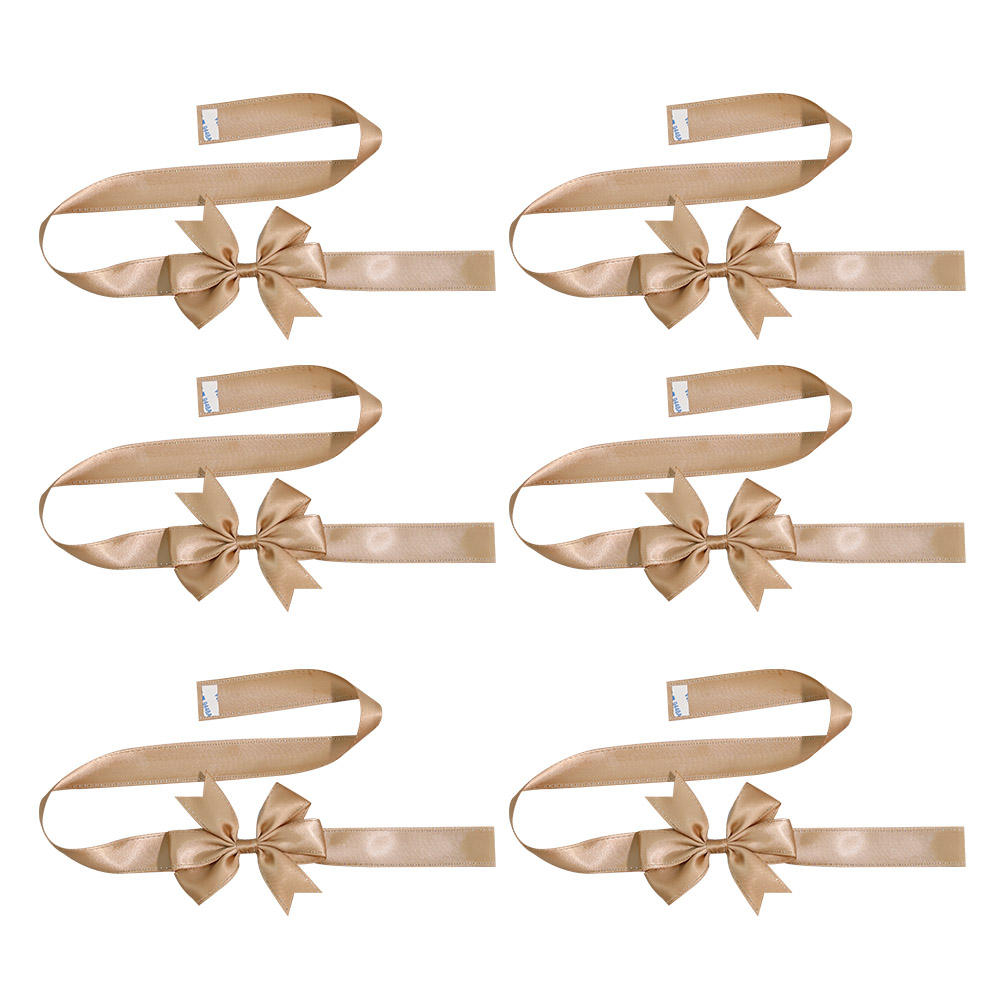
A digital photo or a Pantone code cannot tell you whether the wire inside the edge will hold a sharp fold, or whether the loop diameter is exactly 4 inches or a sloppy 4.5. For pre-tied bows, the critical attributes—loop size, tail length, wire stiffness, and ribbon sheen—only reveal themselves in your hand. That is why the mandatory physical sample exists: to catch mismatches before the production line runs.
Physical sample approval can reduce mismatch and rework risk; use the signed sample, written specification, and dated production records as the control evidence.
- Sample lead time: 7–14 business days after artwork approval. Budget this into your timeline—never let urgency push you to approve a digital proof.
- Inspection checklist: Verify loop diameter, tail symmetry, knot tightness, wire stiffness (if wired-edge), and ribbon sheen under the lighting conditions of your venue.
- Supplier red flag: If a supplier pressures you to skip physical sampling and approve from a photo, you are accepting a high risk of rework. Reputable manufacturers mandate this step—they know it protects both sides.
Comparing Pre-Tied Bow Suppliers: MOQ vs Lead Time vs Quality
Low MOQ often means hand-tied bows — expect inconsistent shapes.
Suppliers offering MOQs below 1,000 pieces for custom pre-tied bows rarely use automated machinery. They typically hand-tie each bow, which produces visible variation in loop diameter, tail length, and ribbon tension across the order. For a ceremony where 500 identical bows are needed, that inconsistency stands out immediately. A factory with automated bow-tying equipment delivers repeatable geometry on every unit.
- Production method: Automated bow machines produce uniform loop size and shape; hand-tied bows vary piece to piece.
- Artwork handling: If your logo is a low-resolution JPEG, check whether the supplier offers vectorisation. Without proper file conversion, printed text and graphics will appear blurry on the finished bow. Many novice buyers overlook this until the sample arrives.
| Supplier Profile | MOQ Range | Typical Lead Time | Quality Standard | Ideal Use Case |
|---|---|---|---|---|
| Low-MOQ Hand-Tie Supplier | 500 – 1,000 pcs | 10–15 days (no sample) | Inconsistent loop sizes, hand-stitched, no color certification | One-off small events, low budget, low quality risk tolerance |
| Factory-Direct Automated (Lude Ribbon) | 1,000 pcs per style | 7–14 day sample + 15–20 business day bulk | Pantone buyer-approved color tolerance, consistent shape | Branded events, luxury packaging, large volume with strict color matching |
| US Local Stock Distributor | 50 – 500 pcs (stock colors only) | 3–7 days (from warehouse) | Pre-made stock, limited customization, consistent pre-tied shapes | Small urgent events, no custom colors/printing needed |
How to Order Pre-Tied Bows Without Missing Your Event Deadline
Confirm the ready-made bow MOQ, approve the physical sample, and agree the production schedule in writing before committing to an event deadline.
- Ask about rush production: Expedited feasibility, timing, and any cost impact must be confirmed against the RFQ and approved sample. Expedited feasibility and timing are confirmed after the RFQ is reviewed.
Never assume a low-MOQ supplier equals fast delivery. Hand-tied bows from small shops vary in loop size and tail length. A factory with automated bow machines produces consistent shape across thousands of units. That consistency is what keeps your event packaging looking professional, not sloppy.
Conclusion
Getting pre-tied bow MOQ right means confirming the selected material, color, design, attachment, packing, and current volume tier before quotation. The real insurance is the 7–14 day physical sample — many post-production disputes vanish when you hold the actual bow before approving bulk production. Skipping that step risks mismatched colors, inconsistent loop sizes, and missed ceremony dates that no digital proof can fix.
Ready to move forward? Browse the pre-tied bow collection to see standard sizes, material options, and color swatches. Use the inquiry form to request a custom sample with your artwork and timeline — the production team confirms MOQ, lead time, and rush feasibility.
Frequently Asked Questions
What is the minimum order quantity MOQ?
For ready-made pre-tied bows, MOQ is usually around 1,000 pieces, with final quantities confirmed for the selected material, color, and design. Always confirm MOQ with your specific design and material choice.
What is MOQ lead time?
Sample lead time is 7–14 business days after artwork approval, then production lead time is 15–20 business days post-sample sign-off. Expedited schedules must be confirmed during RFQ review and still require sample approval.
What does 10 pieces MOQ mean?
A 10-piece MOQ is not standard for custom pre-tied bows; ready-made bow MOQ is usually around 1,000 pieces. That low threshold may apply to pre-made stock items or tiny sample orders, not bulk production. Verify if the 10-piece figure refers to samples or stock inventory.
What is the maximum order quantity MOQ?
There is no fixed maximum order quantity; feasible volume is confirmed against material availability, the approved specification, packing method, and production schedule. Practical limits depend on material availability and production scheduling. Contact the factory with your volume to confirm feasibility and lead time.
What are the 4 types of inventory?
In manufacturing, common categories are raw materials, work-in-progress, finished goods, and MRO supplies. Consult your factory’s specific inventory classification for accurate planning.
Keep exploring
Recommended buyer guides
 Custom Graduation Sashes: Save Time with Pre-Production Samples
Evidence and specification note: Color targets, tolerances, test methods, documentation, acceptance criteria, and remedies must be confirmed for…
Explore guide
Custom Graduation Sashes: Save Time with Pre-Production Samples
Evidence and specification note: Color targets, tolerances, test methods, documentation, acceptance criteria, and remedies must be confirmed for…
Explore guide
 Satin Ribbon MOQ: Hidden Costs of Custom Colors & Printing
Evidence and specification note: Color targets, tolerances, test methods, documentation, acceptance criteria, and remedies must be confirmed for…
Explore guide
Satin Ribbon MOQ: Hidden Costs of Custom Colors & Printing
Evidence and specification note: Color targets, tolerances, test methods, documentation, acceptance criteria, and remedies must be confirmed for…
Explore guide
 Wholesale Satin Ribbon: Avoid 5 Risks with Samples
Evidence and specification note: Color targets, tolerances, test methods, documentation, acceptance criteria, and remedies must be confirmed for…
Explore guide
Wholesale Satin Ribbon: Avoid 5 Risks with Samples
Evidence and specification note: Color targets, tolerances, test methods, documentation, acceptance criteria, and remedies must be confirmed for…
Explore guide
 Custom Grosgrain Ribbon: MOQ, Pricing & Samples 2026
Evidence and specification note: Color targets, tolerances, test methods, documentation, acceptance criteria, and remedies must be confirmed for…
Explore guide
Custom Grosgrain Ribbon: MOQ, Pricing & Samples 2026
Evidence and specification note: Color targets, tolerances, test methods, documentation, acceptance criteria, and remedies must be confirmed for…
Explore guide
Leave a comment
Share a sourcing question or feedback on this guide. The Lude team reviews submissions before following up.