


Pre Tied Bow Attachment Method Sample Approval Wholesale Buyer Guide
Pre Tied Bow Attachment Method Sample Approval Wholesale Buyer Guide — the checks that decide whether a quote, sample, or shipment can be approved
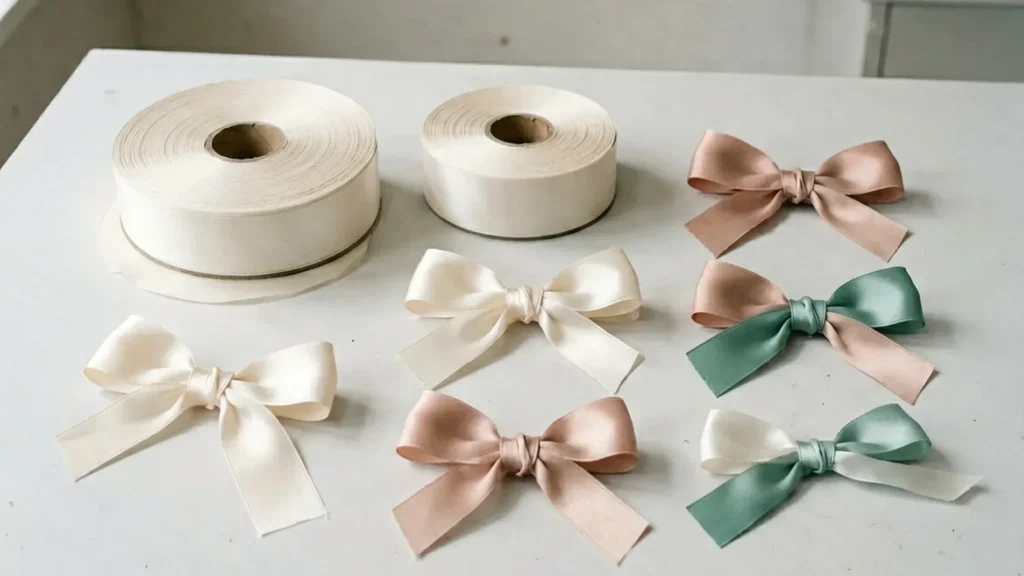
Unit price alone is a weak signal: material, structure, print, packing, and timing all change the supplier answer.
Ask specifically what material, structure, artwork, packing, and proof must be confirmed before sampling, and request commercial numbers in writing.
Use the checkpoints to compare quote assumptions, sample proof, and follow-up actions across factories.
Direct answer: For pre tied bow attachment method sample approval, release the order only after the intended use, approved construction, test record, commercial terms, and sign-off responsibility all match. If one item remains unresolved, return it to the responsible buyer or supplier before bulk production.
Copy this pre tied bow attachment method sample approval approval record into the RFQ file. Keep every checked item on the same revision before releasing the order.
- ☐ Final specification and intended use
- ☐ Supplier feasibility and documented exceptions
- ☐ Sample or inspection evidence
- ☐ Commercial assumptions, owner, decision, and date
Move the pre tied bow attachment method sample approval order forward only when each gate leaves written evidence for the next. Return an unresolved specification, sample, or quote exception to its owner before bulk production.
For packaging buyers and brand owners, keep pre tied bow attachment method sample approval quote-ready: specs to send, proof to request, sample checks to approve, and reorder notes to retain.
Define How and Where the Bow Will Be Applied
The comparison turns on the application environment (indoor, refrigerated, high-humidity) and the substrate material (coated paperboard, plastic, fabric). A bow that passes a dry-room adhesion test may fail on a glossy box in a refrigerated display. The supplier signal is whether they can provide written confirmation of compatibility with your specific environment and substrate before the RFQ. Use the sample approval table below to document what to verify, the risk, and the buyer follow-up.
| Specification | Quality control | Verification method | Risk to avoid | Buyer action |
|---|---|---|---|---|
| Attachment method (twist tie, adhesive tab, clip) | Match sample to RFQ-confirmed type | Compare physical sample against RFQ specification | Bulk order uses different attachment, causing line stoppages | Request signed record stating attachment method, adhesive type, and curing time used for sample |
| Substrate compatibility (material, surface coating, environment) | Supplier written confirmation of compatibility | Request test method for adhesion on your specific substrate | Adhesive fails in production or transit | Include substrate type, surface condition, and expected temperature/humidity in RFQ |
| Pack-out method (loose, layered, individual wrap) | Inspect sample packing against RFQ specification | Ask supplier to retain sealed reference sample and include photo in QC record | Bows arrive deformed or cause line stoppages | Request signed checklist of attachment method, adhesive, curing time, and pack-out before bulk release |
In the factory sample room, apply the bow to the actual substrate under the expected environment and check adhesion. A signed record of the attachment method, adhesive type, curing time, and pack-out must be tied to the retained sample. After completing these checks, shortlist only suppliers who provide written confirmation of the attachment method, adhesive type, and pack-out specification. Carry this signed table into the RFQ and sample approval record.
Compare Adhesive Tie Elastic and Clip Attachments
Shortlist a pre-tied bow attachment method only after verifying that the supplier can provide written evidence of compatibility with your substrate, application environment, and pack-out method. A twist tie that works on a matte box may scratch a glossy surface; an adhesive tab that holds at room temperature may fail in a refrigerated display. The cost driver is the attachment type itself: adhesive tabs, twist ties, elastic loops, and clips each require different materials, labor, and MOQ per type. Without locking the attachment method to the sample record, the bulk order may use a different adhesive or tie, causing line stoppages or transit damage.
| Attachment Option | Best Fit | Risk to Avoid | Verification Check | Buyer Follow-Up |
|---|---|---|---|---|
| Adhesive Tab | Smooth, non-porous substrates (coated paperboard, plastic) | Adhesive fails in high humidity or refrigerated environments | Obtain written confirmation of adhesive type, curing time, and a test method for adhesion on your specific substrate | Include adhesive type and curing time in the RFQ; approve sample only after a signed record matches the spec |
| Twist Tie | Porous or textured surfaces (fabric, uncoated paper) | Twist tie may scratch glossy surfaces or loosen during transit | Verify twist-tie length and material; ask supplier to confirm compatibility with substrate in writing | Document twist-tie length and material in the RFQ; request a pre-production sample from the actual lot |
| Elastic Loop | Bottles, jars, or irregular shapes | Elastic may stretch out or break over time; loop size may not fit all container diameters | Collect a sample applied to the actual container; verify loop diameter and elasticity | Specify container diameter range in the RFQ; approve sample only after a fit test on the actual container |
| Clip | Thin, rigid substrates (cardboard, plastic sheets) | Clip may damage thin substrates or fail to hold on thick materials | Verify clip material and grip strength; ask supplier to confirm substrate thickness range in writing | Document substrate thickness in the RFQ; request a sample applied to the actual substrate before approval |
After completing these checks, shortlist only suppliers who provide written confirmation of the attachment method, adhesive type, and pack-out specification. Carry this signed table into the RFQ and sample approval record. For factory context behind these controls, review ribbon products before sending the RFQ.
RFQ checkpoint
Check the product route for sizes, structures, materials, finishes, and RFQ details before sampling pre tied bow attachment method sample approval.
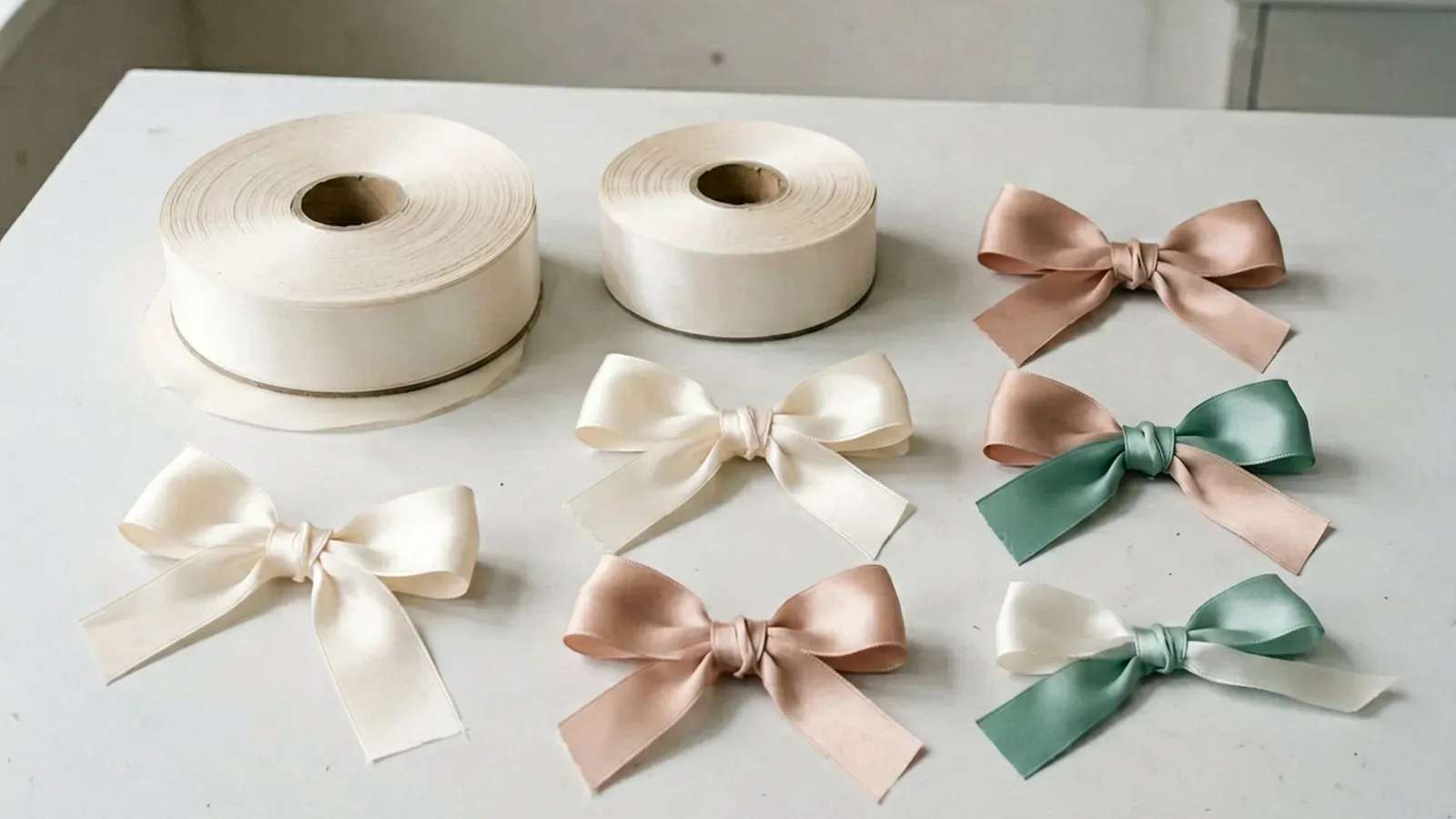
Prepare Substrate and Application Inputs
The approval record for a pre-tied bow must include the target substrate material, the application environment, and the attachment method. Without these three inputs documented before the RFQ, the supplier cannot quote a compatible adhesive, tie, or clip, and the sample may fail the first attachment test. The buyer must verify that the substrate type, surface coating, and expected temperature or humidity are stated in writing.
Core specifications to prepare
Document the substrate material (e.g., coated paperboard, plastic, fabric) and the surface condition (glossy, matte, textured). Specify the application environment: indoor, outdoor, refrigerated, or high-humidity. Risk if ignored: the adhesive may not bond, or the twist tie may damage the surface. Verification method: request the supplier to confirm compatibility in writing and to include a test method for adhesion on your specific substrate.
Artwork, sample, and packing inputs
Provide a sketch or photo of the intended pack-out method: how the bow will be attached to the substrate and how the unit will be packed for transit. Include the artwork file if the bow has a printed logo or pattern. Risk if ignored: the sample may pass a single-unit test but arrive deformed or fail on the line. Verification method: ask the supplier to confirm the pack-out method and to retain a sealed reference sample.
Supplier information to confirm early
Require the supplier to provide written confirmation of the attachment method, adhesive type, curing time, and pack-out specification. Verify that the supplier has a QC record that includes a written test method for adhesion on your specific substrate. Risk if ignored: the bulk order may use a different adhesive or stacking method, causing line stoppages or transit damage. Buyer follow-up: request a signed checklist that lists the attachment method, adhesive type, curing time, and pack-out specification before bulk release.
| Input | What to document | Risk if ignored | Buyer action |
|---|---|---|---|
| Substrate material | Type, coating, surface finish | Adhesive failure or surface damage | Confirm in RFQ; request written compatibility |
| Application environment | Temperature, humidity, indoor/outdoor | Bond failure or bow deformation | State in RFQ; request test method |
| Attachment method | Adhesive, twist tie, clip, elastic | Sample fails first attachment test | The buyer should request written confirmation and sample |
| Pack-out method | Stacking, layer separation, unit wrapping | Transit damage or line stoppage | Provide sketch; request signed checklist |
After documenting these inputs, shortlist only suppliers who provide written confirmation of the attachment method, substrate compatibility, and pack-out specification. Carry this checklist into the RFQ and sample request. For factory context behind these controls, review OEM and ODM ribbon development.
See OEM and ODM ribbon development for prepare substrate and application inputs.
Run Attachment and Pack-Out Sample Checks
When a pre-tied bow sample arrives without a confirmed attachment method, the buyer faces a hidden risk: the bow may detach during transit or fail to meet the intended application surface. The concrete failure mode is an unverified bond between the bow and the target substrate. The control that prevents this is a structured pack-out sample check that validates the attachment method under real-world conditions.
Use this practical checklist during sample approval:
- Attachment method verification: Confirm the supplier used the exact attachment type (e.g., adhesive, elastic, clip) specified in your RFQ. Ask: "Does the sample match the attachment method listed in the RFQ confirmation?"
- Substrate compatibility test: Apply the bow to a sample of your target material (e.g., gift box, garment, poly bag). Check adhesion after 24 hours at room temperature. Ask: "Does the bow remain attached when the substrate is tilted 90 degrees?"
- Pack-out simulation: Place the bow-attached product in its intended packaging (e.g., poly bag, box) and simulate shipping vibration for 10 minutes. Ask: "Does the bow shift, detach, or show adhesive residue?"
- Cost and MOQ alignment: Request a written cost breakdown per attachment method and the minimum order quantity for that method. Ask: "Is the MOQ for the confirmed attachment method the same as the sample lot?"
Additional RFQ items include production risk sign-off: Require the supplier to sign a sample approval form that lists the attachment method, substrate, and pack-out conditions. Ask: "Does the supplier accept liability if the attachment fails during bulk production?".
After completing the checklist, document the results in a table for your records:
The RFQ should also cover attachment method match: Does the sample use the RFQ-confirmed attachment type?; Substrate adhesion: Does the bow stay attached after 24 hours on the target material?; Pack-out durability: Does the bow survive a 10-minute vibration test in its packaging?.
This checklist ensures that the attachment method sample approval is not just a visual check but a functional validation that reduces production risk. For more guidance on pre-tied bow specifications, see our gift and retail packaging ribbon solutions.
Approve the Method for Bulk and Reorders
Cost changes when the attachment method, adhesive type, and MOQ per attachment type are not locked to the same sample record. For a pre-tied bow shortlist, the supplier signal is whether they can provide written confirmation of these three items before bulk release.
Decision criteria to confirm
Before shortlisting, verify that the supplier has documented the attachment method (twist tie, adhesive tab, clip) and the adhesive type used. Risk if ignored: the bulk order may use a different attachment that does not fit your substrate or application line. Verification method: request a signed record with the attachment method, adhesive type, and curing time for the sample.
RFQ details to send
The RFQ should include the attachment method, target substrate material, application environment, and MOQ per attachment type. Supplier proof required: written confirmation of compatibility and a test method for adhesion on your specific substrate. Risk if missing: the sample may fail the first attachment test.
Production handoff details
Before bulk release, compare the retained sample, specification sheet, and supplier’s quotation under the same revision number. Verify that the attachment method, adhesive, and MOQ per attachment type are documented. If any deviation, request a pre-production sample from the actual lot before release. Carry this checklist into the RFQ and sample approval record. For factory context, review the Lude Ribbon factory.
- Decision matrix: choose the pre tied bow attachment method sample route only after product fit, customization scope, quote assumptions, sample approval, and reorder control are comparable.
- Best-for check: match the pre tied bow attachment method sample route to the use case and approved specification before comparing price.
- Trade-off check: compare buyer control, development scope, cost drivers, lead-time assumptions, quality risk, and repeat-order consistency.
In conclusion
For pre tied bow attachment method sample approval, the next procurement action is a written RFQ and sample approval record, not only a preferred style or unit price. Confirm the specification, MOQ assumption, artwork version, supplier capability, sample approval method, QC checkpoint, approval risk, and quote follow-up before bulk production.
If any material, structure, logo, finish, packing detail, or supplier proof changes, ask the supplier to update the quote and sample record before approving production.
Pre-Tied Bow Attachment Method Sample Approval FAQ
What drawings and operating inputs should buyers send for pre tied bow attachment review?
Send the attachment method, target substrate material, and application environment in writing. Include a sketch or photo of the intended pack-out method. Without these inputs, the supplier cannot quote a compatible adhesive, tie, or clip, and the sample may fail the first attachment test.
Which pre tied bow attachment sample checks and supplier records should buyers approve?
Approve the physical sample that matches the RFQ-confirmed attachment method and substrate. The supplier must also provide a signed record stating the adhesive type, curing time, and pack-out specification used for that sample. Risk if ignored: the bulk order may use a different adhesive or stacking method that causes line stoppages or transit damage.
What pre tied bow attachment settings and traceability details should be frozen for production?
Freeze the attachment method, adhesive type, curing time, and pack-out specification as documented in the approved sample record. Verify that the supplier retains a sealed reference sample and that the MOQ is stated per attachment type. Before bulk release, request a pre-production sample from the actual lot and compare it against the signed checklist.
Keep exploring
Recommended buyer guides
 Wholesale Foil Printing vs Screen Printing Ribbon: Buyer Comparison
Foil printing vs screen printing ribbon: side-by-side on artwork files, print method, color target, and sample approval. Pick…
Explore guide
Wholesale Foil Printing vs Screen Printing Ribbon: Buyer Comparison
Foil printing vs screen printing ribbon: side-by-side on artwork files, print method, color target, and sample approval. Pick…
Explore guide
 Organza Ribbon Sheer Finish and Print Comparison for Custom Orders
 — the checks that decide whether a quote,…
Explore guide
Organza Ribbon Sheer Finish and Print Comparison for Custom Orders
Organza Ribbon Sheer Finish and Print Comparison for Custom Orders — the checks that decide whether a quote,…
Explore guide
 Velvet Ribbon Pile and Finish Comparison for Custom Orders Buyer
: what to confirm on material, MOQ, sample checks,…
Explore guide
Metallic Ribbon Finish Comparison for Custom Orders: Buyer Checklist
Metallic Ribbon Finish Comparison for Custom Orders: what to confirm on material, dimensions, finish, and handling before you…
Explore guide
Velvet Ribbon Pile and Finish Comparison for Custom Orders Buyer
Velvet Ribbon Pile and Finish Comparison for Custom Orders Buyer: what to confirm on material, MOQ, sample checks,…
Explore guide
Metallic Ribbon Finish Comparison for Custom Orders: Buyer Checklist
Metallic Ribbon Finish Comparison for Custom Orders: what to confirm on material, dimensions, finish, and handling before you…
Explore guide
Leave a comment
Share a sourcing question or feedback on this guide. The Lude team reviews submissions before following up.