


Personalized Award Ribbons: Personalization vs bulk order
Personalized Award Ribbons — a practical checklist covering artwork files, print method, color target, and sample approval for importers, wholesalers
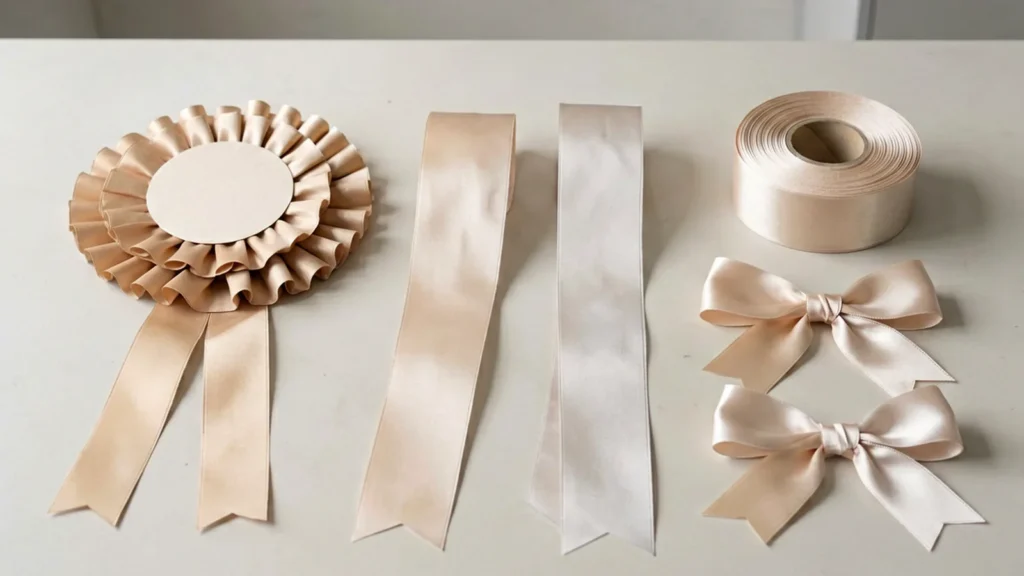
Before you can map product choices to real applications, usage scenarios, buyer constraints, and project outcomes, the specification has to say enough for a supplier to price the same job you have in mind.
Personalization moves an award ribbon from a print run to an assembly job, and the cost structure changes along with it.
Direct answer: For personalized award ribbons, buyers should map product choices to real applications, usage scenarios, buyer constraints, and project outcomes.
What buyers must define before approving personalized award ribbons
An award ribbon program splits into two orders that behave differently: the blank rosettes and sashes, which are a stock decision, and the personalization on top of them, which is a print decision with its own approval chain. Deciding which parts are personalized before the quote is what keeps the two from colliding at the deadline. The trade-off is straightforward: every component you leave blank stays a stock item with a stock lead time.
| Step | What to define | Verification check | Buyer follow-up |
|---|---|---|---|
| Step 1: Split the order | Which components carry text and which stay blank | List the personalized parts against the blank ones | Quote the two separately |
| Step 2: Fix the text scope | How many distinct names, titles, or dates | Count the variants, not the pieces | Confirm the count before artwork |
| Step 3: Set the print method | Which method suits the ribbon face and the run length | Ask for a proof on the actual ribbon | Approve the method at that quantity |
| Step 4: Lock the schedule | When artwork closes and production opens | Get both dates in writing | Book them separately from delivery |
The variant count matters more than the total quantity. Fifty pieces carrying one line of text and fifty carrying fifty different lines are the same volume and two different jobs, and only one of them can be produced as a single run. The risk of quoting on volume alone is a price built for the first case and an order that turns out to be the second.
Artwork file and proofing requirements
Personalization fails at the file more often than at the press, and a supplier who states the file requirement up front is showing more capability than one who accepts whatever arrives. The questions below settle the file before anyone quotes a price against it.
| Question to ask | Why it changes the quote | Proof or answer to expect | Buyer follow-up |
|---|---|---|---|
| What file format and resolution do you need? | Rebuilding artwork is a cost and a delay | A named format with a size specification | Send the file before asking for the price |
| Are the fonts outlined or supplied? | Missing fonts substitute silently and the error reaches production | Confirmation that text is converted to outlines | Fix it in the file, not in the proof |
| How is the text positioned on a tail? | Placement on a narrow tail leaves little margin | A proof showing the text on the actual width | Approve position on the production width |
| Is there a minimum text size for this method? | Fine text closes up on a woven surface | A named minimum for the chosen method | Adjust the design rather than the method |
| How many proof rounds are included? | Extra rounds carry both cost and schedule risk | The number stated in writing | Plan the approval window around it |
For recognition programs where the same design repeats across events, the artwork decisions are worth settling once and reusing. Award and ceremony work runs through award and ceremony ribbon solutions, where the file specification and proof rounds are agreed before the first order rather than renegotiated at each one.
RFQ checkpoint
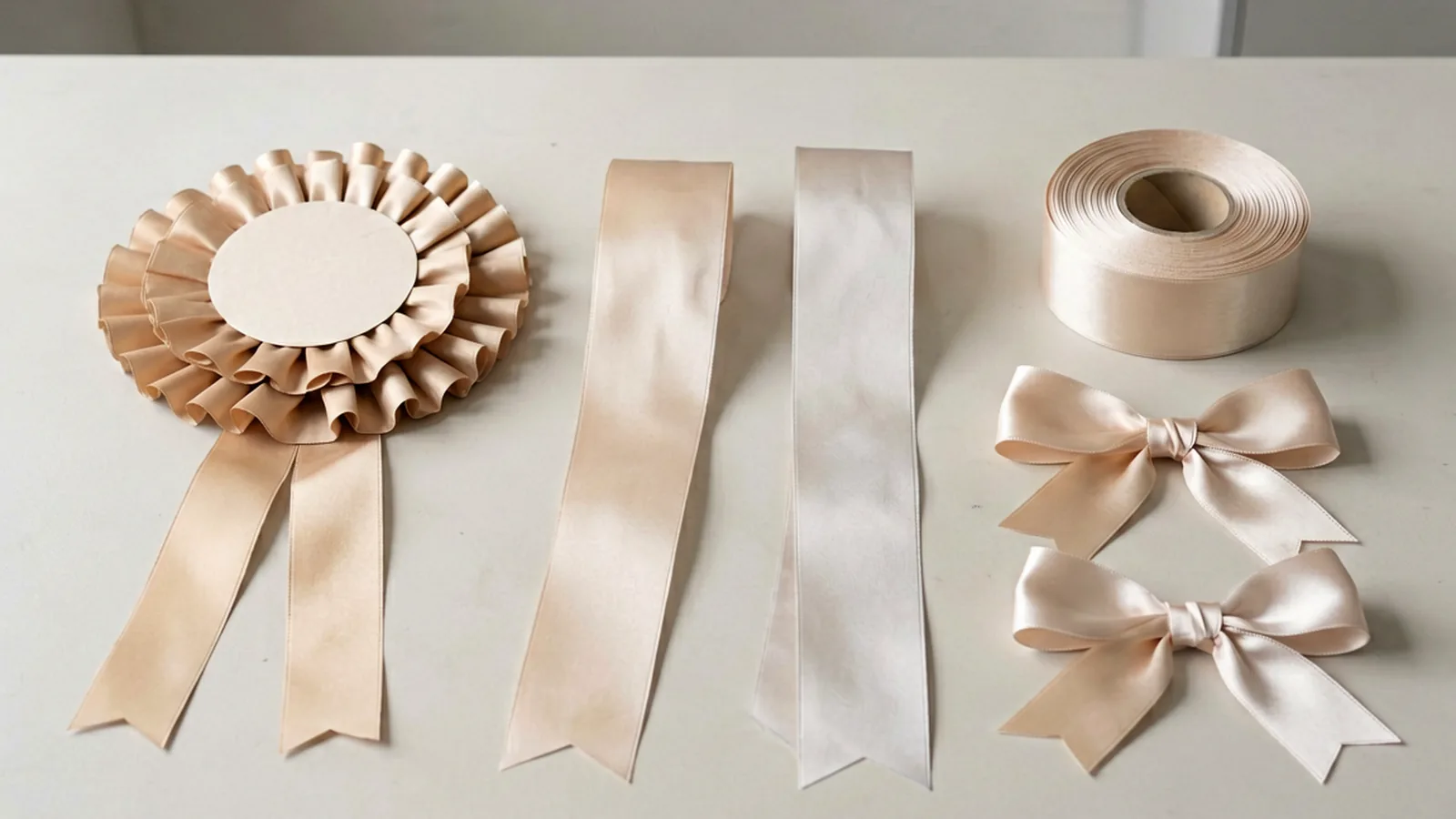
Sample approval workflow
The approval sequence on a personalized program is not the same as on a plain ribbon order, because two things are being approved: the blank component and the printing on it. Running them together is what produces a rosette that is the right shade and the wrong text position.
| Approval stage | What it covers | Risk if skipped | Verification check | buyer follow-up it unlocks |
|---|---|---|---|---|
| Blank component | Rosette shape, sash length, ribbon shade | Colour or shape reworked after printing | Compare against the signed shade swatch | Releases the blank quantity |
| Digital proof | Text content, spelling, layout on the width | Errors multiply across every variant | Read the proof against the source list, name by name | Releases the print setup |
| Printed sample | Method, ink adhesion, text legibility on the ribbon face | A method that cannot hold the text size | Handle the printed sample and rub the text | Releases bulk printing |
| Pre-production piece | The finished item as it ships | Assembly differences on formed pieces | Inspect the complete piece with its lot marking | Releases production |
Each stage should close in writing before the next opens. On a personalized order the digital proof deserves the most attention, because a spelling error on a printed sample is a reprint of one piece while the same error approved at proof stage is a reprint of the run. For programs that combine printing with a formed component, see custom printed ribbon for how the artwork step sits ahead of production.
production quality checkpoints
Five checks belong in the record on a personalized run, each returning a result rather than an opinion.
- Text against the source list. Check every variant against the list you supplied, not against the proof. A proof approved with an error carries that error through the whole run, and the check that catches it is a line-by-line read.
- Print adhesion on the ribbon face. Rub the printed text on a finished piece. Ink that lifts on a woven face is a method problem, and it is cheaper to change the method than to reprint.
- Text position on the tail. Measure where the text sits on the production width. Placement approved on a wider proof drifts when it reaches the real tail.
- Component assembly. On rosettes, check the pleating and the centre alignment on finished pieces rather than components. Assembly defects appear only once the piece is complete.
- Shade across the batch. Compare blanks from different points in the run against the signed swatch. Ready-made bows and award ribbons start at 1,000 pieces, so a shade drift inside one order is worth catching early.
Where the program needs a component developed rather than picked from stock, that work belongs in OEM and ODM ribbon development, where the assembly check sits inside sampling rather than after the first shipment.
Final approval checklist before RFQ or deposit
A personalized quote is only comparable when the personalization is described as precisely as the ribbon. The inputs below are what make two quotes measure the same job; leaving any of them open carries the risk of a price that changes once the file arrives.
- Component specification. Rosette size, sash length, ribbon width and shade, given against a swatch. Ready-made bows and award ribbons start at 1,000 pieces, counted per style and colour, so the component decision sets the quantity floor.
- Variant count and text list. State how many distinct texts, not just how many pieces. This is the single number that separates a one-setup run from a many-setup one.
- Print method and file. Name the method if you know it, send the file if you have it, and ask what the method costs at your run length rather than in general.
- Proof rounds and approval window. Agree how many rounds are included and how long each takes. Standard production runs 15 to 20 business days once specifications are approved, and proof rounds sit outside that window.
- Event date, worked backward. Start from the ceremony date and work back through delivery, production, printing, proofing, and blank approval rather than asking how quickly it can be done.
Ask for one pre-production piece carrying a real name from the list, not a sample text, and approve it in writing. A supplier such as Lude Ribbon should be able to return that with its lot marking intact, which is what the reorder is later matched against.
In conclusion
Final buyer checks before moving forward: Run the split across every personalized award ribbons quote still in contention: what the blank component costs, what the personalization costs at your variant count, how many proof rounds are included, and where quality inspection happens on assembled pieces. A supplier who prices the two parts separately is easier to compare than one who quotes a single figure.
Quote-ready inputs to prepare: Have the component specification, the text list with its variant count, the artwork file, the proof-round expectation, and the event date written down before the request goes out. The risk of sending only a piece count is a quote built on one setup when the job needs many.
Supplier or sample action to take next: Send the specification and the text list to two or three suppliers and ask each for one pre-production piece carrying a real name from that list, with its lot marking intact. Verify the text against the source, check the print by handling it, approve in writing, and keep the piece.
Personalized award ribbons FAQ
What should buyers confirm before ordering Personalized Award Ribbons?
Confirm the blank component specification, the number of distinct texts rather than the number of pieces, the print method for that run length, the artwork file format, and how many proof rounds are included. The variant count is the figure that decides how the job is produced.
How should buyers compare MOQ, lead time, and quote terms?
Compare the blank component and the personalization separately. Ready-made bows and award ribbons start at 1,000 pieces per style and colour, while printed ribbon starts at 3,000 yards per design. Production then runs 15 to 20 business days after approval, with proof rounds and sampling counted outside that window.
What sample, quality, or supplier checks reduce risk?
Read every variant against your source list rather than against the approved proof, rub the printed text on a finished piece to check adhesion, and inspect a complete assembled piece rather than its components. Keep the approved piece with its lot marking for the reorder.
RFQ handoff: Send Specs for Review.
Keep exploring
Recommended buyer guides
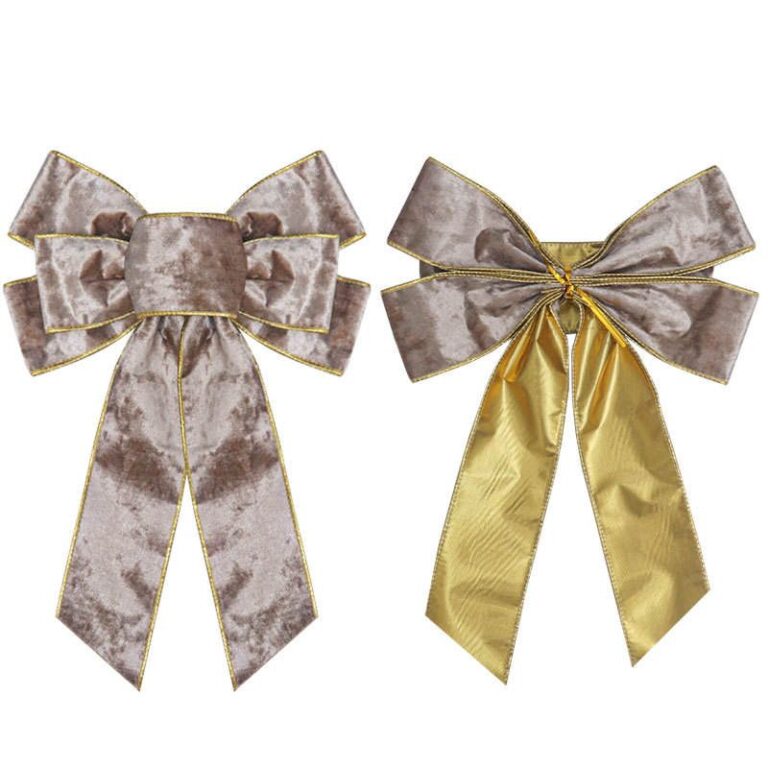 Pre-Tied Bows for Retail Packaging: When They Reduce Labor and Rework
See when pre-tied bows reduce retail packaging labor, improve consistency, and simplify bulk packing, SKU planning, and reorders
Explore guide
Pre-Tied Bows for Retail Packaging: When They Reduce Labor and Rework
See when pre-tied bows reduce retail packaging labor, improve consistency, and simplify bulk packing, SKU planning, and reorders
Explore guide
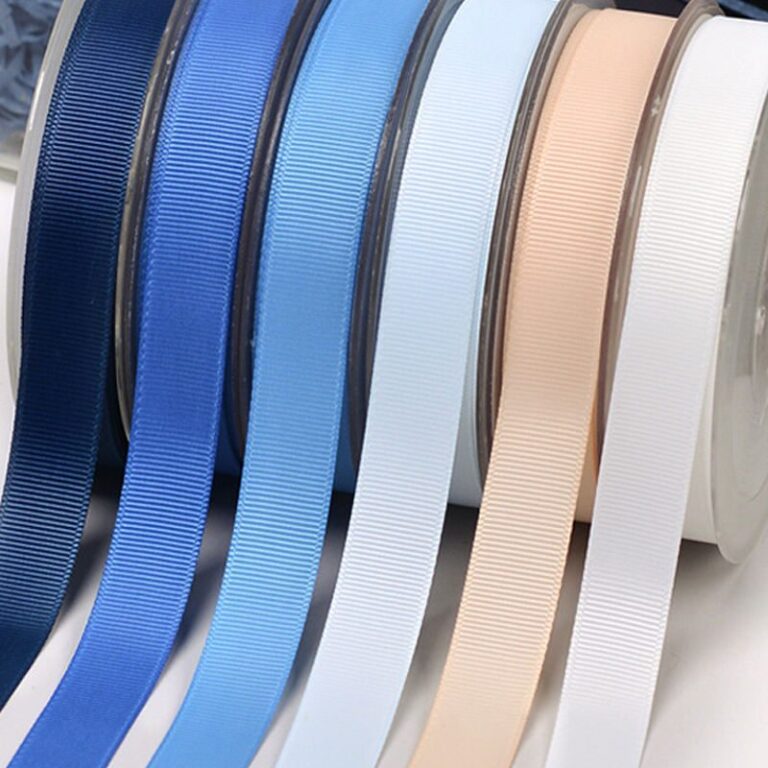 Wholesale Grosgrain Ribbon Rolls: Specs, Roll Length, and RFQ Checks
Buying Grosgrain Ribbon Rolls? Verify sample approval, color tolerance, QC checks, and material to reduce quoting errors and…
Explore guide
Wholesale Grosgrain Ribbon Rolls: Specs, Roll Length, and RFQ Checks
Buying Grosgrain Ribbon Rolls? Verify sample approval, color tolerance, QC checks, and material to reduce quoting errors and…
Explore guide
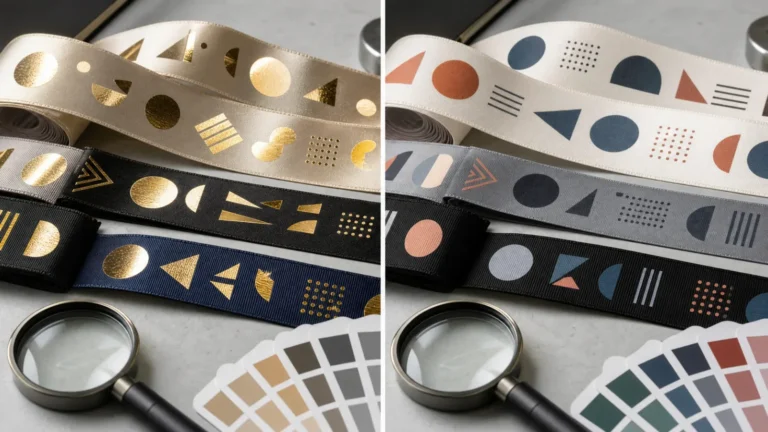 Wholesale Foil Printed Ribbon: Use-Case Fit and RFQ Checklist
Buying foil printed ribbon: buyer use-case fit checklist? Verify artwork files, print method, and color target to reduce…
Explore guide
Wholesale Foil Printed Ribbon: Use-Case Fit and RFQ Checklist
Buying foil printed ribbon: buyer use-case fit checklist? Verify artwork files, print method, and color target to reduce…
Explore guide
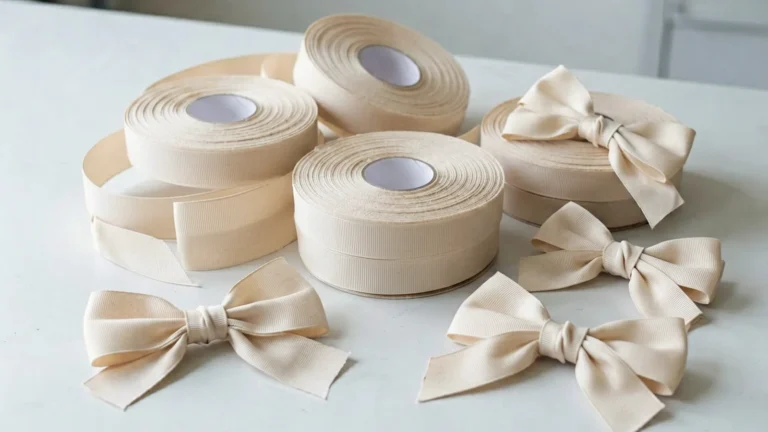 Grosgrain Ribbon Width Guide: Width choice for packaging and bows
Grosgrain Ribbon Width Guide: what to check on artwork files, print method, color target, and material before placing…
Explore guide
Grosgrain Ribbon Width Guide: Width choice for packaging and bows
Grosgrain Ribbon Width Guide: what to check on artwork files, print method, color target, and material before placing…
Explore guide
Leave a comment
Share a sourcing question or feedback on this guide. The Lude team reviews submissions before following up.