


Outdoor Velvet Ribbon: Handling Risks and Use-Case Checks for Buyers
Outdoor Velvet Ribbon: what to check on material, width, finish, and handling before placing a ribbon order
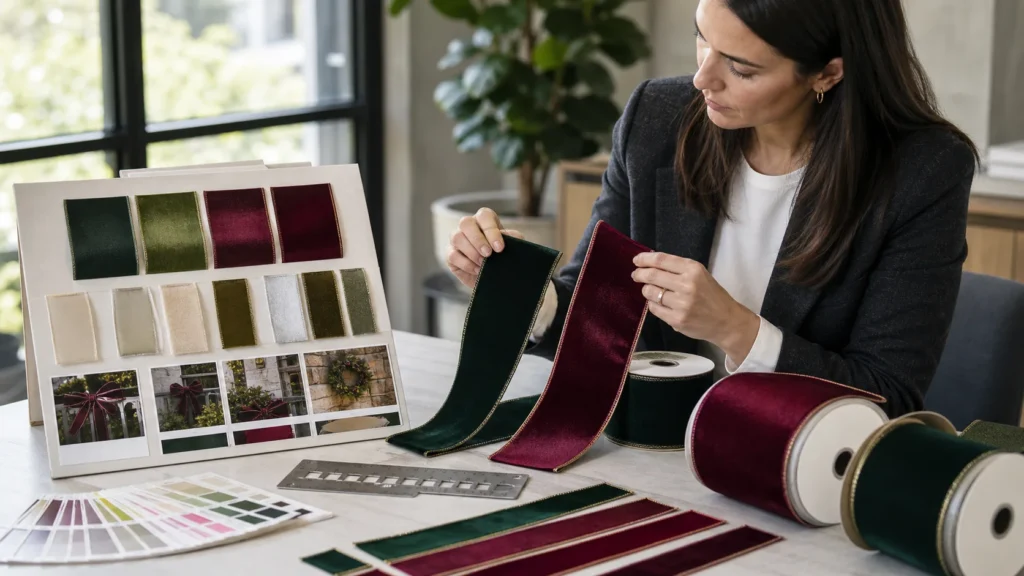
The sourcing record for outdoor velvet ribbon is incomplete until it supports a decision on whether outdoor velvet ribbon fits the use case, specs, MOQ, sample approval path, and supplier quote process.
Velvet outdoors is a moisture question first. If the display is exposed, the backing matters more than the pile.
Direct answer: For outdoor velvet ribbon, buyers should decide whether Outdoor Velvet Ribbon fits the use case, specs, MOQ, sample approval path, and supplier quote process.
When outdoor velvet ribbon fits or custom orders
| Option | Best fit | Trade-off | Risk to avoid | Verification | Follow-up |
|---|---|---|---|---|---|
| Current specification | When the existing width, color, and UV-stabilization level match your program requirements exactly. | No customization cost, but may limit design flexibility if the stock color or width is not an exact match. | Assuming stock velvet ribbon meets UV exposure without verifying the stabilizer type can lead to early fading. | Request the supplier's UV-stabilization test report for the specific stock color and width. | Compare the test report against your project's minimum UV-resistance threshold before approving the sample. |
| Alternative specification | When a minor adjustment in width or color target reduces lead time or MOQ compared to a full custom run. | Slightly different shade or width may require design approval, but keeps production within standard stock MOQ. | Color deviation from the original Pantone reference can cause rejection if the alternative is not pre-approved. | Request a physical swatch of the alternative color under natural daylight and compare to your target. | Document the approved alternative specification in the RFQ and obtain written sign-off from the design team. |
| Custom option | When a unique width, Pantone-matched color, or specific UV-stabilization level is non-negotiable for the application. | Longer lead time and higher MOQ (confirm by RFQ) due to custom dyeing or construction setup. | Custom color may not be reproducible across production runs without a signed master standard. | Require a sealed sample of the custom color and UV-stabilization test before bulk production. | Submit the custom specification as an RFQ and confirm the MOQ and lead time before placing the order. |
| Safer fallback | When the project timeline cannot accommodate custom lead times or the budget limits custom MOQ. | Limited to stock colors and widths, but avoids the risk of color mismatch and production delays. | Stock this velvet ribbon may have lower UV resistance than a custom formulation; verify the supplier's standard stabilizer level. | Ask the supplier for the standard UV-stabilization specification and compare it to your minimum requirement. | If the standard level is insufficient, request a quote for a custom stabilizer treatment within the stock width and color. |
For current specification, a poor decision can mean assuming stock velvet ribbon meets uv exposure without verifying the stabilizer type can lead to early fading. Request the supplier's UV-stabilization test report for the specific stock color and width.
For this velvet ribbon, preserve the current specification decision under one revision number: keep the supplier response, marked sample, approved specification, quotation, and approval owner together. If the evidence conflicts with the approved record, hold the quote, sample, or production release until the deviation is explained in writing. Once the buyer and designated technical authority have accepted the evidence, carry the signed When this velvet ribbon fits or custom orders record into the purchase order, production handoff, shipment release, and later reorder review so every team works from the same baseline.
Best-fit buyer scenarios
Procurement teams should select the current specification when the project uses a standard width and color from the supplier's stock inventory. This route minimizes lead time and MOQ, making it ideal for time-sensitive orders. The alternative specification fits when a slight width or color adjustment still falls within stock parameters, avoiding custom production costs.
Cases where another ribbon option is safer
Choose the custom option only when the application demands a precise Pantone match or a UV-stabilization level beyond the supplier's standard. The safer fallback is appropriate when budget or timeline constraints make custom production impractical. Verify the stock UV resistance first; if it meets the project's minimum, the fallback avoids the risks of custom color reproduction.
Key specs buyers should compare
A usable RFQ should separate visual requirements from performance claims. Ask the supplier to identify which properties are standard, which require a custom run, and which need a sample or test before the ribbon is approved for an exposed display.
| Input | Why it matters | Example detail | Risk if missing | Buyer action |
|---|---|---|---|---|
| Construction and finish | Defines appearance, hand feel, and the production route | Fiber content, pile direction, face and back finish | A visually similar stock item may behave differently in handling | Request a material declaration and representative swatch |
| Width and color reference | Makes supplier quotes and samples comparable | Nominal width, tolerance, Pantone or signed physical standard | Shade or width disagreement can stop assembly | Put the approved reference in the RFQ and sample record |
| Exposure conditions | Determines whether performance evidence is needed | Duration, sunlight, moisture, abrasion, and installation method | An indoor-grade material may be selected for a harsher use case | Ask what test or prior-use evidence supports the stated application |
| Quantity, packing, and lead time | Connects the order plan to the supplier production program | Total yards, roll length, lead-time requirement, splice rule, labels, and carton format | MOQ, waste, or packing assumptions can change the commercial quote | Obtain written confirmation by SKU before shortlisting |
Material, width, color, finish, and packing
Approve these fields as one specification set. Measure sample width, compare color under the agreed viewing condition, inspect the face and backing, and confirm roll and carton labels. If outdoor suitability is important, describe the actual exposure rather than accepting a broad marketing label.
Printing, sample, and reorder requirements
For custom printed ribbon, add artwork version, print method, registration limit, and approval sample to the same record. Reorders should cite the signed sample and specification revision; any material, color, print, or packing change should trigger written review before production release.
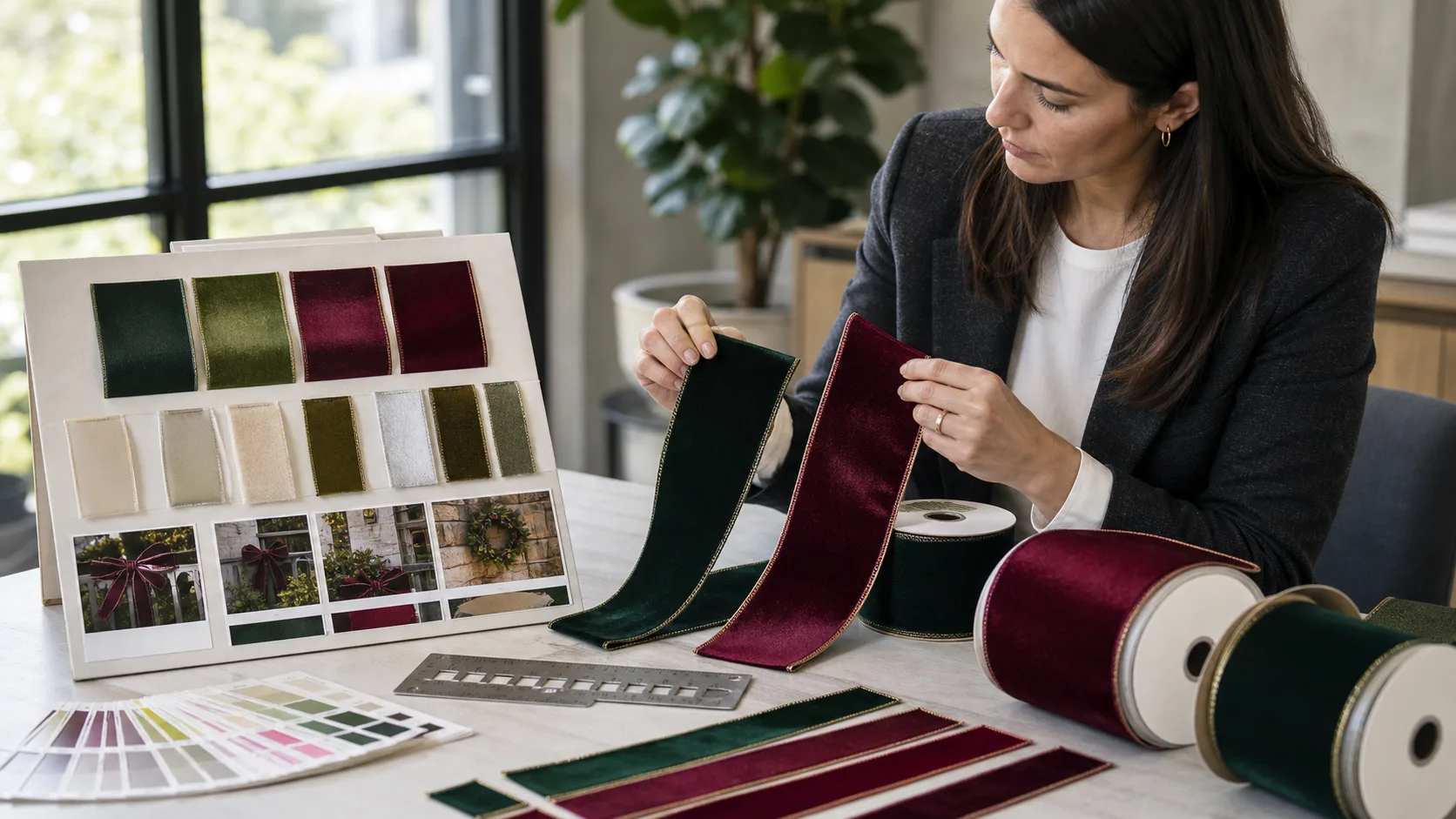
Material, finish, and use-case decision table
For outdoor velvet OEM and ODM ribbon development, use Material, finish, and use-case table as one RFQ checkpoint. Each row should identify the requirement, approval evidence, and buyer action before production.
| Requirement | Factory control | Evidence to verify | Order risk | RFQ follow-up |
|---|---|---|---|---|
| Material / substrate | Factory verifies UV-stabilized polyester pile meets a documented exposure test suited to the stated use condition. | Request supplier's UV test report and compare to the buyer-approved shade standard standard. | Non-UV-stabilized substrate fades earlier than the buyer accepts; reorder cost rises. | Shortlist only suppliers who provide UV test data with the quote. |
| Finish or surface effect | Factory checks nap uniformity and colorfastness via a documented rub or colorfastness check. | Inspect the sample under the agreed viewing condition for pile direction and dye migration. | Uneven nap or bleeding ruins brand presentation; reject at sample stage. | Approve finish only after signed-off sample and crockmeter pass report. |
| Sample approval | Factory holds production until written approval of pre-production sample. | Compare sample to Pantone target and measure width tolerance within the buyer-approved tolerance. | Bulk run without approved sample leads to rework or scrap. | Document approval in RFQ follow-up; request a sealed sample. |
Read the rows as one approval sequence for this ribbon order. Start with material / substrate; use the risk and buyer-action columns to decide whether its evidence is sufficient. Verify it with the inspection method and approval evidence recorded in the table.
Keep the supplier response, marked sample, and approval owner for this velvet ribbon under the same revision number. If any proof conflicts with the approved record, hold the quote, sample, or production release until the supplier explains the deviation in writing. Before closing the checkpoint, reconcile the latest drawing, sample, quotation, and approval comments, identify which record controls if they disagree, and document the resolution. Carry the signed Material, finish, and use-case table table into the purchase order and production handoff so the same checks support quote comparison, sample approval, shipment release, and later reorders.
Common selection mistakes
- Compare sample UV stability against a dated reference standard: A supplier may quote a low unit price but skip UV-stabilizer loading, causing fading after one season Request a sample and expose half to direct sunlight for an agreed time; measure color shift against the unexposed half Approving ribbon that fails UV testing leads to returns, reorders, and damaged buyer reputation with retail clients Document the color-difference reading and share it with the supplier before approving the bulk run
- Verify nap direction consistency across multiple sample cuts: this velvet ribbon must show uniform nap direction to avoid patchy appearance in gift and retail packaging ribbon solutions solutions Lay three sample pieces side by side under a single light source; run your hand along each piece to confirm the pile lies the same way Mixed nap direction creates visible shading differences that buyers reject at final inspection Shortlist only suppliers that can deliver nap-direction consistency on every production roll
- Check that the backing weave matches the approved reference card: A lower-cost ribbon may use a looser backing weave that frays during cutting or tying Hold the sample against the approved reference card under an appropriate inspection magnification; count warp and weft threads per inch Frayed edges during packaging assembly increase labor cost and waste, eroding the unit-price savings Approve the weave specification in writing before the supplier starts bulk production
- Confirm color-fastness to water and perspiration per the buyer-approved shade standard: this velvet ribbon used on packaging or displays may contact moisture during transport or handling Wet a white cotton cloth with distilled water, press it against the ribbon for the agreed contact time, and check for dye transfer Color bleed stains the product or packaging, triggering a full lot rejection and chargeback Require a signed test report from the supplier before releasing the order for shipment
- Match the ribbon width tolerance to the intended application: A small width variance can cause misalignment in automated tying or wrapping equipment Measure the ribbon width at three random points along the sample using a calibrated ruler or caliper Oversized or undersized ribbon jams machinery, causing downtime and scrap that the unit price never accounted for Set the buyer-approved width tolerance in the purchase order and verify on the first production roll
Choosing by unit price only
A low per-yard price often hides compromises in UV stabilizer loading, backing weave density, or dye fastness. Buyers who skip sample-level checks end up approving ribbon that fades, frays, or bleeds. The real cost appears in rejected shipments, rework labor, and lost retail shelf space. Always compare the total cost of quality, not just the unit price.
Skipping sample or quality checks
Approving a bulk run without inspecting a physical sample is a common mistake. This velvet ribbon can vary in nap direction, color depth, and UV resistance between dye lots. A sample under natural light reveals issues that a photo or swatch card hides. Require a pre-production sample and document its approval before production starts.
When to request samples or a quote
For this velvet ribbon, use a release rule: approve only when the supplier evidence matches the written requirement.
- Does the supplier offer UV-stabilized velvet ribbon with a documented test method? Outdoor use requires UV resistance; without a test method, the ribbon may fade or degrade earlier than the buyer accepts. The supplier provides a UV-stabilization data sheet and a lab report from an accredited third party. Approving a ribbon without UV documentation leads to color loss and material failure in the field. Request the UV test report and confirm the test standard before sample approval.
- What is the minimum order quantity for a custom color in this velvet ribbon? Custom dye lots require a production run; the minimum order determines whether the order fits your program budget. The supplier states a clear minimum order for custom colors and confirms it in writing on the quote. Assuming a low minimum order may delay the project when the supplier requires a larger run for color matching. Compare the custom-color minimum order against your planned yardage and adjust the order quantity or color selection.
- Can the supplier provide a production sample before bulk cutting? A sample confirms color, nap direction, and UV coating consistency before committing to a full run. The supplier agrees to send a pre-production sample within the standard lead time and covers the sample cost. Skipping the sample may result in a bulk lot that does not match the approved color or texture. Request a pre-production sample and set a deadline for approval before the production slot is reserved.
- What backing or weave construction does the supplier use for this velvet ribbon? The backing affects how the ribbon holds up to moisture, wind, and handling during installation. The supplier describes a closed-back weave with a water-resistant finish and provides a construction diagram. A lightweight or open-back ribbon may fray, stretch, or absorb water when used outdoors. Ask for a construction specification sheet and request a physical sample to test the backing durability.
- Does the supplier have a documented quality check for color consistency across dye lots? Color variation between production runs can cause mismatched ribbons in a single installation or program. The supplier uses a spectrophotometer and maintains a delta-E tolerance of the buyer-approved tolerance for repeat orders. Without a color-control process, reorders may arrive with visible shade differences that require rework. Request the supplier's color-control standard and ask for a lot-to-lot comparison report from a recent order.
Quote-ready inputs to prepare
Before requesting a quote, gather your exact width, color target (Pantone or reference), and yardage. Specify that the ribbon must be UV-stabilized for outdoor use. Include your desired packing method and delivery location. These details let the supplier calculate material cost, dyeing surcharges, and shipping accurately, reducing back-and-forth revisions.
Approval checks before production
Once the sample is received, verify the color under natural daylight and check the nap direction against your installation plan. Confirm the UV coating is evenly applied by reviewing the test report. Approve the sample in writing only after these checks pass. This step prevents costly bulk rework and ensures the final ribbon meets outdoor performance expectations.
Source check: Textiles USA : a selection of contemporary American textiles .…; Outdoor Jacket minimum order, Sampling, and Lead Time: What Buyers Should…; Outdoor Velvet Ribbon Product Reference.
In conclusion
Finalizing your outdoor velvet ribbon sourcing means checking that the specification, cost, minimum order, lead time, and quality risk all align before you commit. Verify the material width, color target, and UV-stabilization requirement against your project needs, then compare unit pricing and minimum order—stock colors start at 1,500 yards per color, while custom colors or widths require an quote request. Document sample approval under natural light, confirming nap direction and UV resistance, and shortlist only suppliers who provide clear production timelines and defect handling. Once you have validated the spec and approved the sample, you are ready to request a quote and move forward with confidence.
To request a quote for this velvet ribbon, use velvet ribbon to confirm the final specification, quote assumptions, sample approval, QC evidence, approval risk, and supplier follow-up before bulk order.
Outdoor velvet ribbon FAQ
What should buyers confirm before ordering Outdoor Velvet Ribbon?
Confirm material width, color target, and UV-stabilization requirement. Plain stock ribbon minimum order starts at 1,500 yards per color; custom specifications must be confirmed by quote request. Standard production lead time is 15–20 business days after spec confirmation. Request a sample to verify color accuracy under natural light, nap direction, and UV resistance. Include these checks in your quote request to avoid mismatched bulk production. Separate material, setup, packing, freight, and reorder cost drivers in the quote request. Ask the supplier to confirm factory capability and who owns follow-up.
How should buyers compare MOQ, lead time, and quote terms?
Compare minimum order by checking if this velvet ribbon is available from stock (1,500 yards per color) or requires custom production (confirm by quote request). Standard lead time is 15–20 business days after specifications are set. For quote terms, request a unit price breakdown including sample charges and shipping. Confirm the supplier’s capacity to meet your quantity and timeline before ordering. Always request a sample to validate quality.
What sample, quality, or supplier checks reduce risk?
Request a sample and verify color under natural light, nap direction, and UV resistance. Check substrate composition and colorfastness through supplier documentation. Evaluate supplier risk by reviewing their experience with outdoor materials and their quality control process. Approve the sample before bulk production. Document all specifications and approval decisions in writing to maintain traceability. Confirm production lead time after specifications and sample approval are fixed. Separate material, setup, packing, freight, and reorder cost drivers in the quote request.
quote request handoff: Send Specs for Review.
Keep exploring
Recommended buyer guides
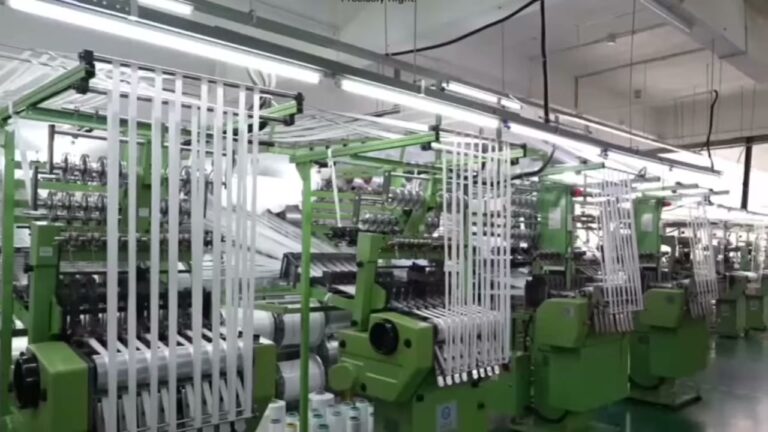 Wholesale Foil Printing vs Screen Printing Ribbon: Buyer Comparison
Foil printing vs screen printing ribbon: side-by-side on artwork files, print method, color target, and sample approval. Pick…
Explore guide
Wholesale Foil Printing vs Screen Printing Ribbon: Buyer Comparison
Foil printing vs screen printing ribbon: side-by-side on artwork files, print method, color target, and sample approval. Pick…
Explore guide
 Organza Ribbon Sheer Finish and Print Comparison for Custom Orders
 — the checks that decide whether a quote,…
Explore guide
Organza Ribbon Sheer Finish and Print Comparison for Custom Orders
Organza Ribbon Sheer Finish and Print Comparison for Custom Orders — the checks that decide whether a quote,…
Explore guide
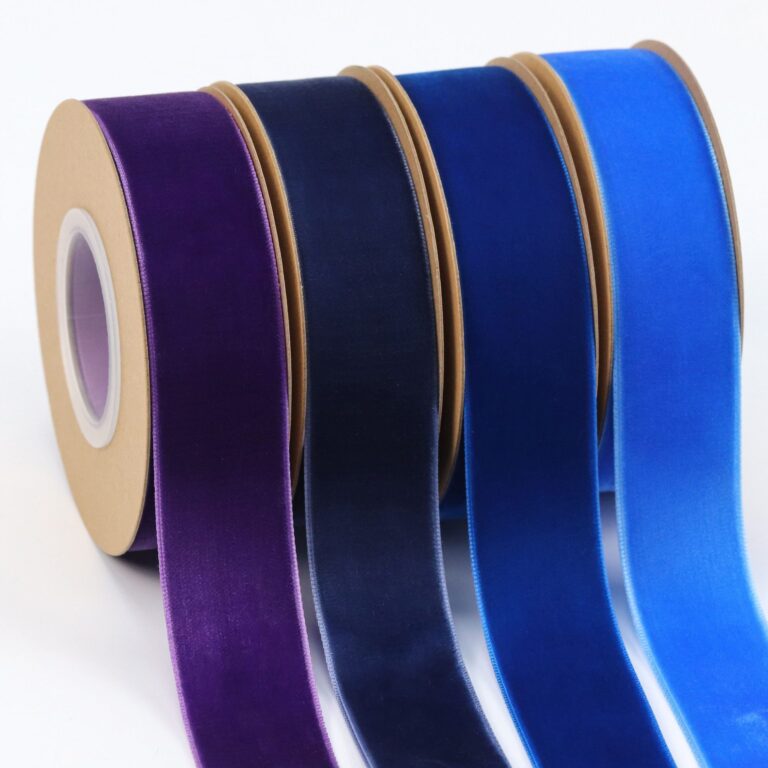 Velvet Ribbon Pile and Finish Comparison for Custom Orders Buyer
: what to confirm on material, MOQ, sample checks,…
Explore guide
Metallic Ribbon Finish Comparison for Custom Orders: Buyer Checklist
Metallic Ribbon Finish Comparison for Custom Orders: what to confirm on material, dimensions, finish, and handling before you…
Explore guide
Velvet Ribbon Pile and Finish Comparison for Custom Orders Buyer
Velvet Ribbon Pile and Finish Comparison for Custom Orders Buyer: what to confirm on material, MOQ, sample checks,…
Explore guide
Metallic Ribbon Finish Comparison for Custom Orders: Buyer Checklist
Metallic Ribbon Finish Comparison for Custom Orders: what to confirm on material, dimensions, finish, and handling before you…
Explore guide
Leave a comment
Share a sourcing question or feedback on this guide. The Lude team reviews submissions before following up.