


Organza Ribbon Width Guide: When 1/4 Inch Rolls Fit Packaging Orders
Organza Ribbon Width Guide: what to check on artwork files, print method, color target, and material before placing a ribbon order
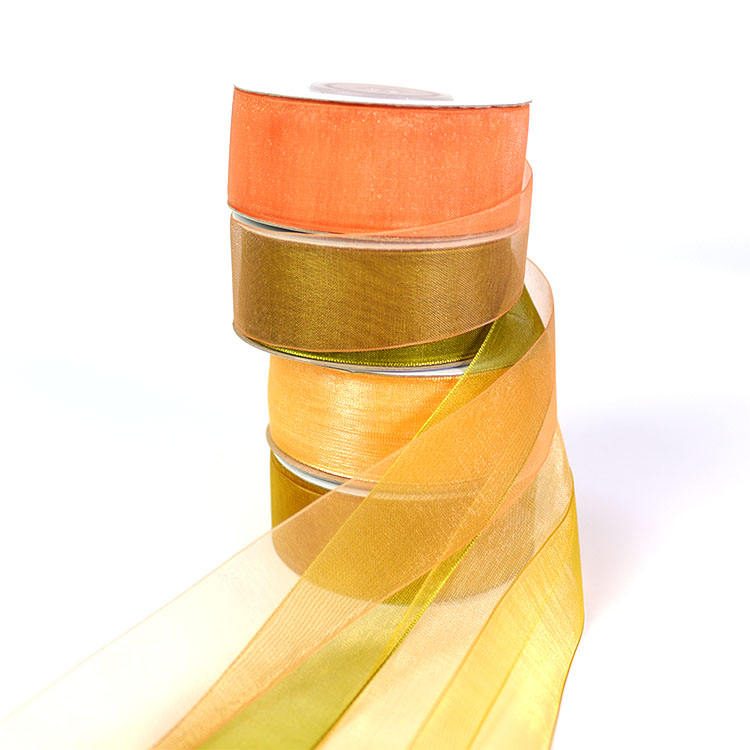
1/4 Inch organza ribbon needs a written specification before the buyer can decide whether 1/4 Inch Organza Ribbon fits the use case, specs, MOQ, sample approval path, and supplier quote process; otherwise suppliers may quote different product and approval assumptions.
Quarter-inch organza is used for tying rather than for display, so at that width roll length matters more than appearance.
Direct answer: Use 1/4 inch organza ribbon only after its specification, application fit, sample route, quantity rule, and supplier exceptions have been confirmed in writing.
When 1/4 inch organza ribbon is the right size or format
Start with APPLY, not the catalog label. A nominal width description cannot by itself decide usable width or application fit: the same ribbon may hold a tag cleanly yet look undersized as a primary bow, twist on a pouch, or disappear against a patterned substrate.
Best-fit packaging and display uses
| Use route | Best fit | Supplier proof | Risk to control | Verification | Buyer follow-up |
|---|---|---|---|---|---|
| Small box or pouch tie | Jewelry, favors, samples, and compact cosmetic packs | Finished tie on the actual closure | The ribbon slips, twists, or looks visually weak | Run an operator tie trial and reopen the pack | Approve knot, tail length, and orientation |
| Tag, card, or ornament attachment | Programs where the ribbon supports a small printed element | Applied sample with the real hole, card, or ornament | The edge catches, the knot loosens, or the tag rotates | Handle and hang the applied sample | Approve attachment and packed position together |
| Layered decorative accent | A narrow translucent line over another ribbon or package structure | Layered sample under intended display lighting | The color disappears, shifts, or competes with the base layer | View beside final artwork and materials | Freeze the layer order and color reference |
When to choose a wider, narrower, or different format
Choose a wider organza when the ribbon must carry the main bow or cover more package area; use cord or elastic when retention matters more than translucent decoration; use satin or grosgrain when opacity, print clarity, or abrasion resistance is essential. Ask the supplier to reproduce the selected route on the final pack, then approve or reject that applied proof before the quote shortlist. Review the organza ribbon route as application evidence, not as a substitute for the trial.
Width, roll length, material, and finish choices
WIDTH means a documented usable-width method, not a nominal catalog fraction. ASTM’s official textile-fabric width method explicitly covers both fabric width and usable width on full rolls or short specimens. The ASTM method also makes usable-width definition and measurement conditions explicit, which is why buyer and supplier should record where, when, and in what state this narrow ribbon is measured.
How size affects appearance and handling
| Specification | Buyer definition | Quality risk | Verification | Buyer follow-up |
|---|---|---|---|---|
| Usable width | Measurement points, edge inclusion, and application-based tolerance | A small shift changes knot size, tag fit, or visual balance | Record results at several positions on the roll and on the formed sample | Approve the method and the result, not only the label |
| Roll length and joins | Usable length, join rule, core, and label | Unexpected joins interrupt packing or change usable output | Inspect the roll presentation and winding record | Put join and label rules in the order file |
| Edge and body | Accepted edge behavior and enough body for the tie or layer | Curl, fray, or weak body changes the finished presentation | Cut, tie, and inspect the application sample | Keep the formed sample as the reference |
Material and finish constraints by use case
Organza transparency leaves the package color and lighting visible through the ribbon. Approve shade and sheen on the actual substrate, then check whether printed, metallic, glitter, or other finishes remain legible and attached after tying and reopening. Record the construction, edge, finish, viewing condition, and width result in the same PROOF file.
For artwork programs, review custom printed ribbon and require a finished-roll plus formed-use sample rather than a screen proof alone.
Printing, bow-making, and packing limits
The PROOF step must show the printed or formed result; the PACK step must show that the same result survives winding, the inner container, carton movement, storage, and reopening. Approving these on separate references leaves a gap between appearance and delivery condition.
Logo or artwork fit considerations
- Visible area: provide the final tie or bow orientation and ask the supplier to mark where the artwork remains readable. Risk if missing: the mark rotates or disappears in the knot.
- Production file: submit repeat direction, contrast target, and approval owner. Risk if missing: fine elements close up on the translucent base.
- Finished proof: request one printed roll and one formed sample. Risk if missing: a flat proof passes while the tied result fails.
Packing and storage details to confirm
Paper core and winding: record core diameter, winding direction, and tension reference; reopen the delivered roll and reject lateral slip, telescoping, or crushed edges.
Edge and piece protection: trial interleaf, end guards, sleeves, or inner dividers as needed; shake and reopen the carton to inspect edge curl and formed-piece collapse.
Humidity and storage: National Park Service textile-care guidance notes that humidity fluctuations create dimensional stress and recommends stable temperature and relative humidity and warns against large fluctuations. That is not an automatic ribbon acceptance limit; record the buyer warehouse range, quarantine any damp carton, and repeat the appearance check after conditioning.
Labels and carton acceptance: require article, shade, roll length, batch, carton count, and orientation on the release record; compare the physical count, label, movement, and edge condition with the approved packout photo.
Put these checks in the RFQ and require the supplier to return one reopened-carton sample before release.
Ask the supplier to isolate any cost effect created by this route and to state whether the printed or converted format changes the applicable minimum order quantity. Use OEM and ODM ribbon development when a new print or conversion trial is required, then keep the returned quantity condition with the finished proof.
MOQ, sample, and reorder planning
The REORDER step links the applicable minimum, dated sample release, production lead time, and retained evidence. A roll minimum does not automatically cover printed or converted pieces, so each finished route needs its own written supplier response.
What changes with custom color or custom print
- Plain stock route: Why it matters: inventory availability determines whether the standard route applies. Supplier question: Is the quarter-inch width in the chosen shade available, and what MOQ applies? Commercial exposure: the buyer plans around stock that actually requires custom development.
- Custom color or width: Why it matters: development and approval add separate handoffs. Supplier question: What MOQ, sample date, and production lead time apply to this program? Schedule consequence: sample and bulk dates are confused.
- Printed route: Why it matters: artwork proof changes the program minimum. Supplier question: What minimum order applies per design, and which proof releases production? Approval consequence: the flat proof and finished result use different assumptions.
- Converted pieces: Why it matters: cutting, tying, and packing create additional capacity and inspection steps. Supplier question: Which minimum and dated milestones apply to the finished format? Execution consequence: the ribbon input is approved without an executable conversion plan.
How to keep repeat orders consistent
Do not copy the previous purchase order blindly. Require a supplier change declaration, compare it with the retained release file, and use the matrix below to decide which APPLY, WIDTH, PROOF, or PACK evidence must reopen.
| Change trigger | Reopen | Evidence to compare | Release decision |
|---|---|---|---|
| Material, yarn source, or dye formula | WIDTH + PROOF | Measured roll, shade on final substrate, and tied sample | Buyer records the accepted lot and reapproves before production |
| Edge, print process, or artwork revision | APPLY + WIDTH + PROOF | Cut-and-tie photos, printed roll, and formed application view | Release only after fit repeats and the buyer signs the revision |
| Core, winding, conversion, or packout owner | PROOF + PACK | Owner record, finished sample, reopened carton, and edge check | Requalify the handoff and approve the packout photo |
Ask for the price effect only after the route and evidence record are frozen. Review gift and retail packaging ribbon solutions against the same final application before the repeat order is released.
For each route, record the defect or risk, the verification method, and the approval standard beside the supplier response. Any unresolved risk holds the reorder until the buyer confirms the check result in writing.
For Lude Ribbon, plain organza selected from existing inventory color and width options starts at 1,500 yards. Standard production lead time is 15-20 business days; a custom color, custom width, print, or conversion route must be reconfirmed in the RFQ.
Lude Ribbon’s approved custom-print baseline starts at 3,000 yards per design or program; the finished proof and quantity split still need written quote request confirmation.
Quote checklist for this specification
A comparable offer shows which activities sit behind the unit figure. Give each bidder the same application and evidence scope, then separate base ribbon, custom development, artwork, conversion, inspection, packing, and transport assumptions.
Method note: This guide uses ASTM’s width method to frame measurement state and NPS textile-care guidance to frame storage risk. None supplies a product-specific tolerance; those limits remain buyer-approved fields tied to the actual application and packout.
Inputs to send before RFQ
- Application and size: provide the package photo, attachment or tie method, usable-width method, roll length request, and planned totals by variant. Risk if missing: suppliers may price different physical routes.
- Material and finish: send the shade reference, transparency target, sheen, edge, and any printed or metallic treatment. Risk if missing: development and sample scope remain unclear.
- Conversion: state rolls, cut lengths, bows, ties, or attachments and ask bidders to separate setup, sampling, processing, and reject allowance. Risk if missing: downstream work becomes an unplanned cost.
- Packing and evidence: define core, winding, protection, labels, inspection record, and packout sample. Risk if missing: damage exposure or packing labor is hidden.
Sample approval points
Approve the shade and finish on the final package, measure usable width, test the real tie or attachment, check artwork in the formed position, and reopen the packed sample. Record revision, date, test method, result, and approver so every bidder prices the same release condition.
Ask for minimum order and lead time only after these inputs are frozen. Use the ribbon resources hub to assemble the returnable quote request pack and shortlist suppliers whose evidence matches the accepted sample route.
In conclusion
Do not release a 1/4-inch organza ribbon program from the nominal width alone. Close all five records in the APPLY–WIDTH–PROOF–PACK–REORDER framework: the real package trial, agreed measurement state, finished-use evidence, reopened packout, and supplier change declaration.
Review the organza ribbon route on the final package, ask the factory to return the sample and QC owners, and compare price only after the release file shows which checks must repeat in production and on reorder. When the supplier-comparable record is complete, send that same revision through the request a quote page.
1/4-Inch Organza Ribbon FAQ
What usable width should buyers confirm before ordering?
Approve the usable-width method and a real tie, tag, or layered sample. A label can match while the knot balance, edge behavior, artwork visibility, or attachment result still fails.
How should buyers compare MOQ, lead time, and quote terms after packing is defined?
Give every bidder the same variant split and PACK record, including paper core, winding, edge protection, carton orientation, storage handoff, and batch label. Compare the minimum order, dated milestones, and commercial assumptions only after those inputs match.
What sample, quality, or supplier checks reduce risk on reorder?
Ask the supplier to declare changes in material source, edge construction, dye lot, print route, paper core, winding, or subcontracted conversion. Reopen the affected APPLY, WIDTH, PROOF, or PACK inspection before confirming the repeat-order minimum order, lead time, and price assumptions.
quote request handoff: Send Specs for Review.
Keep exploring
Recommended buyer guides
 Wholesale Foil Printing vs Screen Printing Ribbon: Buyer Comparison
Foil printing vs screen printing ribbon: side-by-side on artwork files, print method, color target, and sample approval. Pick…
Explore guide
Wholesale Foil Printing vs Screen Printing Ribbon: Buyer Comparison
Foil printing vs screen printing ribbon: side-by-side on artwork files, print method, color target, and sample approval. Pick…
Explore guide
 Organza Ribbon Sheer Finish and Print Comparison for Custom Orders
 — the checks that decide whether a quote,…
Explore guide
Organza Ribbon Sheer Finish and Print Comparison for Custom Orders
Organza Ribbon Sheer Finish and Print Comparison for Custom Orders — the checks that decide whether a quote,…
Explore guide
 Velvet Ribbon Pile and Finish Comparison for Custom Orders Buyer
: what to confirm on material, MOQ, sample checks,…
Explore guide
Metallic Ribbon Finish Comparison for Custom Orders: Buyer Checklist
Metallic Ribbon Finish Comparison for Custom Orders: what to confirm on material, dimensions, finish, and handling before you…
Explore guide
Velvet Ribbon Pile and Finish Comparison for Custom Orders Buyer
Velvet Ribbon Pile and Finish Comparison for Custom Orders Buyer: what to confirm on material, MOQ, sample checks,…
Explore guide
Metallic Ribbon Finish Comparison for Custom Orders: Buyer Checklist
Metallic Ribbon Finish Comparison for Custom Orders: what to confirm on material, dimensions, finish, and handling before you…
Explore guide
Leave a comment
Share a sourcing question or feedback on this guide. The Lude team reviews submissions before following up.