


Metallic Christmas Ribbon: Metallic finish for holiday packaging
Which Metallic Christmas Ribbon options deserve an RFQ? Compare sample approval, color tolerance, QC checks, and material to find the right production
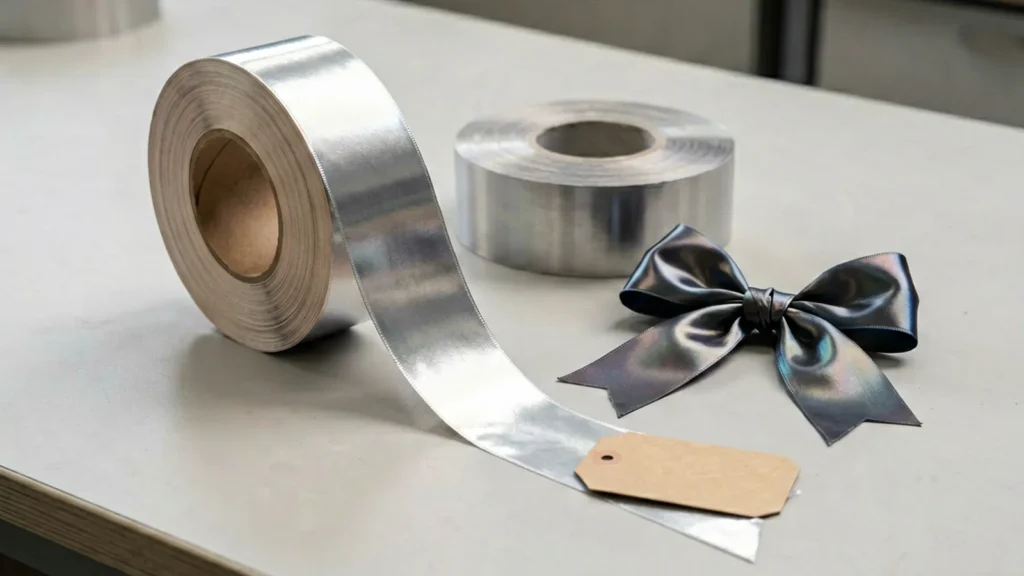
Before you can map product choices to real applications, usage scenarios, buyer constraints, and project outcomes, the specification has to say enough for a supplier to price the same job you have in mind.
Metallic finishes are chosen for how they photograph and returned for how they shed. Test both before the season commits.
Direct answer: For metallic Christmas ribbon, buyers should map product choices to real applications, usage scenarios, buyer constraints, and project outcomes.
Where metallic christmas ribbon fits event projects
A metallic face is a surface treatment rather than a dyed colour, and that single fact explains most of what follows. The finish sits on the ribbon, so it reflects light beautifully and shows every fold, mark, and handling trace that a matte face would hide. Ask the factory how the finish behaves after the sample has been tied, because the flat swatch shows none of it.
| Application | Fits when | Risk to watch | Verification check before ordering |
|---|---|---|---|
| Window and display dressing | Seen from a distance under strong light | Almost none; this is where metallic earns its cost | Look at the sample under the actual display lighting |
| Premium gift box banding | The box is handled once, at opening | Whitening along the fold at the knot | Tie a sample, release it, and inspect the crease |
| High-touch retail packs | Rarely a fit | Finger marks and scuffing show immediately | Handle a sample repeatedly before specifying it |
| Outer cartons and transit | Not a fit | The finish scuffs against carton board in transit | Pack a sample and inspect after shipping |
The trade-off is straightforward: metallic buys presence at distance and pays for it in handling tolerance. Two of these four applications should be decided by how many hands touch the pack rather than by how the ribbon looks in a photograph.
Material, finish, and format decisions
Four signals mean a metallic order will disappoint, and each is visible before production starts.
| Warning sign | Why it matters | Verification check | Risk if ignored |
|---|---|---|---|
| Sample supplied flat only | The finish cracks or whitens at a fold, not on the flat | Ask for a tied sample and inspect the crease | Whitening discovered after the bows are made |
| Finish type not named | Foil, coated, and metallic-yarn faces behave differently | Ask which construction is quoted and see all of them | A cheaper finish supplied than the one imagined |
| Print offered without an adhesion test | Ink adheres poorly to a coated surface | Rub the printed area on a cured sample | Print lifting in handling |
| Supplier capability described, not shown | Coating consistency is a finishing control | Ask which steps run in-house and see the line | Batch-to-batch variation with no owner |
The first row causes most metallic complaints and costs one sample to prevent. Where the design carries a logo on a metallic ground, treat adhesion as part of the artwork approval rather than a separate quality question, and check the threshold on custom printed ribbon before committing to variants.
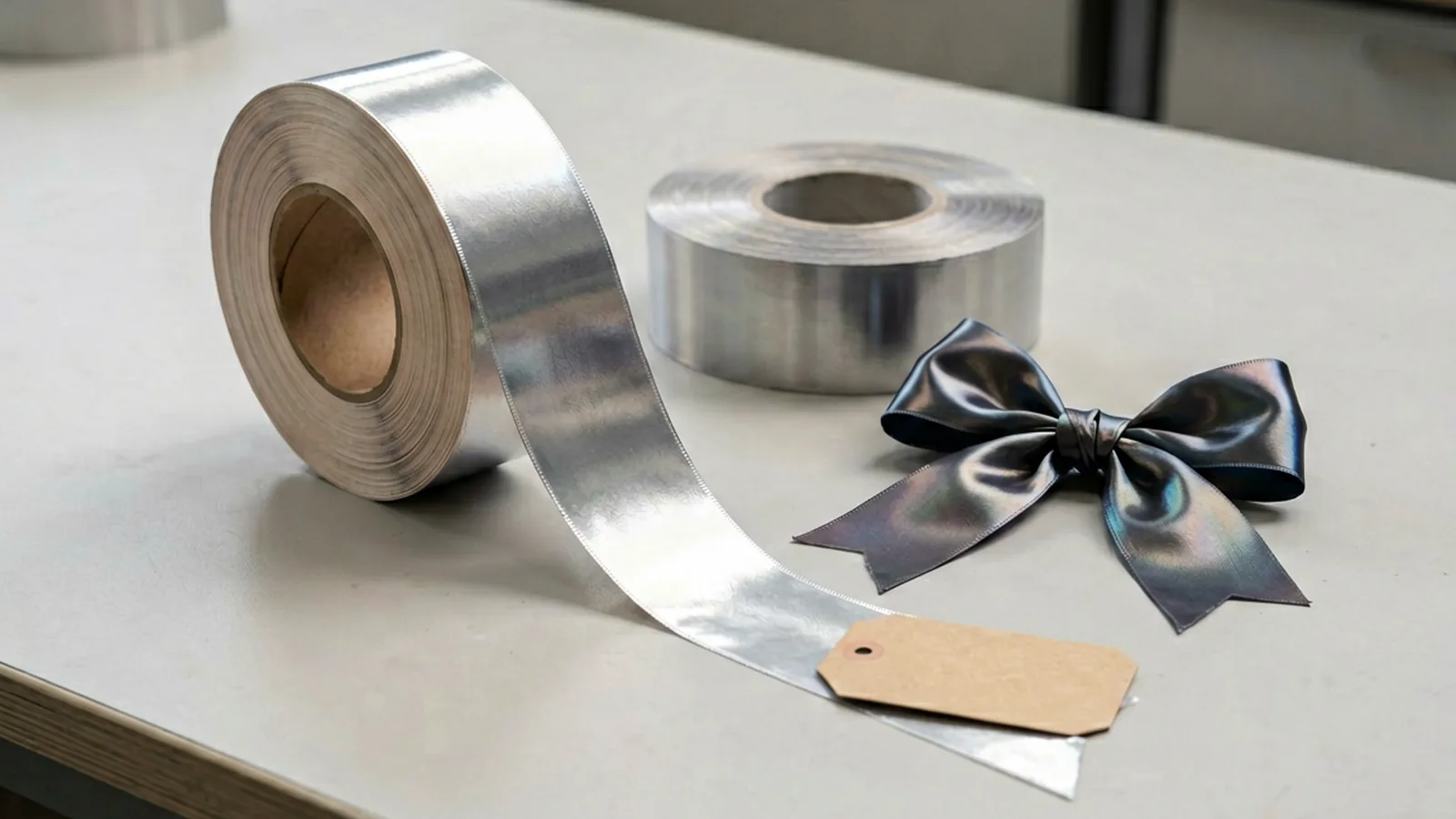
Application and display requirements
Three metallic constructions reach a holiday pack, and they differ in how they age rather than in how they look on day one.
| Option | Best fit | Trade-off | Risk to verify |
|---|---|---|---|
| Metallic yarn woven in | Repeated handling, longer display periods | Less mirror-like, more textile | Handle a sample and compare it to a foil face |
| Foil-laminated face | Maximum reflectivity at distance | Whitens at folds and scuffs in transit | Tie, release, and inspect the crease |
| Coated or lacquered face | A metallic look with more give than foil | Coating consistency varies between batches | Compare two lots side by side under one light |
The cost driver is the construction rather than the colour, and the highest-shine option is usually the least forgiving. For seasonal ranges that repeat, the woven-in route is often the better buy even at a higher unit price, because it survives a second season in storage. Ask the factory for one tied sample in each construction before shortlisting, and confirm which of them it already runs in production. Where a construction is not already made, that development runs through OEM and ODM ribbon development and belongs in the previous season.
MOQ, lead time, and sample planning
Five inputs make a metallic quote comparable, and the first is specific to this finish.
- Finish construction. Name whether you want metallic yarn, foil lamination, or a coated face. They are different products at similar prices, and the risk of leaving it open is a quote for the least forgiving one.
- Width and format. State the width and whether you are buying ribbon or formed bows. Ready-made bows and award ribbons start at 1,000 pieces, counted per style and colour.
- Colour route. Plain stock ribbon starts at 1,500 yards from existing colors and widths, and metallic shades are more often held in stock than dyed, which can shorten the schedule.
- Artwork, if any. Printed ribbon starts at 3,000 yards per design, and on a metallic ground the adhesion test belongs in the same approval as the artwork.
- Dates. Standard production runs 15 to 20 business days once specifications are approved, with sampling and artwork sign-off outside that window. Seasonal capacity fills early, so ask for a dated slot.
For gift and retail programmes the packing specification matters more than usual here, because a metallic face scuffs against board in transit. Agree it in the same record as the ribbon, as set out in gift and retail packaging ribbon solutions.
Buyer checklist before RFQ
Five checks belong in the approval record for a metallic programme. Each returns a physical result, and three of them cannot be run on a flat sample at all.
- Crease behaviour. Tie the sample, release it, and inspect the fold line. The defect is whitening or cracking where the finish opens; the approval standard is the released sample, not the flat one.
- Handling marks. Work a length between your fingers and look at it under the display lighting. The defect is finger marking, and on a mirror finish it is a quality control question rather than a design preference.
- Scuff after packing. Pack a sample against carton board, move it, then inspect. The defect appears in transit rather than in production, which is why the packing method belongs in the approval.
- Print adhesion, where artwork applies. Rub the printed area on a cured sample. Verification is the rubbed piece, and the standard is agreed before bulk rather than argued afterwards.
- Batch consistency. Compare two pieces from different points in the run under one light source. Coating varies more than dyeing does, so this is worth a named check.
Ask for one pre-production sample against the approved specification with its lot marking intact, and approve it in writing after running all five. On metallic that signed piece settles the two disputes that actually occur: whitening at the fold and marks that appear on the shelf rather than in the factory.
Source check: ISO 2859-1 sampling inspection standard; 20KJ70 Christmas Metallic 2cm Sequin Ribbon Trim – 110592217.
In conclusion
The decision behind metallic christmas ribbon is how much handling the finish has to survive. Distance display is where it earns its price; a high-touch pack is where it stops being the right material regardless of how good the sample looked.
Where the shine is the point, the route is metallic ribbon specified by construction rather than by colour, and the cost driver is that construction rather than the shade. Choosing the highest-shine foil for a pack that people pick up carries the risk of a display that looks marked halfway through the season.
Send the pack and the display context to two or three suppliers and ask each for a tied sample in each construction, with lot marking intact. Release the knot and inspect the crease, handle a length under the display light, approve in writing, and archive the piece for next season.
Metallic christmas ribbon FAQ
What should buyers confirm before ordering Metallic Christmas Ribbon?
Confirm the finish construction first: metallic yarn, foil lamination, and a coated face look similar and age differently. Then confirm the width, the format, and how the ribbon is packed. Ask for a tied sample rather than a flat one, because the finish shows its weakness at the fold.
How should buyers compare MOQ, lead time, and quote terms?
Compare by production route rather than as one number. Plain stock ribbon starts at 1,500 yards from existing colors and widths, printed ribbon starts at 3,000 yards per design, and formed pieces are counted individually. Production then runs 15 to 20 business days after approval, with sampling outside that window and seasonal capacity filling early.
What sample, quality, or supplier checks reduce risk?
Tie and release the sample to check for whitening at the crease, handle a length under display lighting to see how marks show, and pack a sample against board to test scuffing. Keep the approved piece with its lot marking so next season has a reference.
RFQ handoff: Send Specs for Review.
Keep exploring
Recommended buyer guides
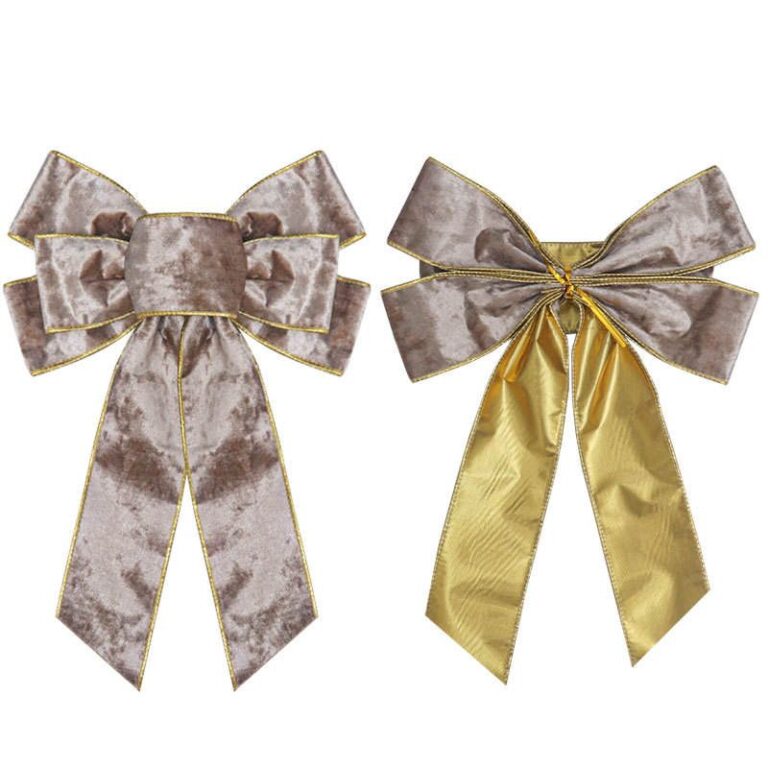 Pre-Tied Bows for Retail Packaging: When They Reduce Labor and Rework
See when pre-tied bows reduce retail packaging labor, improve consistency, and simplify bulk packing, SKU planning, and reorders
Explore guide
Pre-Tied Bows for Retail Packaging: When They Reduce Labor and Rework
See when pre-tied bows reduce retail packaging labor, improve consistency, and simplify bulk packing, SKU planning, and reorders
Explore guide
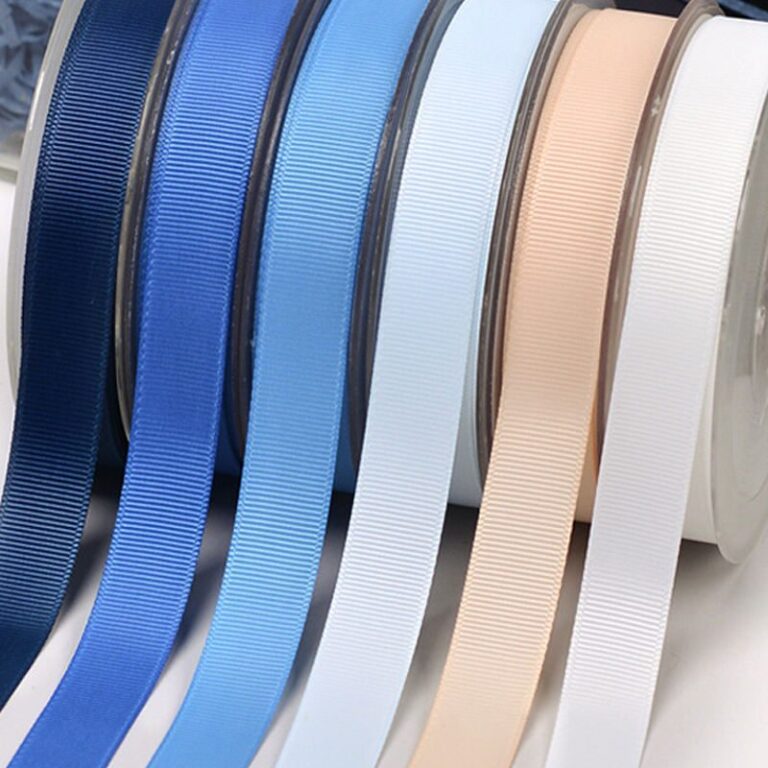 Wholesale Grosgrain Ribbon Rolls: Specs, Roll Length, and RFQ Checks
Buying Grosgrain Ribbon Rolls? Verify sample approval, color tolerance, QC checks, and material to reduce quoting errors and…
Explore guide
Wholesale Grosgrain Ribbon Rolls: Specs, Roll Length, and RFQ Checks
Buying Grosgrain Ribbon Rolls? Verify sample approval, color tolerance, QC checks, and material to reduce quoting errors and…
Explore guide
 Wholesale Foil Printed Ribbon: Use-Case Fit and RFQ Checklist
Buying foil printed ribbon: buyer use-case fit checklist? Verify artwork files, print method, and color target to reduce…
Explore guide
Wholesale Foil Printed Ribbon: Use-Case Fit and RFQ Checklist
Buying foil printed ribbon: buyer use-case fit checklist? Verify artwork files, print method, and color target to reduce…
Explore guide
 Grosgrain Ribbon Width Guide: Width choice for packaging and bows
Grosgrain Ribbon Width Guide: what to check on artwork files, print method, color target, and material before placing…
Explore guide
Grosgrain Ribbon Width Guide: Width choice for packaging and bows
Grosgrain Ribbon Width Guide: what to check on artwork files, print method, color target, and material before placing…
Explore guide
Leave a comment
Share a sourcing question or feedback on this guide. The Lude team reviews submissions before following up.