


Grosgrain Ribbon Print and Finish Comparison for Custom Orders Buyer
Grosgrain Ribbon Print and Finish Comparison for Custom Orders Buyer — the checks that decide whether a quote, sample, or shipment can be approved
The sourcing record for grosgrain ribbon print and finish comparison is incomplete until it supports this Choose the right product type, structure, material, or specification.
Print behaves differently across a ribbed surface, and the difference shows up in fine detail. Compare proofs on grosgrain itself, not on a flat swatch.
Direct answer: For grosgrain ribbon print and finish comparison, buyers should choose the right product type, structure, material, or specification.
Define the Buyer Decision for Grosgrain Ribbon Print Finish Comparison
| Option | Best fit | Trade-off | Risk to avoid | Verification | Follow-up |
|---|---|---|---|---|---|
| Current specification: rotary screen print with matte finish | High-volume continuous orders where color consistency across rolls is critical | Rotary screen has higher plate cost per color; matte finish may show rib texture more than gloss | Plate cost is sunk if design changes; matte finish can trap dust in warehouse storage | Request a 1-meter strike-off on your exact grosgrain width and confirm color registration tolerance | Confirm plate amortization schedule in RFQ and request a sealed production sample before bulk |
| Alternative specification: digital transfer print with gloss finish | Short runs or multi-color gradients where plate cost must be avoided | Digital transfer has lower wash-fastness; gloss finish may highlight surface scratches on rib peaks | Transfer adhesion can fail on grosgrain's rib valleys, causing patchy print after flexing | Run a flex test: fold the printed ribbon 10 times and inspect for ink lift at rib creases | Ask supplier for a wash-fastness data sheet and a pre-production sample for flex testing |
| Custom option: engraved roller print with semi-matte finish | Branded programs requiring a debossed or textured feel on the ribbon surface | Engraved roller tooling cost is high; semi-matte finish may show roller seam lines on wide widths | Roller engraving errors are not fixable once cut; seam lines can cause rejection on visible packaging | Inspect a roller proof on your grosgrain substrate under appropriate inspection magnification for seam alignment | Require a signed-off roller proof before production and add a seam-line tolerance clause to your PO |
| Safer fallback: hot stamp foil print with clear protective finish | Low-volume luxury or event ribbons where metallic effect is needed without full print coverage | Foil print is slower per yard; clear protective finish adds cost and may stiffen the ribbon hand feel | Foil adhesion on grosgrain ribs can crack during bow tying; protective finish may yellow over time | Tie a sample bow with foil-printed ribbon and check for foil cracking at knot stress points | Request a UV-resistance test report for the clear finish and confirm foil application temperature with supplier |
For current specification: rotary screen print with matte finish, a poor decision can mean plate cost is sunk if design changes; matte finish can trap dust in warehouse storage. Request a 1-meter strike-off on your exact grosgrain width and confirm color registration tolerance, then confirm plate amortization schedule in rfq and request a sealed production sample before bulk.
For the current specification: rotary screen print with matte finish checkpoint, keep the supplier response, marked sample, approved specification, quotation, and approval owner under the same revision number. If the evidence conflicts with the approved record, hold the quote, sample, or production release until the deviation is explained in writing. Carry the signed decision record into the purchase order, production handoff, shipment release, and later reorder review so every team works from the same baseline.
Verify the Print Setup Before Shortlisting
Before approving any print method, request a production-capability matrix from the supplier listing their available print technologies, maximum color count, and width range for grosgrain. Cross-check this against your order volume and design complexity. A supplier who cannot provide a printed capability sheet may lack the specific machine setup for your chosen finish.
Match Each Print Method to the Order Pattern
Rotary screen print suits continuous brand ribbons for retail packaging where color consistency across thousands of yards is non-negotiable. Digital transfer fits short-run event ribbons or seasonal promotions with multiple colorways. Engraved roller works for premium gift wraps needing a tactile brand mark. Hot stamp foil is best for metallic accents on small-batch luxury packaging.
Set the First Sample Approval Gate
In your RFQ, specify the print method, finish type, and width tolerance for grosgrain ribbon. Request a pre-production sample on the exact ribbon substrate, not a substitute material. Verify that the sample matches your approved artwork under daylight and store lighting. Reject any sample where the print bleeds into the rib valleys or the finish alters the ribbon's hand feel beyond your spec.
Confirm Product and Order Scope
| Criteria | Baseline option | Confirmed option | Buyer meaning | Risk to avoid | Follow-up |
|---|---|---|---|---|---|
| Cost driver | Foil stamping: die charge plus per-yard foil cost | Screen printing: screen charge plus ink cost per color | Foil requires a metal die per design; screen needs one screen per color, so multi-color designs cost more. | Die and screen charges are non-recurring but add upfront cost; small runs may not amortize them. | Compare die and screen setup fees for your artwork; ask if the supplier waives setup at a volume threshold. |
| Approval risk | Foil sample must be approved for adhesion and position before production | Screen-print sample must be approved for color match and bleed before production | Both methods need a pre-production sample; foil risk is mechanical, screen risk is color fidelity. | Skipping sample approval can lead to a full roll of misprinted ribbon that cannot be reworked. | Document approval criteria in writing: foil adhesion test, screen color tolerance, and acceptable registration shift. |
| Verification method | Peel test on foil print edge; measure registration with a loupe | Compare screen print to Pantone book under buyer-approved viewing conditions; check ink bleed at ribbon edge | Foil verification is a physical adhesion check; screen verification is a visual color and edge check. | Without a standard verification method, supplier and buyer may disagree on pass/fail. | Write the verification method into the RFQ and include it in the incoming inspection checklist. |
For cost driver, a poor decision can mean die and screen charges are non-recurring but add upfront cost; small runs may not amortize them. Request written proof and compare it with the approved sample or specification, then compare die and screen setup fees for your artwork; ask if the supplier waives setup at a volume threshold.
For the cost driver checkpoint, keep the supplier response, marked sample, approved specification, quotation, and approval owner under the same revision number. If the evidence conflicts with the approved record, hold the quote, sample, or production release until the deviation is explained in writing. Carry the signed decision record into the purchase order, production handoff, shipment release, and later reorder review so every team works from the same baseline.
Decision criteria to confirm
Compare the print method and width tolerance against your end-use. Hot-stamped foil delivers fine detail for short-run event badges, while screen-printed ink holds color on grosgrain's ribbed surface for bulk packaging. Document the required tolerance in the RFQ to avoid misalignment in folded bows or stacked rolls.
RFQ details to send
Include print method, ink type, width tolerance, and order quantity in your quote request. Ask for a cost-break table comparing hot stamp and screen print at your volume. Request a physical strike-off for screen-printed custom printed ribbon to verify color and coverage on the textured weave before approving the sample.
Production handoff details
Specify the adhesion test method and acceptable result in the quality agreement. Require a tape-pull test for foil and a rub test for screen print on the first production yardage. Sign off on the physical strike-off before bulk production to prevent color shift or incomplete fill on the ribbed surface.
Build the Verification Checklist
Before you approve a sample or release a production order, confirm that every requirement is captured in a single verification document. This checklist becomes the handoff record between your team and the factory, reducing rework and cost overruns.
- Specs – List the print method (silk screen, hot stamp, or woven label) and the finish type (cut edge, heat cut, or pinking). Confirm the OEM and ODM ribbon development width with a hard gauge; do not rely on verbal agreement.
- Cost or MOQ – Ask the factory: “What is the minimum order quantity for this print-and-finish combination?” Record the unit price at that MOQ and the price break for higher volumes.
- Production risk – Identify the most failure-prone step. For example, hot stamp alignment on grosgrain can drift if the ribbon tension is inconsistent. Require a first-article inspection at that step.
- Factory execution – Request a process flow diagram that shows how print registration and edge finishing are controlled. Verify that the factory uses a documented changeover procedure between different ribbon types.
- quote request/sample handoff – Attach the checklist to the quote request and to the sample approval form. Both parties must sign off on the same criteria before production begins.
Use the table below to map each checklist item to a specific verification question you will ask the factory.
| Checklist Item | Verification Question |
|---|---|
| Print method | What is the maximum print repeat length for your silk screen press? |
| Finish type | Do you offer heat-cut edges that prevent fraying on grosgrain? |
| Ribbon width tolerance | What is your width tolerance for custom orders? |
| Color matching | Do you use Pantone or a spectrophotometer for color verification? |
| Sample turnaround | How many revision rounds are included in the sample fee? |
Once the checklist is signed, proceed to sample development. Every unanswered question is a future delay.
Compare Quote and Production Assumptions
When a quote does not specify the print method (e.g., heat-transfer vs. woven) and finish (e.g., glazed vs. matte), you risk receiving ribbon that fails your application—causing costly reorders or missed deadlines. To avoid this, treat the quote as a starting point and verify every assumption before committing.
Supplier proof to verify
Request a proof that shows the exact print alignment, color registration, and edge finish. Ask: “Does this proof reflect the final production run, including the buyer-approved width tolerance?” If the supplier cannot provide a signed proof, escalate to a pre-production sample.
Use cases that fit
Heat-transfer prints suit high-detail logos on polyester grosgrain, while woven ribbon is better for text-heavy designs on cotton. For gift gift and retail packaging ribbon solutions, a glazed finish adds sheen but may crack on sharp folds; matte finish hides fingerprints. Confirm your use case with the supplier before they set up production.
RFQ and sample checks
Your quote request must list print type, finish, width, and color codes. Before ordering, request a cutting sample and compare it to the proof. Measure width with a caliper; if it deviates more than the approved tolerance, reject and ask for a corrected run. Document all approvals in writing.
| Checkpoint | What to Verify | Buyer Action |
|---|---|---|
| Quote | Print method, finish, width tolerance | Ask: “Is width tolerance within the buyer-approved tolerance?” |
| Proof | Color, alignment, edge finish | Sign only if all specs match RFQ |
| Sample | Width, print clarity, hand feel | Measure with caliper; reject if outside the approved tolerance |
| Production | Consistency across rolls | Request in-process photos |
By following this sequence, you turn a vague quote into a verifiable contract, reducing the chance of off-spec ribbon arriving at your dock.
Run the Review Before Approval
At this stage, you must have a confirmed quote request that lists every agreed specification, including print type, finish, and tolerance range. Do not proceed to sample sign-off or production release until this document is complete and verified.
Questions to Send Back to the Supplier
- What is the exact print method (e.g., hot stamp, screen print, or woven) and finish (e.g., matte, gloss, or satin) confirmed in our quote request?
- Can you provide a written confirmation that the print alignment and color match the approved digital proof within the tolerance we agreed?
- What is the minimum order quantity for this specific print-and-finish combination, and does it match the quantity in our purchase order?
- Do you have a documented process for verifying that the ribbon width and print registration stay within the buyer-approved tolerance we specified?
- Will you share a pre-production sample that we can physically measure and compare to the approved standard before full production?
When to Revise, Escalate, or Reject
Use the decision matrix below as an approval sequence. Do not skip steps.
| Checkpoint | Pass Criteria | Action if Failed |
|---|---|---|
| Specs match RFQ | All print, finish, and dimension requirements are confirmed in writing | Revise the RFQ with the supplier; do not proceed until alignment is reached |
| Cost and MOQ verified | Unit price and minimum order quantity match the quotation | Escalate to procurement to renegotiate or seek alternative supplier |
| Production risk assessed | Supplier has shared a risk assessment for print bleed or finish inconsistency | Reject the current plan and require a revised risk mitigation document |
| Sample handoff complete | Pre-production sample is received, measured, and approved against the RFQ | Reject the sample and request a corrected version before any production run |
After passing all checkpoints, you can confidently move to sample sign-off or production release. For more on our editorial approach, visit Lude Ribbon factory.
Move from Review to RFQ or Sample
Before you approve a sample or release a production order, confirm that every requirement is captured in a single verifiable record. A confirmed quote request that lists every agreed specification, including print type, finish, and tolerances, eliminates ambiguity and reduces rework risk.
Inputs to include in the next message
When you send your quote request or sample request, include these verified inputs:
- Print type (e.g., hot stamp, screen print, or woven) and finish (e.g., matte, gloss, or satin) confirmed by a prior sample or reference standard.
- Ribbon width and tolerance range as agreed with the supplier, verified by a measurement record from a previous order or a buyer-provided gauge.
- Color match specification: use a Pantone code or physical swatch, not a generic name, and confirm the acceptable delta-E range with the supplier.
- MOQ and cost per unit for the chosen print-and-finish combination, based on the supplier’s written quote.
- Production lead time and any risk factors (e.g., color shift on certain substrates) documented in the supplier’s capability statement.
Ownership and sign-off for the next gate
Assign one person to own the quote request-to-sample handoff. That person must verify that every input above is complete before sending the request. After the sample arrives, the same owner inspects it against the quote request and signs off or requests a revision. This single-owner gate prevents miscommunication and ensures factory execution matches the order scope.
Use this comparison to guide your approval sequence:
| Requirement | Verification Method | Owner |
|---|---|---|
| Print type and finish | Compare sample to reference standard | Buyer or QC |
| Width and tolerance | Measure with calibrated tool | Supplier or buyer |
| Color match | Spectrophotometer reading vs. Pantone | Supplier or third-party lab |
| MOQ and cost | Written quote match | Procurement |
Once these checks pass, you can confidently move to sample approval or production release.
In conclusion
The sourcing choice between print methods and finishes for grosgrain ribbon comes down to how you verify each variable before committing to production. Compare the spec sheet against the supplier’s pre-production sample, document the approved print alignment and edge finish, and confirm that the agreed minimum order and lead time match your order schedule. A clear approval record—signed-off sample plus digital proof—reduces the risk of costly rework and keeps your custom program on track. Shortlist only those suppliers who can provide that proof at the quote request stage, then validate the spec before you approve a sample.
To shortlist a supplier for grosgrain ribbon print, use grosgrain ribbon to confirm the final specification, quote assumptions, sample approval, QC evidence, approval risk, and supplier follow-up before bulk order.
Grosgrain Ribbon Print Finish Comparison FAQ
What should buyers confirm first?
It depends on the print method and finish you need for your grosgrain ribbon. Check the specification for each: heat-transfer printing offers fine detail and a smooth feel, while screen printing gives thicker, more opaque color but a slightly raised texture. Confirm the cost and minimum order impact with your supplier, as screen printing often requires higher minimums due to setup. Also verify the lead time for each method, and request a strike-off or sample to assess color accuracy and hand feel before approving production. Document your approved spec and sample for reorder consistency.
Which proof should be retained for approval and reorders?
Retain a signed-off production sample and the corresponding digital proof or artwork approval record. For reorders, keep the original specification sheet that includes print method, finish type (e.g., matte or glossy), width tolerance, and color codes (Pantone or CMYK). This proof ensures the supplier can replicate the exact look and feel, reducing risk of mismatched batches. When sending an quote request for a reorder, reference the approved sample and spec to streamline lead time and avoid costly re-approval cycles.
Which warning signs should stop the order?
Stop the order if the supplier cannot provide a pre-production sample that matches your approved color and finish spec, or if the print alignment is off on the grosgrain ribbing. Also halt if the quoted minimum order or lead time changes after sample approval without clear justification. Verify the sample’s width consistency and edge finish—fraying or uneven edges signal poor quality control. If the supplier resists documenting the approval in writing, that is a red flag for future disputes. Always compare the sample against your spec sheet and retain it as the benchmark.
quote request handoff: Send Specs for Review.
Keep exploring
Recommended buyer guides
 Wholesale Foil Printing vs Screen Printing Ribbon: Buyer Comparison
Foil printing vs screen printing ribbon: side-by-side on artwork files, print method, color target, and sample approval. Pick…
Explore guide
Wholesale Foil Printing vs Screen Printing Ribbon: Buyer Comparison
Foil printing vs screen printing ribbon: side-by-side on artwork files, print method, color target, and sample approval. Pick…
Explore guide
 Organza Ribbon Sheer Finish and Print Comparison for Custom Orders
 — the checks that decide whether a quote,…
Explore guide
Organza Ribbon Sheer Finish and Print Comparison for Custom Orders
Organza Ribbon Sheer Finish and Print Comparison for Custom Orders — the checks that decide whether a quote,…
Explore guide
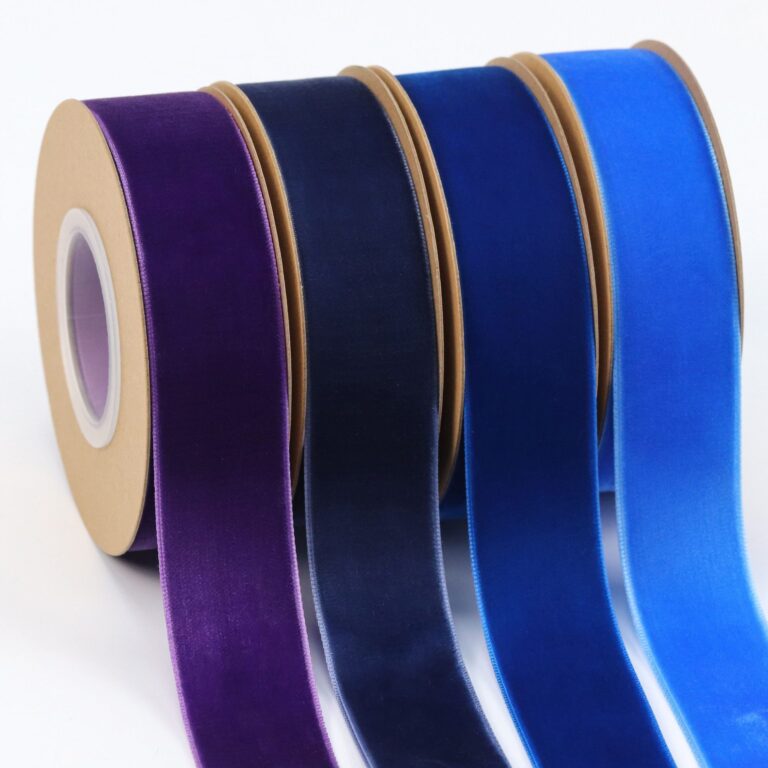 Velvet Ribbon Pile and Finish Comparison for Custom Orders Buyer
: what to confirm on material, MOQ, sample checks,…
Explore guide
Metallic Ribbon Finish Comparison for Custom Orders: Buyer Checklist
Metallic Ribbon Finish Comparison for Custom Orders: what to confirm on material, dimensions, finish, and handling before you…
Explore guide
Velvet Ribbon Pile and Finish Comparison for Custom Orders Buyer
Velvet Ribbon Pile and Finish Comparison for Custom Orders Buyer: what to confirm on material, MOQ, sample checks,…
Explore guide
Metallic Ribbon Finish Comparison for Custom Orders: Buyer Checklist
Metallic Ribbon Finish Comparison for Custom Orders: what to confirm on material, dimensions, finish, and handling before you…
Explore guide
Leave a comment
Share a sourcing question or feedback on this guide. The Lude team reviews submissions before following up.