


Grosgrain Ribbon For Packaging: Packaging applications and limits
Evaluate Grosgrain Ribbon For Packaging options: sample approval, color tolerance, QC checks, and material. Narrow the list before requesting samples
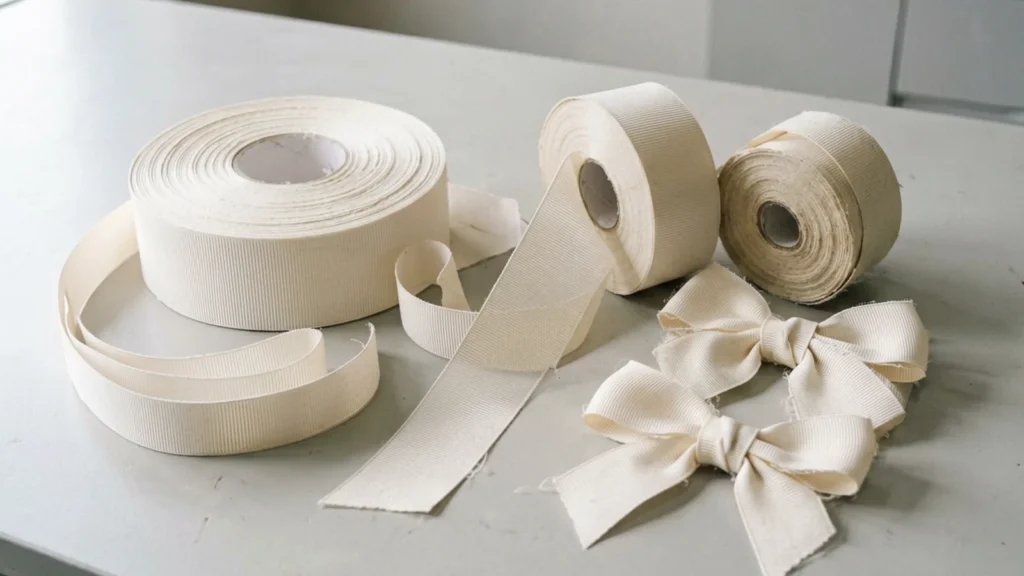
Before you can map product choices to real applications, usage scenarios, buyer constraints, and project outcomes, the specification has to say enough for a supplier to price the same job you have in mind.
Grosgrain works where the ribbon takes load and fails where it has to lie perfectly flat. Which one your pack needs settles the material.
Direct answer: For grosgrain ribbon for packaging, buyers should map product choices to real applications, usage scenarios, buyer constraints, and project outcomes.
Where grosgrain ribbon packaging fits event projects
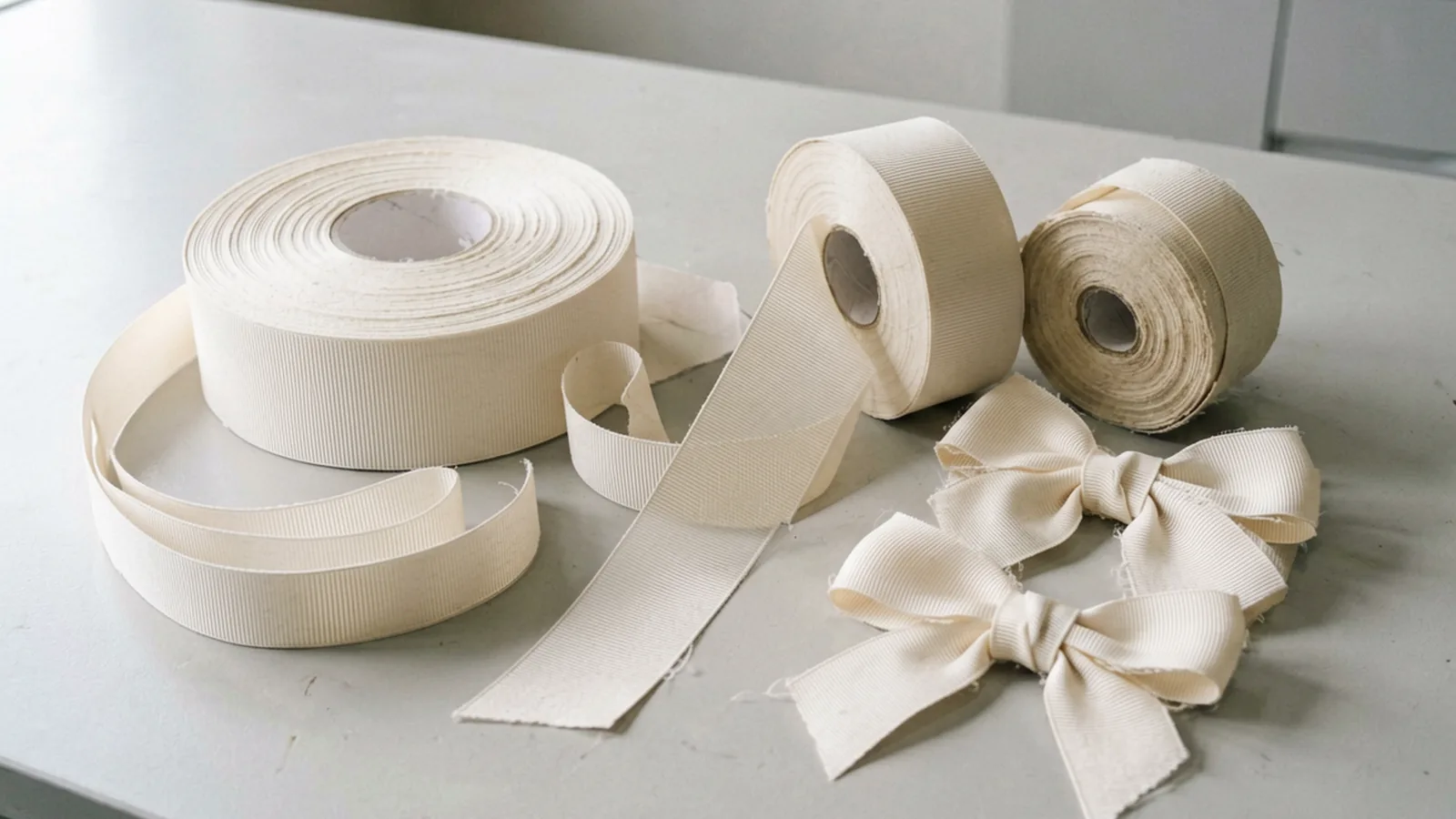
The rib is what you are buying. It runs across the ribbon and gives it body, which makes grosgrain hold a knot and resist creasing better than a flat weave. The same rib is why it does not drape, and most grosgrain disappointments come from asking it to do the one thing its construction rules out.
| Application | Fits when | Risk to watch | Verification check before ordering |
|---|---|---|---|
| Box banding and tie-offs | The bow must stay tight through handling | Almost none; this is what the rib is for | Tie a sample and open it after a week |
| Carrier bag handles | The ribbon takes load rather than decoration | Edge wear at the punch hole | Load a handled sample and inspect the hole |
| Standing bows on display | The bow must hold shape without wire | Body varies with rib density | Compare two densities tied at the same width |
| Draped or gathered work | Rarely a fit; the rib resists the fold | Stiff folds and a gathered look that will not sit | Drape a sample before specifying it |
The trade-off is consistent: grosgrain buys structure and gives up softness. Where a pack needs the ribbon to fall rather than to hold, the honest comparison is against satin at the same width rather than against a cheaper grosgrain. Ask the factory which rib density the sample was woven at, because that figure decides the body far more than the width does.
Material, finish, and format decisions
Four signals mean a grosgrain packaging order will not perform, and each is checkable before production.
| Warning sign | Why it matters | Verification check | Risk if ignored |
|---|---|---|---|
| Rib density never specified | Density decides body, and body is the reason to choose grosgrain | Ask for two densities and compare them tied | A ribbon that behaves like a flat tape |
| Sample shown flat, never loaded | Handle applications put the ribbon under load | Load a handled sample and inspect the stress point | Failure at the bag handle rather than on the shelf |
| Print quoted without a rib reference | The rib interrupts fine artwork detail | Ask for a printed sample on the actual rib | Detail that disappears at production |
| Supplier capability described in general | Rib consistency is a weaving control | Ask which steps run in-house and see the loom | Quality answers that stop at their own supplier |
The third row is specific to grosgrain and catches people out. Ink sits across a ridged surface, so fine lines and small type break up in a way they would not on satin. Testing that before approval costs one sample. Where the pack is a gift or retail programme, the approval sequence sits in gift and retail packaging ribbon solutions.
Application and display requirements
Three ways to put grosgrain on a pack, compared on what each asks of the ribbon rather than on appearance.
| Option | Best fit | Trade-off | Risk to verify |
|---|---|---|---|
| Plain grosgrain band | Structure and a clean line | No brand mark | Confirm the shade against a signed standard |
| Printed grosgrain | The mark carries the pack | Artwork detail limited by the rib | Proof the design on the production rib and width |
| Grosgrain handle or carrier | The ribbon takes load | Edge and end finishing become critical | Load-test a finished handle sample |
The cost driver differs by row. On a printed band it is the per-design setup rather than the material, which is why a range of four artwork variants costs far more than four times one design at the same volume. Check the threshold on custom printed ribbon before deciding how many variants the range needs, and simplify the artwork if the rib will not carry it.
MOQ, lead time, and sample planning
Five inputs make grosgrain packaging quotes comparable, and each one moves the price more than the pack quantity usually does.
- Width and rib reference. Send a sample for the rib rather than describing it. Density is what the buyer feels, and it is not carried by a width figure alone.
- Application. Say whether the ribbon is decorative or load-bearing. A handle specification changes the construction, and the risk of leaving it out is a decorative tape quoted for a structural job.
- Colour route. Plain stock ribbon starts at 1,500 yards per color from existing colors and widths; a brand match is confirmed by quote request and adds a dye lot approval step.
- Artwork, if any. Printed ribbon starts at 3,000 yards per design, so treat each variant as its own programme rather than a version of one.
- Dates. Standard production runs 15 to 20 business days once specifications are approved, with sampling, artwork sign-off, and dye lot approval outside that window.
Where a pack needs a rib or a width not already woven, that development runs through OEM and ODM ribbon development, and the weaving trial belongs inside sampling rather than after the order.
Buyer checklist before RFQ
Five checks belong in the approval record for a grosgrain pack. Each returns a physical result, and each is run on the sample you intend to approve rather than an earlier one.
- Rib density in the hand. Compare the sample against your reference piece by feel as well as by eye. The defect it catches is a thinner construction supplied at the same width, and the approval standard is the signed reference rather than a description.
- Knot behaviour after a week. Tie the bow on the actual pack, leave it, then look at the knot. The defect is a bow that loosens rather than one that creases, which is the opposite of the satin failure mode.
- Load at the stress point, where applicable. On handles and carriers, load the sample and inspect the punch or stitch point. Verification here is the loaded sample, not the flat one.
- Print legibility on the rib. Read the smallest element of the artwork on the production width. The defect is detail broken up by the ridge, and it is a quality control question rather than a design preference.
- Edge condition after handling. Handle a cut length and inspect the end. Grosgrain edges behave differently from satin, and the check is a worked piece rather than a fresh cut.
Ask for one pre-production sample against the approved specification with its lot marking intact, and approve it in writing. That signed piece is what a later inspection is measured against, and on grosgrain it settles the two disputes that actually happen: rib density and print legibility.
Source check: ISO 2859-1 sampling inspection standard.
In conclusion
The decision behind grosgrain ribbon for packaging is whether the pack needs structure or softness. The rib supplies the first and rules out the second, and no amount of specification work changes that.
Where the bow must hold and the ribbon may take load, the route is grosgrain ribbon specified by rib density rather than by width alone, and the cost driver on a printed programme is the per-design setup rather than the material. Specifying grosgrain for draped work carries the risk of a pack that looks stiff in exactly the place the design wanted movement.
Send the pack, the width, and a rib reference to two or three suppliers, and ask each for a tied sample plus a printed proof at the production width, with lot marking intact. Compare the density by hand, check the knot a week later, approve in writing, and keep the piece.
Grosgrain ribbon packaging FAQ
What should buyers confirm before ordering Grosgrain Ribbon For Packaging?
Confirm the width, the rib density against a reference sample, the edge finish, and whether the ribbon is decorative or load-bearing. The rib gives grosgrain its body, so density is the specification that decides how the pack actually looks and holds.
How should buyers compare MOQ, lead time, and quote terms?
Compare by production route rather than as one number. Plain stock ribbon starts at 1,500 yards per color from existing colors and widths, printed ribbon starts at 3,000 yards per design, and formed pieces are counted individually. Production then runs 15 to 20 business days after approval, with sampling outside that window.
What sample, quality, or supplier checks reduce risk?
Compare rib density by hand against a signed reference, tie a bow on the real pack and check it a week later, and read the smallest artwork element on the production width. Keep the approved piece with its lot marking for the reorder.
Next step: Send Specs for Review.
Keep exploring
Recommended buyer guides
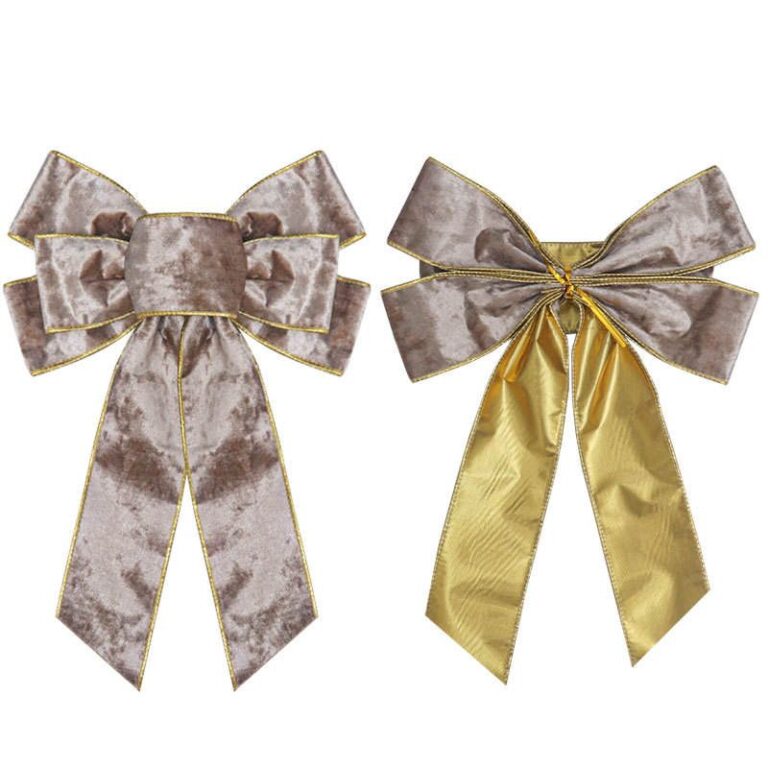 Pre-Tied Bows for Retail Packaging: When They Reduce Labor and Rework
See when pre-tied bows reduce retail packaging labor, improve consistency, and simplify bulk packing, SKU planning, and reorders
Explore guide
Pre-Tied Bows for Retail Packaging: When They Reduce Labor and Rework
See when pre-tied bows reduce retail packaging labor, improve consistency, and simplify bulk packing, SKU planning, and reorders
Explore guide
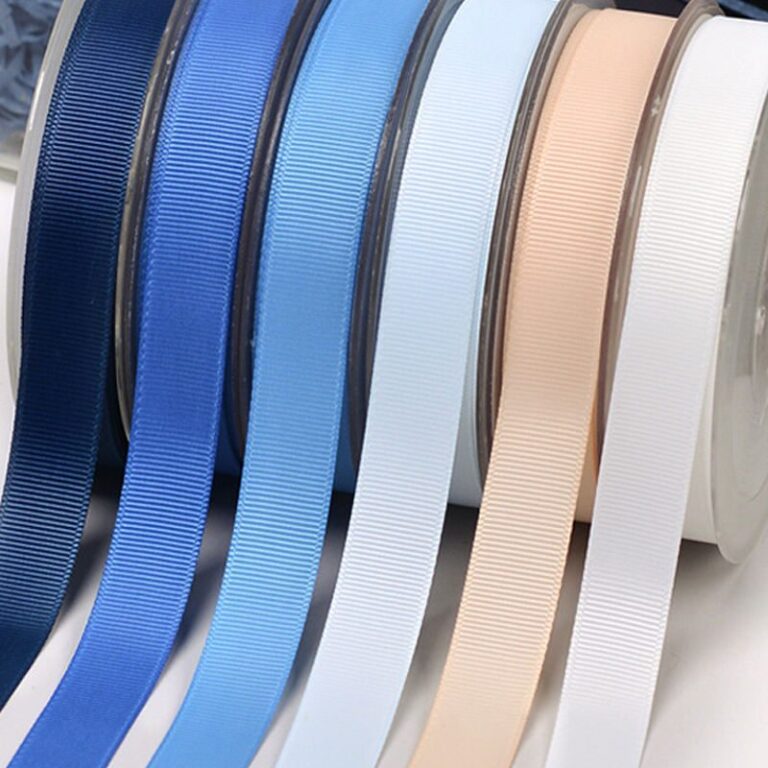 Wholesale Grosgrain Ribbon Rolls: Specs, Roll Length, and RFQ Checks
Buying Grosgrain Ribbon Rolls? Verify sample approval, color tolerance, QC checks, and material to reduce quoting errors and…
Explore guide
Wholesale Grosgrain Ribbon Rolls: Specs, Roll Length, and RFQ Checks
Buying Grosgrain Ribbon Rolls? Verify sample approval, color tolerance, QC checks, and material to reduce quoting errors and…
Explore guide
 Wholesale Foil Printed Ribbon: Use-Case Fit and RFQ Checklist
Buying foil printed ribbon: buyer use-case fit checklist? Verify artwork files, print method, and color target to reduce…
Explore guide
Wholesale Foil Printed Ribbon: Use-Case Fit and RFQ Checklist
Buying foil printed ribbon: buyer use-case fit checklist? Verify artwork files, print method, and color target to reduce…
Explore guide
 Grosgrain Ribbon Width Guide: Width choice for packaging and bows
Grosgrain Ribbon Width Guide: what to check on artwork files, print method, color target, and material before placing…
Explore guide
Grosgrain Ribbon Width Guide: Width choice for packaging and bows
Grosgrain Ribbon Width Guide: what to check on artwork files, print method, color target, and material before placing…
Explore guide
Leave a comment
Share a sourcing question or feedback on this guide. The Lude team reviews submissions before following up.