


Velvet Ribbon MOQ Planning for Custom Orders Cost Checklist
What drives Velvet Ribbon MOQ Planning for Custom Orders Cost Checklist pricing? Check MOQ, setup fees, unit cost, and packing to separate spec cost from
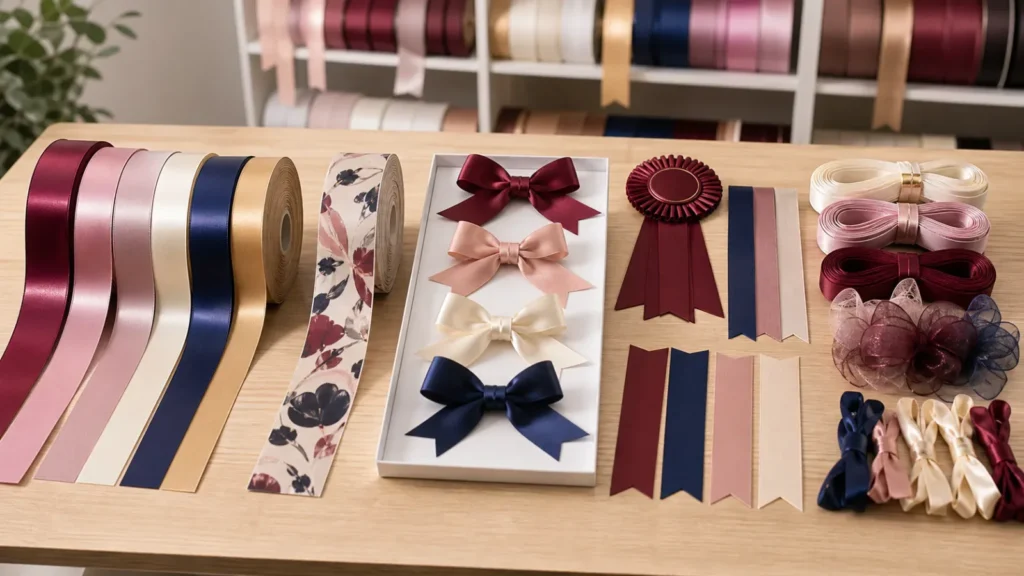
The sourcing record for velvet ribbon MOQ planning for custom is incomplete until it supports this Prepare quote-ready specifications before contacting suppliers.
Velvet MOQ runs higher than flat ribbon because the pile process carries its own minimum. Plan the color count around it.
Direct answer: For velvet ribbon MOQ planning for custom, buyers should prepare quote-ready specifications before contacting suppliers.
Define the Buyer Decision for Velvet Ribbon MOQ Planning
Compare the decision criteria for velvet ribbon minimum order against one RFQ revision. Each row should identify the requirement, approval evidence, and buyer action before production.
| Requirement | Factory control | Evidence to verify | Order risk | RFQ follow-up |
|---|---|---|---|---|
| Sample approval | Factory holds production until signed-off sample is returned. | Compare production first-piece against approved reference under buyer-approved viewing conditions. | Proceeding without approval can lead to shade or pile variation across the run. | Request a sealed sample and sign the spec sheet before any cutting. |
| MOQ and order quantity | Factory allocates material and dye lot only after quantity is locked. | Confirm per-color and per-width minimums in writing on the PO. | Under-ordering triggers a second dye lot that may not match the first. | Request a written MOQ breakdown by SKU before committing to the PO. |
| Lead time after approval | Factory starts the clock only when the signed sample and PO are both received. | Check the production schedule for a confirmed ship week after approval. | Delays in sample sign-off compress the delivery window and may incur air freight. | Request a production schedule with a clear start date tied to your approval. |
For velvet ribbon minimum order, use the decision criteria as the decision scope. Read the rows as one approval sequence. Start with sample approval; use the risk and buyer-action columns to decide whether its evidence is sufficient. Verify it with the inspection method and approval evidence recorded in the table.
For this velvet ribbon minimum order sourcing record, keep the supplier response, marked sample, and approval owner under the same revision number. If any proof conflicts with the approved record, hold the quote, sample, or production release until the supplier explains the deviation in writing. Before closing the checkpoint, reconcile the latest drawing, sample, quotation, and approval comments, identify which record controls if they disagree, and document the resolution. Carry the signed the decision criteria table into the purchase order and production handoff so the same checks support quote comparison, sample approval, shipment release, and later reorders.
Customization, setup, and MOQ impact
Custom velvet ribbon orders incur setup charges for engraving embossing rollers or creating print screens, which are amortized across the run. The minimum order is typically higher for multicolor patterns or debossed logos because each color requires a separate screen and setup. To avoid paying for unused capacity, compare the setup cost per color against the per-yard price break at the supplier's stated minimum order threshold before finalizing the order quantity.
Hidden risks in quotes and delivery
A quoted lead time of 15–20 business days often excludes artwork approval, sample transit, and any rework cycles. Buyers who do not explicitly request a calendar-based production schedule may find that the supplier counts only working days after all approvals are in hand. To mitigate this, ask the supplier to confirm the ship week and include a liquidated damages clause for late delivery in the purchase order terms.
Questions to confirm before ordering:
For velvet ribbon minimum order, treat the listed items as RFQ inputs. Match each buyer input to written supplier confirmation, approval evidence, and the risk that would hold the quote.
- Velvet ribbon width, material composition, and pile height: Each variable shifts the raw material cost and loom setup, directly affecting the minimum order and unit price. the buyer-confirmed requirement wide velvet ribbon with a the buyer-confirmed limit pile uses less yarn than a the buyer-confirmed limit wide ribbon with a the buyer-confirmed limit pile, changing the supplier's cost structure. The supplier may quote based on a standard spec, leading to a price adjustment or minimum order increase after order placement. Document the exact width, material blend, and pile height on the RFQ and request a cost breakdown per spec.
- Customization method: printed, embossed, or dyed velvet ribbon: Setup costs for engraving cylinders, dye formulations, or print screens are amortized across the minimum order, making order quantity a direct cost driver. A debossed logo requires a custom die, adding a one-time setup fee that is typically spread over the first production run. The quote may exclude setup fees, causing an unexpected cost increase when the supplier adds them at invoicing. Request a separate line item for setup, tooling, or engraving costs and confirm how they affect the minimum order.
- Production lead time and schedule confirmation: Lead time directly ties to minimum order planning because larger orders often require longer production slots and raw material procurement. A 500-meter velvet ribbon order may ship in 15 business days, while a 5,000-meter order may need 20 business days plus material sourcing time. Without a confirmed schedule, the buyer may commit to a launch date that the supplier cannot meet, causing stockouts or delays. Request a production schedule with the quote request that includes raw material lead time, production days, and shipping window.
- Quality control check for color consistency and pile uniformity: Velvet ribbon's pile can vary between dye lots, affecting the final product appearance and brand consistency. A buyer ordering black velvet ribbon for a luxury packaging line must approve a first-production sample to verify the shade matches the approved standard. Bulk production may ship with visible color or pile differences, leading to rework or rejected goods at the buyer's facility. Include a sample approval gate in the quote and confirm the supplier's QC process for color and pile consistency.
- minimum order per SKU and split order feasibility: Suppliers often set a minimum per color or design, and splitting across multiple SKUs can increase total commitment. A supplier may require 500 meters per color, so a buyer needing three colors must commit to 1,500 meters total. The buyer may place an order that exceeds budget or inventory capacity, or face a higher per-unit cost for smaller splits. Confirm the minimum order per SKU and ask if the supplier allows combined orders across colors or designs to meet the minimum.
Velvet ribbon cost is driven by width, pile height, and material composition. A wider ribbon with a deeper pile uses more yarn per meter, raising both the raw material cost and the minimum order quantity. Buyers should specify these details on the quote request to receive an accurate quote and avoid price adjustments after order placement.
Setup costs for custom velvet ribbon—such as engraving cylinders for debossed logos or mixing dye for a specific color—are typically amortized across the minimum order. A larger order spreads these fixed costs, lowering the per-unit price. Buyers should request a separate setup fee line item to understand how customization affects the total quote.
Quotes may exclude setup fees, sample approval costs, or shipping charges, leading to unexpected expenses. Additionally, lead time can vary based on order size and raw material availability. Without a confirmed production schedule, the buyer risks missing launch dates. Request a full cost breakdown and a timeline that includes material procurement and production days.
Confirm Product and Order Scope
| Cost driver | What changes it | Quote signal | Risk to avoid | Buyer action |
|---|---|---|---|---|
| Dye method and color count per SKU | Custom Pantone matching adds setup waste; multiple colors per SKU raise total yardage needed. | Line item for color-matching fee and per-color MOQ appears on RFQ. | Underestimating per-color MOQ can force a full re-quote or split order. | Verify per-color MOQ with supplier before combining SKUs on one PO. |
| Custom debossing or printed logo setup | Engraving a deboss roller or making a print screen adds a one-time tooling charge. | Separate setup fee line item; MOQ may increase for tooling amortization. | Setup fee is non-refundable if order is canceled after tooling starts. | Request setup fee quote and tooling ownership terms before PO. |
| Packing configuration and roll length | Custom core size, inner pack quantity, or label changes packing line setup and waste. | Packing spec listed as a separate cost driver; per-roll length affects MOQ calculation. | Non-standard packing may exceed MOQ or incur extra labor charges. | Confirm roll length, core size, and inner pack quantity in writing before production. |
| Lead time compression or split shipments | Rush orders require overtime or line priority; split shipments add handling and freight cost. | Expedite fee or split-shipment surcharge noted on quote. | Compressed lead time may skip sample approval, risking bulk defects. | Negotiate lead time with a sample-approval gate; confirm velvet ribbon MOQ can support split delivery. |
Evaluate Confirm Product and Order Scope as one decision scope. Use this cost breakdown table as an approval sequence, not as a supplier claim. For dye method and color count per sku, a poor decision can mean underestimating per-color minimum order can force a full re-quote or split order. Request written proof and compare it with the approved sample or specification, then verify per-color minimum order with supplier before combining skus on one po.
For the dye method and color count per sku checkpoint, keep the supplier response, marked sample, approved specification, quotation, and approval owner under the same revision number. If the evidence conflicts with the approved record, hold the quote, sample, or production release until the deviation is explained in writing. Carry the signed decision record into the purchase order, production handoff, shipment release, and later reorder review so every team works from the same baseline.
Decision criteria to confirm
Before sending the quote request, compare each cost driver against your order scope. A single change in width or color count can shift minimum order and unit price. Document your tolerance and packing preferences early to avoid re-quotes. This step turns a generic quote into a production-ready baseline.
RFQ details to send
List every variable that affects cost: dye method, width, pile height, logo type, and packing. Attach a spec sheet or reference sample. Ask the supplier to confirm per-color minimum order and setup fees. A complete quote request reduces back-and-forth and locks in the quoted terms for your velvet ribbon order.
Production handoff details
Once the quote is accepted, confirm the production schedule and sample approval gate. Verify that the lead time starts after spec confirmation, not after PO. Request a pre-production sample for color and width check. This handoff prevents costly re-runs and keeps your velvet ribbon project on track.
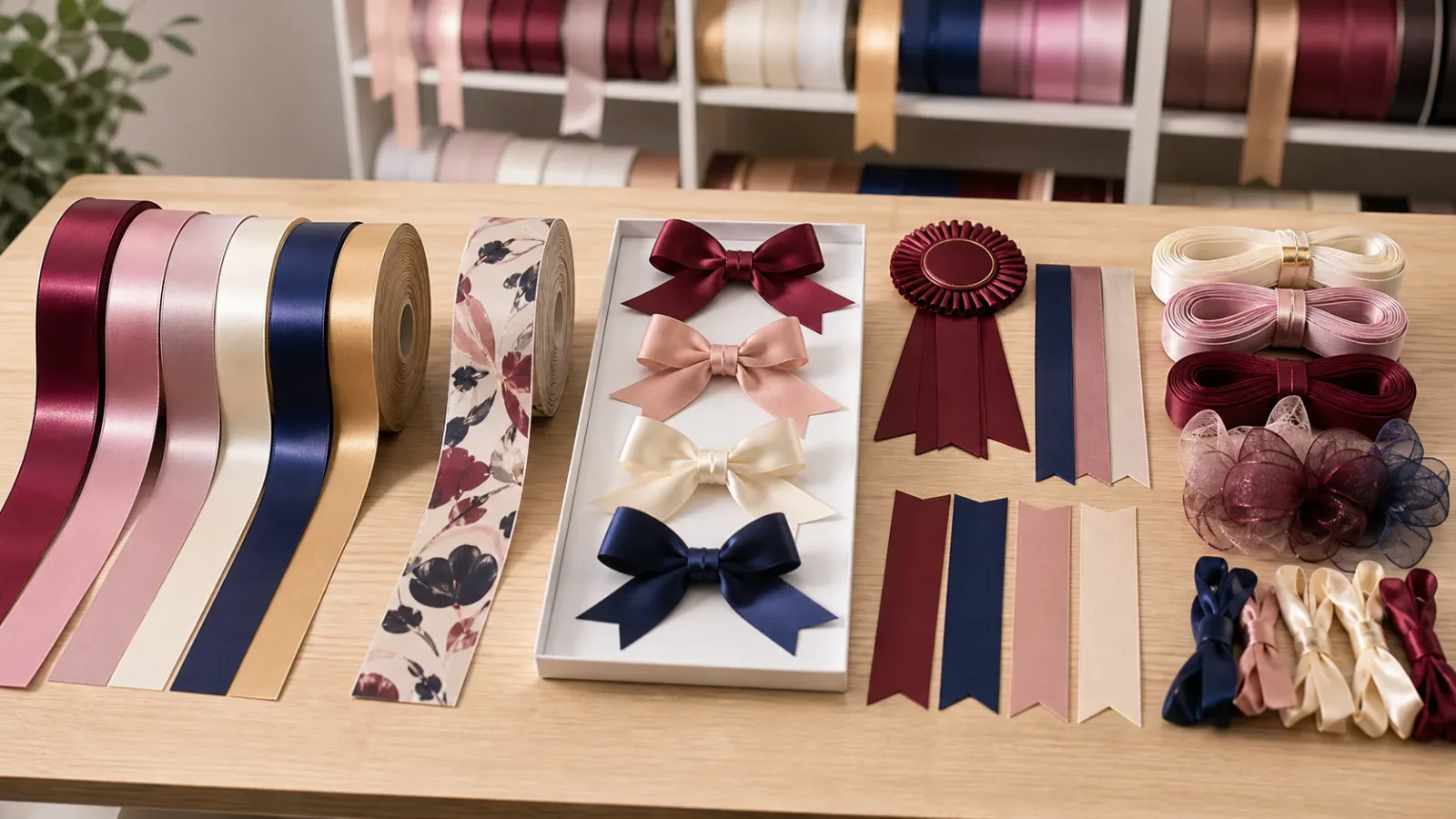
Build the Verification Checklist
- Supplier cannot produce velvet ribbon in the specified width and pile height. Incompatible loom setup leads to off-spec ribbon, rework costs, and delayed delivery. Request a capability statement listing supported widths, pile heights, and backing types. Recent production order sheet or QC record for similar velvet ribbon specs. Shortlist only suppliers who confirm your exact width and pile height in writing.
- No sample approval gate for custom printed ribbon before bulk production. Unapproved samples can hide color mismatch, print registration errors, or pile crush. Require a signed sample approval form with pass/fail criteria for color and print. Signed sample approval record from a previous custom order with similar print method. Add sample approval as a contract milestone before bulk cutting.
- Supplier has no documented QC check for velvet ribbon pile integrity or backing adhesion. Defective pile or delaminated backing causes returns and brand damage in finished goods. Ask for the QC checklist step where pile height and backing adhesion are measured. QC log from the last three velvet ribbon runs showing pile height readings and pass/fail results. Include a pile integrity test in your incoming inspection plan.
Compare Quote and Production Assumptions
The main failure mode for velvet ribbon minimum order is approval before the supplier has resolved the listed evidence gaps.
- What is the supplier's minimum run length for velvet ribbon by width and color? Velvet ribbon requires specific loom setups and dye lots; a single minimum order per width avoids cost surprises when you add colors. Supplier provides a per-width minimum order table and confirms that multiple colors can share a single production run without extra setup fees. A flat minimum order across widths may force over-ordering on narrow ribbon or under-ordering on wide ribbon, causing waste or stockouts. Request a written minimum order schedule by width, color count, and finish type before quote request submission.
- How does the supplier verify dye-lot consistency across split shipments? Velvet ribbon absorbs dye unevenly across batches; a split shipment without lot control can yield visible shade differences. Supplier uses a digital spectrophotometer for each dye lot and holds a sealed reference sample from the approved strike-off. Unmatched dye lots in partial deliveries can ruin a retail packaging line, forcing rework or discounting. Add a dye-lot continuity clause to the purchase order and request lot numbers on each packing list.
- What is the approval gate for production samples before bulk cutting? Velvet pile direction, width tolerance, and edge finish must be signed off; a skipped sample gate risks bulk rework. Supplier requires a signed first-article report covering width, color, pile height, and roll length before production release. Bulk ribbon that fails width or shade spec may be unusable for gift and retail packaging ribbon solutions solutions, delaying your launch. Define a three-day sample review window in the order confirmation and hold the supplier to it.
At the review checkpoint, the supplier must have provided a completed quote request revision and sample handoff sheet. Without these, the approval stage cannot proceed.
Run the Review Before Approval
For velvet ribbon minimum order, this section converts run the Review Before Approval into quote request inputs, supplier evidence, approval risk checks, and the next sample or quote decision.
Questions to send back to the supplier
- Confirm the exact velvet ribbon specifications (width, density, dye method) and whether they align with the quote request.
- Request a breakdown of minimum order by color and width, including any cost implications for smaller quantities.
- Ask about production risks: are there any known issues with edge curl, color bleeding, or pile crush?
- Verify factory execution capability: do they have in-house sample matching and last-order comparison?
- Request the sample handoff timeline and confirm that the sample will match the production spec.
Once the supplier responds, evaluate using the criteria below.
When to revise, escalate, or reject
Use the following table to decide whether to send the quote request back for revision, escalate to a manager, or reject the proposal outright.
| Issue | Recommended Action | Reason |
|---|---|---|
| Spec discrepancy: sample does not match RFQ | Revise with corrected specs | Prevents production error |
| MOQ exceeds budget | Escalate to negotiate or seek alternative | Cost impact |
| Production risk unresolved | Reject unless alternative process proposed | Ensures quality |
| Sample handoff incomplete | Revise with clear milestones | Avoids delays |
These steps ensure that the approval stage is backed by verified evidence.
Move from Review to RFQ or Sample
The main failure mode at this stage is proceeding to an quote request or sample request without confirming that the supplier has resolved all evidence gaps from the review. The control is a structured handoff that forces closure on specs, cost, minimum order, and production risk before the next gate.
Inputs to include in the next message
- Confirmed velvet ribbon specifications: width, color code, pile height, backing type, and any dye lot tolerance.
- Agreed minimum order per SKU and total order quantity, with clear cost breaks at each tier.
- Production risk items: identified failure modes (e.g., color shift, edge fraying) and the supplier’s proposed mitigation steps.
- Factory execution details: machine type, inspection points, and packaging requirements for the sample or first run.
- quote request or sample handoff sheet: a single document that captures all agreed terms, including payment terms and delivery window.
Ownership and sign-off for the next gate
Assign one person as the gate owner—typically the procurement lead or product manager—who must sign off that all inputs are complete before the quote request or sample request is sent. The supplier’s counterpart must also confirm readiness. Without dual sign-off, the handoff is incomplete and risks rework or cost overruns.
Source check: ISO 2859-1 sampling inspection standard; Velvet Ribbon Supplier for Wholesale and Custom Decorative Orde…; Custom Silicone Product minimum order Guide for B2B Buyers | LYA.
In conclusion
The sourcing choice for velvet ribbon custom orders comes down to how thoroughly you compare and verify the specification, cost, and minimum order details before committing to a supplier. By documenting the exact material composition, width, and print method, you can shortlist only those factories that provide a completed quote request revision with clear cost breakdowns and lead time estimates. This approach reduces the risk of proceeding to a sample request without confirmed parameters, ensuring that the approval stage is backed by verified evidence rather than assumptions.
Ultimately, the most reliable path is to validate the spec and approve a sample only after the supplier has demonstrated they can meet your order scope and quality requirements. This disciplined handoff between quote request evaluation and sample approval helps you avoid costly rework and production delays, making your velvet ribbon program more predictable and manageable from the start.
To request a quote for velvet ribbon minimum order, use MOQ and lead time to confirm the final specification, quote assumptions, sample approval, QC evidence, approval risk, and supplier follow-up before bulk order.
Velvet Ribbon MOQ Planning FAQ
What should buyers confirm first?
Buyers should first confirm the exact material composition, width, and print method for the velvet ribbon, as each variable directly impacts the minimum order. Check the supplier’s minimum per color and per design, and compare that against your planned order schedule to avoid paying for unused inventory. Ask how QC will check the sample, color, finish, packing, and bulk order.
Which proof should be retained for approval and reorders?
Retain the approved sample and the signed specification sheet that includes color, width, and print details. This proof ensures the supplier’s production matches the agreed standard and serves as the benchmark for reorder verification, reducing risk of visual or dimensional drift. Confirm minimum order and order quantity by color, width, artwork, and packing route.
Which warning signs should stop the order?
Stop the order if the supplier cannot provide a completed quote request revision showing the minimum order breakdown per SKU or if the sample approval reveals a color or texture mismatch. Also halt if the quoted lead time exceeds your launch window without a documented reason, as this signals production or capacity risk. Ask for a sample, specification confirmation, or QC evidence before approval.
quote request handoff: Send Specs for Review.
Keep exploring
Recommended buyer guides
 Bulk Custom Printed Ribbon Orders: MOQ, Supplier Checks, and Quote Inputs
Plan bulk custom printed ribbon orders with MOQ, print method, artwork files, color targets, and supplier checks ready…
Explore guide
Bulk Custom Printed Ribbon Orders: MOQ, Supplier Checks, and Quote Inputs
Plan bulk custom printed ribbon orders with MOQ, print method, artwork files, color targets, and supplier checks ready…
Explore guide
 Custom Ribbon RFQ Checklist: Specs to Prepare Before Requesting a Price
A complete custom ribbon RFQ needs material, width, print method, color spec, quantity per SKU, and packing, so…
Explore guide
Custom Ribbon RFQ Checklist: Specs to Prepare Before Requesting a Price
A complete custom ribbon RFQ needs material, width, print method, color spec, quantity per SKU, and packing, so…
Explore guide
 Wholesale Ribbon Fray Edge Quality: Specs, Roll Length, and RFQ Checks
Which Ribbon Fray Edge Quality options deserve an RFQ? Compare artwork files, print method, color target, and sample…
Explore guide
Wholesale Ribbon Fray Edge Quality: Specs, Roll Length, and RFQ Checks
Which Ribbon Fray Edge Quality options deserve an RFQ? Compare artwork files, print method, color target, and sample…
Explore guide
 Organza Ribbon Width Guide: When 1/4 Inch Rolls Fit Packaging Orders
Organza Ribbon Width Guide: what to check on artwork files, print method, color target, and material before placing…
Explore guide
Organza Ribbon Width Guide: When 1/4 Inch Rolls Fit Packaging Orders
Organza Ribbon Width Guide: what to check on artwork files, print method, color target, and material before placing…
Explore guide
Leave a comment
Share a sourcing question or feedback on this guide. The Lude team reviews submissions before following up.