


Satin Ribbon MOQ Planning for Custom Orders Cost Checklist
What drives custom satin ribbon MOQ and pricing? Check MOQ, setup fees, unit cost, and packing before you request a quote.
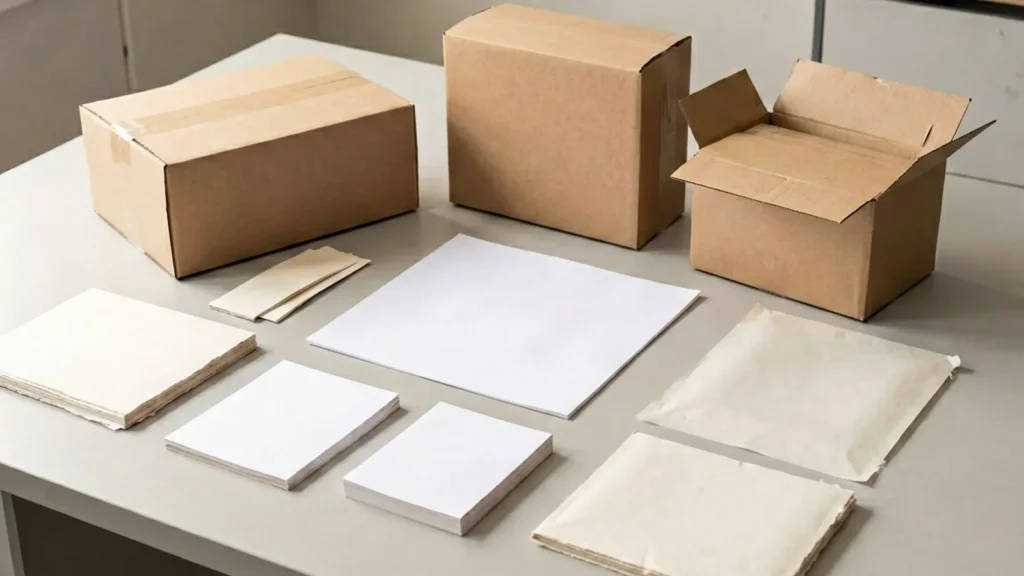
The sourcing record for satin ribbon MOQ planning for custom is incomplete until it supports quote-ready specifications.
Satin MOQ follows the dye lot, and a dye lot is measured in yards of a single color. Splitting colors multiplies the minimum.
Direct answer: For satin ribbon MOQ planning for custom, buyers should prepare quote-ready specifications before contacting suppliers.
Define the Buyer Decision for Satin Ribbon MOQ Planning For Custom Orders
Compare the decision criteria for satin ribbon minimum order against one RFQ revision. Each row should identify the requirement, approval evidence, and buyer action before production.
| Requirement | Factory control | Evidence to verify | Order risk | RFQ follow-up |
|---|---|---|---|---|
| Sample approval | Factory holds approved sample as master reference against production run. | Compare production first-off to signed-off sample using light box and spectro. | Color drift, width variation, or print misregistration without sealed sample. | Request A4-size sealed sample with signature before production release. |
| MOQ and order quantity | Factory confirms per-color MOQ in meters, not per-SKU, before cutting. | Audit dye-lot allocation and roll count against written MOQ breakdown. | Unused inventory if MOQ is per-design rather than per-color-way. | Ask supplier to itemize MOQ by color, width, and print method in RFQ. |
| Lead time after approval | Factory starts clock only after sample sign-off and material in stock. | Check production schedule against confirmed raw silk inventory date. | Lead-time slippage if approval gate is not documented in order acknowledgment. | Require written lead-time commitment that excludes artwork and sample days. |
For satin ribbon minimum order, use the decision criteria as the decision scope. Read the rows as one approval sequence. Start with sample approval; use the risk and buyer-action columns to decide whether its evidence is sufficient. Verify it with the inspection method and approval evidence recorded in the table.
For this satin ribbon minimum order sourcing record, keep the supplier response, marked sample, and approval owner under the same revision number. If any proof conflicts with the approved record, hold the quote, sample, or production release until the supplier explains the deviation in writing. Before closing the checkpoint, reconcile the latest drawing, sample, quotation, and approval comments, identify which record controls if they disagree, and document the resolution. Carry the signed the decision criteria table into the purchase order and production handoff so the same checks support quote comparison, sample approval, shipment release, and later reorders.
Questions to confirm before ordering:
For satin ribbon minimum order, treat the listed items as RFQ inputs. Match each buyer input to written supplier confirmation, approval evidence, and the risk that would hold the quote.
- Satin ribbon width, color standard, material composition, and print method per SKU. Each variable changes the production setup and material waste, directly affecting minimum order per color and per design. A double-face satin with PMS 186C and hot-stamp foil requires separate ink mixing and foil roll, raising the minimum run per SKU. Supplier may quote a combined minimum order that hides high per-color minimums, causing a shortfall on reorder. Submit a spec sheet per SKU and ask the supplier to confirm minimum order by color and print method in writing.
- Supplier-confirmed minimum order breakdown by color, width, and print method for the custom satin ribbon order. A single minimum order figure often masks higher per-color minimums; splitting it reveals the true order commitment. A total minimum order may still carry a per-color limit, so a four-color order can need more than the quoted total to avoid short-run penalties. Buyer approves a quote that looks affordable but triggers a surcharge or order split when color counts exceed the hidden minimum. Request a line-item minimum order table from the supplier and verify it against your planned color and width quantities.
- Pre-production sample approval record with signed-off spec sheet and color standard reference. The sample is the only physical proof that the satin ribbon meets your width, shade, and print registration before bulk production. Retain the approved sample alongside the PMS chip and a note of acceptable tolerance (e.g., the buyer-approved tolerance width, ±1 shade step). Bulk run may deviate from the intended color or print alignment, and the supplier will claim the spec was unclear. Document the approval date, sign-off name, and any deviation limits on the spec sheet before releasing the production order.
- Written lead-time commitment from the supplier covering artwork, sample, production, and shipping stages. Custom satin ribbon involves multiple handoffs—artwork approval, sample making, bulk weaving, and packing—each adding days. A 15–20 business day production clock starts only after sample sign-off, not after the quote request; shipping adds supplier-confirmed timing by sea. Buyer plans a launch date based on a single lead-time number, then misses the window because sample approval took two weeks. Ask the supplier to confirm each stage duration in calendar days and add a buffer for your internal approval process.
Confirm Product and Order Scope
| Cost driver | What changes it | Quote signal | Risk to avoid | Buyer action |
|---|---|---|---|---|
| Material width and dye lot | Wider satin ribbon increases raw material cost per yard; multiple dye lots raise setup and waste | Supplier itemizes cost by width increment and dye lot quantity | Approving a single width without checking cost per yard across widths | Request a width-to-cost matrix before finalizing the spec sheet |
| Color count per SKU | Each additional color requires separate dye bath, drying, and inspection setup | Quote shows per-color setup fee and MOQ floor for each colorway | Assuming one MOQ covers all colors, then facing per-color minimums | Verify the supplier's per-color MOQ in writing before sample approval |
| Print method and plate cost | Rotary screen vs. digital transfer changes plate fees, run speed, and per-yard cost | Supplier lists plate charge, minimum run length, and per-yard price by method | Choosing a print method solely on per-yard price without factoring plate amortization | Compare total cost (plate + run) across print methods for your satin ribbon order quantity |
| Packaging and unitization | Individual spooling, polybagging, or inner boxes add labor and material cost per unit | Quote separates packaging line items from ribbon cost | Accepting a bundled price that hides expensive custom packaging | Ask for a packaging cost breakdown and confirm if standard spooling meets your needs |
| Lead time compression | Expedited production or split shipments increase labor, logistics, and overtime charges | Supplier flags a rush fee or split-shipment surcharge on the quote | Requesting a compressed lead time without negotiating the cost impact | Document the standard lead time and any premium for acceleration before placing the PO |
For material width and dye lot, a poor decision can mean approving a single width without checking cost per yard across widths. Request written proof and compare it with the approved sample or specification, then request a width-to-cost matrix before finalizing the spec sheet.
For the material width and dye lot checkpoint, keep the supplier response, marked sample, approved specification, quotation, and approval owner under the same revision number. If the evidence conflicts with the approved record, hold the quote, sample, or production release until the deviation is explained in writing. Carry the signed decision record into the purchase order, production handoff, shipment release, and later reorder review so every team works from the same baseline.
For satin ribbon minimum order, use a release rule: approve only when the supplier evidence matches the written requirement.
- Supplier cannot split minimum order across colorways or print variations: A single minimum order per SKU forces overcommit on slow-moving colors, inflating inventory cost and risking dead stock before the first reorder cycle. Ask for a flexible minimum order structure that aggregates total yardage across all color variants, with a minimum per-color floor to protect setup cost. Written minimum order breakdown by color, print method, and width, signed on supplier letterhead or included in the formal quote request response. Compare the per-color floor against your forecast; if it exceeds your planned first order, request a revised allocation or split the PO into two phases.
- Lead-time quote excludes artwork approval and sample revision cycles: Standard 15–20 business day production clocks start only after spec sign-off; unquoted review days can push delivery past your launch window without a contractual remedy. Require the supplier to state a calendar-day lead time that includes artwork proof, sample approval, and shipping, and to confirm the trigger point for the clock. A timeline table showing each gate (artwork sent, sample approved, bulk start, ship date) with calendar-day durations and the person responsible for each sign-off. Map the supplier's timeline against your internal approval capacity; if you need more than two business days per review, negotiate a longer window before the PO is issued.
- Supplier cannot provide a signed specification sheet for the satin ribbon construction: Without a locked spec, the first bulk run may use different yarn denier, weave density, or dye lot tolerance than the approved sample, causing color shift or hand feel variation that triggers a full reject. Demand a spec sheet that lists material composition, width tolerance, color standard (Pantone or spectral), finish type, and acceptable shade band before any production starts. A signed specification document with the supplier's QC stamp and a reference to the approved pre-production sample number or photo. File the signed spec sheet with your purchase order and share it with your receiving team so the incoming inspection checks against the same document.
- Supplier capability claim lacks evidence of running similar satin ribbon programs: A factory that primarily weaves grosgrain or organza may not have the finishing equipment (calendering, slitting, or edge-fusing) needed for consistent satin ribbon width and edge quality. Ask for three references of past satin ribbon orders with similar print method, width, and order volume, plus a photo or video of the actual finishing line. Customer references with contact details, order dates, and volumes, plus a dated photo of the finishing machine set up for satin ribbon width and edge treatment. Call one reference to confirm on-time delivery and defect rate; if the supplier cannot provide a reference within agreed response time, shortlist a different factory.
quote request checkpoint

Build the Verification Checklist
Start the verification checklist with evidence for satin ribbon.
- Can the supplier produce custom printed ribbon to the exact width and color standard we require? Verifies that the factory's loom setup and ink system match your spec sheet before any material is cut. Supplier provides a signed spec sheet with width tolerance, color code, and print registration limits. Receiving ribbon that is off-width or off-color, causing rework or rejection at your packing line. Request a pre-production sample and compare it against the signed spec sheet under controlled lighting.
- What is the supplier's minimum order quantity per color and per print design? Confirms minimum order breakdown so you can plan order quantities across multiple SKUs without overcommitting. Supplier states a clear per-color and per-design minimum order in meters or rolls, and explains how combined orders may reduce minimums. Ordering a single color at a high minimum order that exceeds your budget or storage capacity, or missing a lower combined minimum order. Document the per-color minimum order in your quote request and ask if split orders across designs count toward the same minimum.
- How does the supplier verify that the bulk run matches the approved sample? Ensures the factory has a documented QC step between sample sign-off and production to catch drift early. Supplier describes a first-article inspection, in-process checks, and a final audit against the approved sample. Bulk ribbon arriving with color shift, print misalignment, or width variation that was not caught during production. Ask for a copy of the supplier's QC checklist and agree on a hold point for first-article approval before full production.
- What is the lead time for a custom printed ribbon order after sample approval? Locks the production schedule so you can align your inventory arrival with your own packing or event timeline. Supplier gives a firm lead time in business days after spec confirmation, and explains what can cause delays. Late delivery that disrupts your production line or forces air freight costs not accounted for in your budget. Confirm the lead time in writing and ask for a production schedule with milestone dates for material arrival, printing, and finishing.
- What reorder process does the supplier use to maintain consistency across batches? Prevents color or print variation between your first order and repeat orders, which is critical for branded packaging. Supplier keeps archived spec sheets and sample swatches, and runs a new pre-production sample for each reorder. Receiving a second batch that does not match the first, forcing you to sort or discard mismatched ribbon. Request that the supplier include a reorder protocol in your contract, specifying sample retention and re-approval steps.
Compare Quote and Production Assumptions
When comparing quotes for custom satin ribbon, the most common oversight is assuming that standard production assumptions apply. Without a structured verification checklist, you risk budget overruns and misaligned expectations. The following checklist ensures that specs, cost, production risk, factory execution, and quote request/sample handoff are aligned.
- Confirm ribbon width, color, and finish match your spec sheet
- Verify that the minimum order stated applies to your exact custom combo
- Ask if the quote includes dye lot consistency and defect tolerance
- Clarify whether sample fees are deducted from production order
- Request a written timeline for sample approval and production start
| Assumption | Custom Reality |
|---|---|
| Standard widths are always available | Custom widths may require minimum yardage per color |
| MOQ is per design | MOQ often applies per color per design |
| Sample is free with bulk order | Sample cost may be separate and non-refundable |
| Production lead time is fixed | Custom dyeing can add 2–3 weeks |
For more guidance on packaging applications, explore our gift and retail packaging ribbon solutions.
Run the Review Before Approval
At this stage, you must have a supplier-confirmed quote request that states the required satin ribbon width, color, and dye lot tolerance. Before moving to production, verify that every cost and specification line item matches the buyer’s original requirements.
Questions to send back to the supplier
- What is the confirmed minimum order for our custom satin ribbon order, and does it include any setup or color-matching fees?
- Can you provide a written guarantee that the ribbon width will be within the agreed tolerance (e.g., the buyer-approved tolerance as per our quote request)?
- What is the percentage of acceptable color variation between dye lots, and how will you communicate any deviation before shipping?
- Are there any additional costs for sample approval or production proofs before the full run?
When to revise, escalate, or reject
If the supplier cannot confirm the minimum order or tolerance in writing, revise the order terms. If the supplier offers a different width or color without prior approval, escalate to a manager. Reject the order if the supplier fails to provide a sample or proof that meets your specifications. Use the table below to document your review.
| Checkpoint | Requirement | Status |
|---|---|---|
| MOQ Confirmation | Supplier confirms exact MOQ for custom satin ribbon | Pending |
| Width Tolerance | Width within the buyer-approved tolerance per RFQ | Pending |
| Color Variation | Dye lot variation within the agreed tolerance | Pending |
| Sample Approval | Sample matches buyer’s color and width requirements | Pending |
After completing the table, send the questions to the supplier and wait for written responses. Do not proceed to production until all items are marked as ‘Approved’. This review prevents costly rework and ensures the custom satin ribbon meets your exact specifications.
Move from Review to RFQ or Sample
Without a signed-off specification sheet, the buyer risks receiving a sample that does not match the intended color, width, or finish, leading to costly rework and delays. The control is a structured handoff document that captures all critical parameters before the supplier proceeds to quote request or sample production.
Inputs to include in the next message
- Confirmed ribbon width, color code (Pantone or thread match), and finish type (e.g., matte, glossy).
- Order quantity range and target unit cost to align minimum order and pricing.
- Packaging and labeling requirements (e.g., per roll, per box, custom tags).
- Delivery timeline expectations and any incoterms (e.g., FOB, EXW).
- Quality standards: acceptable color variance, edge finish tolerance, and defect rate.
Ownership and sign-off for the next gate
Assign a single point of contact from your procurement team to review and approve the final quote request or sample request. The supplier should confirm receipt and provide a timeline for quotation or sample creation. This avoids miscommunication and ensures both parties are aligned before committing resources.
For a smooth transition, use the following checklist to verify all inputs are complete:
| Input | Status | Owner |
|---|---|---|
| Width and color spec | Confirmed | Buyer |
| Quantity and target cost | Approved | Buyer |
| Packaging requirements | Documented | Buyer |
| Delivery timeline | Agreed | Both |
| Quality standards | Signed off | Buyer |
Once the checklist is complete, the buyer can confidently issue the quote request or sample request, knowing that production risks are minimized and factory execution expectations are clear.
Source check: ISO 2859-1 sampling inspection standard.
In conclusion
The sourcing choice for custom satin ribbon ultimately comes down to how thoroughly you compare and verify the supplier’s minimum order breakdown against your own order volume and color requirements. Before you shortlist a supplier, validate the spec sheet for material, width, and color standard, then document the written minimum order per color and per print method. Approve a pre-production sample that matches the signed specification sheet, and check that the supplier’s lead time and cost per unit align with your budget and schedule. This disciplined handoff from quote request to sample approval reduces the risk of receiving mismatched goods or facing unexpected reorder constraints.
To request a quote, visit MOQ and lead time and confirm the final specification, quote assumptions, sample approval, QC evidence, approval risk, and supplier follow-up before bulk order.
Satin Ribbon MOQ Planning For Custom Orders FAQ
What should buyers confirm first?
Buyers should first confirm the exact material composition, width, color standard, and print method for the satin ribbon, as each variable directly impacts the minimum order and cost per unit. Document these specifications in a signed-off sheet and request a written minimum order commitment from the supplier, including tolerance for over or under runs, before any price negotiation.
Which proof should be retained for approval and reorders?
Retain the approved pre-production sample along with the signed specification sheet and the supplier’s written minimum order confirmation as the master proof for both initial approval and future reorders. This sample should be measured for width, color-matched under standard lighting, and tested for edge fraying or dye migration to ensure repeatable quality.
Which warning signs should stop the order?
Stop the order if the supplier cannot provide a written minimum order breakdown by color or design variation, or if they refuse to produce a strike-off or lab dip before bulk production. Also halt if the quoted lead time is vague or if the supplier has no documented process for shade control across different production lots, as these gaps signal high risk of batch inconsistency and delayed delivery. Ask how QC will check the sample, color, finish, packing, and bulk order. Ask for a sample, specification confirmation, or QC evidence before approval.
quote request handoff: Send Specs for Review.
Keep exploring
Recommended buyer guides
 Organza Ribbon MOQ Planning for Custom Orders Cost Checklist
Break down Organza Ribbon MOQ Planning for Custom Orders Cost Checklist costs: MOQ, setup fees, unit cost, and…
Explore guide
Velvet Ribbon MOQ Planning for Custom Orders Cost Checklist
What drives Velvet Ribbon MOQ Planning for Custom Orders Cost Checklist pricing? Check MOQ, setup fees, unit cost,…
Explore guide
Organza Ribbon MOQ Planning for Custom Orders Cost Checklist
Break down Organza Ribbon MOQ Planning for Custom Orders Cost Checklist costs: MOQ, setup fees, unit cost, and…
Explore guide
Velvet Ribbon MOQ Planning for Custom Orders Cost Checklist
What drives Velvet Ribbon MOQ Planning for Custom Orders Cost Checklist pricing? Check MOQ, setup fees, unit cost,…
Explore guide
 Custom Ribbon RFQ Checklist: Specs to Prepare Before Requesting a Price
A complete custom ribbon RFQ needs material, width, print method, color spec, quantity per SKU, and packing, so…
Explore guide
Ribbon Reorder Planning: Forecasting repeat orders
Evaluate Ribbon Reorder Planning options: artwork files, print method, color target, and MOQ. Narrow the list before requesting…
Explore guide
Custom Ribbon RFQ Checklist: Specs to Prepare Before Requesting a Price
A complete custom ribbon RFQ needs material, width, print method, color spec, quantity per SKU, and packing, so…
Explore guide
Ribbon Reorder Planning: Forecasting repeat orders
Evaluate Ribbon Reorder Planning options: artwork files, print method, color target, and MOQ. Narrow the list before requesting…
Explore guide
Leave a comment
Share a sourcing question or feedback on this guide. The Lude team reviews submissions before following up.