


Ribbon Reorder Planning: Forecasting repeat orders
Evaluate Ribbon Reorder Planning options: artwork files, print method, color target, and MOQ. Narrow the list before requesting samples or quotes

Ribbon reorder planning needs a written specification before the buyer can prepare the exact information needed for an accurate RFQ, sample request, or custom quote; otherwise suppliers may quote different product and approval assumptions.
This guide connects ribbon reorder planning to parameters, cost impact, supplier risk, factory process, and procurement advice.
Direct answer: For ribbon reorder planning, prepare the RFQ by locking measurable specifications, sample evidence, packing details, quantity terms, and approval checkpoints before requesting a supplier quote.
How buyers should plan ribbon reorders before production
| Application | Fit condition | Risk to avoid | Specification or proof | Follow-up |
|---|---|---|---|---|
| Annual award ceremony ribbon reorder | Custom printed satin or grosgrain with same artwork and PMS color match | Color drift between batches or discontinued stock color | Approved PMS reference and previous production artwork file | Request a color-match sample before bulk reorder |
| Seasonal promotional ribbon for retail packaging | Stock color plain ribbon in standard width and material | Inventory shortfall if reorder point is calculated without supplier lead time | Confirmed stock availability and current lead time | Verify stock level and lead time before placing order |
| Custom dyed ribbon for brand packaging program | Pantone-dyed satin with minimum yardage per color | Incorrect shade approval causing full production rejection | Signed-off physical sample under production lighting | Document approval conditions and hold sample for bulk reference |
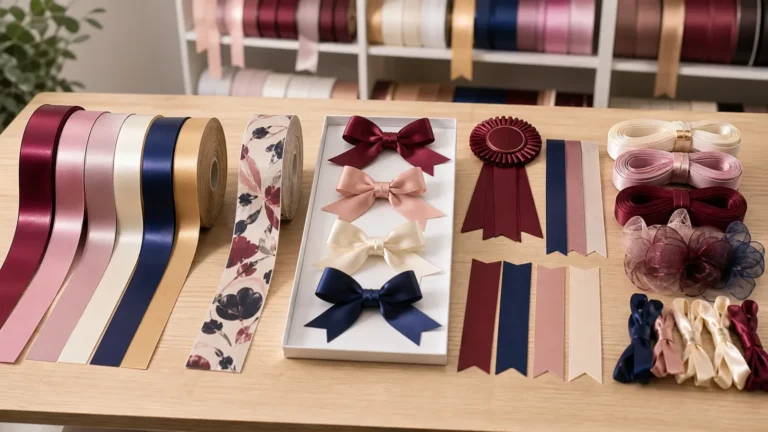
| Ready-made bow reorder for gift packaging | Pre-tied bows in consistent style and color per program | Mismatched bow dimensions or ribbon grain from prior run | Approved bow sample with dimension and material spec | Compare new sample against archived production sample |
For annual award ceremony ribbon reorder, a poor decision can mean color drift between batches or discontinued stock color. Request written proof and compare it with the approved sample or specification. Use the result to decide whether this checkpoint can proceed or must stay on hold.
Preserve the annual award ceremony ribbon reorder decision under one revision number: keep the supplier response, marked sample, approved specification, quotation, and approval owner together. If the evidence conflicts with the approved record, hold the quote, sample, or production release until the deviation is explained in writing. Once the buyer and designated technical authority have accepted the evidence, carry the signed approval record into the purchase order, production handoff, shipment release, and later reorder review so every team works from the same baseline.
Demand forecast, SKU, color, and packing assumptions
Before any reorder, document the exact SKU count, color codes, and packing format from the last production run. A mismatch in packing assumptions—such as roll length or inner box quantity—can delay fulfillment. Share these details with your supplier so they can confirm material availability and avoid surprises.
What must be confirmed before a repeat or seasonal order
Verify that the artwork file, color reference, and spec sheet from the last run are still current. If the ribbon will be used in a new season or event, check that the color has not been discontinued and that the width is still in stock. A signed proof and color match sample approval are required before production begins.
Quantity, roll length, and reorder calculations
- No documented roll length verification at the factory: Short rolls mean you run out mid-event and cannot match the dye lot on a reorder. Ask how they measure roll length and whether they use a calibrated yardage counter. A calibration certificate for the measuring device and a recent QC log for the same ribbon type. Schedule a video call to watch the measurement process on a sample roll.
- Supplier lacks a buffer stock policy for reorder surges: Without buffer, a last-minute order for an award ceremony can miss the event date entirely. Confirm they hold safety stock for your program or can commit to a fixed reorder lead time. A signed agreement on minimum buffer quantity and a lead-time guarantee for rush orders. Add a clause to your purchase order that triggers a penalty if the buffer is not maintained.
- No color consistency check between production runs: Award ribbons from different runs will not match, forcing you to discard entire batches. Ask if they use a spectrophotometer and what delta-E tolerance they accept. A color measurement report from the last two runs of the same SKU. Send a retained metallic ribbon sample from the first run as a visual benchmark for the next order.
- Supplier cannot provide a roll-weight or yardage certificate: Without a certificate, you cannot verify you received the full paid quantity, risking budget overruns. Request a weight-based or yardage-based certificate of conformance for every shipment. A sample certificate from a past order and a description of their weighing or measuring process. Add the certificate requirement to your supplier approval checklist before the first bulk order.
How to estimate usage by package, bow, or event setup
Measure the ribbon length needed for one bow or one award package by tying a sample and cutting the excess. Multiply that length by the total number of units you plan to produce. Then add a documented allowance for test ties and machine setup waste, based on the approved sample run and the factory’s written setup plan. This gives a usable yardage target for your reorder quantity.
Buffer stock and wastage assumptions
Set the buffer quantity from actual consumption records, the approved production method, supplier lead time, and the risk of last-minute event additions. Record that quantity in the reorder sheet instead of applying an unsupported fixed percentage. Confirm whether the supplier will hold the agreed buffer between orders and how it will be allocated, reviewed, and replenished.
quote request checkpoint
MOQ, lead time, and production slot planning
A reorder schedule should work backwards from the required delivery date and show which specification, quantity, and approval events allow the factory to reserve production. Prepare the following inputs before asking the supplier to confirm availability.
| Input | Check method | Risk if missing | Buyer follow-up |
|---|---|---|---|
| Previous order number, approved specification revision, artwork, colour reference, and packing standard | Ask the supplier to mark every changed and unchanged field. | The factory may treat the request as a new program or repeat an obsolete version. | Freeze the revision before requesting the final quote. |
| Quantity by SKU, colour, artwork, roll or piece format, and delivery split | Request written minimums and price breaks for the exact mix. | A per-variant minimum can create excess stock or make a split shipment uneconomic. | Consolidate variants or revise the forecast before approval. |
| Required delivery date and destination | Obtain a schedule that separates material readiness, sample review, production, inspection, and shipment. | A headline lead time can omit approval or logistics days. | Approve only a dated schedule with a named start condition. |
| Inspection and release evidence | Confirm which retained sample, tolerance record, colour check, and packing check will govern the batch. | Unclear release criteria can turn a reorder discrepancy into a quality dispute. | Add the evidence list to the purchase order. |
When MOQ affects reorder timing
Ask whether the minimum applies to the total order, each colour, each artwork, or each production run. If the forecast does not meet the confirmed threshold, decide early whether to combine demand, reduce variants, accept a supplier-quoted setup charge, or postpone the run. That decision belongs before a slot is requested, not after inventory reaches the emergency level.
How sampling and approval change the schedule
A repeat sample may still be needed when material, colour, print file, finish, packing, or factory process changes. Ask the supplier which change triggers reapproval and when the production clock begins. Send the locked specification through the OEM and ODM ribbon development route, request the dated approval plan, and reserve the slot only after both sides confirm the same revision.
Quality consistency between orders
- Confirm ribbon material, width, color, and finish match previous order specs: Ensures consistent product appearance and function across reorder batches Compare current order specs and samples against archived artwork and previous batch records Mismatched ribbons cause customer complaints and possible order rejection Request detailed spec sheets and physical samples before approving reorder
- Verify factory quality control reports and defect rate for the ribbon batch: Maintains product quality standards and reduces risk of defects reaching buyer Review factory QC inspection logs and defect summaries from sample room checks High defect rates lead to increased returns, delays, and extra inspection costs Require factory QC report with defect thresholds before confirming production run
- Check that reorder quantity meets Lude Ribbon minimum order quantities for ribbon type: Avoids production delays and price surcharges from orders below MOQ thresholds Confirm order quantities align with MOQ rules for plain, custom printed, or bows Orders below MOQ cause longer lead times or cancellation of reorder Adjust order volume or negotiate minimum order exceptions via quote request with supplier
- Verify packaging and labeling match previous order to ensure shipment consistency: Correct packing prevents damage and supports brand presentation in gift and retail packaging ribbon solutions Inspect packing photos and confirm label details against prior shipment records Incorrect packing causes product damage or misbranding, impacting sales Approve packing samples and require packing checklist before shipment
- Confirm lead time and delivery schedule align with production and inventory needs: Timely delivery avoids stockouts and production delays in reorder planning Check supplier lead time commitments and cross-reference with reorder point calculations Late deliveries disrupt supply chain and increase buffer stock costs Set reorder point with safety stock and confirm supplier lead time in purchase order
Color, finish, width, and packing records to archive
Keep detailed records of ribbon color codes, finish types, width measurements, and packing specifications from each approved order. These archives help verify that subsequent orders match exactly, reducing risk of inconsistencies in gift and retail packaging ribbon solutions. Buyers can reference these documents to confirm supplier compliance before approving new runs.
Planning checklist before RFQ
- Can the supplier meet the minimum order quantities for our ribbon type and color? minimum order compliance affects pricing, lead time, and production feasibility for reorder planning. Supplier confirms minimum order matches Lude Ribbon's thresholds for stock or custom ribbons. Ordering below minimum order causes delays, higher costs, or order rejection. Verify minimum order compliance in quote request and shortlist only suppliers who meet these minimums.
- What verification methods does the supplier use to confirm ribbon color and finish before production? Accurate color and finish matching prevents costly rework and customer dissatisfaction. Supplier provides color-match samples and physical samples with documented approval steps. Color mismatches lead to rejected shipments and delayed deliveries. Request color-match and physical samples early and approve before bulk production.
- What risks are associated with supplier approval processes for custom printed ribbons? Approval gates control quality and ensure specifications meet program requirements. Supplier details artwork review, sample approval, and production sign-off procedures. Skipping approval steps risks off-spec ribbons and unsellable inventory. Document and enforce approval checkpoints before confirming bulk orders.
- How does the supplier handle buyer follow-up on reorder status and potential delays? Timely updates allow buyers to manage inventory and adjust schedules proactively. Supplier commits to regular status reports and proactive communication on delays. Lack of communication causes stockouts or rushed orders with premium costs. Set communication expectations in contracts and monitor supplier responsiveness.
- What quality control measures are in place during ribbon production and final inspection? QC controls detect defects early and maintain consistent product standards. Supplier runs in-process inspections and final QC checks documented with reports. Poor QC leads to defective ribbons, returns, and damaged brand reputation. Require QC documentation with each shipment and consider third-party inspection if needed.
Inputs to send the supplier
Send detailed ribbon specifications including exact color codes, width, finish type, and required quantities. Include artwork files for custom prints and confirm minimum order requirements upfront. Clear inputs reduce ambiguity, speed up quoting, and prevent costly errors during sampling and production.
In conclusion
To ensure effective ribbon reorder planning, buyers should thoroughly validate ribbon specifications, including color codes, widths, and finishes, while carefully comparing minimum order and lead time implications to align with budget and timeline requirements. Assessing quality risks through supplier proofs and sample approvals is essential to confirm factory capabilities and maintain consistency in production.
By documenting all details and coordinating closely with suppliers during the quote request and sample handoff stages, buyers can shortlist reliable manufacturers and streamline reorder decisions with confidence. This structured approach minimizes surprises and supports smooth, cost-effective procurement aligned with project goals.
To request a quote for ribbon reorder planning, use custom printed ribbon to confirm the final specification, quote assumptions, sample approval, QC evidence, approval risk, and supplier follow-up before bulk order.
Ribbon reorder planning FAQ
What should buyers confirm before ordering Ribbon Reorder Planning?
Buyers should confirm exact ribbon specifications including color codes, width, finish, and material type before ordering Ribbon Reorder Planning. They must also verify minimum order thresholds—such as 1,500 yards for plain stock ribbons or 3,000 yards for custom printed ribbons—and lead times, typically 15-20 business days after specification approval.
Additionally, buyers need to assess supplier reliability through sampling and quality control checks, document reorder quantities with buffer stock considerations, and ensure all details are clearly outlined in the quote request to avoid delays or miscommunication.
How should buyers compare MOQ, lead time, and quote terms?
Buyers should compare minimum order, lead time, and quote terms by aligning them with their project scale and timing needs, noting that minimum order for plain stock ribbons is 1,500 yards and 3,000 yards per design for custom printed ribbons. Lead times generally range from 15 to 20 business days after specification confirmation.
Cost implications tied to minimum order and production complexity should be verified in the quote request, and buyers must check for any surcharge options like rush production. Comparing these factors helps shortlist suppliers who meet both budget and schedule requirements.
What sample, quality, or supplier checks reduce risk?
To reduce risk, buyers should request physical samples and color-match proofs to verify quality and consistency before bulk production. Factory audits or social compliance reports can help assess supplier reliability, while thorough quality control inspections ensure ribbons meet specified standards.
Following up on RFQs and sample approvals is critical to confirm lead times and minimum order compliance, and documenting all findings supports transparent communication and risk mitigation throughout the reorder process.
quote request handoff: Send Specs for Review.
Keep exploring
Recommended buyer guides
 Satin Ribbon MOQ Planning for Custom Orders Cost Checklist
What drives custom satin ribbon MOQ and pricing? Check MOQ, setup fees, unit cost, and packing before you…
Explore guide
Satin Ribbon MOQ Planning for Custom Orders Cost Checklist
What drives custom satin ribbon MOQ and pricing? Check MOQ, setup fees, unit cost, and packing before you…
Explore guide
 Organza Ribbon MOQ Planning for Custom Orders Cost Checklist
Break down Organza Ribbon MOQ Planning for Custom Orders Cost Checklist costs: MOQ, setup fees, unit cost, and…
Explore guide
Velvet Ribbon MOQ Planning for Custom Orders Cost Checklist
What drives Velvet Ribbon MOQ Planning for Custom Orders Cost Checklist pricing? Check MOQ, setup fees, unit cost,…
Explore guide
Organza Ribbon MOQ Planning for Custom Orders Cost Checklist
Break down Organza Ribbon MOQ Planning for Custom Orders Cost Checklist costs: MOQ, setup fees, unit cost, and…
Explore guide
Velvet Ribbon MOQ Planning for Custom Orders Cost Checklist
What drives Velvet Ribbon MOQ Planning for Custom Orders Cost Checklist pricing? Check MOQ, setup fees, unit cost,…
Explore guide
 Custom Ribbon RFQ Checklist: Specs to Prepare Before Requesting a Price
A complete custom ribbon RFQ needs material, width, print method, color spec, quantity per SKU, and packing, so…
Explore guide
Custom Ribbon RFQ Checklist: Specs to Prepare Before Requesting a Price
A complete custom ribbon RFQ needs material, width, print method, color spec, quantity per SKU, and packing, so…
Explore guide
Leave a comment
Share a sourcing question or feedback on this guide. The Lude team reviews submissions before following up.