


Metallic Ribbon MOQ Planning for Custom Orders Cost Checklist
What drives Metallic Ribbon MOQ Planning for Custom Orders Cost Checklist pricing? Check MOQ, setup fees, unit cost, and packing to separate spec cost
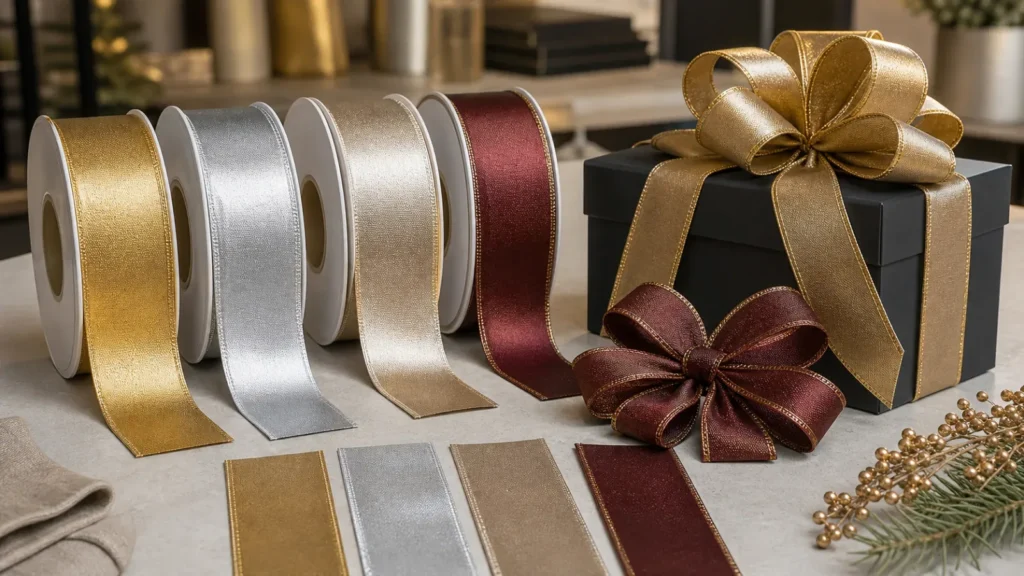
The sourcing record for metallic ribbon MOQ planning for custom is incomplete until it supports this Prepare quote-ready specifications before contacting suppliers.
Metallic MOQ follows the coated substrate run, which is usually larger than the dye lot behind a plain ribbon.
Direct answer: For metallic ribbon MOQ planning for custom, buyers should prepare quote-ready specifications before contacting suppliers.
Define the Buyer Decision for Metallic Ribbon MOQ Planning
Compare the decision criteria for metallic ribbon minimum order against one RFQ revision. Each row should identify the requirement, approval evidence, and buyer action before production.
| Requirement | Factory control | Evidence to verify | Order risk | RFQ follow-up |
|---|---|---|---|---|
| Sample approval | Factory holds approved sample as master for production | Compare production sample against signed-off master under buyer-approved viewing conditions | Shipment rejected if visual match deviates from approved standard | Request written approval sign-off before production release |
| MOQ and order quantity | Factory sets MOQ per material, print, width, and packing | Confirm MOQ breakdown in writing per spec line item | Under-ordering triggers re-run charges or delayed delivery | Verify MOQ per variant and negotiate if order volume is below threshold |
| Lead time after approval | Factory counts lead time from confirmed spec and sample sign-off | Request calendar-based production schedule with buffer for shipping | Unclear start date causes missed launch or inventory gap | Document lead time commitment in RFQ and confirm weekly updates |
For metallic ribbon minimum order, use the decision criteria as the decision scope. Read the rows as one approval sequence. Start with sample approval; use the risk and buyer-action columns to decide whether its evidence is sufficient. Verify it with the inspection method and approval evidence recorded in the table.
For this metallic ribbon minimum order sourcing record, keep the supplier response, marked sample, and approval owner under the same revision number. If any proof conflicts with the approved record, hold the quote, sample, or production release until the supplier explains the deviation in writing. Before closing the checkpoint, reconcile the latest drawing, sample, quotation, and approval comments, identify which record controls if they disagree, and document the resolution. Carry the signed the decision criteria table into the purchase order and production handoff so the same checks support quote comparison, sample approval, shipment release, and later reorders.
Material and specification cost drivers
Metallic ribbon pricing is driven by substrate type, foil layering method, and width tolerance. Polyester-based metallics cost less than nylon or acetate blends but may affect drape. Buyers should request a cost breakdown per material grade to isolate the base substrate expense from the metallic coating process.
Customization, setup, and MOQ impact
Each custom color match, print pattern, or width change adds setup time and waste, raising the effective minimum order. Factories often split minimum order across multiple SKUs only if the same substrate and coating line are used. Request a setup fee schedule and ask whether combined SKUs share the same production run to lower per-unit cost.
Hidden risks in quotes and delivery
Quotes may exclude artwork approval cycles, sample revision fees, or shipping surcharges for metallic ribbon rolls. Delivery dates often shift if the foil supplier delays raw material. Require a written milestone calendar that ties each approval gate to a production start date and includes a penalty clause for missed ship windows.
Questions to confirm before ordering:
Build the metallic ribbon minimum order RFQ around Metallic ribbon alloy type and foil layer count. Match every listed buyer input to written supplier confirmation, approval evidence, and the risk that would hold the quote.
- Metallic ribbon alloy type and foil layer count: Alloy composition and foil layers directly affect raw material cost and production yield. A buyer requesting a custom silver metallic ribbon with two foil layers versus a single layer will see a cost increase per roll. Supplier may quote a standard metallic ribbon and later add surcharges for the specified foil count, blowing the budget. Verify the exact alloy and foil layer count with the supplier before RFQ submission.
- Custom color match tolerance (Pantone or spectral): Color matching for metallic ribbons requires spectral measurement; tight tolerances increase setup and waste. A buyer specifying Pantone 877 C with a buyer-approved color tolerance will incur additional lab dip charges and longer lead time. Without a defined tolerance, the supplier may deliver a shade that fails inspection, causing order rejection. Document the acceptable buyer-approved color tolerance range and request a lab dip for approval before production.
- Width and slitting tolerance for metallic ribbon: Metallic ribbon edges are prone to fraying; tight slitting tolerances reduce waste but increase setup cost. A buyer requiring a tighter width tolerance will see a higher per-meter price due to additional slitting passes. Loose tolerance may cause inconsistent ribbon width, leading to rejection in automated bow-making machines. Confirm the slitting tolerance with the supplier and include it in the QC checklist.
- Minimum order quantity per SKU and color: minimum order per SKU and color determines whether the order is economical for the supplier and buyer. A buyer needing small quantities across several colors may fall below the per-color minimum order. Ordering below the supplier's minimum order may result in a refused order or a high per-unit surcharge. Request the minimum order per SKU and color in writing and compare it against your forecasted demand.
- Lead time for custom metallic ribbon production: Lead time includes material sourcing, foil lamination, slitting, and packaging; delays affect launch schedules. A buyer ordering metallic ribbon with a custom foil color may face a longer lead time than standard production. Without a confirmed lead time, the buyer may miss a trade show or product launch window. Obtain a written lead time commitment from the supplier and add buffer for sample approval.
The alloy type and foil layer count are the primary cost drivers for metallic ribbon. A single-layer silver foil costs less than a two-layer gold-copper blend. Buyers must specify the exact alloy composition and layer count in the quote request to avoid unexpected surcharges. Suppliers use these inputs to calculate raw material waste and production complexity.
Custom color matching, width tolerance, and slitting requirements directly influence setup costs and minimum order. A tight color tolerance or narrow width tolerance increases lab dip and slitting passes, raising the per-meter price. Buyers should request a clear breakdown of setup fees and minimum order per SKU to align order quantities with budget constraints.
Quotes often omit surcharges for foil layer changes, color matching, or tight tolerances. Without a written lead time commitment, production delays can push delivery past critical launch dates. Buyers must verify that the quote includes all specification-driven costs and a realistic lead time, then document these in the purchase order to avoid disputes.
Confirm Product and Order Scope
| Cost driver | What changes it | Quote signal | Risk to avoid | Buyer action |
|---|---|---|---|---|
| Material width and metallic coating type | Wider rolls or specialty metallic finishes increase waste and setup time. | Supplier quotes per roll or per yard with a clear width-based price break. | Approving a width without confirming the MOQ per width can lock you into excess inventory. | Verify the metallic ribbon width against the MOQ table before sending the RFQ. |
| Print method and color count | Rotary vs. digital print and number of PMS colors affect plate cost and run length. | Itemized line for plate or screen fees appears on the quote. | Skipping print-method confirmation leads to surprise tooling charges or longer lead time. | Document the approved print method and color count in the scope sheet. |
| Packing unit and inner carton quantity | Bulk rolls vs. individually packed pieces change handling cost and MOQ per SKU. | Quote states packing unit (roll, piece, or set) and carton quantity. | Assuming standard packing can cause reorder mismatches or warehouse storage issues. | Confirm the packing unit matches your downstream distribution plan. |
| Lead time and production slot | Standard 15–20 business days after spec confirmation; complex runs quoted longer per RFQ. | Lead time is stated in business days with a condition: after specifications are confirmed. | Ordering without a confirmed production slot can delay your launch date. | Request a written lead-time commitment before approving the PO. |
| Sample approval and QC hold point | Approved sample locks the color, finish, and construction before bulk production. | Quote includes a sample approval step with a QC hold point. | Skipping sample approval risks bulk rejection of metallic ribbon due to shade or finish mismatch. | Retain the signed QC checklist and approved sample as proof of scope agreement. |
For material width and metallic coating type, a poor decision can mean approving a width without confirming the minimum order per width can lock you into excess inventory. Request written proof and compare it with the approved sample or specification, then verify the metallic ribbon width against the minimum order table before sending the quote request.
For metallic ribbon minimum order, preserve the material width and metallic coating type decision under one revision number: keep the supplier response, marked sample, approved specification, quotation, and approval owner together. If the evidence conflicts with the approved record, hold the quote, sample, or production release until the deviation is explained in writing. Carry that signed Confirm Product and Order Scope record into the purchase order, production handoff, shipment release, and later reorder review so every team works from the same baseline.
Decision criteria to confirm
Before you request a quote, confirm the exact metallic ribbon specification—material composition, width, print method, and color count. Each variable shifts the minimum order and unit cost. A missing detail forces the supplier to quote a range, which delays approval and risks a mismatch between the quoted price and the final order.
RFQ details to send
Your quote request must include the confirmed width, print method, color count, packing unit, and target lead time. Without these fields, the supplier cannot provide a firm minimum order or price. Attach the approved sample or color standard to the quote request so the quote reflects the actual production requirement, not a generic estimate.
Production handoff details
Once the quote is approved, document the scope in a handoff sheet that includes the minimum order per SKU, packing unit, and QC hold point. The production team uses this sheet to schedule the run and order the metallic ribbon raw material. A missing handoff step is a common cause of rework and delayed shipments.
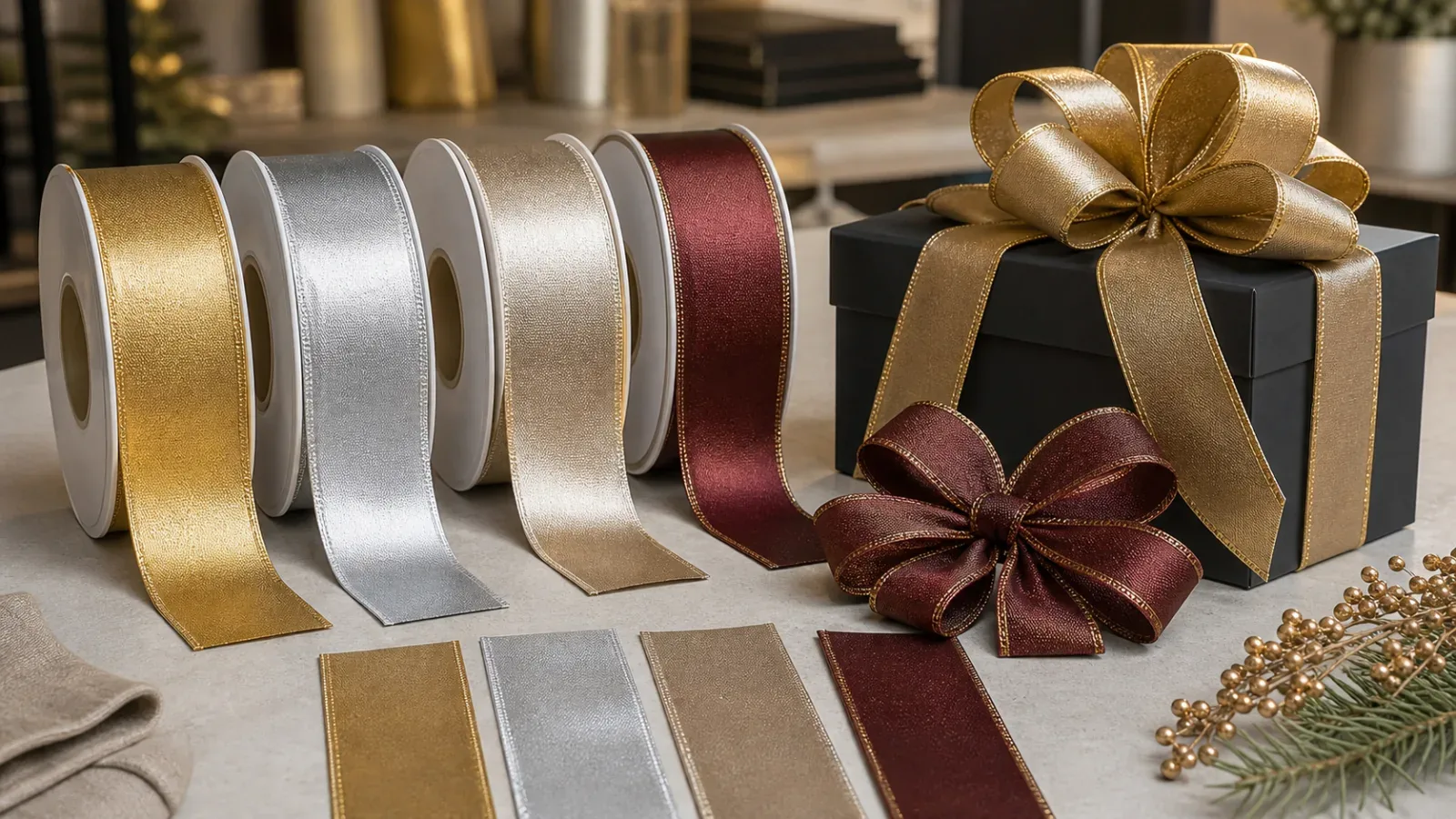
Build the Verification Checklist
- Supplier cannot provide metallic ribbon substrate specs for each coating method. Incompatible substrate causes delamination or color shift after first wash. Request a substrate specification sheet by coating type. Supplier's metallic ribbon substrate data sheet or third-party test. Add substrate requirement to the quote request before quoting.
- Supplier has no documented color-matching procedure for metallic finishes. Metallic color variation across batches leads to returns and rework. Ask for their color approval process and tolerance limits. Color approval record from a previous metallic ribbon order. Include color-matching approval steps in the project timeline.
- Supplier's sample approval timeline is not defined in the contract. Unplanned sample rounds delay production and miss shipping deadlines. Define a maximum number of color-match rounds before production. Written sample approval schedule with revision caps. Document sample approval milestones in the order confirmation.
- Supplier quotes minimum order without specifying per width, color, or print method. Hidden minimum order per variation increases total order cost unexpectedly. Request minimum order breakout by material, width, color, and print method. Supplier's minimum order matrix for custom printed ribbon orders. Verify minimum order matrix against your forecast before committing.
Compare Quote and Production Assumptions
The main failure mode for metallic ribbon minimum order is approval before the supplier has resolved the listed evidence gaps.
- Does the supplier have documented experience producing metallic ribbon with consistent color and sheen across multiple dye lots? Metallic ribbon color and luster can shift between production runs; a supplier without documented process control may deliver mismatched rolls. Supplier provides a written color-matching protocol and references for metallic ribbon orders of similar width and denier. Receiving ribbon with visible lot-to-lot variation that fails your packaging quality standard. Request a color-tolerance statement and three recent metallic ribbon order references before shortlisting.
- How does the supplier verify that the metallic coating or foil adhesion meets your specified rub and flex test? Metallic ribbon is prone to flaking or cracking during conversion and handling; a standard visual inspection may miss adhesion defects. Supplier includes a rub-test or peel-test step in their QC checklist and shares the test method and acceptable threshold. Coating failure during gift and retail packaging ribbon solutions solutions assembly, causing returns and brand damage. Add a rub-test requirement to your quote request and ask for a sample that has passed that test before production.
- What is the cost driver for your metallic ribbon minimum order—is it the plate, the color match, the substrate setup, or the minimum run per color? Setup costs for metallic ribbon are often higher than for solid-color ribbon; knowing the driver lets you negotiate the right minimum order structure. Supplier breaks down the minimum order into plate, color-match, and per-color run costs, and offers a blended minimum order for multi-color orders. Paying for a high minimum order driven by an unnecessary setup cost that could be shared across colors or orders. Ask the supplier to itemize the minimum order cost components and request a combined minimum order for your color set.
- What is the minimum order quantity per SKU, and does it change if you combine multiple metallic ribbon widths or colors in one production run? minimum order per SKU can lock you into excess inventory; combining SKUs in one run may lower the per-SKU minimum. Supplier offers a combined minimum order for multiple SKUs in the same metallic ribbon substrate and print method. Ordering above your true demand because the minimum order per SKU is too high, tying up capital in slow-moving stock. Ask for a combined minimum order quote for your full SKU list before signing the order contract.
Run the Review Before Approval
At this process checkpoint, the output required before moving to the next stage is a completed quote request revision that includes supplier confirmation on all critical specifications for metallic ribbon. The buyer must have written evidence that the supplier can meet the substrate, coating, color, and quantity requirements.
Questions to send back to the supplier
- Confirm the metallic ribbon substrate material and finish (e.g., foil on polyester or nylon) as exactly stated in the quote request.
- Verify the color matching method (Pantone or physical swatch) and the acceptable tolerance for color deviation.
- Ask for the exact minimum order per colorway and per design, and whether split lots across multiple colors are allowed.
- Request a pre-production sample of the metallic ribbon with the specified coating, width, and color before full production.
- Clarify the lead time for custom color matching and any additional costs for expedited samples or small batch runs.
When to revise, escalate, or reject
Use the table below to decide the buyer follow-up based on the supplier’s response to each requirement.
| Requirement | Action if Unmet |
|---|---|
| Supplier confirms MOQ per colorway as per RFQ | Revise RFQ to adjust quantities or combine colors to meet MOQ |
| Sample matches approved color within tolerance | Proceed to production approval |
| Supplier provides substrate specification matching the agreed material | Escalate to senior buyer if material differs from agreed spec |
| Lead time falls within the required delivery window | Reject if supplier cannot meet deadline without extraordinary expedite fee |
Ensure each decision is backed by written confirmation from the supplier. Only proceed to the next stage when all requirements are satisfied.
Move from Review to RFQ or Sample
If your metallic ribbon specification still contains an unresolved ambiguity—such as whether the substrate is polyester or nylon, or whether the print method is hot stamping versus screen printing—the supplier cannot commit to a firm minimum order or cost. The control is a structured quote request revision that forces each variable to be confirmed before the next gate.
Inputs to include in the next message
- Exact material composition (e.g., polyester and thickness) as verified by your product team.
- Finished width tolerance and whether slitting is required.
- Print method and color count (e.g., 2-color hot stamp, PMS 185C and 286C).
- Packaging unit (e.g., rolls per carton and core size) and requested minimum order in total yards.
- Target unit price range or budget per yard, if available.
Ownership and sign-off for the next gate
Assign one person to own the quote request response review—typically the sourcing lead or engineer. That person must confirm the supplier’s written minimum order, cost per unit, and lead time match the inputs above. Only after that sign-off should you move to sample request or production order.
| Requirement | Buyer Verification Question | Supplier Confirmation Needed |
|---|---|---|
| Substrate material | Is the ribbon polyester or a blend? | Material data sheet provided |
| Width tolerance | Can you hold the buyer-approved tolerance on this width? | Yes/No with process capability note |
| Print method | Is hot stamping available for 2-color PMS? | Yes, with minimum run quantity |
| Packaging unit | Do you supply the required rolls on the specified cores? | Standard or custom option |
Once the supplier answers each verification question, compare their minimum order and cost against your budget. If all items match, proceed to quote request or sample. If any gap remains, revise the input list and re-send.
In conclusion
The sourcing choice for metallic ribbon custom orders comes down to how thoroughly you compare the supplier’s written minimum order breakdown against your own specification, cost tolerance, and lead time. By verifying the material composition, print method, width, and packing details before the quote request stage, you can shortlist only those suppliers who provide clear, itemized minimum order commitments. Approving a sample that matches the signed QC checklist then locks in the quality baseline, reducing the risk of reorder surprises. Document each approval step in writing, and use that verified package to request a quote with confidence.
To request a quote for metallic ribbon minimum order, use MOQ and lead time to confirm the final specification, quote assumptions, sample approval, QC evidence, approval risk, and supplier follow-up before bulk order.
Metallic Ribbon MOQ Planning FAQ
What should buyers confirm first?
First, confirm the full specification of your metallic ribbon—material, width, print method, color, and packing. Then request the minimum order based on those details; at Lude Ribbon, plain stock ribbon starts at 1,500 yards per color and printed ribbon at 3,000 yards per design; other variables are confirmed by RFQ. Verify lead time, typically 15–20 business days after specifications are confirmed, plus sample approval. Assess supplier risk by asking for experience with metallic ribbon and requesting a sample for color and finish verification.
Which proof should be retained for approval and reorders?
Retain the approved sample and the written specification confirmation that includes material, width, print method, color, and packing. Also keep the supplier’s written minimum order and lead time commitment. For reorders, reference the same sample and specification sheet to avoid variations. Request a QC report or photos of the production run for verification.
Which warning signs should stop the order?
Stop the order if the supplier cannot provide a sample for color and finish verification, or if the minimum order is significantly higher than industry norms without justification. Vague or excessively long lead times, lack of written specification confirmation, and no verifiable experience with metallic ribbon are also red flags. Always request a pre-production sample before committing to mass production.
quote request handoff: Send Specs for Review.
Keep exploring
Recommended buyer guides
 Satin Ribbon MOQ Planning for Custom Orders Cost Checklist
What drives custom satin ribbon MOQ and pricing? Check MOQ, setup fees, unit cost, and packing before you…
Explore guide
Satin Ribbon MOQ Planning for Custom Orders Cost Checklist
What drives custom satin ribbon MOQ and pricing? Check MOQ, setup fees, unit cost, and packing before you…
Explore guide
 Organza Ribbon MOQ Planning for Custom Orders Cost Checklist
Break down Organza Ribbon MOQ Planning for Custom Orders Cost Checklist costs: MOQ, setup fees, unit cost, and…
Explore guide
Velvet Ribbon MOQ Planning for Custom Orders Cost Checklist
What drives Velvet Ribbon MOQ Planning for Custom Orders Cost Checklist pricing? Check MOQ, setup fees, unit cost,…
Explore guide
Organza Ribbon MOQ Planning for Custom Orders Cost Checklist
Break down Organza Ribbon MOQ Planning for Custom Orders Cost Checklist costs: MOQ, setup fees, unit cost, and…
Explore guide
Velvet Ribbon MOQ Planning for Custom Orders Cost Checklist
What drives Velvet Ribbon MOQ Planning for Custom Orders Cost Checklist pricing? Check MOQ, setup fees, unit cost,…
Explore guide
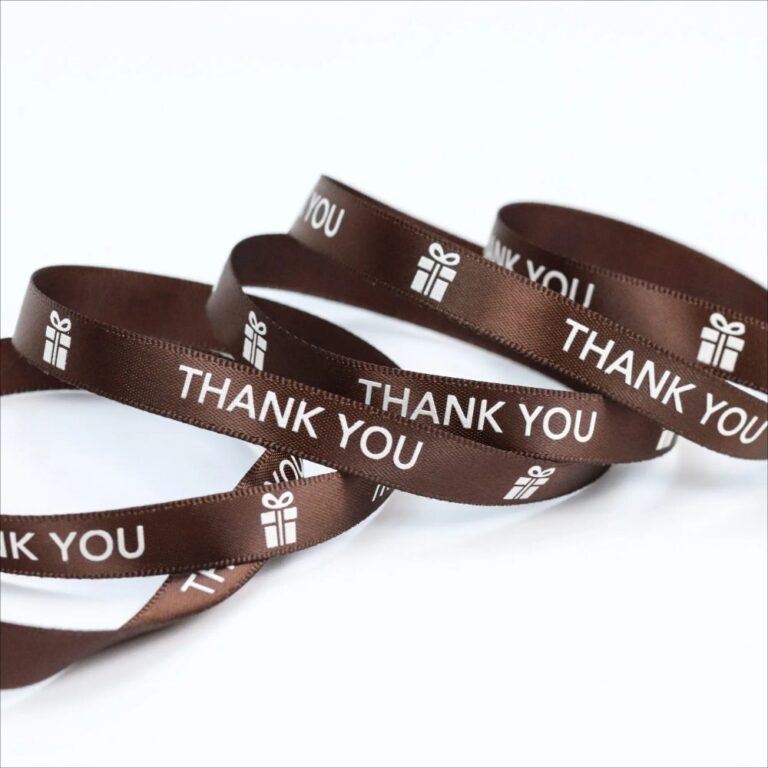 Custom Ribbon RFQ Checklist: Specs to Prepare Before Requesting a Price
A complete custom ribbon RFQ needs material, width, print method, color spec, quantity per SKU, and packing, so…
Explore guide
Custom Ribbon RFQ Checklist: Specs to Prepare Before Requesting a Price
A complete custom ribbon RFQ needs material, width, print method, color spec, quantity per SKU, and packing, so…
Explore guide
Leave a comment
Share a sourcing question or feedback on this guide. The Lude team reviews submissions before following up.