


Wholesale Foil Printed Ribbon: Specs, Roll Length, and RFQ Checks
Buying foil printed ribbon: product selection checklist? Verify artwork files, print method, and color target to reduce quoting errors and approval rework
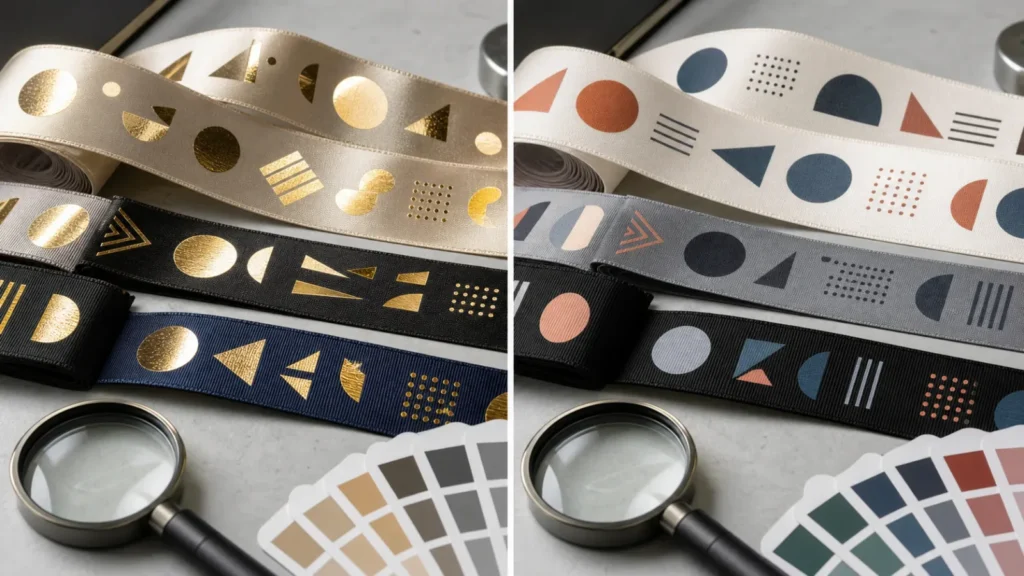
The sourcing record for foil printed ribbon: product selection is incomplete until it supports this Choose the right product type, structure, material, or specification.
Foil sits on the ribbon surface rather than in it, so the substrate decides how well it holds. Choose the base material first.
Direct answer: For foil printed ribbon: product selection, buyers should choose the right product type, structure, material, or specification.
Define the Buyer Requirement
Compare Define the Buyer Requirement for foil printed ribbon against one RFQ revision. Each row should identify the requirement, approval evidence, and buyer action before production.
| Requirement | Factory control | Evidence to verify | Order risk | RFQ follow-up |
|---|---|---|---|---|
| Sample approval | Factory submits pre-production sample for approval. | Compare sample against approved artwork and spec sheet. | Deviation in sample delays production or causes rework. | Request sample and approve in writing before production. |
| MOQ and order quantity | Factory confirms MOQ per material, print method, width. | Request written MOQ confirmation on RFQ response. | Under-ordering leads to shortfall; over-ordering increases inventory cost. | Negotiate MOQ and confirm order quantity in RFQ. |
| Material / substrate | Factory selects substrate per spec: polyester, satin, grosgrain. | Request material certification or swatch card for approval. | Wrong substrate affects print adhesion and durability. | Specify material type and request substrate sample for validation. |
| Finish or color control | Factory uses Pantone reference for color matching and gloss. | Approved color standard under buyer-approved viewing conditions; check finish type. | Color shift or finish inconsistency causes brand rejection. | Submit color standard and request finish sample for approval. |
For foil printed ribbon, use Define the Buyer Requirement as the decision scope. Read the rows as one approval sequence. Start with sample approval; use the risk and buyer-action columns to decide whether its evidence is sufficient. Verify it with the inspection method and approval evidence recorded in the table.
For this foil printed ribbon sourcing record, keep the supplier response, marked sample, and approval owner under the same revision number. If any proof conflicts with the approved record, hold the quote, sample, or production release until the supplier explains the deviation in writing. Before closing the checkpoint, reconcile the latest drawing, sample, quotation, and approval comments, identify which record controls if they disagree, and document the resolution. Carry the signed Define the Buyer Requirement table into the purchase order and production handoff so the same checks support quote comparison, sample approval, shipment release, and later reorders.
Compare the Available Routes
| Option | Best fit | Trade-off | Risk to avoid | Verification | Follow-up |
|---|---|---|---|---|---|
| Standard foil print on satin ribbon | Single-color foil logo on medium-width satin; high sheen for retail packaging. | Limited to one foil color; satin substrate may fray at cut edges. | Foil adhesion failure on synthetic satin if heat/pressure not calibrated. | Request a strike-off sample on your exact satin width and color; check foil adhesion with tape test. | Send artwork in vector format; confirm foil color from Pantone book. |
| Foil print on grosgrain ribbon | Woven edge resists fraying; better for gift wrap and apparel where raw edges show. | Grosgrain texture reduces foil brilliance; ribbed surface may cause incomplete transfer. | Foil may crack on grosgrain's ribbed peaks if ribbon is bent repeatedly. | Run a bend test on the sample; fold 10 times and inspect foil for cracking. | Compare sample cost per yard vs satin; evaluate if duller finish is acceptable. |
| Custom printed ribbon with multi-color foil | Brands needing two or more foil colors or a combination of foil and standard print. | Higher setup cost; longer lead time for color registration; MOQ typically higher. | Misregistration between colors can ruin the design; rework is expensive. | Request a color registration proof before production; approve a pre-production sample. | Provide separated artwork layers for each foil color; confirm run speed and waste tolerance. |
| Unprinted ribbon (no foil) – basic specification | When budget is tight, timeline is short, or foil effect is not essential. | No branding or decorative effect; plain ribbon may not meet packaging aesthetic. | If foil is needed for shelf appeal, plain ribbon could disappoint end customer. | Check if plain ribbon is available in the same color and width; confirm MOQ and lead time. | Use as temporary solution while foil order is in production; or choose a printed alternative. |
Evaluate Compare the Available Routes as one decision scope. Use this decision matrix as an approval sequence, not as a supplier claim. For standard foil print on satin ribbon, a poor decision can mean foil adhesion failure on synthetic satin if heat/pressure not calibrated. Request a strike-off sample on your exact satin width and color; check foil adhesion with tape test, then send artwork in vector format; confirm foil color from pantone book.
For foil printed ribbon, preserve the standard foil print on satin ribbon decision under one revision number: keep the supplier response, marked sample, approved specification, quotation, and approval owner together. If the evidence conflicts with the approved record, hold the quote, sample, or production release until the deviation is explained in writing. Carry that signed Compare the Available Routes record into the purchase order, production handoff, shipment release, and later reorder review so every team works from the same baseline.
Review the Required Proof
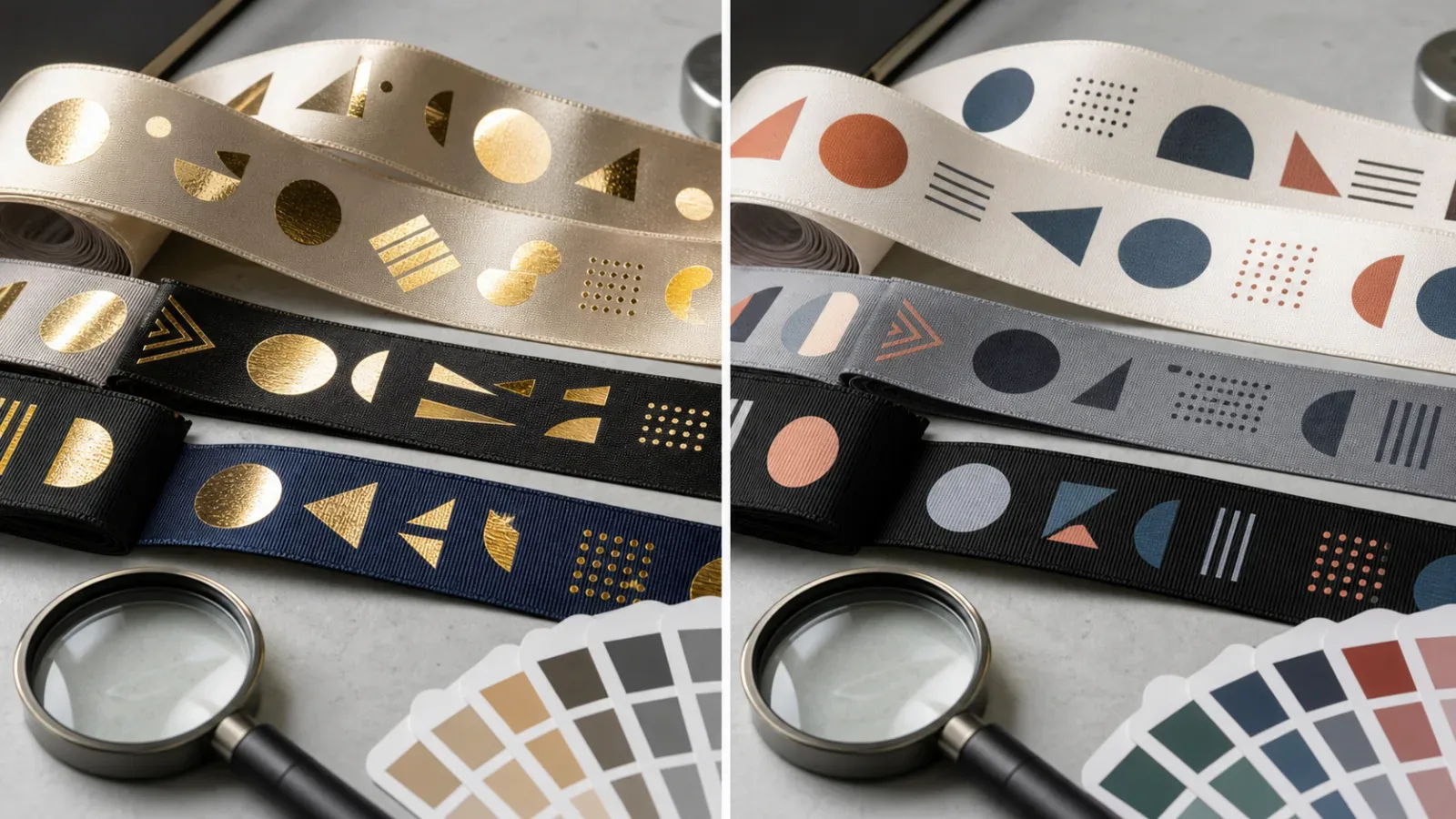
Before approving a foil printed OEM and ODM ribbon development order, verify the proof against your original RFQ. A physical strike-off or digital match is the only verifiable record that confirms foil color, ribbon width, and print registration match your spec.
Foil Printed Ribbon: Product Selection Checklist
- Compare the proof’s foil color to a Pantone reference under daylight (buyer-approved viewing conditions) – not a monitor screen.
- Measure ribbon width with a caliper; confirm it matches the quote request tolerance (the buyer-approved tolerance typical).
- Check print registration: foil edges should align within the buyer-confirmed limit of the design boundary.
- Request a 1-meter sample for bend and adhesion testing – foil should not crack on a 90° fold.
- Document the proof approval date and any revision notes in your quote request file.
This checklist reduces production risk by catching spec mismatches before bulk runs. Hand off the signed proof to your factory with clear instructions to hold the first-run sample for your review.
Build the Decision Asset
At the proof-check checkpoint, you must have a physical strike-off or digital mock that matches your quote request spec for foil printed ribbon. This output gates all downstream approvals.
Supplier evidence to request
Verify the proof against your original quote request: foil color (PMS or foil code), ribbon width tolerance (the buyer-approved tolerance), and repeat pattern alignment. Reject any proof where the foil adhesion test leaves residue on a white cloth.
Sample approval evidence
Once the proof passes, request a 5‑meter production sample. Confirm the roll length matches your order quantity (e.g., the quoted quantity per roll). Run a bend test: foil should not crack at a 90° fold. Approve only after the sample passes a 24‑hour heat‑seal test at the buyer-approved test temperature.
Reorder control records
Before reordering, compare the new quote request against the approved sample’s spec sheet. If the foil supplier changed, request a new proof. Document any deviation in foil luster or ribbon stiffness; these affect downstream bow‑tying and gift packaging.
For more on integrating foil printed ribbon into gift packaging workflows, see our gift and retail packaging ribbon solutions.
Prepare Comparable RFQ Inputs
- What foil stamping width range can your production line hold for satin ribbon? Narrower or wider foil patterns change die cost and registration stability. Supplier states min/max foil width and confirms repeatable registration within the buyer-confirmed requirement. A width mismatch forces die rework or a second supplier mid-order. Attach the exact foil width and repeat length to the quote request spec sheet.
- Do you hold a physical strike-off or digital proof before bulk foil runs? Foil coverage and edge sharpness vary by ribbon weave and heat dwell time. Supplier provides a dated proof with PMS foil code and ribbon substrate noted. Approving a digital mock-up only can lead to rejected bulk rolls. Request a 1-meter strike-off on the actual satin ribbon width before sample approval.
- What is your reorder tolerance for foil color shift across production lots? Foil lot changes can shift hue; a written tolerance prevents surprise shade differences. Supplier shares a delta-E tolerance value and keeps a sealed reference sample. Without a tolerance, a second batch may not match the approved strike-off. Document the tolerance in the quote request and keep the reference sample in your file.
- How do you verify foil adhesion before shipment? Poor adhesion causes flaking during bow tying or gift wrapping. Supplier runs a tape-pull test on a production sample and logs the result. Adhesion failures in the field create returns and brand presentation issues. Ask for the adhesion test record with the packing list for each order.
- Can you split a foil printed ribbon order into multiple dye lots if volume exceeds one run? Large orders may require multiple foil rolls; each lot can vary slightly. Supplier confirms lot control and offers to ship all rolls from one production run. Mixed lots on the same spool can cause visible banding on the finished bow. Specify single-lot preference in the quote request and confirm with the Lude Ribbon factory.
Source check: ISO 2859-1 sampling inspection standard; Buy Foil Printed Ribbon for All Events, Weddings & More; Hot Stamping, Silver Foil Printed Ribbon | Gift Packaging | Sta….
In conclusion
Final approval of your foil printed ribbon program depends on systematically checking each specification against the physical proof, comparing supplier lead times and MOQ terms, and documenting the approved strike-off for reorder accuracy. By validating the spec and shortlisting a supplier that demonstrates robust quality control for foil adhesion, you can confidently request a quote and move to sample approval, ensuring the production run matches your original design intent.
To request a quote for this order, use foil printed ribbon to confirm the final specification, quote assumptions, sample approval, QC evidence, approval risk, and supplier follow-up before bulk order.
Frequently Asked Questions
How should a b2b buyer choose product type?
Choose the product type by matching the ribbon material (satin, grosgrain, organza, velvet) to your packaging application and foil adhesion requirements. Compare the foil print method—hot stamping versus screen printing—against your design complexity and volume, then confirm the MOQ and lead time with the supplier during quote request.
Request a physical strike-off or digital proof to verify foil color (PMS or foil code), ribbon width, and print registration before bulk production. Shortlist only suppliers that provide a spec sheet with material composition and foil type, and document any deviations for sample approval.
Which supplier proof should buyers request for foil printed ribbon?
Request a physical strike-off or digital proof that shows the foil color against your specified PMS or foil code, ribbon width, and print registration accuracy. Verify the proof against your original quote request to catch spec mismatches before bulk production, and ask for a 5-meter production sample to confirm roll length and foil adhesion quality.
Document the approved proof and sample spec sheet for reorder consistency, and compare any new quote request against these records to reduce supplier risk. Confirm the lead time after sample approval, as standard production typically takes 15–20 business days after specifications are confirmed.
What should buyers lock before approving product selection checklist?
Lock the foil color (PMS or foil code), ribbon material and width, print method (hot stamp or screen), and roll length before approving the product selection checklist. Confirm the MOQ with the supplier based on your material, print method, and packing requirements, and verify the lead time after sample approval to align with your schedule.
Check the supplier’s quality control process for foil adhesion and registration defects, and request a production sample for QC verification. Document all approved specs and sample outcomes in your quote request to minimize reorder risk and ensure consistent results.
quote request handoff: Send Specs for Review.
Keep exploring
Recommended buyer guides
 Organza Ribbon Width Guide: When 1/4 Inch Rolls Fit Packaging Orders
Organza Ribbon Width Guide: what to check on artwork files, print method, color target, and material before placing…
Explore guide
Organza Ribbon Width Guide: When 1/4 Inch Rolls Fit Packaging Orders
Organza Ribbon Width Guide: what to check on artwork files, print method, color target, and material before placing…
Explore guide
 Pre Tied Bow Attachment Method Sample Approval Wholesale Buyer Guide
 — the checks that decide whether a quote,…
Explore guide
Pre Tied Bow Attachment Method Sample Approval Wholesale Buyer Guide
Pre Tied Bow Attachment Method Sample Approval Wholesale Buyer Guide — the checks that decide whether a quote,…
Explore guide
 Wholesale Heat Cut vs Ultrasonic Cut Ribbon Edge Approval Buyer
: what to confirm on sample approval, color tolerance,…
Explore guide
Wholesale Heat Cut vs Ultrasonic Cut Ribbon Edge Approval Buyer
Wholesale Heat Cut vs Ultrasonic Cut Ribbon Edge Approval Buyer: what to confirm on sample approval, color tolerance,…
Explore guide
 Satin Ribbon Width Guide: When 1/2 Inch Rolls Fit Packaging Orders
Where 1/2 inch satin fits in packaging programs, width comparison against adjacent sizes, specs to lock before quoting,…
Explore guide
Satin Ribbon Width Guide: When 1/2 Inch Rolls Fit Packaging Orders
Where 1/2 inch satin fits in packaging programs, width comparison against adjacent sizes, specs to lock before quoting,…
Explore guide
Leave a comment
Share a sourcing question or feedback on this guide. The Lude team reviews submissions before following up.