


Custom Ribbon MOQ: How to Lower Minimum Order Quantities
Evidence and specification note: Color targets, tolerances, test methods, documentation, acceptance criteria, and remedies must be confirmed for the quoted material and written into the approved sample, specification, and sales agreement. General scenarios in this article are not guaranteed production results. A custom ribbon MOQ of 3,000 yards per design stops many small-batch launches cold.…

A custom ribbon MOQ of 3,000 yards per design stops many small-batch launches cold. You have a new seasonal color, a limited-edition packaging concept, or a test run for a retail chain — but the factory wants a production run that might not move before the season ends. That gap between what the supplier demands and what your budget allows is where this discussion starts.
The standard number exists because setup costs are real. Screen cleaning, ink mixing, spectrophotometer calibration to a buyer-approved ΔE tolerance — all fixed expenses that don’t change whether you run 500 yards or 3,000. But the factory math is not the only math in play. The real trick is knowing which variables are negotiable and which are not.
Why Ribbon Factories Have Minimum Order Quantities
Setup costs are fixed, which is why the minimum is set per design.
Screen printing, foil stamping, and custom dye lots each carry fixed setup costs — cleaning screens, mixing inks, calibrating spectrophotometers to buyer-approved ΔE tolerance — that don’t change whether you run 500 or 3,000 yards. These costs are the reason factories will not accept a 500-yard custom printed order: the per-yard setup charge would exceed the material cost.
- Pricing differences among materials, widths, print methods, quantities, and packing must be calculated from dated quotations for the same approved specification.
- Pricing differences among materials, widths, print methods, quantities, and packing must be calculated from dated quotations for the same approved specification.
Material setup and print setup are separate cost pools. Stock color satin ribbon skips the custom dye-lot preparation entirely. That is why plain stock ribbon starts at 1,500 yards per color while printed ribbon starts at 3,000 yards per design. Screen engraving, ink mixing, and press alignment recur with each new design, not with each new yard of material.
Three Ways to Lower Your Custom Ribbon MOQ
Standard MOQ for custom printed ribbon is 3,000 yards per design. That number exists because setup costs—screens, ink mixing, spectrophotometer calibration at buyer-approved ΔE tolerance—are fixed regardless of run length. But a few choices can make that minimum easier to plan around.
- Stock color selection: Choosing an existing stock color avoids custom dye-lot setup and saves time.
- Pricing differences and savings must be calculated from dated quotations for the same approved specification, quantity, packing, delivery terms, and destination.
What Happens When You Skip the Physical Sample
Skipping the physical sample causes many post-production disputes.
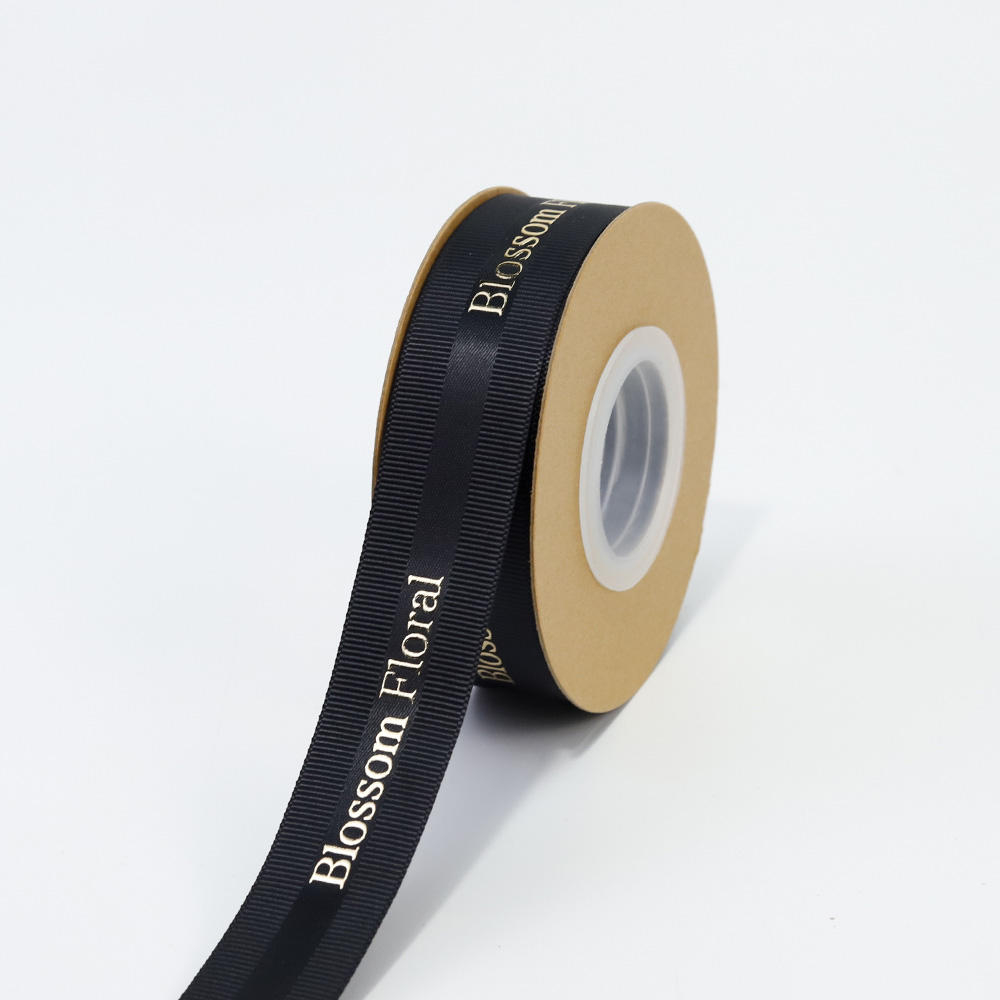
The failures cluster into three categories: color mismatch beyond the buyer-approved ΔE tolerance, foil stamp cracking on the fold line, and logo misalignment on repeat patterns. Each of these is detectable on a physical sample. Each is invisible on a PDF. The real cost of skipping is not just rework—it is a lost launch window. A rejected container can mean emergency air freight. That single expense wipes out any perceived savings from skipping the sample step.
- Sample production: 7–14 business days after artwork approval.
- Sample shipping: 3–5 business days via courier.
- Buyer review & sign-off: Allow 5 business days for internal approval and written confirmation.
- Bulk production start: Only after written sign-off is received. No exceptions.
After sample approval, the factory applies a two-step safety net. Mid-production inspection catches batch drift while the line is still running—correctable without stopping the full order. Pre-shipment inspection verifies the entire lot against the approved sample before the container is sealed. These checks exist because a single approved sample does not guarantee that 3,000 yards of production will hold the same color, tension, and print registration.
Competitors often treat the sample as optional. Lude Ribbon forbids skipping it. The reasoning is straightforward: a 7–14 day sample cycle prevents a 15–20-business-day production cycle from turning into a dispute. The math favors the sample every time.
Conclusion
The real cost of a custom ribbon run is not the per-yard price — it’s the risk of launching a design that fails the color test or flakes foil mid-season. Skipping the physical sample guarantees a high chance of that failure. Work with a factory that enforces mandatory sampling.
Submit your specs and Lude Ribbon will confirm MOQ, sampling, and timing after the RFQ is reviewed.
Frequently Asked Questions
What is the absolute lowest MOQ Lude Ribbon offers?
Plain stock ribbon starts at 1,500 yards per color, printed ribbon at 3,000 yards per design, and finished bows at 1,000 pieces per style. Other custom colors and widths are confirmed per RFQ.
Does the MOQ apply to sample orders?
No, sample orders are separate and do not carry the bulk MOQ. You order a physical sample for approval before committing to full production. Order a sample first to avoid disputes and confirm specs.
How does width affect MOQ?
Custom widths are confirmed per RFQ, and ribbons wider than 50mm consume significantly more material per yard, raising actual cost. Confirm with the factory if very wide ribbons require a different minimum.
How do I reduce MOQ for foil-stamped ribbon?
Foil-stamped ribbon starts at 3,000 yards per design, the same as other printed ribbon. Choosing a stock base color avoids custom dye setup.
Keep exploring
Recommended buyer guides
 Pre-Tied Bows for Retail Packaging: When They Reduce Labor and Rework
See when pre-tied bows reduce retail packaging labor, improve consistency, and simplify bulk packing, SKU planning, and reorders
Explore guide
Pre-Tied Bows for Retail Packaging: When They Reduce Labor and Rework
See when pre-tied bows reduce retail packaging labor, improve consistency, and simplify bulk packing, SKU planning, and reorders
Explore guide
 Velvet Ribbon Wholesale Checklist: MOQ, Finish, and Supplier Questions
Evaluate velvet ribbon wholesale options: MOQ, setup fees, unit cost, and packing. Narrow the list before requesting samples…
Explore guide
Velvet Ribbon Wholesale Checklist: MOQ, Finish, and Supplier Questions
Evaluate velvet ribbon wholesale options: MOQ, setup fees, unit cost, and packing. Narrow the list before requesting samples…
Explore guide
 Wholesale Custom Ribbon with Logo: Specs, Roll Length, and RFQ Checks
Step-by-step: Custom Ribbon With Logo. Check artwork files, print method, color target, and sample approval to avoid delays,…
Explore guide
Wholesale Custom Ribbon with Logo: Specs, Roll Length, and RFQ Checks
Step-by-step: Custom Ribbon With Logo. Check artwork files, print method, color target, and sample approval to avoid delays,…
Explore guide
 Wholesale Ribbon By The Roll: Roll length and inventory planning
Evaluate Wholesale Ribbon By The Roll options: factory capability, QC proof, lead time, and reorder reliability. Narrow the…
Explore guide
Wholesale Ribbon By The Roll: Roll length and inventory planning
Evaluate Wholesale Ribbon By The Roll options: factory capability, QC proof, lead time, and reorder reliability. Narrow the…
Explore guide
Leave a comment
Share a sourcing question or feedback on this guide. The Lude team reviews submissions before following up.