


Sheer Ribbon Wholesale: Alternative wording for organza buyers
Shortlist Sheer Ribbon Wholesale suppliers by factory capability, QC proof, lead time, and reorder reliability. See which options fit your project specs
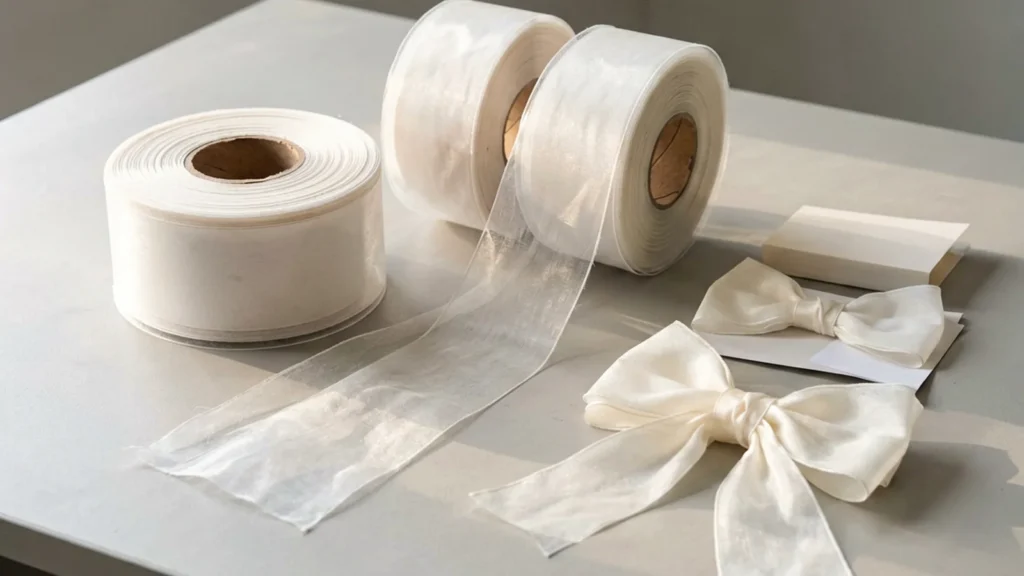
Before you can shortlist Wholesale Sheer Ribbon suppliers using proof, capability, quality, MOQ, and delivery criteria, the specification has to say enough for a supplier to price the same job you have in mind.
Sheer and organza describe overlapping products and suppliers use the words differently. Confirming which you mean prevents a mismatched quote.
Direct answer: For sheer ribbon wholesale, buyers should shortlist Wholesale Sheer Ribbon suppliers using proof, capability, quality, MOQ, and delivery criteria.
What buyers should compare when sourcing sheer ribbon
Sheer ribbon is sold under several names — organza, chiffon, voile, sheer — and no two suppliers draw the lines in the same place. Send a swatch rather than a word. Everything below assumes the buyer and the factory are looking at the same physical piece, because on this material the vocabulary settles nothing.
| Criterion | What to verify | Proof to request | Risk if left unchecked |
|---|---|---|---|
| Opacity | How see-through the ribbon actually is, against your own packaging | A length laid over the box or card it will sit on | A shade approved on white that disappears on kraft |
| Weaving and dyeing scope | Whether the tape is woven in-house or bought greige | A clip of the loom or dye house with your shade running | Quality answers that stop at the supplier’s own supplier |
| Edge stability | How the cut edge is finished on a fine weave | A handled cut length, not a fresh cut | Fraying that appears after the bows are tied |
| Minimum order rule | Whether the minimum counts yards, design, or pieces | The written minimum for your width and shade | A quote that moves at order confirmation |
| Inspection point | Where quality control happens on a fine weave | An inspection record from a comparable sheer run | Defects found in your warehouse rather than theirs |
Opacity is the row buyers most often skip and most often regret. It is not a property of the name; it is a property of the weave, and it only becomes visible when the ribbon is laid over the surface it will be used on.
Product and specification checks before shortlisting
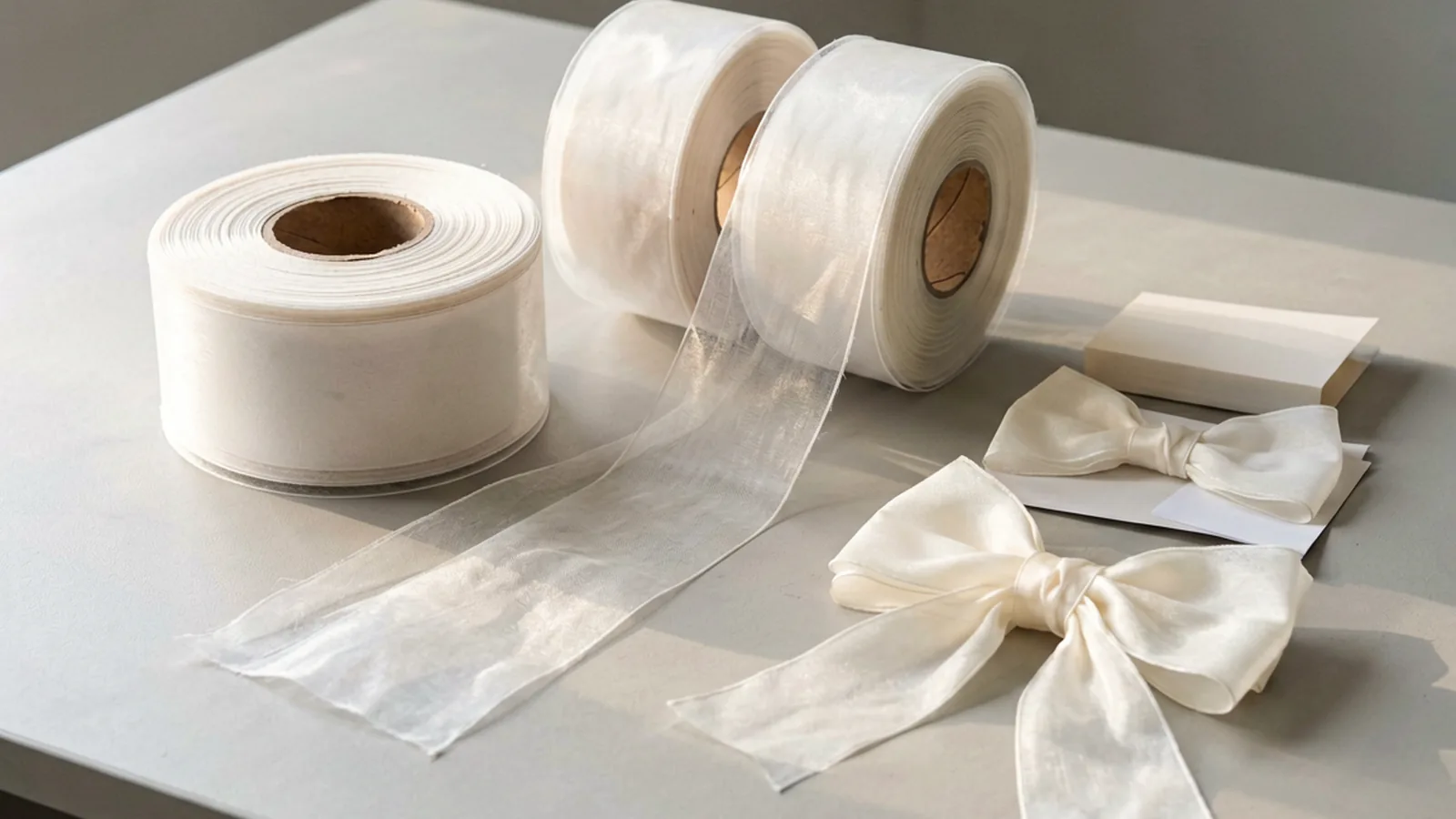
A sheer specification a factory can quote against names the weave, the width, the opacity reference, and the edge finish. The naming problem makes the first of those harder than it looks: two suppliers can both answer “organza” and send visibly different goods, so the specification has to carry a physical reference rather than a category.
| Question to ask | Why it changes the quote | Proof or answer to expect | Buyer follow-up |
|---|---|---|---|
| What weave and yarn is this, in your terms? | Vocabulary differs between factories, construction does not | A named construction plus a swatch | Attach the swatch to the RFQ, not the word |
| How opaque is it over my packaging? | Sheer reads differently over white, kraft, and dark board | A length laid over your own material | Approve the shade on the real substrate |
| How is the cut edge finished? | Fine weaves fray faster than satin or grosgrain | A handled cut length | Add a handling check to sample approval |
| How is shade controlled on a sheer weave? | Dye uptake shows differently on an open weave | Two lengths from different lots against one swatch | Sign one reference and keep the retained piece |
| What is the minimum for this exact construction? | Minimums follow the route, not the name | The written figure for your width and shade | Confirm before comparing unit prices |
Shade work on an open weave is where most sheer programs go wrong, because dye uptake and the visible colour are not the same thing at this construction. Where the shade matters more than the price, the conversation belongs with quality and color control before a quote is issued rather than after a sample is rejected.
MOQ, cost, sample, and lead-time questions
Minimums follow the production route rather than the material name, so identifying the route settles most of the quantity and cost question before a supplier replies.
| Route | Where it fits | Trade-off | Threshold to confirm |
|---|---|---|---|
| Stock shades and widths | A house colour close to an inventory shade | Fastest route, limited to what is held | Plain stock ribbon starts at 1,500 yards from existing colors and widths |
| Custom dyed sheer | Brand colour matching on an open weave | Adds a dye lot approval step and its own cost | Confirmed by quote request rather than a fixed figure |
| Printed sheer | Logo or repeating artwork on a translucent face | Artwork reads differently through the weave | Printed ribbon starts at 3,000 yards per design |
| Formed pieces | Rosettes, sashes, and finished items | Counted individually per style and shade | Ready-made bows and award ribbons start at 1,000 pieces |
Standard production runs 15 to 20 business days once specifications are approved, with dye lot approval and sampling counted outside that window. Artwork on a sheer face carries an extra risk worth naming in the request: ink sits on a translucent ground, so the design reads against whatever is behind it. Test it on the packaging before approving, and see custom printed ribbon for the per-design threshold that applies.
Quality and communication red flags
Four signals are worth treating as stop points on a sheer program, because a fine weave punishes each one harder than a satin tape would.
- The material is described by name only. “Organza” is a category, not a construction. Ask for the weave and a swatch; a supplier who cannot produce one is quoting against a word rather than against goods.
- Opacity discussed but never sampled on your substrate. Sheer approved on a white desk can vanish on a kraft box. Send the packaging material and ask for the sample laid over it before approving the shade.
- Cut edges shown fresh rather than handled. Fraying on a fine weave appears after handling, not at the cutting table. Request a length that has been worked, and inspect the cut end.
- A certificate offered instead of an inspection record. The certificate describes a quality system; the record describes your goods. Ask which check covers shade consistency on an open weave, and where it happens.
A supplier who answers the first two with physical samples has already shown more capability than one who answers all four in writing. For gift and retail programs where sheer is layered over printed board, these checks sit inside gift and retail packaging ribbon solutions, where approval is handled as a record rather than an exchange of assurances.
How to move from shortlist to RFQ
A sheer quote request needs one thing most ribbon requests do not: a piece of your own packaging. Without it the supplier approves a shade against their bench and you approve it against your box, and the two do not match. The risk of leaving any input below open is a set of prices that cannot be compared and a shade that has to be re-approved.
- Construction and width. Give the weave in the supplier’s own terms plus a swatch. The swatch is what the quote is actually built against.
- Opacity reference on your substrate. Send a sample of the board, card, or bottle the ribbon will sit against, and ask for the shade approved over it.
- Edge finish. Name the edge type and ask for a handled length. On a fine weave this is a cost driver as well as a quality question.
- Quantity and release pattern. Give the annual volume, first release, and reorder rhythm. A single quantity gets a single price; a release pattern gets a program conversation.
- Dates. Work back from the shelf date through delivery, production, dye lot approval, and sampling rather than asking how quickly the factory can run.
Ask for one pre-production sample against the approved specification, with its lot marking intact, and approve it in writing over your own packaging material. That signed piece is what a later inspection is measured against, and on sheer it settles the two disputes that actually happen: opacity and edge condition after handling.
Source check: ISO 2859-1 sampling inspection standard; Organza Ribbon Supplier for Wholesale and Custom Packaging Orde…; Wholesale Sheer Organza Ribbon | Retail Stores & Gift ..
In conclusion
Final buyer checks before moving forward: Run the same rows across every sheer ribbon supplier still in contention: opacity over your own packaging, whether weaving and dyeing are in-house, how the cut edge behaves after handling, the written minimum for your construction, and where inspection happens. A supplier who covers most with evidence beats one who covers all with assurances.
Quote-ready inputs to prepare: Have the swatch, the width, the packaging substrate, the edge finish, and the release pattern ready before the request goes out. Quotes built on a swatch can be compared; quotes built on the word organza carry the risk of a cost mismatch that surfaces only when the samples arrive.
Supplier or sample action to take next: Send the swatch and a piece of your packaging to two or three suppliers and ask each for a sheer ribbon sample approved over that material, with its lot marking intact. Verify the opacity and the handled edge, approve in writing, and keep the piece for the reorder.
Sheer ribbon FAQ
What should buyers confirm before ordering Sheer Ribbon ?
Confirm the construction with a swatch rather than a name, the width, the edge finish, and the opacity over the packaging material the ribbon will sit against. Organza, chiffon, and sheer are used differently by different factories, so a physical reference settles what the vocabulary cannot.
How should buyers compare MOQ, lead time, and quote terms?
Compare by production route rather than as one number. Printed ribbon, for example, starts at 3,000 yards per design, while stock shades and formed pieces carry separate thresholds. Production then runs 15 to 20 business days after approval, with dye lot approval and sampling counted outside that window.
What sample, quality, or supplier checks reduce risk?
Lay the sample over your own board or box and judge the shade there. Handle a cut length and inspect the end for fraying. Ask for two lengths from different dye lots against one signed swatch, and keep the approved piece with its lot marking for the reorder.
RFQ handoff: Send Specs for Review.
Keep exploring
Recommended buyer guides
 Bulk Ribbon Cost Guide: How to Compare Price Without Losing Quality
What drives Bulk Ribbon Cost Guide How to Compare Price Without Losing Quality pricing? Check sample approval, color…
Explore guide
Bulk Ribbon Cost Guide: How to Compare Price Without Losing Quality
What drives Bulk Ribbon Cost Guide How to Compare Price Without Losing Quality pricing? Check sample approval, color…
Explore guide
 Wholesale Ribbon Manufacturers: Factory vs Trading Company Checklist
Evaluate Wholesale Ribbon Manufacturers options: factory capability, QC proof, lead time, and reorder reliability. Narrow the list before…
Explore guide
Wholesale Ribbon Manufacturers: Factory vs Trading Company Checklist
Evaluate Wholesale Ribbon Manufacturers options: factory capability, QC proof, lead time, and reorder reliability. Narrow the list before…
Explore guide
 Wired Ribbon Wholesale Checklist: Structure, MOQ, and Supplier Questions
Evaluate Wired ribbon wholesale options: MOQ, setup fees, unit cost, and packing. Narrow the list before requesting samples…
Explore guide
Wired Ribbon Wholesale Checklist: Structure, MOQ, and Supplier Questions
Evaluate Wired ribbon wholesale options: MOQ, setup fees, unit cost, and packing. Narrow the list before requesting samples…
Explore guide
 Velvet Ribbon Wholesale Checklist: MOQ, Finish, and Supplier Questions
Evaluate velvet ribbon wholesale options: MOQ, setup fees, unit cost, and packing. Narrow the list before requesting samples…
Explore guide
Velvet Ribbon Wholesale Checklist: MOQ, Finish, and Supplier Questions
Evaluate velvet ribbon wholesale options: MOQ, setup fees, unit cost, and packing. Narrow the list before requesting samples…
Explore guide
Leave a comment
Share a sourcing question or feedback on this guide. The Lude team reviews submissions before following up.