


Quality Color Control: Custom Program Planning Checklist
Quality Color Control: what to check on sample approval, color tolerance, and QC checks before placing a custom order
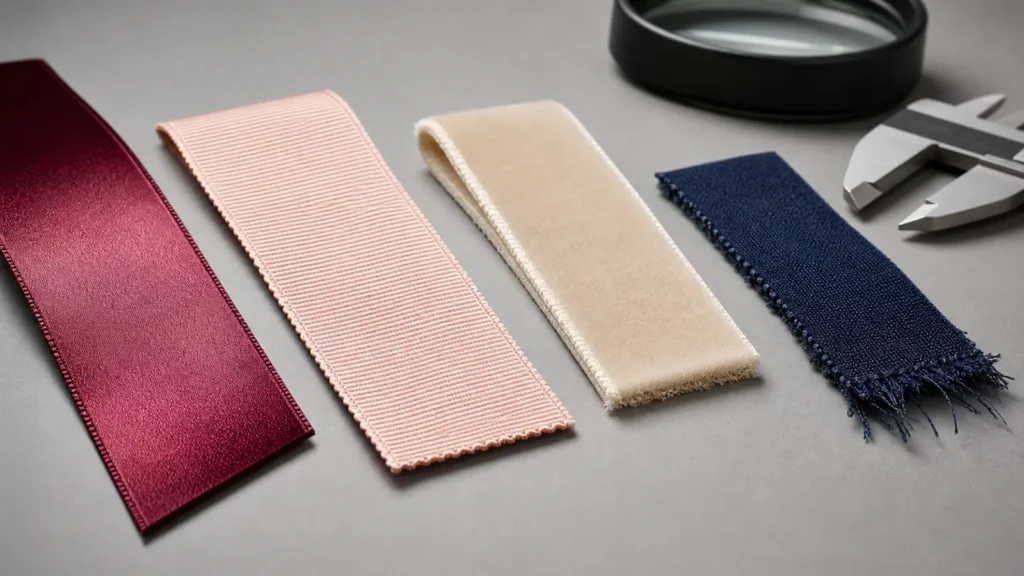
The sourcing record for quality color control: custom program planning is incomplete until it covers artwork, samples, finishes, and production handoff.
Color control across a program means holding a standard between lots and between products. Those are two separate commitments.
Direct answer: For quality color control: custom program planning, buyers should plan custom artwork, samples, finishes, and production handoff.
Define the Buyer Requirement
Compare Define the Buyer Requirement for quality color control against one RFQ revision. Each row should identify the requirement, approval evidence, and buyer action before production.
| Requirement | Factory control | Evidence to verify | Order risk | RFQ follow-up |
|---|---|---|---|---|
| Finish or surface effect | Factory maintains physical finish standard and measures gloss/reflectance per roll. | Compare submitted finish sample against approved standard under buyer-approved viewing conditions. | Unmatched finish causes visual rejection and rework cost at receiver. | Request finish sample and spectrophotometer report before production approval. |
| Color and dye-lot control | Factory tracks dye-lot numbers and measures buyer-approved color tolerance per batch. | Review dye-lot certificate and color swatch with buyer-approved color tolerance reading. | Shade drift between lots disrupts matching and increases scrap. | Ask for dye-lot sample and buyer-approved color tolerance data before releasing order. |
| Artwork or logo file | Factory runs preflight check on file format, resolution, and color space. | Obtain hardcopy proof or digital match print with buyer sign-off. | Incorrect artwork leads to full print run rejection and delay. | Submit final artwork file for pre-approval and proof sign-off. |
| Sample approval | Factory produces first-sample from production setup against all specs. | Sign off on physical sample; confirm measurements and MOQ per material. | Proceeding without approval may cause non-conforming shipment. | Approve sample and issue production go-ahead with MOQ confirmation. |
For quality color control, use Define the Buyer Requirement as the decision scope. Read the rows as one approval sequence. Start with finish or surface effect; use the risk and buyer-action columns to decide whether its evidence is sufficient. Verify it with the inspection method and approval evidence recorded in the table.
For this quality color control sourcing record, keep the supplier response, marked sample, and approval owner under the same revision number. If any proof conflicts with the approved record, hold the quote, sample, or production release until the supplier explains the deviation in writing. Before closing the checkpoint, reconcile the latest drawing, sample, quotation, and approval comments, identify which record controls if they disagree, and document the resolution. Carry the signed Define the Buyer Requirement table into the purchase order and production handoff so the same checks support quote comparison, sample approval, shipment release, and later reorders.
Compare the Available Routes
| Option | Best fit | Trade-off | Risk to avoid | Verification | Follow-up |
|---|---|---|---|---|---|
| Current specification | Approved color standard already matched to production ribbon | No flexibility for seasonal or packaging-line shade shifts | Supplier may drift from approved standard without a reorder light box check | Compare production first-run against the signed master card under buyer-approved viewing conditions | Document the approved standard in the RFQ and require a custom sampling and artwork process for each reorder |
| Alternative specification | Second approved standard for multi-SKU programs or dual-vendor risk | Adds another master card, storage, and approval gate | Mixing two standards on one order increases shade-band rejection | Confirm both standards are measured on the same spectrophotometer model | State the alternative spec as a separate line item with its own MOQ confirmation |
| Custom option | Buyer-supplied target or Pantone reference not yet in supplier's library | Requires lab dip, strike-off, and production approval before bulk | Missed shade match if the substrate or finish is not included in the lab dip | Request a physical lab-dip swatch on the actual ribbon width and weave | Include the lab-dip approval deadline in the program timeline; lead time starts after sign-off |
| Safer fallback | Standard color from supplier's existing production palette | Limited to available shades; may not match brand identity exactly | No recourse if the fallback shade is discontinued without notice | Ask the supplier to confirm the palette is current and stocked for reorders | Negotiate a minimum annual volume to keep the fallback shade active in inventory |
For current specification, a poor decision can mean supplier may drift from approved standard without a reorder light box check. Ask the supplier to compare production first-run against the signed master card under buyer-approved viewing conditions, then document the approved standard in the rfq and require a custom sampling and artwork process for each reorder.
For quality color control, preserve the current specification decision under one revision number: keep the supplier response, marked sample, approved specification, quotation, and approval owner together. If the evidence conflicts with the approved record, hold the quote, sample, or production release until the deviation is explained in writing. Carry that signed Compare the Available Routes record into the purchase order, production handoff, shipment release, and later reorder review so every team works from the same baseline.
Review the Required Proof
Compare the Define the Buyer Requirement for quality color control against one quote request revision. Each row should identify the required proof type, its purpose, and the handoff action.
| Proof Type | Purpose | Handoff Action |
|---|---|---|
| Digital color proof (e.g., PMS or CMYK) | Verify color accuracy before production | Submit with RFQ revision; buyer signs off |
| Physical strike-off or drawdown | Confirm substrate and ink interaction | Ship to buyer for tactile approval |
| Production sample (first run) | Validate consistency under factory lighting | Hold until buyer releases for bulk |
Use this checklist to ensure no step is skipped: confirm proof type matches spec, verify cost impact of revisions, assess production risk from color drift, and document quote request/sample handoff. For custom printed ribbon, see custom printed ribbon for execution details.
Build the Decision Asset
The record needed before the next stage is a verified decision asset—a single document or file that consolidates the proof of supplier capability, approved samples, and reorder triggers.
Supplier Proof Check
Verify that the supplier has submitted a signed Global Supplier Manual acknowledgment and a quality control plan covering color tolerance. This proof must include a recent third-party lab report for the specific ribbon substrate. Without this, production risk increases due to unverified color consistency.
Sample Approval Check
Compare the approved sample against the buyer requirement. Use a standardized approval form that records the date, lighting condition, and sign-off. The sample must be retained as a physical standard for future reorders. This step directly impacts quote request/sample handoff accuracy.
Reorder Control Check
Define reorder triggers based on the approved sample and supplier proof. For example, a reorder must reference the original sample ID and include a new lab dip if more than 12 months have passed. This reduces execution risk and ensures consistent color across batches.
Use this table to document the decision asset components:
| Component | Requirement | Verification Method |
|---|---|---|
| Supplier Proof | Signed manual + QC plan | Third-party lab report |
| Sample Approval | Approval form + physical standard | Visual and spectral check |
| Reorder Control | Trigger criteria + sample ID | Documented in asset file |
Once the decision asset is built, it serves as the single source of truth for all subsequent quality color control decisions, from cost planning to production execution.
Prepare Comparable RFQ Inputs
- What color matching equipment and dye lot control processes does your factory use? Ensures the supplier can meet your specified color standards consistently. Factory uses spectrophotometer and maintains dye lot records with buyer-approved color tolerance. Accepting vague capability claims may lead to color mismatch across production runs. Request a copy of the factory's color control SOP and recent dye lot reports.
- How do you verify color accuracy from sample to bulk production? Confirms that the approved sample will be matched during production. Supplier provides a spectrophotometric measurement report with each bulk shipment. Without a verification method, bulk color may deviate from the approved sample. Include a requirement for a color measurement report in the quote request terms.
- What happens if the production run does not match the approved sample? Understands the supplier's corrective action plan and liability for color variance. Supplier has a documented rework and replacement policy with defined tolerances. Approving a sample without a rework agreement can cause costly delays and rejections. Define the acceptable color tolerance and rework process in the purchase contract.
- What in-process quality checks do you perform during production to maintain color consistency? Verifies that color is controlled at each stage, not just at final inspection. Supplier performs inline color checks at printing, dyeing, and finishing stages. Relying only on final inspection can miss early deviations that affect entire batches. Ask for a quality control plan that lists all color checkpoints and acceptance criteria.
Source check: ISO 2859-1 sampling inspection standard; Quality Evidence Before Shipment: What Buyers Should Ask Chines….
In conclusion
The final approval for a custom color program rests on a complete specification that ties material, print method, width, and packing to a measurable color target. Before you shortlist a supplier, verify that the quote request includes a standardized color standard—such as a Pantone reference or a physical chip—and confirm the MOQ and lead time implications of that match. A supplier that provides a signed acknowledgment of the approved sample and a color measurement report reduces the risk of batch-to-batch variation. Compare the proof against the buyer requirement, document the decision asset, and then approve the sample to lock the production baseline.
To request a quote for this order, use quality and color control to confirm the final specification, quote assumptions, sample approval, QC evidence, approval risk, and supplier follow-up before bulk order.
Frequently Asked Questions
How should a b2b buyer plan custom order?
Start by documenting the full specification: material, print method, width, packing, and order schedule. Confirm the MOQ with the supplier for each variable, as it is negotiable but depends on those details. Verify the standard production lead time of 15–20 business days after specs are confirmed, and add time for artwork review, sample approval, and shipping. Shortlist suppliers who provide a signed quality acknowledgment and a proof type that matches your color control standard.
Which supplier proof should buyers request for quality color control?
Request a physical sample or a digital proof that includes a color measurement report, such as a spectrophotometer reading or a Pantone reference. Compare the approved sample against your requirement using a standardized assessment form. Verify that the supplier has submitted a signed acknowledgment of your color control manual. Document the reorder triggers based on the approved sample and supplier proof to ensure consistency across bulk production.
What should buyers lock before approving custom program planning checklist?
Lock the approved sample, the signed supplier acknowledgment, and the color measurement report as the single source of truth for reorders. Confirm that the proof type matches the specification and that the lead time and MOQ are documented per the confirmed variables. Check the supplier’s capacity to handle complex programs like jacquard or custom color runs, and request a QC verification plan for each shipment. Document all approvals before moving to production.
quote request handoff: Send Specs for Review.
Keep exploring
Recommended buyer guides
 Wholesale Custom Ribbon with Logo: Specs, Roll Length, and RFQ Checks
Step-by-step: Custom Ribbon With Logo. Check artwork files, print method, color target, and sample approval to avoid delays,…
Explore guide
Wholesale Custom Ribbon with Logo: Specs, Roll Length, and RFQ Checks
Step-by-step: Custom Ribbon With Logo. Check artwork files, print method, color target, and sample approval to avoid delays,…
Explore guide
 Ribbon Cutting Ribbon Custom Order: Specs, Roll Length, and RFQ Checks
Shortlist Ribbon Cutting Ribbon Custom Order suppliers by sample approval, color tolerance, and QC checks. See which options…
Explore guide
Ribbon Cutting Ribbon Custom Order: Specs, Roll Length, and RFQ Checks
Shortlist Ribbon Cutting Ribbon Custom Order suppliers by sample approval, color tolerance, and QC checks. See which options…
Explore guide
 Wholesale Custom Organza Ribbon: Specs, Roll Length, and RFQ Checks
Custom Organza Ribbon — a practical checklist covering artwork files, print method, color target, and sample approval for…
Explore guide
Wholesale Foil Printed Ribbon: Custom Specs, Samples, and RFQ Checks
Foil printed ribbon: what to check on artwork files, print method, color target, and sample approval before placing…
Explore guide
Wholesale Custom Organza Ribbon: Specs, Roll Length, and RFQ Checks
Custom Organza Ribbon — a practical checklist covering artwork files, print method, color target, and sample approval for…
Explore guide
Wholesale Foil Printed Ribbon: Custom Specs, Samples, and RFQ Checks
Foil printed ribbon: what to check on artwork files, print method, color target, and sample approval before placing…
Explore guide
Leave a comment
Share a sourcing question or feedback on this guide. The Lude team reviews submissions before following up.