


Wholesale Custom Organza Ribbon: Specs, Roll Length, and RFQ Checks
Custom Organza Ribbon — a practical checklist covering artwork files, print method, color target, and sample approval for importers, wholesalers
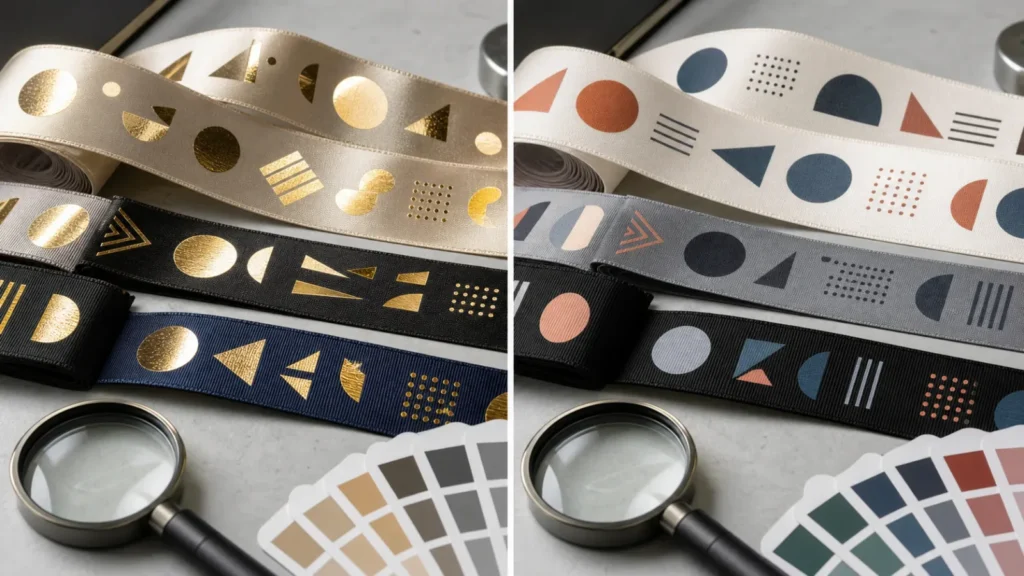
Unit price alone is a weak signal: material, structure, print, packing, and timing all change the supplier answer.
Ask specifically what material, structure, artwork, packing, and proof must be confirmed before sampling—and request commercial numbers in writing.
Use the checkpoints to compare quote assumptions, sample proof, and follow-up actions across factories.
Direct answer: Treat custom organza ribbon as order-ready only when material, width, color or print target, packing, sample acceptance, and commercial terms share one written revision.
Define the Packaging Use and Required Sheer Effect
Use the organza ribbon wholesale buying guide to align sheer finish, color, width, MOQ, and packing assumptions before evaluating print feasibility. The print sample is only comparable when those base-ribbon variables are held on the same revision.
Packaging and sourcing buyers must decide whether the required sheer appearance, print result, attachment behavior, and roll format can be produced and quoted under one controlled specification. Use the matrix to connect each requirement to approval evidence and a named buyer action.
| Specification | Quality control | Verification method | Risk to avoid | Buyer action |
|---|---|---|---|---|
| Finish or surface effect | Match approved sheerness, edge finish, and hand feel against sealed reference sample. | Compare production roll to approved sample under daylight 6500K; measure light transmission with a lux meter if specified. | Receiving opaque or stiff ribbon that changes the intended sheer look on retail packaging. | Request a pre-production sample and approve the finish against your packaging mock-up. |
| Artwork or logo file | Artwork must match approved color, scale, and registration on the organza substrate. | Submit a digital proof; then print a strike-off on actual organza to check ink adhesion and transparency. | Printed design bleeds, shifts, or disappears due to the sheer fabric's low opacity. | Send vector artwork in CMYK with Pantone references; ask for a printed strike-off before production. |
| Sample approval | Approved sample locks width, color, print registration, edge finish, and roll length. | Measure width with a calibrated ruler; weigh roll; compare color under buyer-approved viewing conditions against the approved standard. | Bulk production drifts from the approved sample, causing packaging line rejection or brand inconsistency. | Sign off on a physical sample and retain one sealed copy; include sample reference in the PO. |
Read the matrix as an approval sequence. First confirm the sheer effect and hand feel on the final package. Next review the artwork on an actual-ribbon strike-off for density, registration, and repeat spacing. Finally, measure the physical sample and retain the signed reference with the purchase order. If the quotation, sample, or specification disagrees, stop the release and resolve the deviation in writing.
Keep the custom organza ribbon supplier response, marked sample, and approval owner under the same revision number. If any proof conflicts with the approved record, hold the quote, sample, or production release until the supplier explains the deviation in writing. Before closing the checkpoint, reconcile the latest drawing, sample, quotation, and approval comments, identify which record controls if they disagree, and document the resolution. Carry the signed Define the Packaging Use and Required Sheer Effect table into the purchase order and production handoff so the same checks support quote comparison, sample approval, shipment release, and later reorders.
Confirm visibility through the ribbon
Organza's sheer effect is defined by its open weave and low denier yarns. To confirm the intended transparency, request a light transmission measurement or simply hold the ribbon sample over printed text. The supplier should state the thread count and yarn thickness that produce the specified sheerness. A consistent visibility level ensures your packaging's label or product remains readable through the ribbon.
Check handling on the final package
The ribbon's hand feel and stiffness affect how it ties, drapes, and stays in place on a gift box or bag. Ask the supplier for a handling test: tie a bow on your actual packaging and check if the ribbon holds shape without fraying. Confirm that the edge finish (e.g., fused or stitched) does not scratch or shed. This step prevents assembly-line slowdowns and customer complaints about loose or damaged bows.
Specify Organza Color, Width, Material, and Edge
At the Specify Organza Color, Width, Material, and Edge checkpoint, keep each custom organza ribbon requirement beside its supplier proof and approval owner.
- Define color specification: Provide Pantone reference and viewing condition (e.g., buyer-approved viewing conditions daylight) Submit dyed sample with stated color difference value Avoid off-shade acceptance due to mismatched light source Approve color sample with written tolerance
- Record width, edge, and roll requirements: State requested width in mm, edge finish type, and roll length per unit Confirm production width tolerance and edge finish method Prevent width variation causing uneven packaging appearance Verify width using calibrated ruler, document edge finish
- Inspect sample against specifications: Hold physical sample under buyer-approved viewing conditions Provide sample with sealed edge and stated sheerness level Avoid accepting sample that deviates from specified sheerness Document inspection results and sign off on sample
- Document approval and next steps: Record approval decision, revision number, and any deviations Include sample reference and lead time confirmation in PO Eliminate ambiguity between approved sample and bulk production Issue PO with sample reference, confirm lead time by RFQ
Set the color target and viewing condition
Organza’s sheer structure makes color appear different under varying light. To avoid mismatch, provide a Pantone reference or physical swatch and specify the light source (e.g., buyer-approved viewing conditions daylight 6500K). Ask the supplier to return a lab dip or strike-off evaluated under that same light. This step prevents the common rejection where ribbon looks correct at the factory but wrong in your warehouse.
Record width, edge, and roll requirements
State the exact width in millimeters and the edge finish (e.g., fused, stitched, or raw cut). Organza's open weave can fray if the edge is not properly sealed. Also specify roll length per unit to avoid short rolls. Confirm these requirements in writing to prevent production errors that cause rework or unusable ribbon.
RFQ checkpoint
Check the product route for sizes, structures, materials, finishes, and RFQ details before sampling custom organza ribbon.
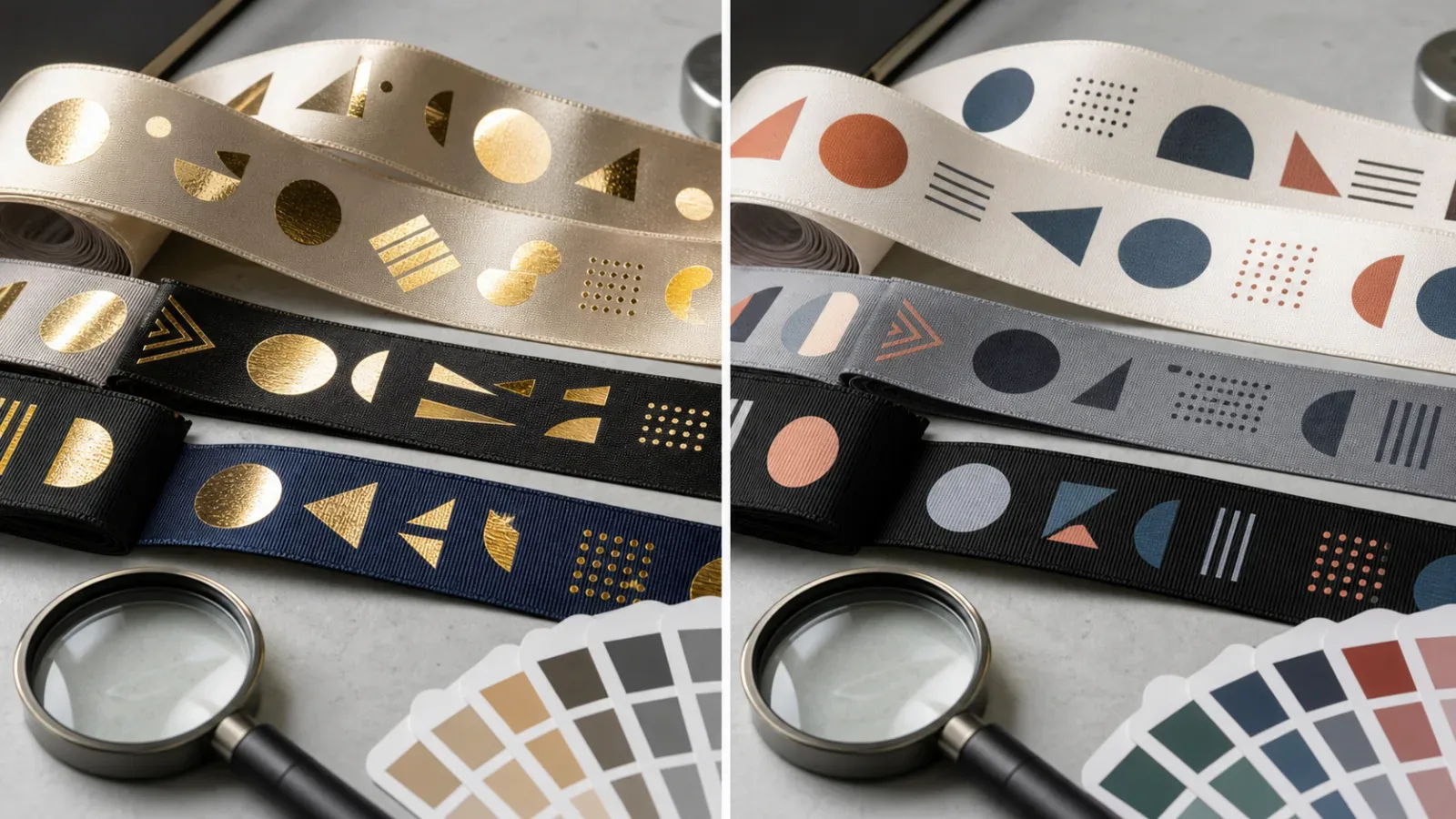
Choose a Print Method That Fits the Artwork
Select the print method by testing the actual logo, color target, repeat spacing, and edge construction on the intended organza. The supplier response, strike-off, and quotation must identify the same method and artwork revision.
- Artwork: identify the file revision, logo size, colors, and repeat spacing.
- Method: ask the supplier which print route fits the sheer substrate and edge construction, and why.
- Proof: approve a strike-off on the actual ribbon, not only a digital rendering.
- Quote: confirm setup, sample, production, packing, and lead-time assumptions for the selected method.
Additional RFQ items include lead time: request the sample, approval, production, and packing calendar for the selected print method before fixing the required delivery date. Risk if ignored: if the method or artwork changes after the strike-off, color density, registration, cost, and schedule can move; hold production until the revised proof and timing are approved.
Check logo detail and repeat spacing
Ask the supplier to state the minimum printable line and text sizes for the proposed method, then validate them on a strike-off made with the actual ribbon and artwork. Measure the repeat spacing against the packaging layout and record the accepted range before bulk production.
Identify opacity and registration limits
Organza's open weave affects ink opacity and registration. Colored backgrounds may appear washed out. Request a test print on the actual ribbon to confirm color density and edge sharpness. Register the print to avoid shift along the length. This step ensures the final ribbon matches the approved artwork.
Compare the proposed method with the custom printed ribbon route so artwork limits, strike-off evidence, and the production substrate stay on one approval path.
Approve the Proof and Physical Sample
Without a clear approval record, a mismatch between artwork and final ribbon can halt packaging lines and inflate costs. Compare the artwork scale, color, and readability on the sheer organza material against your RFQ-confirmed requirement. For example, verify that the print method (e.g., screen or hot stamp) aligns with the buyer-specified edge finish and transparency level.
Record acceptance criteria such as color tolerance (e.g., within buyer-approved color tolerance) and minimum text height before bulk production. This step reduces production risk and ensures factory execution matches your quote basis. Use a physical sample to confirm that the ribbon meets your packaging use case, not just a digital proof.
| Checkpoint | Buyer Verification Question |
|---|---|
| Artwork scale | Is the design proportion correct for the ribbon width? |
| Color match | Does the sample color fall within the agreed tolerance? |
| Readability | Can all text be read clearly on the sheer material? |
Use OEM and ODM ribbon development when the proof requires a supplier-side process change, revised construction, or a new physical sample before bulk approval.
Compare artwork scale, color, and readability
Place the printed strike-off on the intended package and compare logo scale, color density, edge sharpness, readability, repeat spacing, and registration with the approved artwork. Record any permitted difference on the signed sample rather than accepting it verbally.
Record acceptance criteria before production
The approval record should name the artwork revision, ribbon width and edge, viewing condition, print method, repeat-spacing check, sample date, approver, and retained-sample ID. Attach it to the purchase order so bulk inspection and reorders use the same reference.
Lock Bulk Production and Reorder Controls
A documented approval of the first production sample, accompanied by a signed-off artwork file, is the verifiable proof that the custom organza ribbon specification is locked for bulk production. Without this record, each batch risks deviations that affect your packaging line.
Confirm packing, labeling, and inspection checks
Before releasing the production order, confirm that the following controls are defined in your RFQ:
- Have the packing method (e.g., spool, roll, flat) and unit quantity been specified in the purchase order?
- Are labeling requirements – including barcode, lot number, and care symbols – included in the final spec?
- Is the inspection criteria (visual, dimensional, and color) documented and agreed with the supplier?
- Has the tolerance for width and length been defined as a range rather than a single number?
Archive the approved artwork and sample record
Store the signed-off artwork and the approved physical sample with a clear reference number. This archive becomes the master reference for all reorder controls, ensuring that every subsequent production run matches the original specification.
| Checkpoint | Buyer Verification Question | Evidence Required |
|---|---|---|
| Packing & Labeling | Are packing and labeling specs confirmed in writing? | Signed RFQ or specification sheet |
| Dimensional Compliance | Is the width within the agreed tolerance? | Measurement report from first sample |
| Color & Sheer Effect | Does the sample match the approved color standard? | Color swatch comparison record |
| Sample Retention | Is a physical sample archived with a unique ID? | Sample log with date and sign-off |
Carry the approved artwork, roll, and packing record into the intended application through the gift and retail packaging ribbon solutions page before scheduling reorders.
- Cost breakdown table: compare custom organza ribbon quotes by specification, material, customization, development, packing, quantity, inspection, and freight assumptions.
- send the product specification, reference files, target quantity, branding or packing inputs, sample requirement, and delivery terms in the same RFQ.
- Red flag list: pause custom organza ribbon quotes that hide development, sample, tooling, lead-time, quality, or reorder assumptions behind one unit price.
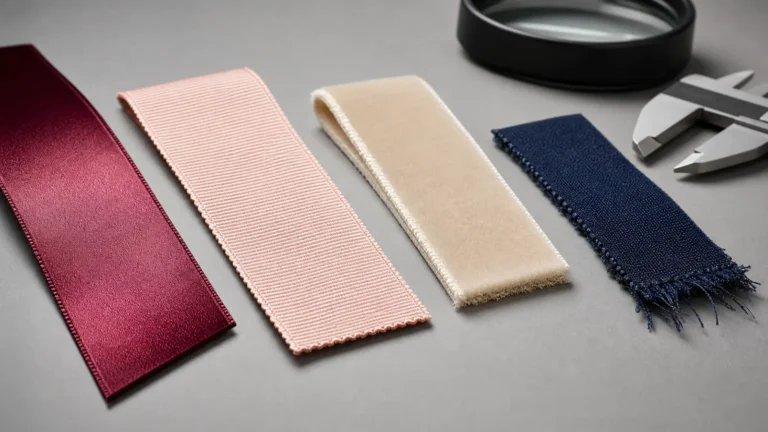
- Supplier capability context: verify the RFQ against satin ribbon, grosgrain ribbon, velvet ribbon, metallic ribbon so the buyer compares the right production route.
In conclusion
The final approval for your custom organza ribbon order begins when you compare the supplier’s written response against your approved specification, sample approval record, and quotation assumptions. Verify that the material, width, print method, and roll length match the approved sample, and that the MOQ, lead time, and freight method are recorded as agreed. Only when the specification, sample, quote, and QC evidence are consistent should you approve the sample and release the bulk order. This sequence prevents drift from quote to production to reorder, locking in the cost and quality you planned.
To request a quote, visit organza ribbon and confirm the final specification, quote assumptions, sample approval, QC evidence, approval risk, and supplier follow-up before bulk order.
Organza Ribbon Printing FAQ
Which artwork files and logo details should buyers include in the RFQ?
Fine lines, small text, and detailed logos are hardest to reproduce on organza due to its open weave. This works only if the buyer specifies minimum line thickness and text height in the RFQ, requests a printed strike-off, and verifies print method compatibility with the edge finish. Confirm color density and repeat spacing on the sample to avoid misalignment.
What should buyers inspect on a printed sample?
Inspect the printed sample for color accuracy, edge sharpness, and registration against the approved artwork. The check is valid only if the sample is evaluated under the specified light source (e.g., daylight 6500K) and compared to the physical swatch. Measure width, roll length, and check for fraying. Verify that the design does not shift along the length. Document acceptance criteria such as color tolerance within approved limit and minimum text height before bulk production.
How should repeat orders be controlled?
Repeat orders should be controlled by referencing the archived signed-off artwork and approved physical sample with a clear reference number. This works only if the buyer confirms that the supplier’s production roll matches the archived sample under the same viewing conditions, and that the specification, print method, and edge finish remain unchanged. Verify lead time and MOQ are consistent with the original order. Request a pre-production sample if the supplier has changed materials or processes.
For the supplier-side scope behind these print and reorder checks, review the Lude Ribbon factory.
Keep exploring
Recommended buyer guides
 Wholesale Custom Ribbon with Logo: Specs, Roll Length, and RFQ Checks
Step-by-step: Custom Ribbon With Logo. Check artwork files, print method, color target, and sample approval to avoid delays,…
Explore guide
Wholesale Custom Ribbon with Logo: Specs, Roll Length, and RFQ Checks
Step-by-step: Custom Ribbon With Logo. Check artwork files, print method, color target, and sample approval to avoid delays,…
Explore guide
 Ribbon Cutting Ribbon Custom Order: Specs, Roll Length, and RFQ Checks
Shortlist Ribbon Cutting Ribbon Custom Order suppliers by sample approval, color tolerance, and QC checks. See which options…
Explore guide
Ribbon Cutting Ribbon Custom Order: Specs, Roll Length, and RFQ Checks
Shortlist Ribbon Cutting Ribbon Custom Order suppliers by sample approval, color tolerance, and QC checks. See which options…
Explore guide
 Wholesale Foil Printed Ribbon: Custom Specs, Samples, and RFQ Checks
Foil printed ribbon: what to check on artwork files, print method, color target, and sample approval before placing…
Explore guide
Wholesale Foil Printed Ribbon: Custom Specs, Samples, and RFQ Checks
Foil printed ribbon: what to check on artwork files, print method, color target, and sample approval before placing…
Explore guide
 Quality Color Control: Custom Program Planning Checklist
Quality Color Control: what to check on sample approval, color tolerance, and QC checks before placing a custom…
Explore guide
Quality Color Control: Custom Program Planning Checklist
Quality Color Control: what to check on sample approval, color tolerance, and QC checks before placing a custom…
Explore guide
Leave a comment
Share a sourcing question or feedback on this guide. The Lude team reviews submissions before following up.