


Wholesale Foil Printed Ribbon: Custom Specs, Samples, and RFQ Checks
Foil printed ribbon: what to check on artwork files, print method, color target, and sample approval before placing a custom order
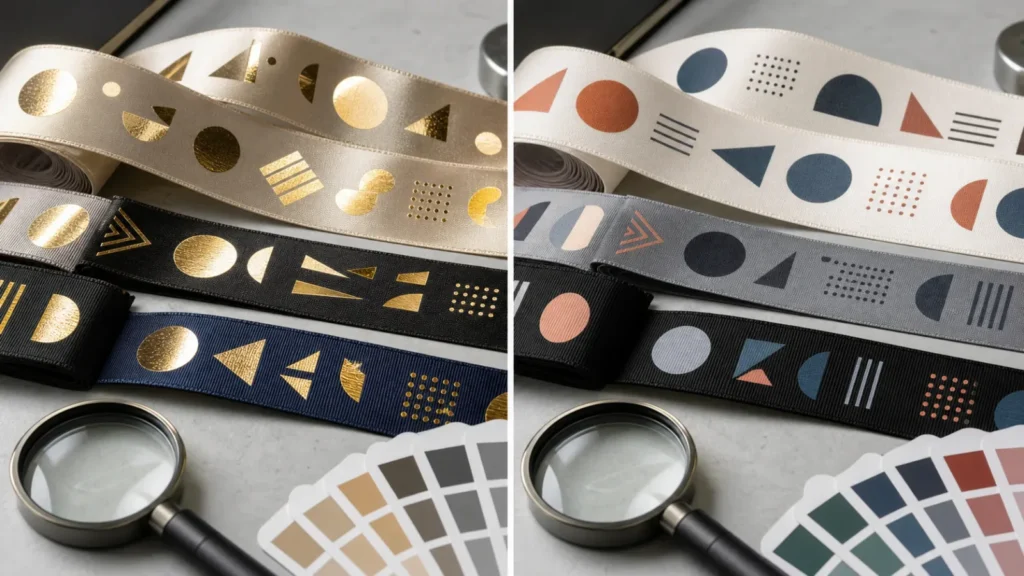
The sourcing record for foil printed ribbon: custom program planning is incomplete until it covers custom artwork, dielines, samples, finishes, and production handoff.
A foil program is planned around the die, because every artwork change means cutting a new one.
Direct answer: For foil printed ribbon: custom program planning, buyers should plan custom artwork, dielines, samples, finishes, and production handoff.
Define the Buyer Requirement
Compare the requirements below for foil printed ribbon against one RFQ revision. Each row should identify the requirement, approval evidence, and buyer action before production.
| Requirement | Factory control | Evidence to verify | Order risk | RFQ follow-up |
|---|---|---|---|---|
| Base ribbon and width | Material, width, hand feel, and tolerance stated by the buyer | A different substrate can change foil appearance and handling | Compare the proposed substrate and measured width with the RFQ | Approve the base ribbon before the foil proof |
| Artwork and foil effect | Buyer-approved logo file, repeat, placement, and color reference | Small artwork changes can affect registration or readability | Review a marked proof on the selected ribbon construction | Return one annotated proof with an approval owner |
| Sample and reorder record | Signed sample, packing instruction, and revision identifier | Missing records can create disagreement in bulk or repeat orders | Reconcile the sample, quotation, and purchase-order fields | Release production only after the records agree |
For foil printed ribbon, use this table as the decision scope. Read the rows as one approval sequence. Start with base ribbon and width; use the risk and buyer-action columns to decide whether its evidence is sufficient. Verify it with the inspection method and approval evidence recorded in the table.
For this foil printed ribbon sourcing record, keep the supplier response, marked sample, and approval owner under the same revision number. If any proof conflicts with the approved record, hold the quote, sample, or production release until the supplier explains the deviation in writing. Before closing the checkpoint, reconcile the latest drawing, sample, quotation, and approval comments, identify which record controls if they disagree, and document the resolution. Carry the signed requirements table into the purchase order and production handoff so the same checks support quote comparison, sample approval, shipment release, and later reorders.
Compare the Available Routes
| Option | Best fit | Trade-off | Risk to avoid | Verification | Follow-up |
|---|---|---|---|---|---|
| Standard foil-printed satin ribbon | Consistent brand color on satin ribbon for retail packaging | Limited to stock widths and standard color matching | Color shift on foil against satin weft may cause mismatch | Request a foil proof on your actual ribbon width and substrate | Submit Pantone references and width spec for sample run |
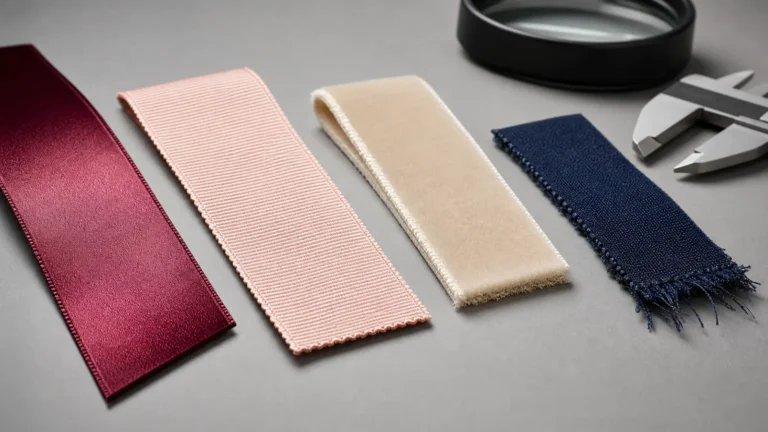
| Grosgrain ribbon with foil print | Ribbed texture adds durability and visual depth for premium goods | Thicker ribbon alters bow tightness; minimum order typically higher | Stiffness may affect knot finish; confirm end-use tie or bow type | Ask for a hand-tied sample to evaluate drape and registration | Request MOQ and lead time for grosgrain foil print by RFQ |
| Fully custom foil-printed ribbon | Tailored color, width, and foil design for exclusive brand programs | Longer lead time for artwork approval, sampling, and production | Foil registration and color must pass production sample sign-off | Review a production sample under your lighting conditions | Approve artwork and signed sample before bulk production |
| Pre-printed stock ribbon with foil | Immediate availability with no custom artwork or design fees | Limited to supplier's existing designs; less brand distinction | Stock design may not match your brand message or event theme | Check stock design library and request a physical swatch | Confirm stock availability, shipping timeline, and reorder risk |
For standard foil-printed satin ribbon, a poor decision can mean color shift on foil against satin weft may cause mismatch. Request a foil proof on your actual ribbon width and substrate, then submit pantone references and width spec for sample run.
For foil custom printed ribbon, preserve the standard foil-printed satin ribbon decision under one revision number: keep the supplier response, marked sample, approved specification, quotation, and approval owner together. If the evidence conflicts with the approved record, hold the quote, sample, or production release until the deviation is explained in writing. Carry that signed record into the purchase order, production handoff, shipment release, and later reorder review so every team works from the same baseline.
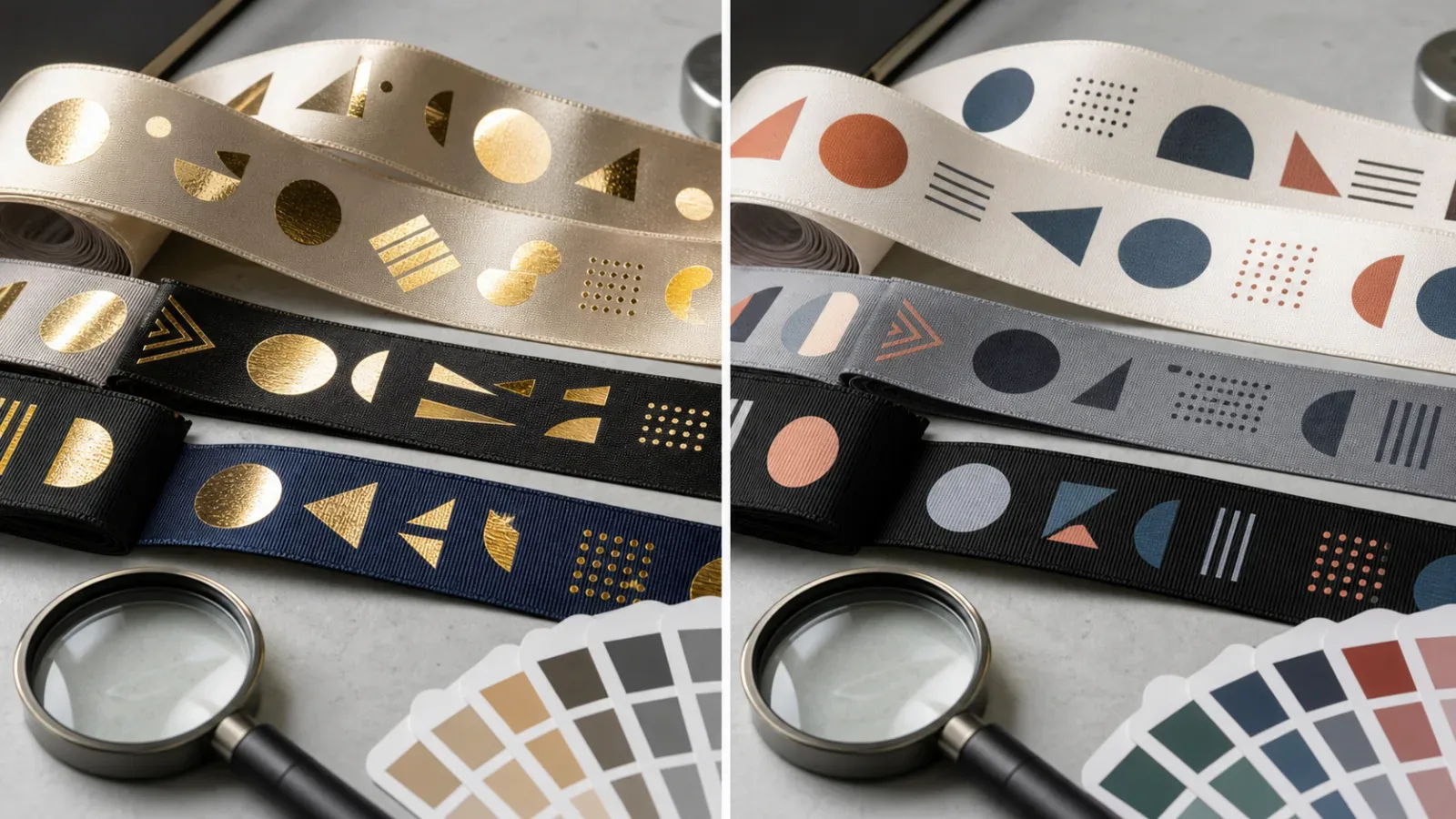
Review the Required Proof
Before approving a foil printed ribbon order, verify the proof against the RFQ revision. Each row in the checklist below confirms a spec, cost, or production risk point before factory execution and sample handoff.
| Check Item | What to Verify |
|---|---|
| Specs | Ribbon width, foil color, substrate material, and repeat length match the RFQ. |
| Cost or MOQ | Unit price and minimum order quantity are as quoted; no hidden setup fees. |
| Production Risk | Foil adhesion test passed; no cracking or peeling on folds. |
| Factory Execution | Roll length tolerance and splice count per roll are stated. |
| RFQ/Sample Handoff | Proof approval triggers sample shipment; sign-off deadline is clear. |
Use this checklist to compare the proof against the original buyer requirement. Reject any deviation before moving to sample production. For custom program planning, see our OEM and ODM ribbon development guide.
Build the Decision Asset
At the proof-check checkpoint, the output must be a verified supplier proof that matches every quote request-confirmed requirement before sample production begins.
Supplier evidence to request
Compare the supplier’s digital or physical proof against your quote request revision. Each row in the checklist below identifies one spec and the buyer’s verification question.
| Spec | Buyer Verification Question |
|---|---|
| Foil color | Does the proof match the PMS or brand color code stated in the RFQ? |
| Ribbon width | Is the width within the buyer-approved tolerance of the RFQ tolerance? |
| Repeat pattern | Does the pattern length and alignment match the approved artwork? |
| Substrate material | Is the ribbon base material (e.g., satin) as specified? |
If any row fails, request a revised proof before proceeding.
Sample approval evidence
Once the proof is accepted, evaluate the physical sample for foil adhesion, edge definition, and color consistency across the roll. Reject samples with smudging, misregistration, or flaking foil.
Reorder control records
Before reordering, confirm that the original quote request specs remain unchanged and that the supplier’s production records match the approved sample. This prevents drift in color or pattern on repeat runs.
Prepare Comparable RFQ Inputs
- Does the supplier have documented foil stamping capability for satin ribbon widths 3/8" to 2"? Foil adhesion and registration vary by ribbon weave and width; a supplier without documented capability may produce inconsistent foil transfer or edge misalignment. Supplier provides a capability matrix listing foil stamping equipment, supported ribbon widths, and maximum repeat length for foil printed ribbon. Approving a supplier without proven foil capability can cause rework, color mismatch, and production delays that push back your launch schedule. Request the supplier's foil stamping capability matrix and a reference sample of a similar foil printed ribbon order.
- What is the verification method for foil color match against the approved PMS or brand standard? Foil colors shift under different lighting and substrate tension; a defined verification method ensures the proof and bulk run match your brand standard. Supplier uses a spectrophotometer reading under buyer-approved viewing conditions and provides a signed color approval form before production. Without a documented verification method, you may approve a proof that looks correct in the sample room but fails under retail or event lighting. Require the supplier to include the spectrophotometer reading and lighting condition on the proof approval form.
- What is the approval risk if the foil printed ribbon proof is approved without a production mock-up on the actual ribbon substrate? Foil adheres differently to satin, grosgrain, and organza; a proof on paper or a different substrate can hide adhesion or cracking issues that appear on the actual ribbon. Supplier produces the proof on the exact ribbon substrate and includes a bend test to confirm foil adhesion. Approving a proof on a substitute substrate can lead to foil flaking or cracking during cutting, tying, or bow making, causing field failures. Stipulate in the quote request that the proof must be on the final ribbon substrate and include a bend test result.
- What buyer follow-up is required after the foil printed ribbon sample is approved? Sample approval is a production gate; without a documented follow-up step, the supplier may start bulk production without confirming the approved sample's specs. Supplier issues a production approval sheet referencing the approved sample, foil color code, ribbon width, and repeat pattern before bulk run. Skipping follow-up can result in bulk production that deviates from the approved sample, requiring costly rework or order rejection. Confirm the supplier's production approval sheet template and require its submission before bulk production begins.
Source check: ISO 2859-1 sampling inspection standard.
In conclusion
The final approval for a foil printed ribbon program hinges on verifying the proof against every specification—foil color, ribbon width, repeat pattern, and any custom artwork—before locking the physical sample. Once the sample is approved, document the control plan and compare it with the original quote request inputs to ensure reorders replicate the exact output. This checklist also includes confirming the supplier’s lead time (typically 15–20 business days after specification confirmation) and negotiating MOQ terms based on material, print method, and width. By shortlisting suppliers that provide clear proof and sample approval, you minimize quality risk and streamline the handoff from quote to production.
With the spec validated and the sample approved, the procurement team can confidently proceed to order placement, knowing that every checkpoint—from cost drivers to quality control—has been addressed. The checklist serves as a single source of truth for both first-time orders and repeat programs, ensuring consistency across batches.
To approve a sample for foil printed ribbon, use foil printed ribbon to confirm the final specification, quote assumptions, sample approval, QC evidence, approval risk, and supplier follow-up before bulk order.
Frequently Asked Questions
How should a b2b buyer plan custom order?
Start by shortlisting the exact foil color, ribbon width, repeat pattern, and substrate material. Compare these specifications against the supplier’s available print methods and confirm the MOQ with your order schedule, as it varies by material and width. Verify the supplier’s proof and request a physical sample before approving production to catch any color or alignment issues early.
Which supplier proof should buyers request for foil printed ribbon?
Request a digital or physical proof that shows the foil color, pattern repeat, and ribbon width exactly as specified. Check that the proof matches your quote request requirements and document any discrepancies. After approving the proof, verify a physical sample to confirm foil adhesion, color accuracy, and overall quality before locking the production order. Ask the supplier to confirm factory capability and who owns follow-up.
What should buyers lock before approving custom program planning checklist?
Lock the approved proof and physical sample against your original specification checklist. Confirm the MOQ and lead time with the supplier, noting that standard production takes 15-20 business days after specifications are confirmed, excluding artwork review and shipping. Document the sample approval and any QC criteria to ensure reorders replicate the same quality without deviation.
Next step: Send Specs for Review.
Keep exploring
Recommended buyer guides
 Wholesale Custom Ribbon with Logo: Specs, Roll Length, and RFQ Checks
Step-by-step: Custom Ribbon With Logo. Check artwork files, print method, color target, and sample approval to avoid delays,…
Explore guide
Wholesale Custom Ribbon with Logo: Specs, Roll Length, and RFQ Checks
Step-by-step: Custom Ribbon With Logo. Check artwork files, print method, color target, and sample approval to avoid delays,…
Explore guide
 Ribbon Cutting Ribbon Custom Order: Specs, Roll Length, and RFQ Checks
Shortlist Ribbon Cutting Ribbon Custom Order suppliers by sample approval, color tolerance, and QC checks. See which options…
Explore guide
Ribbon Cutting Ribbon Custom Order: Specs, Roll Length, and RFQ Checks
Shortlist Ribbon Cutting Ribbon Custom Order suppliers by sample approval, color tolerance, and QC checks. See which options…
Explore guide
 Wholesale Custom Organza Ribbon: Specs, Roll Length, and RFQ Checks
Custom Organza Ribbon — a practical checklist covering artwork files, print method, color target, and sample approval for…
Explore guide
Wholesale Custom Organza Ribbon: Specs, Roll Length, and RFQ Checks
Custom Organza Ribbon — a practical checklist covering artwork files, print method, color target, and sample approval for…
Explore guide
 Quality Color Control: Custom Program Planning Checklist
Quality Color Control: what to check on sample approval, color tolerance, and QC checks before placing a custom…
Explore guide
Quality Color Control: Custom Program Planning Checklist
Quality Color Control: what to check on sample approval, color tolerance, and QC checks before placing a custom…
Explore guide
Leave a comment
Share a sourcing question or feedback on this guide. The Lude team reviews submissions before following up.