


Bulk Award Ceremony Recognition: Custom Specs, Samples, and RFQ Checks
Buying award ceremony recognition: custom program planning checklist? Verify sample approval, color tolerance, QC checks, and format to reduce quoting
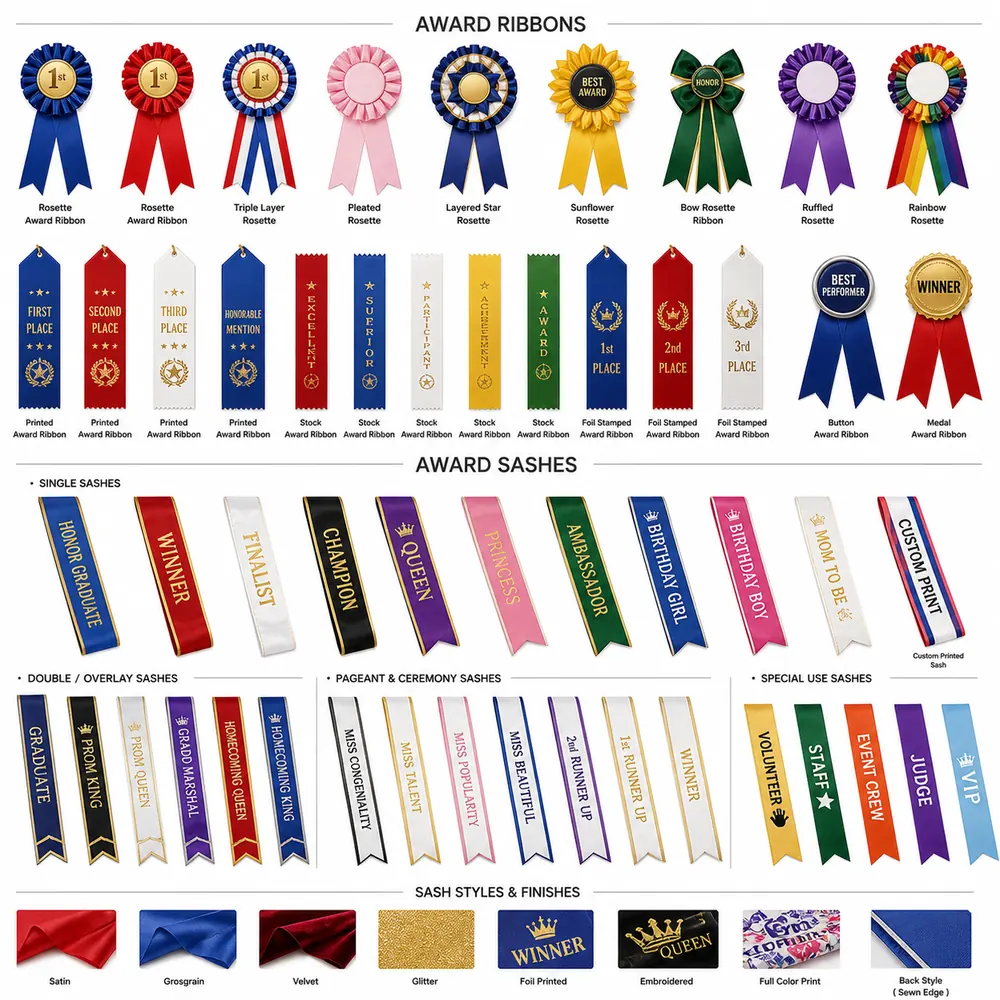
The sourcing record for award ceremony recognition: custom program planning is incomplete until it supports this Plan custom artwork, dielines, samples, finishes, and production handoff.
Ceremony orders arrive with a fixed date and a variable quantity. Locking the text and the color early is what protects the date.
Direct answer: For award ceremony recognition: custom program planning, buyers should plan custom artwork, dielines, samples, finishes, and production handoff.
Define the Buyer Requirement
Compare Define the Buyer Requirement for award ceremony recognition against one RFQ revision. Each row should identify the requirement, approval evidence, and buyer action before production.
| Requirement | Factory control | Evidence to verify | Order risk | RFQ follow-up |
|---|---|---|---|---|
| Program and recipient groups | Award levels, quantities by group, ceremony date, and distribution sequence | Names, colors, or quantities can be assigned to the wrong group | A line-item order summary mapped to each award level | Approve the recipient-group matrix before artwork |
| Ribbon or sash construction | Format, dimensions, material, color, finish, attachment, and edge treatment | The item may not present, wear, or hang as intended | A construction sample marked against the buyer's specification | Confirm construction before final print approval |
| Artwork and packing map | Logo placement, variable text, reading direction, unit packing, and carton labels | Correct products can still reach the wrong presentation station | A marked artwork proof and packing mock-up tied to the same revision | Sign one consolidated approval record |
For award ceremony recognition, use Define the Buyer Requirement as the decision scope. Read the rows as one approval sequence. Start with program and recipient groups; use the risk and buyer-action columns to decide whether its evidence is sufficient. Verify it with the inspection method and approval evidence recorded in the table.
For this award ceremony recognition sourcing record, keep the supplier response, marked sample, and approval owner under the same revision number. If any proof conflicts with the approved record, hold the quote, sample, or production release until the supplier explains the deviation in writing. Before closing the checkpoint, reconcile the latest drawing, sample, quotation, and approval comments, identify which record controls if they disagree, and document the resolution. Carry the signed Define the Buyer Requirement table into the purchase order and production handoff so the same checks support quote comparison, sample approval, shipment release, and later reorders.
Compare the Available Routes
Choose the route that best matches the ceremony schedule, approved visual standard, and tolerance for a new sample cycle. The safest option is the one whose specification and proof can be recorded before the purchase order is released.
| Route | Best fit | approval risk | Verification check | buyer follow-up |
|---|---|---|---|---|
| Repeat an approved specification | Recurring awards that need continuity | The archived record may not match current materials | Compare the supplier response with the signed sample and latest order file | Request a confirmation sample if any input changed |
| Adapt a proven construction | A new event theme with familiar ribbon construction | Artwork or finish changes may alter the approved appearance | Review the revised artwork and a substrate-specific proof side by side | List every changed field in the RFQ revision |
| Build a fully custom route | A new award format or identity system | Unresolved specifications can trigger sample rework | Approve artwork, material, dimensions, finish, and packing as one record | Use the custom sampling and artwork process before bulk release |
Ask each supplier to quote the same selected route and identify assumptions separately. If the proof, sample, or quotation conflicts with the approved specification, stop the handoff and resolve the revision before production.
Review the Required Proof
Before approving a sample or issuing an RFQ, verify the physical proof—a printed ribbon sample, a plaque mockup, or a digital color swatch. This step eliminates guesswork and ensures the final award matches your brand’s specifications.
- Specs: Confirm dimensions (e.g., ribbon width, medal diameter), material (woven, satin, acrylic), and color accuracy against a Pantone reference.
- Cost or MOQ: Request a line-item breakdown for tooling, setup, and per-unit pricing. Verify minimum order quantities for custom colors or finishes.
- Production risk: Ask for a pre-production sample from the actual production run, not a hand-made prototype. Check for dye-lot consistency, edge finishing, and attachment strength.
- Factory execution: Review the factory’s quality control checklist—does it include visual inspection, dimensional tolerance, and packaging standards?
- quote request/sample handoff: Attach the approved proof to your quote request as a binding reference. Require the supplier to sign off on the proof before mass production begins.
This checklist turns a subjective “looks good” into an objective pass/fail gate. For more on custom printed ribbon specifications, see our custom printed ribbon.
Build the Decision Asset
At the process checkpoint before sample sign-off, the output that must exist is a verified supplier proof—a physical ribbon sample, plaque mockup, or die-struck medal—that matches the quote request specs exactly. This proof becomes the decision asset that gates production.
Supplier evidence to request
Compare the physical sample against the quote request revision for award ceremony recognition. Verify material composition (e.g., grosgrain vs. satin ribbon), color match (Pantone code), and construction details (stitch density, edge finish). The Lude Ribbon editorial team creates practical B2B ribbon and bow buying guides from applied factory-side knowledge; their guides emphasize that a deviation in ribbon width can alter drape and perceived quality.
Sample approval evidence
Before approving, confirm that the sample passes a production risk assessment: Are there loose threads? Is the print registration sharp? Does the backing material delaminate under tension? Use a simple table to document checks:
| Check | Pass/Fail | Notes |
|---|---|---|
| Color match (Pantone) | Pass | Within buyer-approved color tolerance |
| Dimensional tolerance | Pass | the buyer-approved tolerance |
| Adhesion test (if appliqué) | Pass | No peel after the agreed time |
This table serves as the quote request handoff document for the next stage: reorder control.
Reorder control records
Once the sample is approved, lock the spec into a reorder control checklist. This ensures that future batches match the approved asset without requalification. The checklist should include the approved sample ID, supplier qualification program references, and a reorder trigger (e.g., 60-day lead time buffer).
Prepare Comparable RFQ Inputs
- Does the supplier have documented experience producing award ceremony ribbons with custom color matching and tight repeatability? Award ceremony recognition requires consistent color and construction across multiple order cycles. A supplier without documented ribbon-specific capability cannot guarantee match across reorders. Supplier provides a capability statement listing award ribbon production, color-matching equipment, and at least two past program references with photos. Approving a supplier without ribbon-specific capability leads to color drift, inconsistent bow tension, and reorder mismatch that damages the ceremony's visual standard. Request capability documentation and two reference contacts for award ribbon programs of similar volume.
- What verification method does the supplier use to confirm that the printed award ribbon matches the approved proof before bulk production? Without a documented verification method, the supplier may rely on visual judgment alone. A measurable pass/fail gate prevents subjective approval and reduces rejection risk. Supplier uses a spectrophotometer reading against the approved proof and a physical sample sign-off record before any bulk run begins. Missing a verification method means the first bulk output may not match the approved sample, causing last-minute rework and ceremony delay. Ask the supplier to share their standard verification checklist and request a sample of the sign-off record from a recent award ribbon order.
- What buyer follow-up does the supplier require after sample approval to lock the spec for reorder? A verbal approval is not a production lock. Without a documented follow-up step, the supplier may use outdated specs or miss a critical change for the next ceremony cycle. Supplier requires a signed spec sheet and a reorder control checklist that captures material, color, print method, and bow construction details. Skipping formal follow-up means the next reorder may reproduce from an old file, causing mismatch and requiring a new sample cycle under time pressure. Confirm the supplier's reorder lock process and request a template of their spec sheet before you issue the first PO.
- How does the supplier's quality control process verify that each award ribbon meets the approved standard before shipment? Award ribbons are inspected visually by ceremony organizers. Any defect—frayed edge, misprint, loose bow—reflects on the program. QC must catch these before packing. Supplier uses a documented QC checklist that includes edge finish, print registration, color match, bow tension, and packaging integrity for every production lot. Without QC verification, defective ribbons may reach the ceremony, forcing last-minute replacements and damaging the program's professional image. Request a copy of the supplier's QC checklist and ask how they handle non-conforming lots before shipment.
For award ceremony recognition, use OEM and ODM ribbon development to align the applicable specification, proof record, supplier responsibility, and quote request handoff before comparing quotes.
In conclusion
For award award and ceremony ribbon solutions recognition: custom program planning checklist, the next procurement action is a written quote request and sample approval record, not only a preferred style or unit price. Confirm the specification, MOQ assumption, artwork version, supplier capability, sample approval method, QC checkpoint, approval risk, and quote follow-up before bulk production.
Frequently Asked Questions
How should a b2b buyer plan custom order?
Start by shortlisting the exact award type (ribbon, rosette, sash, or medallion) and confirm the print method, material width, and attachment style with the supplier. Compare cost and MOQ across shortlisted suppliers—award ribbons, rosettes, and sashes start at 1,000 pieces per style; confirm other items in the quote request. Verify lead time: standard production is 15–20 business days after spec confirmation, plus artwork review, sample approval, and shipping. Request a printed proof or physical sample before approving, and document all specifications in a reorder control checklist to lock quality for future runs.
Which supplier proof should buyers request for award ceremony recognition?
Request a physical sample that matches the approved artwork and spec revision—this is the only reliable proof before production. Check that the sample passes a production risk assessment: verify color accuracy, print registration, material feel, and attachment durability against your quote request. If the supplier cannot provide a sample within the agreed timeline, consider it a red flag for quality control. After sample approval, lock the spec into a reorder control checklist to avoid drift on future orders.
What should buyers lock before approving custom program planning checklist?
Before approving the program planning checklist, verify that every specification (material, print method, width, attachment, and packaging) is documented and matches the approved sample. Confirm the minimum order and lead time are locked per the quote request—award ribbons, rosettes, and sashes start at 1,000 pieces per style, and the order schedule must be confirmed. Also check that the supplier has provided a production risk assessment and that the sample passes QC checks. Document all details in a reorder control checklist to ensure consistency for future award ceremony orders.
quote request handoff: Send Specs for Review.
Keep exploring
Recommended buyer guides
 Wholesale Custom Ribbon with Logo: Specs, Roll Length, and RFQ Checks
Step-by-step: Custom Ribbon With Logo. Check artwork files, print method, color target, and sample approval to avoid delays,…
Explore guide
Wholesale Custom Ribbon with Logo: Specs, Roll Length, and RFQ Checks
Step-by-step: Custom Ribbon With Logo. Check artwork files, print method, color target, and sample approval to avoid delays,…
Explore guide
 Ribbon Cutting Ribbon Custom Order: Specs, Roll Length, and RFQ Checks
Shortlist Ribbon Cutting Ribbon Custom Order suppliers by sample approval, color tolerance, and QC checks. See which options…
Explore guide
Ribbon Cutting Ribbon Custom Order: Specs, Roll Length, and RFQ Checks
Shortlist Ribbon Cutting Ribbon Custom Order suppliers by sample approval, color tolerance, and QC checks. See which options…
Explore guide
 Wholesale Custom Organza Ribbon: Specs, Roll Length, and RFQ Checks
Custom Organza Ribbon — a practical checklist covering artwork files, print method, color target, and sample approval for…
Explore guide
Wholesale Foil Printed Ribbon: Custom Specs, Samples, and RFQ Checks
Foil printed ribbon: what to check on artwork files, print method, color target, and sample approval before placing…
Explore guide
Wholesale Custom Organza Ribbon: Specs, Roll Length, and RFQ Checks
Custom Organza Ribbon — a practical checklist covering artwork files, print method, color target, and sample approval for…
Explore guide
Wholesale Foil Printed Ribbon: Custom Specs, Samples, and RFQ Checks
Foil printed ribbon: what to check on artwork files, print method, color target, and sample approval before placing…
Explore guide
Leave a comment
Share a sourcing question or feedback on this guide. The Lude team reviews submissions before following up.