


Wholesale Ribbon Supplier: What to ask before rfq
Which Wholesale Ribbon Supplier options deserve an RFQ? Compare factory capability, QC proof, lead time, and reorder reliability to find the right supplier.
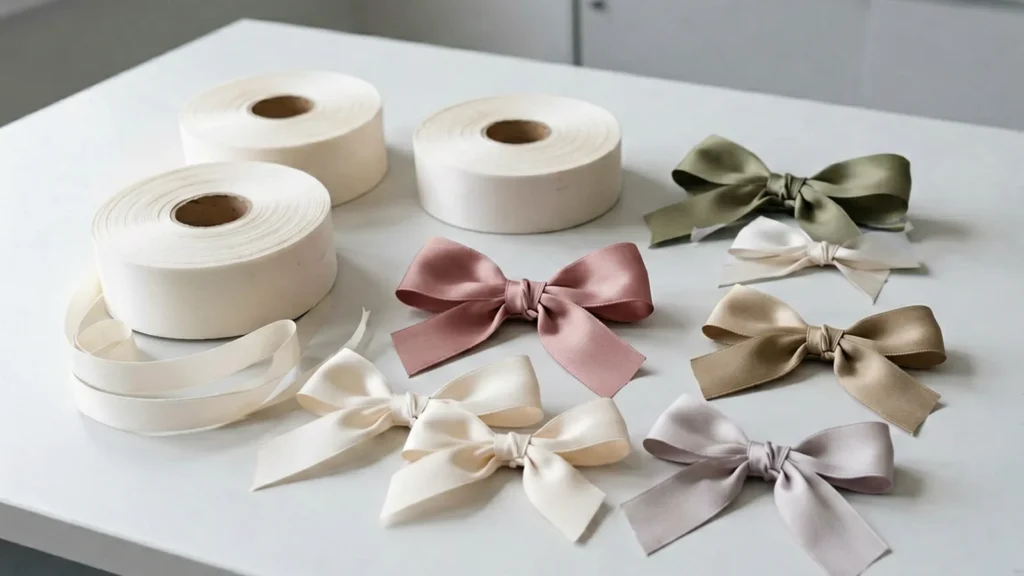
Before you can shortlist Wholesale Ribbon suppliers using proof, capability, quality, MOQ, and delivery criteria, the specification has to say enough for a supplier to price the same job you have in mind.
The questions worth asking before an RFQ are about dye capability, minimum lot size, and who owns the color standard.
Direct answer: For wholesale ribbon supplier, buyers should shortlist Wholesale Ribbon suppliers using proof, capability, quality, MOQ, and delivery criteria.
How buyers should evaluate wholesale ribbon supplier
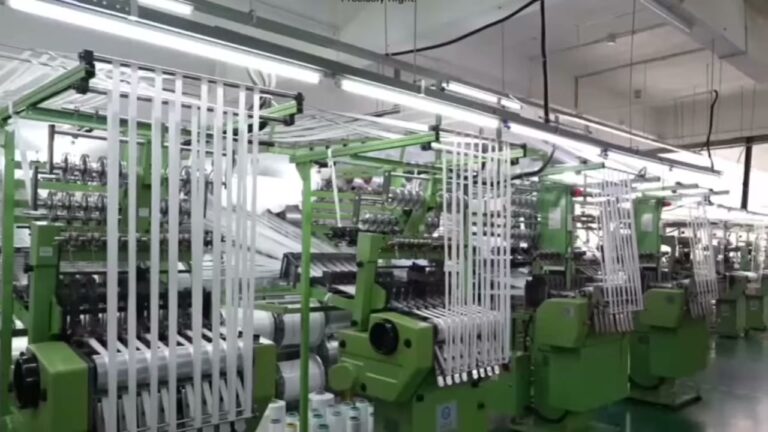
Ribbon reaches you through four separate operations: weaving the tape, dyeing it, printing or foiling it, and forming it into bows or rosettes. Very few companies run all four, and the ones that run none are quoting you someone else’s capacity. The first question worth asking is which of those steps happen under the roof you are talking to.
| Criterion | What to verify | Proof to request | Risk signal if it is missing |
|---|---|---|---|
| Weaving and dyeing scope | Which steps run in-house versus outside | A short clip of the loom or dye house floor with your shade on it | Lead time you cannot influence, because it belongs to a subcontractor |
| Dye lot control | How one dye lot is matched to the next | Two pieces from different lots against one signed swatch | Shade variation across a reorder, with no reference to reject it against |
| Minimum order rule | Whether the minimum sits on yardage, on the design, or on formed pieces | The written minimum for your exact material and width | A quote that changes at order confirmation |
| Quality control method | Where inspection happens and what is recorded | An inspection record from a comparable run, not a certificate | Defects found at your warehouse instead of theirs |
Three answers should end the conversation early: a unit price offered before anyone asked your width, a sample with no batch or lot marking, and a delivery promise shorter than the supplier’s own stated production window. Each of those means the number in front of you is not connected to a production plan.
Score every candidate on the same four rows before comparing price. A supplier who answers three with evidence is a better risk than one who answers four with reassurance, because only the evidence survives into the second order.
Product and specification checks before shortlisting
A ribbon specification that a factory can quote against has five parts: material, width, edge construction, weight or hand, and the color reference. Leave one out and each supplier fills the gap differently, which is how three quotes for the same job arrive at three different prices. The risk is that the cheapest number is quoting a different product.
| Question to ask | Why it changes the answer | Proof or answer to expect | Buyer follow-up |
|---|---|---|---|
| Is the edge woven, heat-sealed, or cold cut? | Edge construction drives fraying and how the ribbon behaves at a knot | A handled sample of the actual edge type | Add a handling check to sample approval |
| Which dye process is used for this shade? | Process decides both color consistency and the minimum | A dyed sample with its lot marking | Confirm the minimum tied to that process |
| What is the color reference? | A physical standard is the only thing a dye house can match | A signed swatch held by both sides | Keep one retained piece on file |
| How is the ribbon wound and packed? | Core size and roll length affect line feeding and freight | Roll specification in writing | Check it against your application method |
For anything that needs development rather than a catalog pick, the specification conversation belongs in OEM and ODM ribbon development, where sampling and approval steps are documented from the start rather than agreed by email.
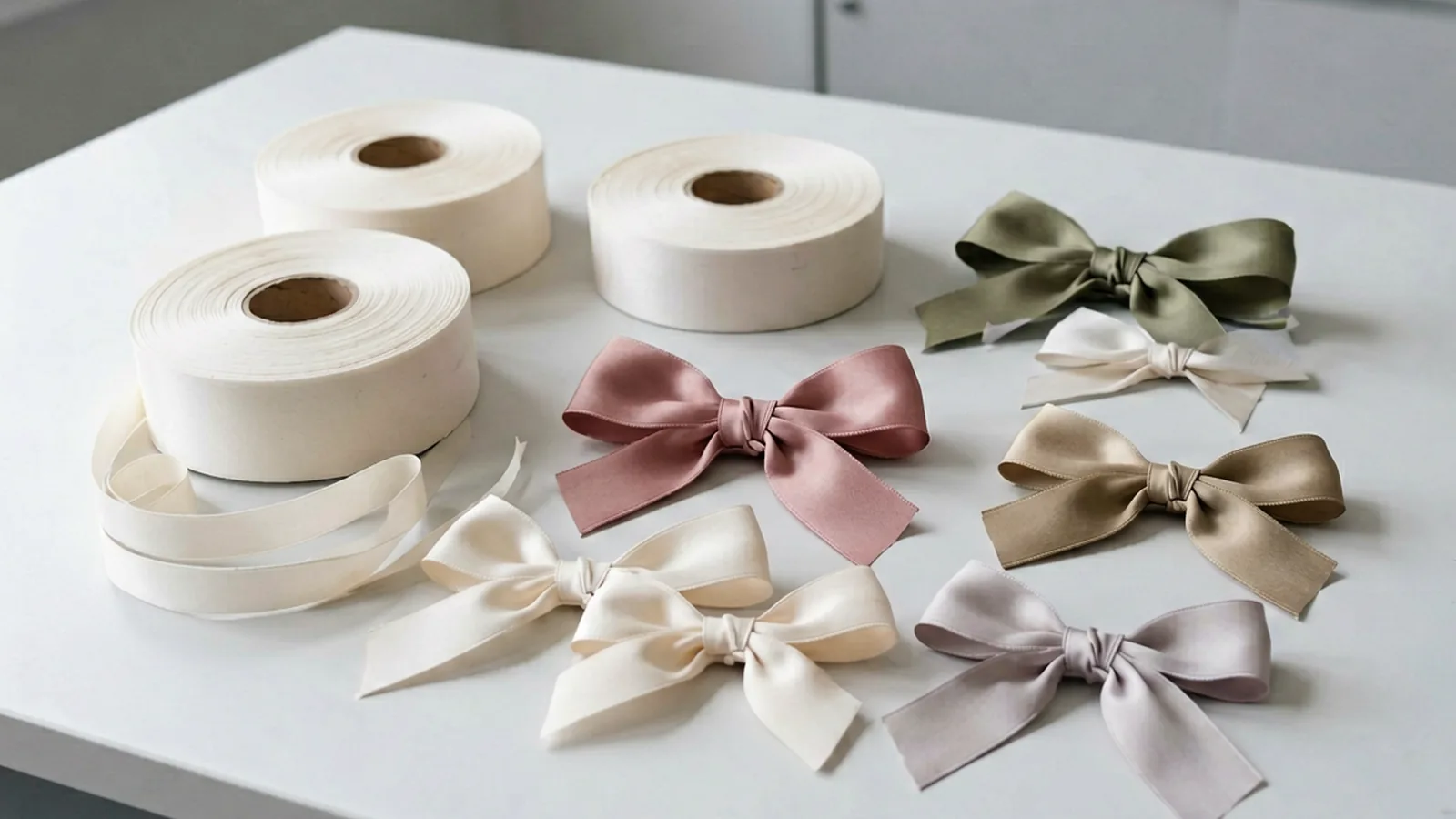
MOQ, cost, sample, and lead-time questions
Minimums follow the production route, not the buyer. Identifying which route a program sits on answers most of the quantity and cost question before a supplier replies.
| Route | Where it fits | Trade-off | Threshold to confirm |
|---|---|---|---|
| Stock shades and widths | House colors close to an inventory shade | Fastest route, limited to what is held | Plain stock ribbon starts at 1,500 yards from existing colors and widths |
| Custom dyed color or width | Brand color matching | Adds a dye lot approval step and its own cost | Confirmed by quote request rather than a fixed figure |
| Printed ribbon | Logo or repeating artwork | Artwork approval sits ahead of production | Printed ribbon starts at 3,000 yards per design |
| Formed pieces | Rosettes, sashes, and finished decorative items | Counted individually per style and color | Ready-made bows and award ribbons start at 1,000 pieces |
Standard production runs 15 to 20 business days once specifications are approved, with artwork sign-off and sample courier time sitting outside that window. Quoting a custom shade against the stock threshold is a common source of a later price mismatch, so keep the routes separate in the request. Where artwork is involved, custom printed ribbon carries its own per-design minimum.
Quality and communication red flags
Many ribbon complaints trace back to one of four causes, and each has a check that settles it before the shipment argument starts.
- Shade differs between cartons. Usually separate dye lots run without a common reference. Ask which lots the shipment covers and compare each against the signed swatch; the fix is one approved standard held by both sides before production.
- Edges fray after handling. Often a cold-cut edge supplied where a sealed or woven edge was assumed. Handle a cut length repeatedly and inspect the cut, then write the edge type into the specification rather than the sample request.
- Ribbon curls or twists off the roll. Typically winding tension or core size, not the ribbon itself. Ask for the roll specification and run a short feed test with a production roll before approving the run.
- Print rubs off at the fold. Adhesion is being judged on the flat face instead of the crease. Check artwork where it crosses a knot, and make that the approval point for any printed run.
Communication has its own signal worth watching: a supplier who answers a quality question with a certificate rather than a record. Certificates describe a system; an inspection record describes your goods. For gift and retail programs the difference shows up fast, which is why gift and retail packaging ribbon solutions are scoped around approval records rather than documents.
How to move from shortlist to RFQ
A quote request carrying complete inputs comes back comparable. One with gaps comes back with each supplier guessing differently, and the lowest number usually belongs to whoever guessed smallest. The risk of leaving any input below open is a set of prices that cannot be placed side by side.
- Material and width. Name the construction and the exact width. Width drives yardage, and yardage drives the price more than any negotiation will.
- Color reference. Send a physical swatch or an agreed standard. A photograph or an on-screen color is not a dye reference, and the dye house is matching to guesswork without one.
- Edge and finish. State whether the edge is woven, sealed, or cut, and whether the face carries print, foil, or nothing. Each changes both the process and the minimum.
- Quantity and release pattern. Give annual volume, first release, and expected reorder rhythm. A single quantity gets a single price; a release pattern gets a program conversation.
- Dates. Start from the date the goods must be on your shelf and work backward through delivery, production, approval, and sampling instead of asking how fast the supplier can go.
Ask for one pre-production sample against the approved specification and treat its written approval as the gate to production. That signed piece is what a later inspection is measured against, and it settles most shade and edge disputes before they reach a shipment. A supplier such as Lude Ribbon should be able to return that sample with its lot marking intact.
Source check: ISO 2859-1 sampling inspection standard.
In conclusion
Final buyer checks before moving forward: Run the same four rows across every wholesale ribbon supplier still in contention: which operations are in-house, how dye lots are matched, the written minimum for your material, and where quality inspection happens. A supplier who covers three with evidence beats one who covers four with assurances.
Quote-ready inputs to prepare: Have material and width, the color reference, edge and finish, release pattern, and the shelf date written down before the request goes out. Prices built on the same five inputs can be compared; prices built on assumptions carry the risk of a cost mismatch that only appears at order confirmation.
Supplier or sample action to take next: Send the specification to two or three suppliers and ask each for one pre-production sample with its dye lot marking. Verify what comes back against the signed swatch, keep the approved piece on file, and let that sample open production rather than an email confirmation.
Ribbon supplier FAQ
What should buyers confirm before ordering Wholesale Ribbon Supplier?
Confirm which operations run in-house: weaving, dyeing, printing, and forming are four separate steps and few suppliers hold all of them. Then confirm material, width, edge construction, and the color reference. A sample returned with its dye lot marking answers most of the capability question in one shipment.
How should buyers compare MOQ, lead time, and quote terms?
Compare them by production route rather than as a single number. Printed ribbon, for example, starts at 3,000 yards per design, while stock shades and formed pieces carry separate thresholds. Production then runs 15 to 20 business days after approval, with artwork sign-off and sampling counted outside that window.
What sample, quality, or supplier checks reduce risk?
Three checks carry most of the weight. Compare the sample to the signed swatch rather than to a description, handle a cut length to see how the edge behaves, and ask for an inspection record from a comparable run instead of a certificate. Keep the approved piece on file for the reorder.
RFQ handoff: Send Specs for Review.
Keep exploring
Recommended buyer guides
 Velvet Ribbon Wholesale Checklist: MOQ, Finish, and Supplier Questions
Evaluate velvet ribbon wholesale options: MOQ, setup fees, unit cost, and packing. Narrow the list before requesting samples…
Explore guide
Velvet Ribbon Wholesale Checklist: MOQ, Finish, and Supplier Questions
Evaluate velvet ribbon wholesale options: MOQ, setup fees, unit cost, and packing. Narrow the list before requesting samples…
Explore guide
 Wholesale Ribbon By The Roll: Roll length and inventory planning
Evaluate Wholesale Ribbon By The Roll options: factory capability, QC proof, lead time, and reorder reliability. Narrow the…
Explore guide
Wholesale Ribbon By The Roll: Roll length and inventory planning
Evaluate Wholesale Ribbon By The Roll options: factory capability, QC proof, lead time, and reorder reliability. Narrow the…
Explore guide
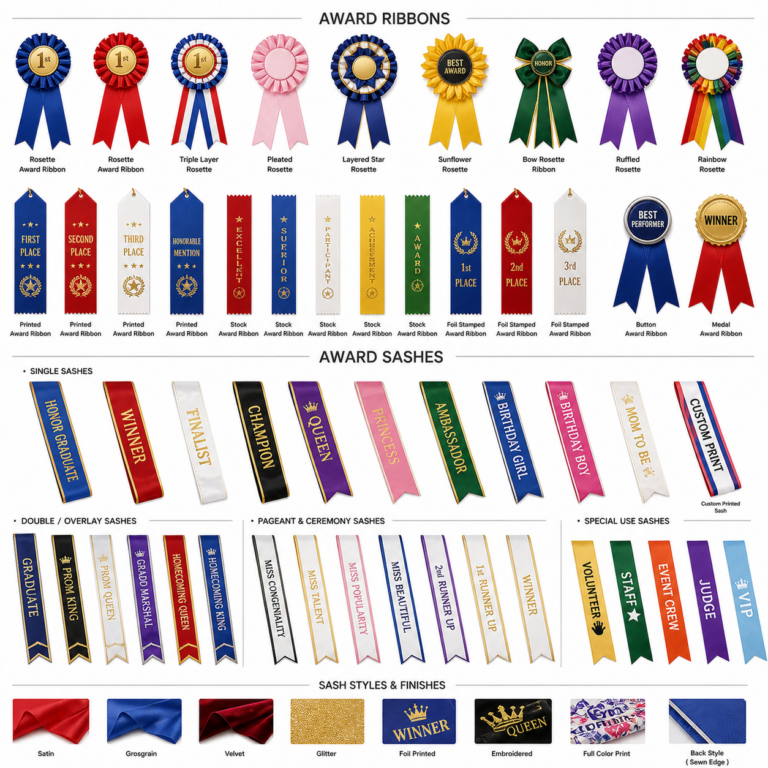 Award Ribbons Wholesale: Bulk award ribbon supplier checks
Shortlist Award Ribbons Wholesale suppliers by factory capability, QC proof, lead time, and reorder reliability. See which options…
Explore guide
Award Ribbons Wholesale: Bulk award ribbon supplier checks
Shortlist Award Ribbons Wholesale suppliers by factory capability, QC proof, lead time, and reorder reliability. See which options…
Explore guide
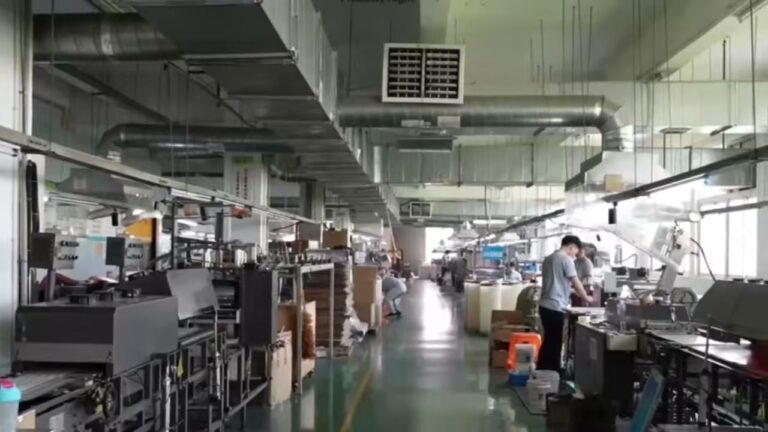 Wholesale Ribbon Manufacturers: Factory vs Trading Company Checklist
Evaluate Wholesale Ribbon Manufacturers options: factory capability, QC proof, lead time, and reorder reliability. Narrow the list before…
Explore guide
Wholesale Ribbon Manufacturers: Factory vs Trading Company Checklist
Evaluate Wholesale Ribbon Manufacturers options: factory capability, QC proof, lead time, and reorder reliability. Narrow the list before…
Explore guide
Leave a comment
Share a sourcing question or feedback on this guide. The Lude team reviews submissions before following up.