


Wholesale Grosgrain Ribbon By The Roll: Roll planning and moq
Evaluate Wholesale Grosgrain Ribbon By The Roll options: MOQ, setup fees, unit cost, and packing. Narrow the list before requesting samples or quotes
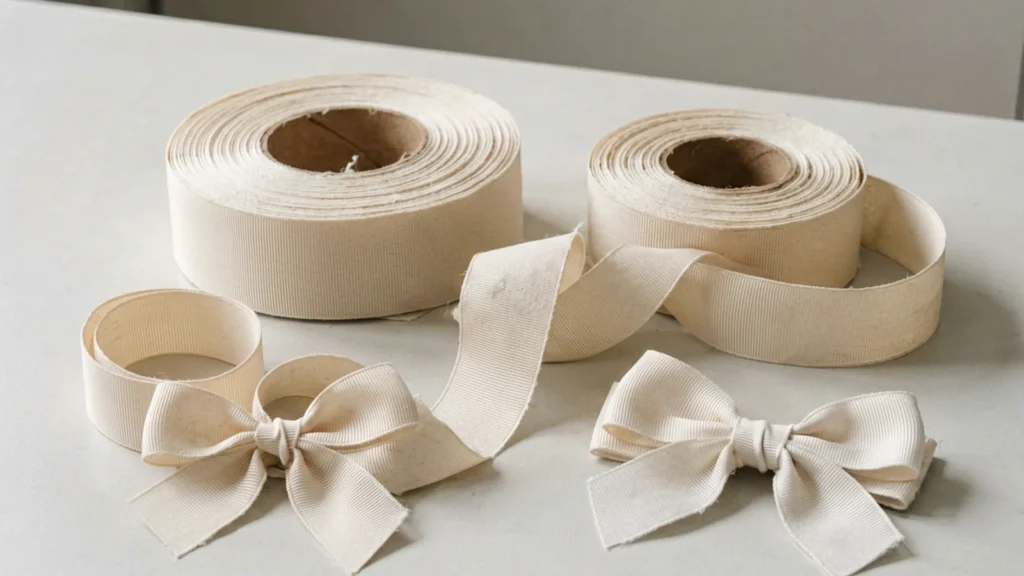
Before you can shortlist Wholesale Grosgrain Ribbon by the Roll suppliers using proof, capability, quality, MOQ, and delivery criteria, the specification has to say enough for a supplier to price the same job you have in mind.
Buying grosgrain by the roll shifts the planning question from yardage to roll count, and the two do not convert cleanly.
Direct answer: For wholesale grosgrain ribbon by the roll, buyers should shortlist Wholesale Grosgrain Ribbon by the Roll suppliers using proof, capability, quality, MOQ, and delivery criteria.
What buyers should compare when sourcing wholesale grosgrain ribbon by the roll
Buying by the roll moves one number to the front of the decision: yards per roll. It decides how much ribbon you write off at the end of each cutting run, and two suppliers quoting the same price per yard can leave very different amounts of waste behind.
| Criterion | What to verify | Proof to request | Risk if left unchecked |
|---|---|---|---|
| Yards per roll | The actual length on the roll, not the nominal figure | A weighed or measured roll from the last production run | Short rolls that break a cutting plan mid-carton |
| Rib consistency | Whether the rib density holds across rolls in one lot | Two cut lengths from different rolls, laid rib to rib | Visible mismatch between bows made from different rolls |
| Core and winding | Core diameter and whether the wind is even | The roll specification in writing | Feed problems on an automatic line |
| Minimum order rule | Whether the minimum counts yards, rolls, or design | The written minimum for your width and shade | A quote that changes at order confirmation |
Score every supplier on the same four rows before comparing unit price, and ask where quality inspection sits in their process. Yards per roll and rib consistency are the two that a per-yard price hides completely.
Product and specification checks before shortlisting
Grosgrain is defined by its rib. The weave gives it the crosswise ridge that holds a knot and resists creasing, and almost every specification question traces back to how that rib is made and how consistently it repeats. A supplier who answers rib questions in general terms is describing a category rather than the goods you would receive.
| Question to ask | Why it changes the quote | Proof or answer to expect | Buyer follow-up |
|---|---|---|---|
| What is the rib density across the width? | Density drives hand, knot behaviour, and how the bow sits | A cut length the buyer can handle and compare | Write the reference sample into the specification |
| Is the rib square to the edge? | Skewed rib shows the moment a bow is tied | Two lengths from different rolls, tied and compared | Make skew a named sample rejection point |
| Which edge finish is supplied? | Woven, sealed, and cut edges fray differently in use | A handled length, not a fresh cut | Add a handling check to sample approval |
| How many yards per roll, and on what core? | Roll format decides waste and line feeding | Roll specification in writing | Check it against your cutting plan |
| How is the shade referenced? | A physical standard is what a dye house matches to | A signed swatch held by both sides | Keep one retained piece on file |
Working from an existing range rather than a description shortens this conversation considerably. Point at the ribbon products that come closest to the program, then list what has to change. A quote against a made product and three changes is more accurate than a quote against a paragraph.
MOQ, cost, sample, and lead-time questions
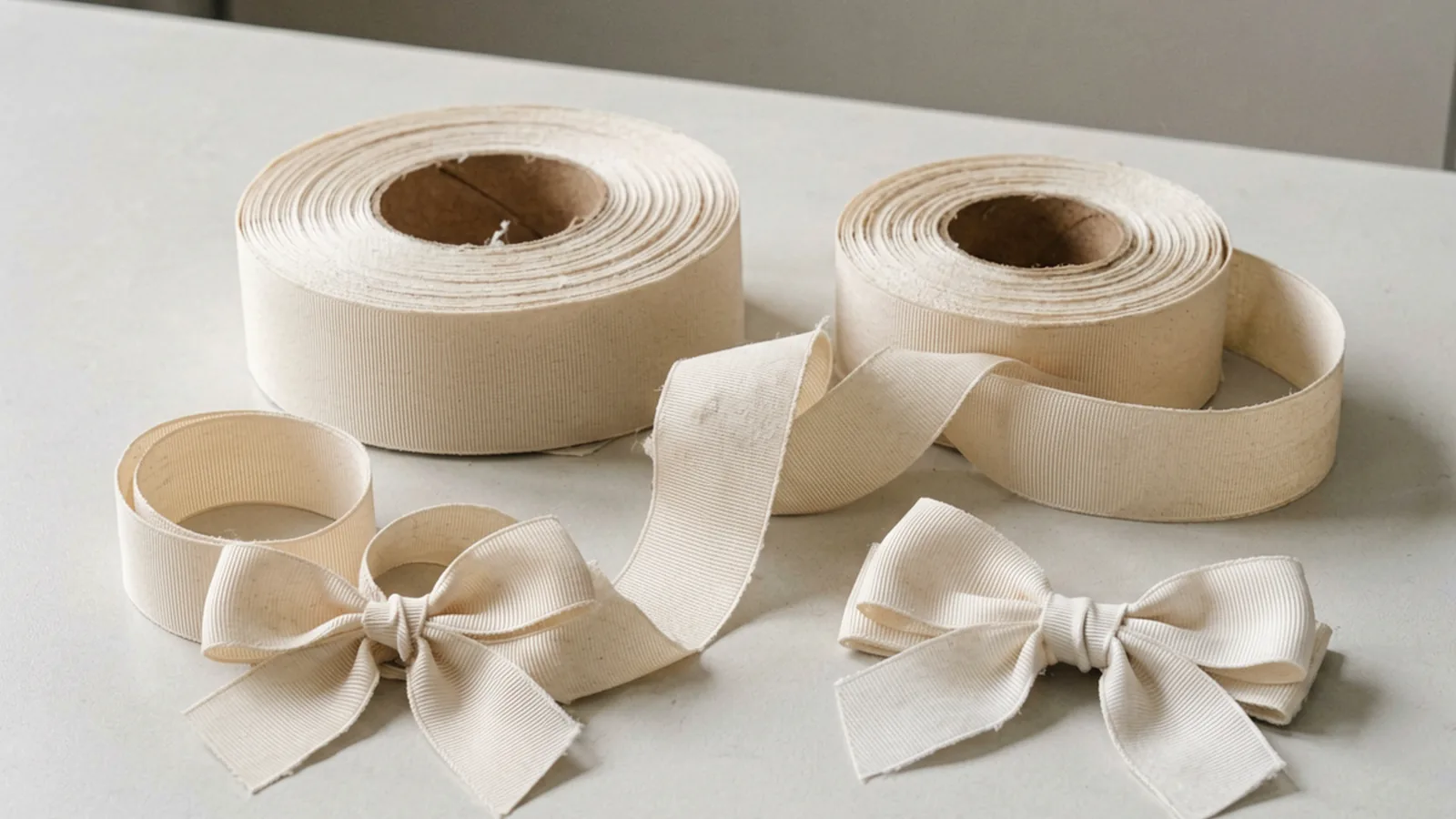
Minimums follow the production route rather than the roll count, so establishing the route settles most of the quantity question before a supplier replies.
| Route | Where it fits | Trade-off | Threshold to confirm |
|---|---|---|---|
| Stock shades and widths | A house colour close to an inventory shade | Fastest route, limited to what is held | Plain stock ribbon starts at 1,500 yards from existing colors and widths |
| Custom dyed shade or width | Brand colour matching or a non-standard width | Adds a dye lot approval step | Confirmed by quote request rather than a fixed figure |
| Printed grosgrain | Logo or repeating artwork on the rib face | Artwork approval sits ahead of production | Printed ribbon starts at 3,000 yards per design |
| Formed pieces | Rosettes, sashes, and finished items | Counted individually per style | Ready-made bows and award ribbons start at 1,000 pieces |
Standard production runs 15 to 20 business days once specifications are approved, and dye lot approval, artwork sign-off, and sampling sit outside that window. Folding them into the production window is the usual risk on a seasonal date. Development work on a non-standard rib or width runs through OEM and ODM ribbon development rather than a catalogue order, and the sampling step is where the cost of that choice becomes visible.
Quality and communication red flags
Four signals are worth treating as stop points on a roll program, because each one costs more to discover after delivery than to check before it.
- Yards per roll quoted as “approximately”. An approximate roll length cannot be planned against. Ask for the figure the supplier is willing to hold, and check the first cartons against it before releasing the balance.
- Rib appearance described but never sampled. Rib density and squareness are visible only in the hand. Request two cut lengths from different rolls and compare them tied; a supplier who cannot produce that is not holding stock of your specification.
- No lot marking on the sample. An unmarked sample cannot be matched at reorder, which turns every shade question into an argument. Ask for the batch reference with the sample and keep the retained piece.
- A certificate offered instead of an inspection record. The certificate describes a quality system; the record describes your goods. Ask for the record from a comparable run, and note where in the process the check happens.
For gift and retail programs where several rolls feed one packing line, these four sit naturally inside gift and retail packaging ribbon solutions, where sampling and approval are handled as a record rather than an exchange of assurances.
How to move from shortlist to RFQ
A roll program needs one input that other ribbon programs do not: the cutting plan. Without it a supplier quotes a roll length that suits their winding, and the waste lands on your side. The risk of leaving it out is a price that looks competitive per yard and is expensive per finished piece.
- Width and rib specification. Give the width and a reference sample for the rib. Description alone leaves the density open, and density is what the buyer actually feels.
- Cutting plan and yards per roll. State the lengths you cut and how many pieces per roll you expect. Ask the supplier to confirm the roll length that minimises the offcut for that plan.
- Shade reference. Send a physical swatch or an agreed standard. A photograph is not a dye reference, and matching to a screen colour produces a dispute rather than a shade.
- Edge finish and core. Name the edge type and the core diameter. Both affect handling on the line, and the core is often the cheapest thing to get wrong.
- Quantity, release pattern, and dates. Give the annual volume, the first release, and the shelf date, then work backward through delivery, production, and approval rather than asking how quickly the factory can run.
Ask for one pre-production sample against the approved specification, with its lot marking intact, and approve it in writing. That signed piece is what a later inspection is measured against, and on a roll program it settles the two arguments that actually occur: roll length and rib consistency between rolls.
Source check: ISO 2859-1 sampling inspection standard.
In conclusion
Final buyer checks before moving forward: Run the four rows across every wholesale grosgrain ribbon supplier still in contention: the yards per roll they will hold, rib consistency between rolls in one lot, the core and winding specification, and the written minimum for your width. A supplier who covers three with evidence is a better risk than one who covers four with assurances.
Quote-ready inputs to prepare: Have the width, the rib reference sample, the cutting plan, the shade standard, and the release pattern written down before the request goes out. Grosgrain ribbon bought by the roll is priced against that set, not against a description. Quotes built on those five can be compared per finished piece rather than per yard, which is the comparison that decides the cost.
Supplier or sample action to take next: Send the specification to two or three suppliers and ask each for two cut lengths from different rolls, with the lot marking intact. Compare them tied, verify the rib against your reference, approve in writing, and keep the signed piece for the reorder.
Grosgrain ribbon by the roll FAQ
What should buyers confirm before ordering Wholesale Grosgrain Ribbon By The Roll?
Confirm the width, the rib specification against a reference sample, the edge finish, the yards per roll, and the core diameter. Then confirm the shade against a physical standard. Roll length and rib consistency are the two that a per-yard price hides, so settle both before comparing quotes.
How should buyers compare MOQ, lead time, and quote terms?
Compare by production route rather than as one figure. Printed ribbon, for example, starts at 3,000 yards per design, while stock shades and formed pieces carry separate thresholds. Production then runs 15 to 20 business days after approval, with dye lot approval and sampling counted outside that window.
What sample, quality, or supplier checks reduce risk?
Ask for two cut lengths from different rolls in the same lot and compare them tied, not flat. Check the rib is square to the edge, handle a length to see how the cut behaves, and keep the approved piece with its lot marking so the reorder has a reference.
RFQ handoff: Send Specs for Review.
Keep exploring
Recommended buyer guides
 Velvet Ribbon Wholesale Checklist: MOQ, Finish, and Supplier Questions
Evaluate velvet ribbon wholesale options: MOQ, setup fees, unit cost, and packing. Narrow the list before requesting samples…
Explore guide
Velvet Ribbon Wholesale Checklist: MOQ, Finish, and Supplier Questions
Evaluate velvet ribbon wholesale options: MOQ, setup fees, unit cost, and packing. Narrow the list before requesting samples…
Explore guide
 Wholesale Ribbon By The Roll: Roll length and inventory planning
Evaluate Wholesale Ribbon By The Roll options: factory capability, QC proof, lead time, and reorder reliability. Narrow the…
Explore guide
Wholesale Ribbon By The Roll: Roll length and inventory planning
Evaluate Wholesale Ribbon By The Roll options: factory capability, QC proof, lead time, and reorder reliability. Narrow the…
Explore guide
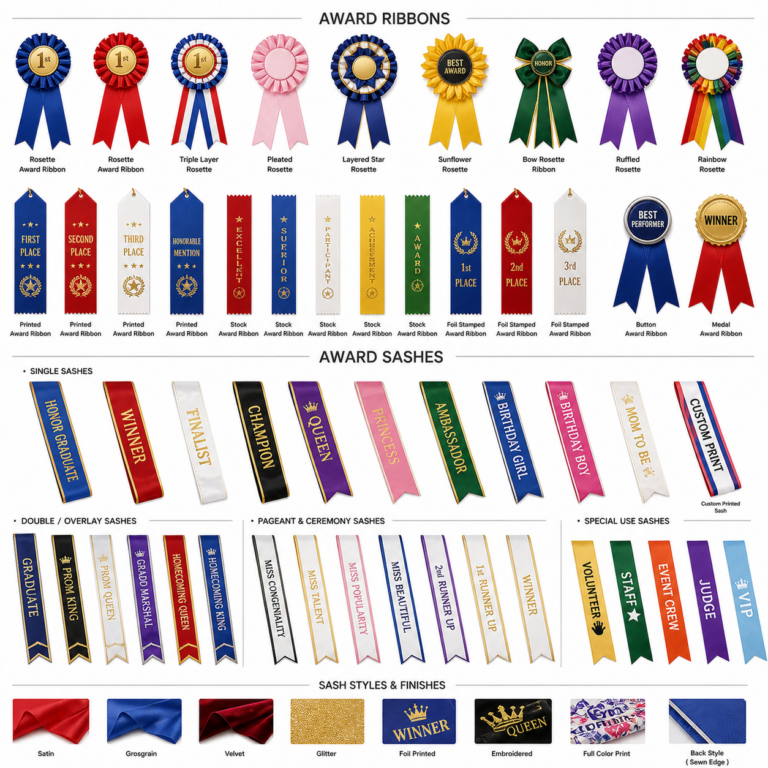 Award Ribbons Wholesale: Bulk award ribbon supplier checks
Shortlist Award Ribbons Wholesale suppliers by factory capability, QC proof, lead time, and reorder reliability. See which options…
Explore guide
Award Ribbons Wholesale: Bulk award ribbon supplier checks
Shortlist Award Ribbons Wholesale suppliers by factory capability, QC proof, lead time, and reorder reliability. See which options…
Explore guide
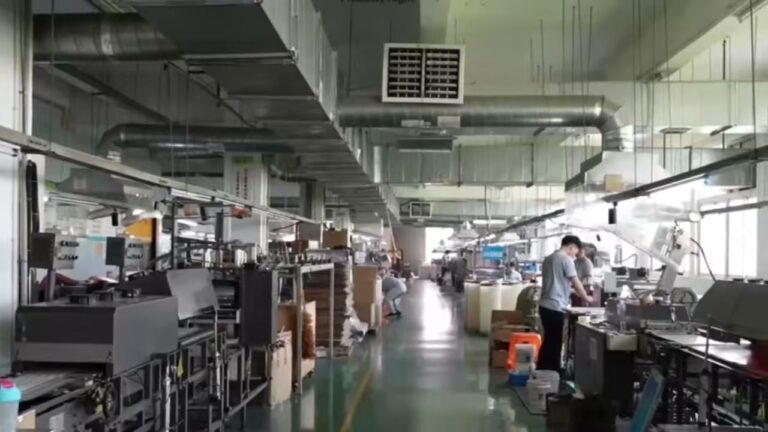 Wholesale Ribbon Manufacturers: Factory vs Trading Company Checklist
Evaluate Wholesale Ribbon Manufacturers options: factory capability, QC proof, lead time, and reorder reliability. Narrow the list before…
Explore guide
Wholesale Ribbon Manufacturers: Factory vs Trading Company Checklist
Evaluate Wholesale Ribbon Manufacturers options: factory capability, QC proof, lead time, and reorder reliability. Narrow the list before…
Explore guide
Leave a comment
Share a sourcing question or feedback on this guide. The Lude team reviews submissions before following up.