


Ribbon Quote: How to request a ribbon quote
Before you request a ribbon quote, six inputs decide the price: construction, width, colour route, print, finished form, and release pattern. Here is what to send.
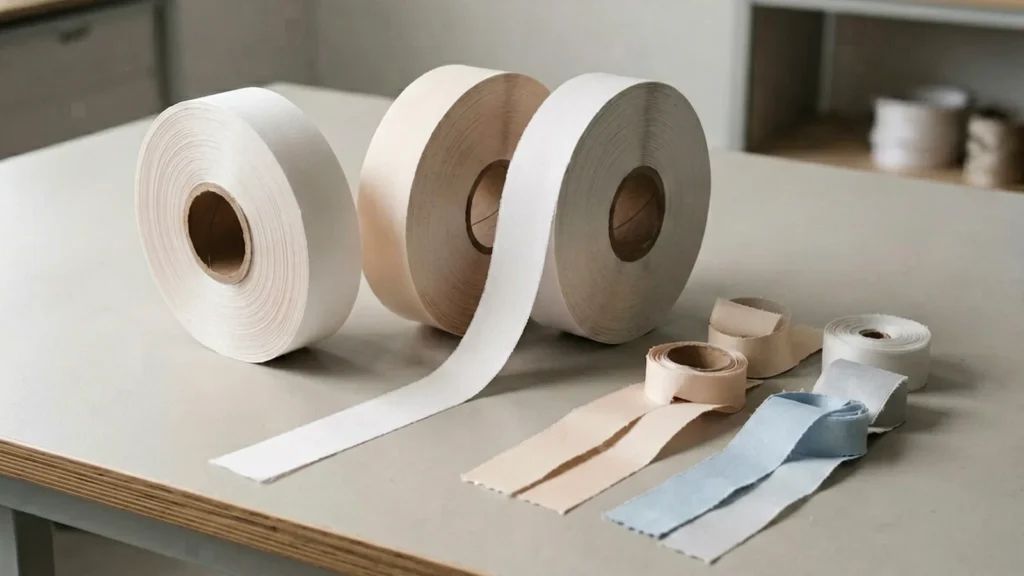
Before you can understand price drivers, MOQ impact, hidden costs, and quote assumptions before ordering, the specification has to say enough for a supplier to price the same job you have in mind.
A ribbon quote needs width, length, material, color reference, and finish. Leaving out any one of them is what makes two quotes incomparable.
Direct answer: For the packaging specification, buyers should understand price drivers, MOQ impact, hidden costs, and quote assumptions before ordering.
What drives ribbon quote cost, MOQ, and quote differences
A ribbon price is built from six inputs, and a buyer who supplies all six gets numbers that can be compared. Supply three and each supplier fills the rest differently, which is where most of the spread between quotes comes from. The risk is not the spread itself but the assumption hidden under the lowest number.
| Cost input | What it changes, and the risk if omitted | What to send with the request |
|---|---|---|
| Material and construction | Yarn cost and how much the loom produces per hour | The construction name plus a swatch |
| Width | Yardage consumed per finished piece, so it moves the unit price more than negotiation does | The exact width and its tolerance |
| Colour route | Whether a dye lot approval sits in the schedule and in the cost | Stock shade or brand standard, stated plainly |
| Print or finish | Setup per design plus an artwork approval step | The file, or a note that artwork is pending |
| Form | Ribbon on the roll, or cut and formed into bows and rosettes | The finished item, not just the material |
| Quantity and release | Which minimum applies and whether setup is spread | Annual volume, first release, reorder rhythm |
Minimums follow those inputs rather than the buyer. Plain stock ribbon starts at 1,500 yards from existing colors and widths, printed ribbon starts at 3,000 yards per design, and formed pieces are counted individually. Standard production runs 15 to 20 business days once specifications are approved, and quality inspection sits inside that window while approvals do not.
MOQ and quantity planning
Four quantity signals are worth treating as stop points, because each one means the quote in front of you is answering a different question than the one you asked. Each also says something about supplier capability: a factory that quotes minimums by route has thought about how the goods are actually made, and quality control is easier to discuss with one that has.
| Warning sign | Why it matters | How to check it | Risk if it goes unaddressed |
|---|---|---|---|
| A single minimum quoted for the whole program | Minimums follow the production route, not the order | Ask for the figure per route: stock, dyed, printed, formed | The cheapest line item carries a minimum you cannot meet |
| Quantity quoted in yards for a formed item | Bows and rosettes are counted per piece | Ask which unit the minimum is stated in | A quantity mismatch that surfaces at order confirmation |
| No mention of setup cost on a printed design | Setup is per design and does not scale with quantity | Ask what the setup is and whether it repeats on reorder | A second order priced as if it were the first |
| Volume discount offered without a release plan | Annual volume and a single shipment are different jobs | State the release pattern and ask for the price against it | Storage or cash tied up in stock you cannot move |
Where artwork is involved the arithmetic changes again, because each design is its own program rather than a version of one. See custom printed ribbon for how the per-design threshold works before deciding how many variants the range really needs.
Lead time, sampling, and shipping assumptions
Most missed dates come from steps that sit outside the production window and were never booked. The checks below turn each of them into something with a date attached.
| Check point | What goes wrong | How to verify it | Approval standard to agree |
|---|---|---|---|
| Production window | Approval time is folded into it | Ask when the 15 to 20 business days actually start | Specifications approved in writing, with the date |
| Dye lot approval | A custom shade waits on a lot that has not been booked | Ask which lot and when it runs | One signed shade standard held by both sides |
| Sampling and courier | Sample transit is assumed to be instant | Ask how the sample ships and how long it takes | Sample dates listed separately in the schedule |
| Inspection point | Quality control happens after the goods leave | Ask where inspection sits in the process | An inspection record from a comparable run |
Specialty faces add their own step, because a coated or foiled surface has to be judged after handling rather than flat. Where a programme uses metallic ribbon, add a handled sample to the schedule rather than treating it as the same approval as a plain shade.
How to compare supplier quotes fairly
Two quotes are only comparable when they describe the same job. The questions below expose the assumptions that make a low number look attractive and an accurate one look expensive. Verify each answer against a returned sample rather than against the email; the risk of comparing on price alone is choosing a supplier who quoted a different job.
- What width are you quoting, and measured how? A quote against a slightly narrower tape looks cheaper per yard and costs the same per finished piece. Ask for the width and the measurement method together, then measure the sample.
- Is the colour a stock shade or a dyed match? A supplier quoting a stock approximation against a competitor quoting a dyed match is not quoting the same product. Ask which one the number covers.
- Does the price include setup, and does setup repeat? Setup on a printed design is a one-off on the first run and sometimes a repeat on reorders. The difference decides which supplier is cheaper over a year.
- What is included in the sample stage? Free samples, charged samples, and charged-then-credited samples all appear as the same line in an email. Ask which one applies.
- Which incoterm and packing does the price assume? Formed bows take volume rather than weight, so freight can move a comparison more than the unit price does.
For gift and retail programs where several suppliers quote the same range, running these five questions against every quote takes an hour and usually reorders the list. The approval and packing assumptions behind them are documented in gift and retail packaging ribbon solutions.
RFQ checklist before contacting a supplier
Send these five items together and the quotes come back comparable. Send the quantity alone and they come back as guesses. Each line below pairs the requirement with who returns the evidence for it and the risk of leaving it unevidenced.
| Requirement | Who provides the evidence | Risk if it is not evidenced | Verification check |
|---|---|---|---|
| Construction and width, with a swatch | Supplier returns a cut sample | Yardage and price both drift | Measure across the ribbon yourself |
| Shade reference | Supplier returns a dyed sample with its lot marking | No reference to match at reorder | Compare against your signed standard |
| Artwork, or a note that it is pending | Supplier prints on the actual ribbon face | Detail closes up at the production width | Review the printed sample, not a proof sheet |
| Finished form and packing | Supplier packs one sample carton | Freight assumptions differ between quotes | Inspect the packed sample |
| Volume, release pattern, and the date | Supplier returns a dated schedule | Approvals eat the production window | Check when approvals close and production opens |
A supplier who returns all five has answered the quality question as well as the price one. Ask for one pre-production sample against the approved specification and approve it in writing before any deposit, because that signed piece is what an inspection is later measured against and what settles a dispute without stopping production.
Source check: ISO 2859-1 sampling inspection standard; How to Choose a Packaging Partner for Better Quality, Cost Cont…; Procurement of Printer Colored Ribbon and Custom Laminates.
In conclusion
Final buyer checks before moving forward: Before accepting any ribbon quote, check that every supplier quoted the same width measured the same way, the same colour route, the same finished form, and the same packing. A quote that is cheaper on one of those four is not cheaper on the job.
Quote-ready inputs to prepare: Have the swatch, the width and tolerance, the shade standard, the artwork status, and the release pattern ready before you contact anyone. Suppliers price what they are given; a request built on a quantity alone produces a number built on assumptions.
Supplier or sample action to take next: Send the five inputs to two or three suppliers and ask each for a pre-production sample with its lot marking intact. Measure what comes back, verify the shade against your standard, approve in writing, and keep the piece so the reorder has a physical reference rather than an email thread.
Ribbon quote FAQ
What should buyers confirm before ordering Ribbon Quote?
Confirm the construction with a swatch, the exact width and tolerance, the colour route, whether artwork is involved, and whether you are buying material or finished pieces. Those five decide the price far more than the quantity does.
How should buyers compare MOQ, lead time, and quote terms?
Compare by production route rather than as one number. Plain stock ribbon starts at 1,500 yards from existing colors and widths, printed ribbon starts at 3,000 yards per design, and formed pieces are counted individually. Production then runs 15 to 20 business days after approval, with dye lot approval and sampling outside that window.
What sample, quality, or supplier checks reduce risk?
Measure the returned sample rather than reading the specification, compare the dyed sample against your signed standard, and ask for an inspection record from a comparable run instead of a certificate. Keep the approved piece with its lot marking for the reorder.
RFQ handoff: Send Specs for Review.
Keep exploring
Recommended buyer guides
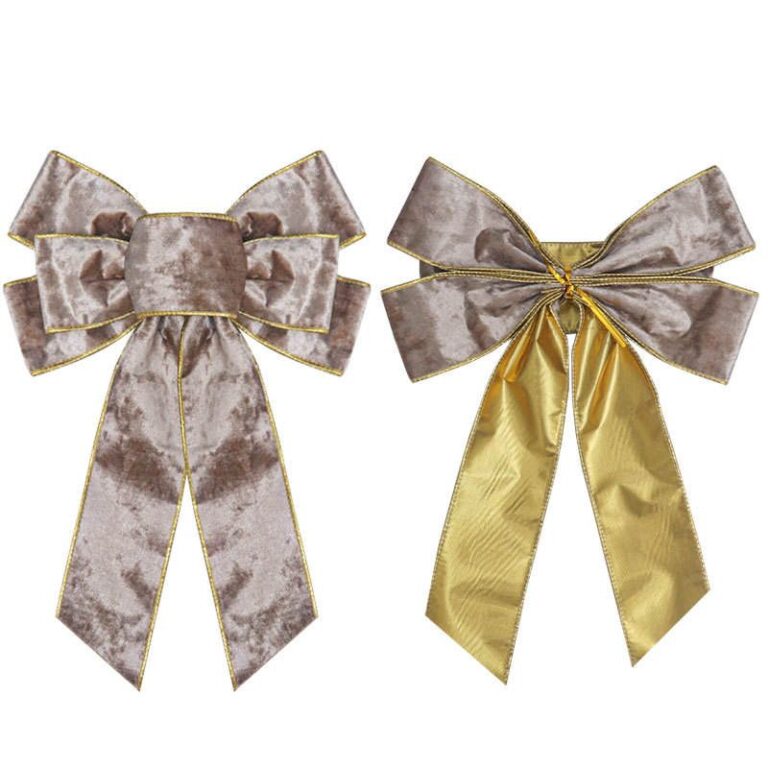 Pre-Tied Bows for Retail Packaging: When They Reduce Labor and Rework
See when pre-tied bows reduce retail packaging labor, improve consistency, and simplify bulk packing, SKU planning, and reorders
Explore guide
Pre-Tied Bows for Retail Packaging: When They Reduce Labor and Rework
See when pre-tied bows reduce retail packaging labor, improve consistency, and simplify bulk packing, SKU planning, and reorders
Explore guide
 Velvet Ribbon Wholesale Checklist: MOQ, Finish, and Supplier Questions
Evaluate velvet ribbon wholesale options: MOQ, setup fees, unit cost, and packing. Narrow the list before requesting samples…
Explore guide
Velvet Ribbon Wholesale Checklist: MOQ, Finish, and Supplier Questions
Evaluate velvet ribbon wholesale options: MOQ, setup fees, unit cost, and packing. Narrow the list before requesting samples…
Explore guide
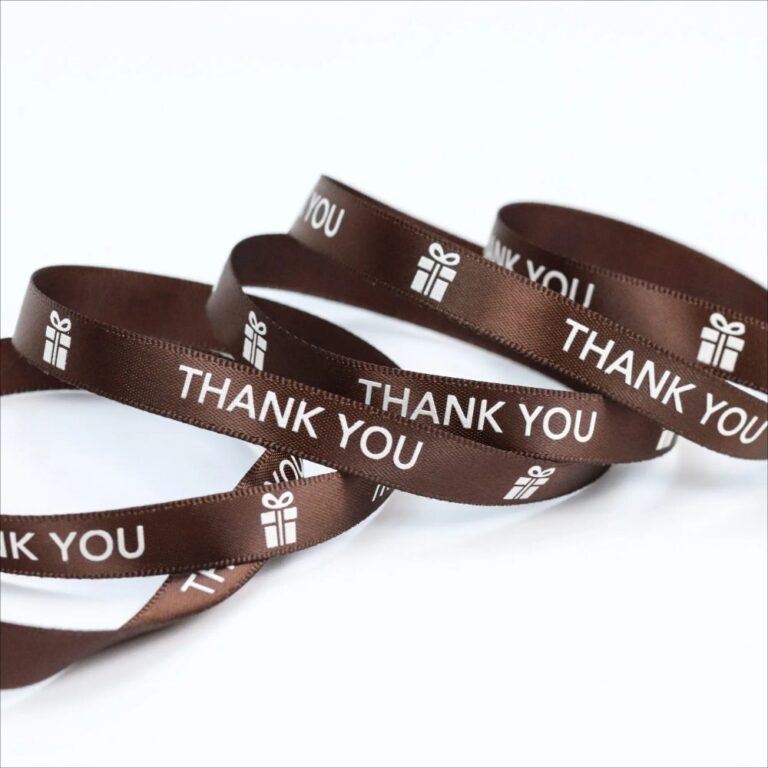 Wholesale Custom Ribbon with Logo: Specs, Roll Length, and RFQ Checks
Step-by-step: Custom Ribbon With Logo. Check artwork files, print method, color target, and sample approval to avoid delays,…
Explore guide
Wholesale Custom Ribbon with Logo: Specs, Roll Length, and RFQ Checks
Step-by-step: Custom Ribbon With Logo. Check artwork files, print method, color target, and sample approval to avoid delays,…
Explore guide
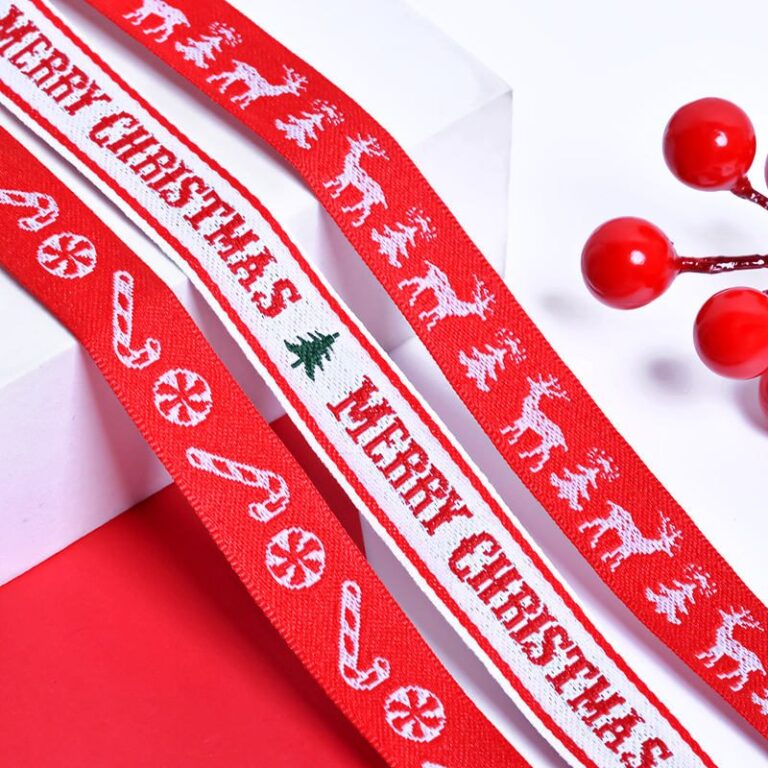 Wholesale Ribbon By The Roll: Roll length and inventory planning
Evaluate Wholesale Ribbon By The Roll options: factory capability, QC proof, lead time, and reorder reliability. Narrow the…
Explore guide
Wholesale Ribbon By The Roll: Roll length and inventory planning
Evaluate Wholesale Ribbon By The Roll options: factory capability, QC proof, lead time, and reorder reliability. Narrow the…
Explore guide
Leave a comment
Share a sourcing question or feedback on this guide. The Lude team reviews submissions before following up.