


Quality Color Control: Supplier Shortlist Scorecard
Quality Color Control — the checks that decide whether a quote, sample, or shipment can be approved
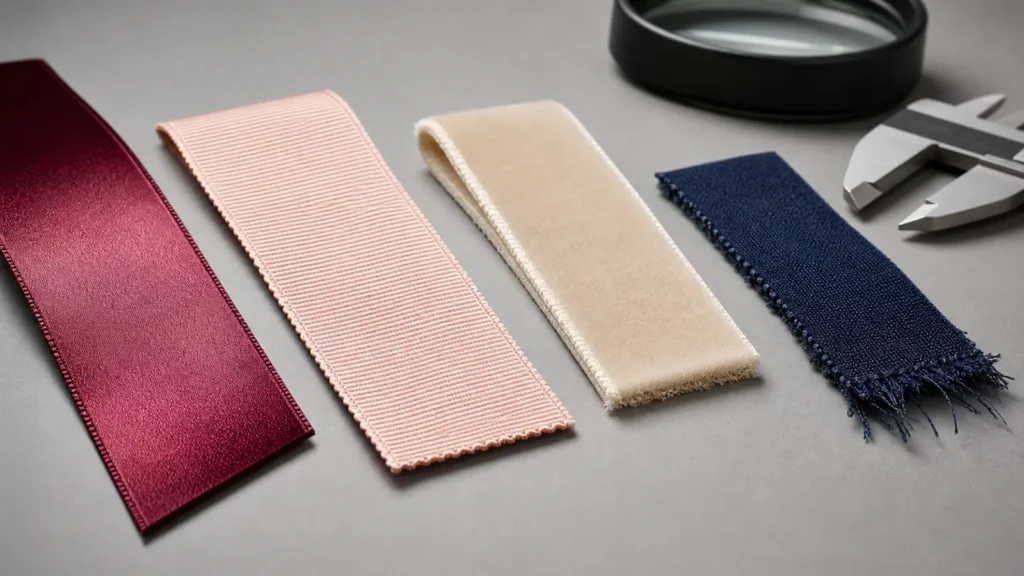
The sourcing record for quality color control: shortlist scorecard is incomplete until it supports this Shortlist Quality Color Control: Supplier Shortlist Scorecard suppliers using proof, capability, quality, MOQ, and delivery criteria.
Score suppliers on whether they can state a tolerance and measure against it, not on whether they promise a perfect match.
Direct answer: For quality color control: shortlist scorecard, buyers should shortlist Quality Color Control: Supplier Shortlist Scorecard suppliers using proof, capability, quality, MOQ, and delivery criteria.
Define the Buyer Requirement
Begin the supplier comparison with a measurable ribbon color-control brief. Record the fiber and weave, width, target color standard, dye-lot tolerance, lighting condition, finish and hand feel, edge requirement, print or foil interaction, batch quantity, sample stage, and repeat-order expectation. Each row should identify the instrument, retained sample, or controlled visual check used to approve that requirement.
| Requirement | Factory control | Evidence to verify | Order risk | RFQ follow-up |
|---|---|---|---|---|
| Color and dye-lot control | Supplier maintains dye-lot records and color standard references. | Request dye-lot certificates and compare against approved color standard. | Color variation across batches leads to rejected goods. | Ask for dye-lot samples and color consistency report. |
| Sample approval | Supplier submits pre-production samples for buyer sign-off. | Review samples against approved color and material specs. | Unapproved samples cause production delays and rework. | Approve samples in writing before bulk order. |
| Material / substrate | Supplier verifies material composition and source. | Request material data sheet and test certificate. | Substandard material affects durability and appearance. | Request material sample and spec sheet. |
| Width or size tolerance | Supplier checks width and size against specified tolerance. | Measure samples with calibrated tools; review QC records. | Out-of-tolerance sizes cause fit issues in packaging. | Ask for measurement report and tolerance limits. |
| Finish or color control | Supplier applies finish and color control during production. | Inspect finish under standard lighting; compare to master. | Inconsistent finish leads to visual defects and returns. | Request finish samples and QC inspection plan. |
Read the rows as one approval sequence for this order. Start with color and dye-lot control; use the risk and buyer-action columns to decide whether its evidence is sufficient. Verify it with the inspection method and approval evidence recorded in the table.
Keep the supplier response, master color standard, approved ribbon sample, dye-lot record, measurement method, tolerance, inspection result, roll identification, and approval owner under the same revision. If a batch shifts shade, width, hand feel, luster, edge condition, or print response, quarantine it until the supplier provides a documented disposition. Carry the signed control matrix into the purchase order, lot release, packing list, shade-band archive, and repeat-order reference.
Compare the Available Routes
| Option | Best fit | Trade-off | Risk to avoid | Verification | Follow-up |
|---|---|---|---|---|---|
| Current specification | Approved color standard with documented tolerance | May limit supplier pool to those matching exact dye lots | Color drift across batches if tolerance not enforced | Request lab dip and AATCC gray scale rating | Confirm tolerance in RFQ and sample approval |
| Alternative specification | When current spec is unavailable or cost-prohibitive | Requires re-approval and may shift shade slightly | Accepting a near-match without visual check | Compare against physical standard under buyer-approved viewing conditions | Document deviation and get sign-off |
| Custom option | Brand-specific color not in supplier's standard range | Longer lead time and higher setup cost | Custom color may not repeat consistently | Require dye lot continuity and production sample | Ask for custom color chip and reorder guarantee |
| Safer fallback | When color accuracy is critical and time is short | May limit design options or use standard stock | Fallback may not match brand identity | Check stock availability and color fastness | Order pre-production sample for approval |
For current specification, a poor decision can mean color drift across batches if tolerance not enforced. Request lab dip and AATCC gray scale rating.
For ribbon products, preserve the current specification decision under one revision number: keep the supplier response, marked sample, approved specification, quotation, and approval owner together. If the evidence conflicts with the approved record, hold the quote, sample, or production release until the deviation is explained in writing. Once the buyer and designated technical authority have accepted the evidence, carry the signed Compare the Available Routes record into the purchase order, production handoff, shipment release, and later reorder review so every team works from the same baseline.
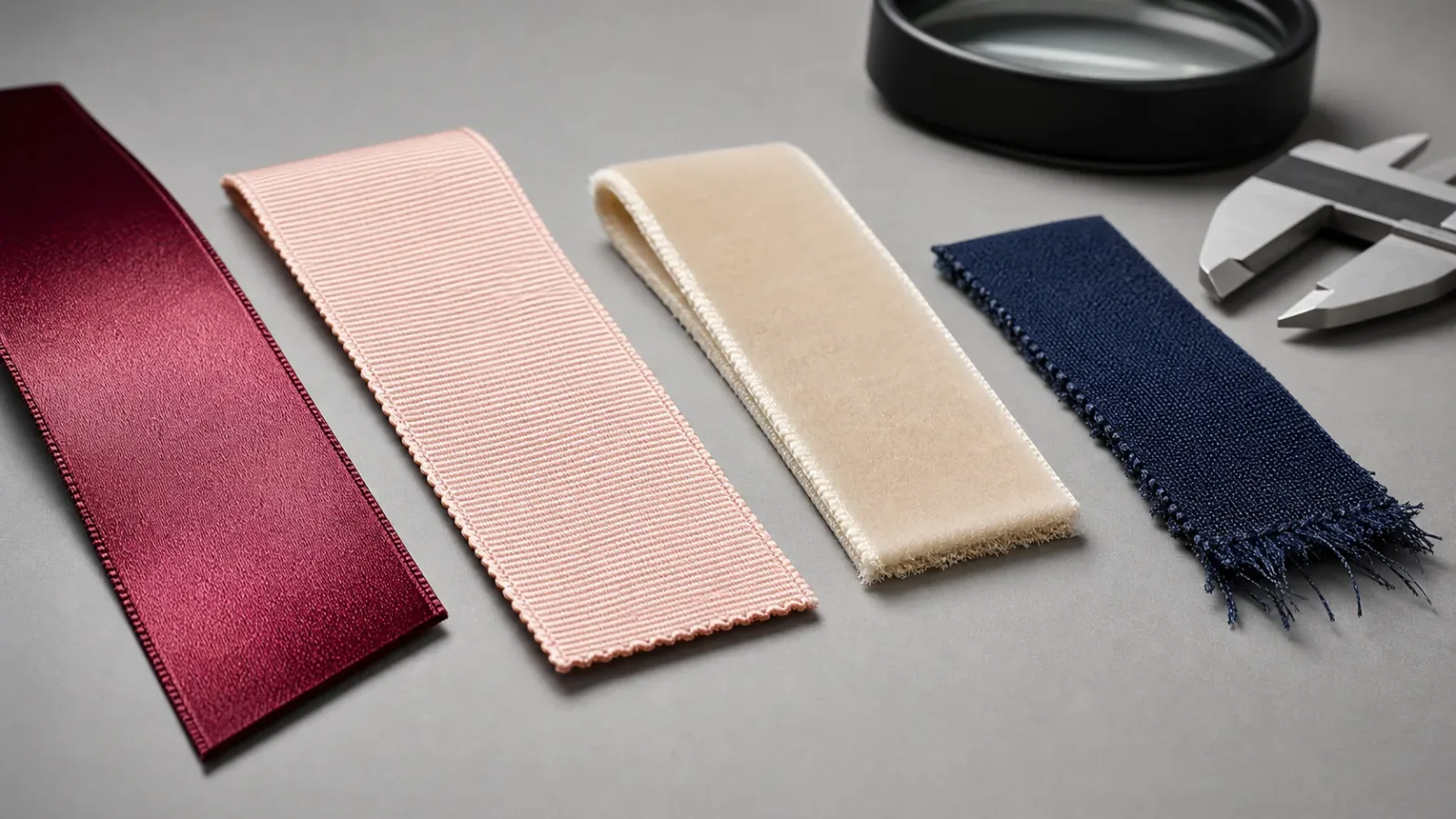
Review the Required Proof
- Supplier capability: Verify the supplier runs a three-stage inspection protocol for all bulk gift and retail packaging ribbon solutions orders. Supplier shares inspection records and sample-room check data. Supplier only offers final inspection without in-process checks. Request inspection protocol and recent batch records.
- MOQ or order quantity: Confirm minimum order per material, print method, width, packing, and schedule. Supplier provides clear minimum order breakdown and negotiable terms for custom programs. minimum order is vague or changes after sampling. Get written minimum order for your exact ribbon specs.
- Quality control: Check if supplier uses color measurement tools and visual standards. Supplier uses spectrophotometer and maintains color tolerance logs. Color approval relies only on visual match without documented tolerance. Ask for color measurement reports and tolerance limits.
- Verification method: Confirm how the supplier will verify color and quality before shipment. Supplier offers pre-shipment inspection with photo or video evidence. Supplier expects buyer to accept without independent check. Arrange third-party inspection or sample approval.
- The risk is that Identify who approves the final sample and what happens if color fails. Supplier has clear rework and re-approval process. No defined process for color rejection or re-run. Document approval owner and rework procedure.
Build the Decision Asset
Hold the quality color control review when evidence for Supplier cannot show a color standard or master sample for your ribbon shade. is unresolved; record the discrepancy, supplier owner, and release condition before approval.
- Supplier cannot show a color standard or master sample for your ribbon shade. Without a fixed standard, bulk dye lots drift and you approve a color that won't repeat. Ask for the master sample and written color tolerance before you shortlist. Master sample, spectrophotometer data, or a signed color standard sheet. File the master sample and tolerance with the RFQ.
- Supplier has no in-house QC check for dye lot consistency. Color variation between rolls or reorders becomes your problem at packing time. Require a lot-to-lot comparison report before bulk production starts. Lot-to-lot color comparison report or QC checklist. Add this report to the approval gate.
- Supplier asks you to approve a lab dip without a production strike-off. Lab dips can look right but fail on the actual ribbon weave or finish. Insist on a production strike-off on the exact material and width. Production strike-off on the specified ribbon substrate. Compare strike-off to master sample and approve in writing.
- Supplier cannot provide a reorder color match guarantee. Your next order may arrive a different shade, breaking your packaging consistency. Ask how they lock color for reorders and what tolerance they commit to. Written reorder color match policy or tolerance spec. Confirm the policy and keep it with your approved sample.
Supplier evidence to request
Before you shortlist a ribbon supplier, ask for proof they can hold a color standard. A master sample, spectrophotometer data, or a signed tolerance sheet shows they measure color, not just eyeball it. Without this, you risk approving a shade that drifts between lots. Make this proof part of your RFQ checklist.
Sample approval evidence
Sample approval is your gate. Require a production strike-off on the exact ribbon material, not just a lab dip. Compare it to your master sample under the same light. Sign off only when the color matches within your written tolerance. This step prevents bulk production from starting with an unapproved shade.
Reorder control records
Color control doesn't end at first order. Ask your supplier how they match color on reorders and what tolerance they guarantee. A written reorder policy protects your packaging consistency. Keep your approved master sample and tolerance on file, and reference them in every reorder PO. This turns color control into a repeatable process.
Prepare Comparable RFQ Inputs
- Can you provide a production strike-off on the exact ribbon material and color before bulk? Verifies the supplier can match your color standard on the actual substrate, not just a digital proof. Supplier commits to a physical sample for approval before production. Approving a digital proof alone risks bulk color mismatch. Request the strike-off and set an approval deadline.
- What color measurement method do you use for pass/fail decisions? Confirms they use objective tools like spectrophotometers, not just visual checks. They cite a specific instrument and tolerance standard. Visual-only checks lead to inconsistent color across batches. Ask for their QC report format and tolerance limits.
- How do you handle color matching for reorders if the original dye lot is exhausted? Ensures they have a process to maintain color consistency over time. They describe a re-dyeing or re-matching protocol with documented history. Reorders may drift from the original approved color. Request their reorder color-matching procedure in writing.
- Will you provide a color consistency report for each production batch? Gives you documented evidence to verify color control, not just promises. They offer a report with measured values for each batch. Without reports, you can't prove color compliance if issues arise. Add the report requirement to your quote request and purchase order.
For quality color control, use OEM and ODM ribbon development to align the applicable specification, proof record, supplier responsibility, and quote request handoff before comparing quotes.
In conclusion
For quality quality and color control: supplier shortlist scorecard, the next procurement action is a written quote request and sample approval record, not only a preferred style or unit price. Confirm the specification, minimum order assumption, artwork version, supplier capability, sample approval method, QC checkpoint, approval risk, and quote follow-up before bulk production.
Frequently Asked Questions
How should a b2b buyer compare supplier options?
Compare suppliers by turning your color specification into a scored checklist. For each candidate, verify they can match your target color across materials and print methods, and ask for a production strike-off on your exact ribbon width and finish. Confirm minimum order and lead time in the quote request, and check how they handle color variation across batches.
Include a risk column for each supplier: their experience with your color type, their QC process, and how they document color approvals. Shortlist only those who can provide measurable proof, not just promises.
Which supplier proof should buyers request for quality color control?
Request a production strike-off on the exact ribbon material, width, and finish you plan to order. Ask for a spectrophotometer reading or a color standard they can match, and have them document their tolerance range. Verify they can reproduce the color consistently across multiple production runs.
Also ask for a sample of a previous order that matches your color, and check if they have a process for approving color before bulk production. Confirm their QC steps and how they handle color deviations. Ask the supplier to confirm factory capability and who owns follow-up.
What should buyers lock before approving supplier shortlist scorecard?
Before approving a supplier shortlist scorecard, lock the exact color specification, including Pantone or custom reference, and the acceptable tolerance. Define the sample approval process: you must approve a production strike-off before bulk manufacturing. Confirm minimum order and lead time in the quote request, and include a clause for color consistency across reorders.
Also verify the supplier’s QC documentation and how they handle color complaints. Ensure the scorecard includes a risk assessment for color variation and a clear follow-up plan for sample approval.
quote request handoff: Send Specs for Review.
Keep exploring
Recommended buyer guides
 Velvet Ribbon Wholesale Checklist: MOQ, Finish, and Supplier Questions
Evaluate velvet ribbon wholesale options: MOQ, setup fees, unit cost, and packing. Narrow the list before requesting samples…
Explore guide
Velvet Ribbon Wholesale Checklist: MOQ, Finish, and Supplier Questions
Evaluate velvet ribbon wholesale options: MOQ, setup fees, unit cost, and packing. Narrow the list before requesting samples…
Explore guide
 Wholesale Ribbon By The Roll: Roll length and inventory planning
Evaluate Wholesale Ribbon By The Roll options: factory capability, QC proof, lead time, and reorder reliability. Narrow the…
Explore guide
Wholesale Ribbon By The Roll: Roll length and inventory planning
Evaluate Wholesale Ribbon By The Roll options: factory capability, QC proof, lead time, and reorder reliability. Narrow the…
Explore guide
 Award Ribbons Wholesale: Bulk award ribbon supplier checks
Shortlist Award Ribbons Wholesale suppliers by factory capability, QC proof, lead time, and reorder reliability. See which options…
Explore guide
Award Ribbons Wholesale: Bulk award ribbon supplier checks
Shortlist Award Ribbons Wholesale suppliers by factory capability, QC proof, lead time, and reorder reliability. See which options…
Explore guide
 Wholesale Ribbon Manufacturers: Factory vs Trading Company Checklist
Evaluate Wholesale Ribbon Manufacturers options: factory capability, QC proof, lead time, and reorder reliability. Narrow the list before…
Explore guide
Wholesale Ribbon Manufacturers: Factory vs Trading Company Checklist
Evaluate Wholesale Ribbon Manufacturers options: factory capability, QC proof, lead time, and reorder reliability. Narrow the list before…
Explore guide
Leave a comment
Share a sourcing question or feedback on this guide. The Lude team reviews submissions before following up.