


Perfume Box Ribbon Supplier: Sample, Finish, and RFQ Scorecard
Which Perfume Box Ribbon Supplier options deserve an RFQ? Compare factory capability, QC proof, lead time, and reorder reliability to find the right

Choosing a perfume box ribbon supplier takes more than a quote; buyers need to know who owns samples, design changes, inspection, lead time, and reorder consistency.
When choosing a perfume box ribbon supplier, a supplier shortlist should show sample control, communication path, QC responsibility, and repeat-order records before price comparison.
The article turns supplier selection into sample, QC, lead-time, and RFQ questions a buyer can use.
How buyers should evaluate perfume box ribbon supplier
A supplier score should reflect the evidence returned for the actual perfume-box ribbon, not the number of materials in a catalog. Start with the controls that protect presentation, pack-out, and repeat orders.
| Option | Best fit | Trade-off | Risk to avoid | Verification | Follow-up |
|---|---|---|---|---|---|
| Strong sample-control evidence | Shortlisting a supplier for a new construction, color, print, or box-integration requirement. | Physical approval adds work before bulk production but creates a clear reference. | The supplier prices one construction and samples another, or bulk output has no signed target. | Review the sample file, approval owner, revision history, and retained physical reference. | Ask how the approved sample is identified in production and on a reorder. |
| Strong production and QC evidence | Orders where color, width, edge, finish, placement, or pack-out consistency affects the luxury presentation. | Useful evidence must be specific to the defect risk; a generic inspection form is not enough. | Inspection confirms quantity but misses the ribbon condition that matters on the box. | Request the inspection points, acceptance method, defect response, and evidence supplied before shipment. | Map each high-risk feature to an owner and a record. |
| Strong communication and change control | Programs with artwork revisions, multiple SKUs, staged approvals, or repeat orders. | More disciplined change control may require clearer buyer ownership and file management. | A salesperson agrees to a change that never reaches sampling, production, packing, or QC. | Trace one example change from buyer request to acknowledged production revision. | Name the supplier contact and buyer approver for specification, sample, and commercial changes. |
Use the How buyers should evaluate perfume box ribbon supplier table to compare evidence rather than catalog claims. A strong supplier answer names the responsible process owner and returns a sample, inspection record, or production reference that the buyer can verify.
Cosmetic & Perfume Packaging Ribbon gives related application context for this checklist.
Product and specification checks before shortlisting
Give every candidate the same product definition before scoring supplier capability. A supplier should respond to the exact ribbon-and-box route, not a broad request for “luxury ribbon.”
| Specification | Quality control | Verification method | Risk to avoid | Buyer action |
|---|---|---|---|---|
| Ribbon construction and intended box function | Material, hand feel, width, edge, finish, and tie or closure role are tied to one sample reference. | Test the physical ribbon on the intended box, insert, slot, or bow route. | The ribbon looks suitable alone but changes the opening or presentation experience. | Send the box or accurate pack-out reference with the RFQ. |
| Color, artwork, and visible placement | The supplier uses the approved physical color or finish target and current artwork revision. | Review the sample under the agreed viewing condition and in final placement. | Color, logo orientation, or print position changes after tying or assembly. | Mark the approval target and placement on the sample record. |
| Edge, surface, and handling result | Inspection focuses on the defects that remain visible on a perfume box. | Handle, tie, fold, pack, and unpack the sample using the buyer’s actual sequence. | Fraying, marking, transfer, or surface damage appears only during pack-out. | Define the visible acceptance result and evidence required before shipment. |
The RFQ should also cover roll or cut format, labels, and packing: List the packing basis for every order line.
Supplier-control questions:
- Who owns the approved specification and physical sample inside production?
- Which inspection record will show that visible box-presentation risks were checked?
- How are substitutions, artwork revisions, packing changes, and repeat orders acknowledged?
Use the OEM/ODM ribbon development service when the construction or artwork still needs supplier engineering review.
RFQ checkpoint
Match the solution route to the buyer scenario, proof requirement, and RFQ step before sampling perfume box ribbon supplier.

MOQ, cost, sample, and lead-time questions
- Cost breakdown by material, print setup, and packing: Line-item cost attribution allows fair quote comparison and reveals where savings or adjustments are possible without sacrificing quality. A low unit price may exclude print plate cost, sample fees, or packing labor, making it artificially cheap. Bundled pricing hides cost drivers, making it impossible to negotiate quantity discounts or design changes without requoting the full bundle. Ask for a detailed cost breakdown and confirm which line items change if quantity, color count, or packing method is adjusted.
- Sample approval record with color and print proof: Sample approval is the gate before bulk production; a written record ensures the supplier is bound to the approved standard. Supplier provides a lab dip for color match and a printed sample for alignment and registration; buyer signs off on specified tolerances. Verbal approval leads to disputed quality at delivery—shade variation, misregistered print, or wrong material feel become unverifiable. Document sample approval in writing with sign-off criteria including color tolerance (buyer-approved color tolerance), print registration, and material hand feel.
- Inspection scope and defect standard per batch: QC scope ensures ribbon meets visual and dimensional specs before shipment, protecting the buyer from costly rework or rejection. Supplier inspects for color variation, print clarity, width tolerance, and fraying; reject rate and AQL level are agreed in advance. Without defined QC, the shipment may contain inconsistent color, damaged edges, or misprinted logos that are only discovered at the receiving dock. Specify AQL level (e.g., 2.5 for major defects), inspection point (before packing or after), and defect reporting process in the purchase order.
oem odm ribbon development services specification support gives related context for MOQ, cost, sample, and lead-time questions.
Quality and communication red flags
- No documented in-process quality checks during ribbon production: Defects hidden until final inspection, causing rework and shipment delays. Ask supplier for QC checkpoints per production stage and pass/fail criteria. Written QC plan with inspection points, tolerances, and sampling frequency. Include QC milestones and approval gates in the order contract.
- Artwork proof provided without color matching or print registration tolerance: Printed ribbon may have color shift or misalignment, causing rejection at brand check. Request Pantone references and a physical sample with stated print tolerances. Signed-off artwork approval sheet including acceptable color deviation and registration limits. Require physical sample approval before bulk production starts.
- Supplier cannot provide sample approval history from previous orders: Recurring issues remain unaddressed, increasing risk of repeat non-conformance. Ask for sample records of the last three orders, including any corrective actions taken. Sample sign-off documents and internal root cause analysis for prior defects. Include sample record retention and traceability requirement in the supplier agreement.
- MOQ or lead time stated without production logic or clear start point: Causes order delays, cost surprises, and misalignment with launch schedule. Ask for MOQ breakdown by material, print method, width; lead time per phase (sampling, production, shipment). Written MOQ logic and production timeline with dependencies and start conditions. Confirm MOQ and lead time in the RFQ and include as binding terms before deposit.
custom printed ribbon products product route gives related context for these red flags.
How to move from shortlist to RFQ
The shortlist becomes useful only when every supplier receives the same controlled handoff. Carry forward the selected ribbon route and approval requirements from the earlier scorecard; do not ask suppliers to fill gaps with their own assumptions.
Quote-ready inputs to send
- Attach the perfume box drawing or sample and identify where the ribbon is applied, tied, inserted, or packed.
- Send the approved ribbon construction, visible finish, color or artwork reference, cut or roll format, packing method, and order breakdown as one revision.
- State the sample route, approval owner, destination, and delivery window, then ask the supplier to separate review, sampling, production, inspection, and shipping milestones.
- Request an itemized quote showing the basis for sample, setup, packing, freight, and any customization charge.
Sample checks before deposit or approval
Compare each approved physical sample with the perfume box under the buyer-approved viewing conditions. Check color, sheen, edge finish, logo clarity, bow or insertion behavior, abrasion against the box surface, and the packed presentation. Record each result against the supplier name and specification revision.
Decision record before commercial approval
Before deposit or production release, record which supplier passed, which issues remain open, who accepted any deviation, and whether a new sample is required. The purchase order should cite the accepted sample and revision so the same evidence can be used for bulk inspection and repeat orders.
In conclusion
The final approval for a perfume box ribbon supplier comes down to verifying that every specification, cost, and quality checkpoint has been documented and matched across shortlisted candidates. Before you commit, compare each supplier’s ability to confirm ribbon width, material type, Pantone color matching, and finish requirements against your product specification sheet. Check that MOQ and lead time—typically 15–20 business days after spec and sample approval—are clearly stated and align with your production schedule. Verify that sample approval includes a QC checklist covering color accuracy, width tolerance, edge finish, and material consistency, and that the supplier can provide a Pantone-approved strike-off and sample approval report. Only proceed with deposit or approval after the sample passes all checks, ensuring the factory’s execution matches your expectations and reduces production risk.
To request a quote, visit cosmetics and perfume packaging ribbon solutions and confirm the final specification, quote assumptions, sample approval, QC evidence, approval risk, and supplier follow-up before bulk order.
Perfume box ribbon supplier FAQ
What factory capability checks should I finish before sending a perfume box ribbon supplier RFQ?
First verify the factory’s ability to produce ribbon exactly to your perfume box specification. Confirm ribbon width, material type (satin, grosgrain, organza, velvet, metallic), Pantone color matching, and finish requirements (matte/glossy, printing, embossing). Also ask about their experience with perfume box integration and request reference samples before issuing the RFQ. Standard lead time is 15–20 business days after specification and sample approval.
Which sample or QC proof should buyers request?
Request production-matched samples with a QC checklist that includes color accuracy, width tolerance, edge finish, and material consistency. For printed ribbon, verify print registration and durability. Ask for a Pantone-approved strike-off and a sample approval report documenting measurements and defects. Confirm that the supplier offers a pre-shipment inspection or photos. If the ribbon attaches to the box, test adhesion or tie quality with your actual box material.
Which quote terms should buyers compare before RFQ?
Compare unit price, MOQ, lead time, packing method, and inspection scope across suppliers, all based on the same specification sheet. MOQ should be negotiable depending on material and print method – confirm in the RFQ. Standard lead time is 15–20 business days after spec and sample approval. If any term is missing from a quote, treat it as incomplete and request clarification before supplier selection.
Do they have experience with perfume boxes?
No, unless they provide evidence of prior perfume box ribbon projects. Request case studies, customer references, or a portfolio showing ribbon integrated with perfume boxes. Verify understanding of color compatibility, stain prevention, and packaging process requirements. A supplier with specific cosmetic packaging experience reduces risk in color matching and material compatibility. If they cannot demonstrate this, consider it a red flag.
Keep exploring
Recommended buyer guides
 Velvet Ribbon Wholesale Checklist: MOQ, Finish, and Supplier Questions
Evaluate velvet ribbon wholesale options: MOQ, setup fees, unit cost, and packing. Narrow the list before requesting samples…
Explore guide
Velvet Ribbon Wholesale Checklist: MOQ, Finish, and Supplier Questions
Evaluate velvet ribbon wholesale options: MOQ, setup fees, unit cost, and packing. Narrow the list before requesting samples…
Explore guide
 Wholesale Ribbon By The Roll: Roll length and inventory planning
Evaluate Wholesale Ribbon By The Roll options: factory capability, QC proof, lead time, and reorder reliability. Narrow the…
Explore guide
Wholesale Ribbon By The Roll: Roll length and inventory planning
Evaluate Wholesale Ribbon By The Roll options: factory capability, QC proof, lead time, and reorder reliability. Narrow the…
Explore guide
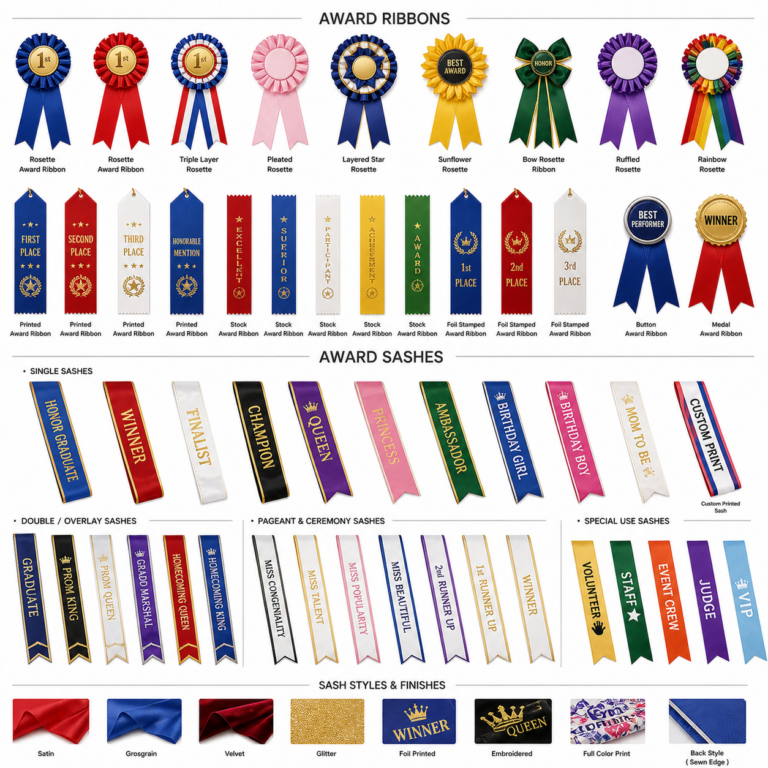 Award Ribbons Wholesale: Bulk award ribbon supplier checks
Shortlist Award Ribbons Wholesale suppliers by factory capability, QC proof, lead time, and reorder reliability. See which options…
Explore guide
Award Ribbons Wholesale: Bulk award ribbon supplier checks
Shortlist Award Ribbons Wholesale suppliers by factory capability, QC proof, lead time, and reorder reliability. See which options…
Explore guide
 Wholesale Ribbon Manufacturers: Factory vs Trading Company Checklist
Evaluate Wholesale Ribbon Manufacturers options: factory capability, QC proof, lead time, and reorder reliability. Narrow the list before…
Explore guide
Wholesale Ribbon Manufacturers: Factory vs Trading Company Checklist
Evaluate Wholesale Ribbon Manufacturers options: factory capability, QC proof, lead time, and reorder reliability. Narrow the list before…
Explore guide
Leave a comment
Share a sourcing question or feedback on this guide. The Lude team reviews submissions before following up.