


Organza Ribbon Supplier Audit Checklist: Supplier Proof Checklist
Use this checklist to compare factory capability, QC proof, lead time, and reorder reliability against one written approval record before bulk production
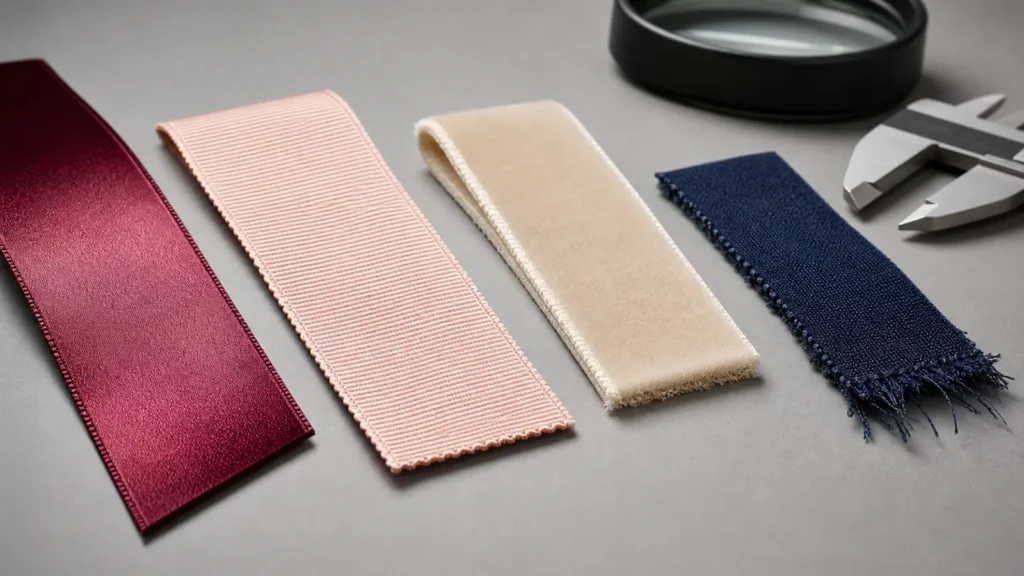
Organza audits focus on evenness of weave, because sheer fabric shows every irregularity that opaque ribbon hides.
Direct answer: For organza ribbon supplier audit, buyers should compare suppliers, factory proof, samples, MOQ, lead time, and risk signals.
Define the Buyer Decision for Organza Ribbon Supplier Audit
Compare the decision criteria for organza ribbon supplier against one RFQ revision. Each row should identify the requirement, approval evidence, and buyer action before production.
| Requirement | Factory control | Evidence to verify | Order risk | RFQ follow-up |
|---|---|---|---|---|
| Sample approval | Supplier submits pre-production sample per agreed spec and AQL level. | Compare sample against approved color standard, width, and finish using calibrated light box. | Rejected sample delays production; off-spec sample may pass if inspection is lax. | Request pre-production sample; approve in writing before production release. |
| MOQ and order quantity | Factory confirms MOQ per material, width, and print method; negotiable on schedule. | Review RFQ response for MOQ breakdown by SKU; request tiered pricing for higher volumes. | Over-ordering ties up capital; under-ordering may incur premium per-unit cost. | Confirm MOQ in RFQ; ask for volume breaks at 2x and 5x MOQ. |
| Material / substrate | Supplier certifies organza composition (nylon or polyester) and denier consistency. | Request material data sheet; perform burn test or lab analysis on first shipment. | Substituted substrate alters drape, dye uptake, and durability; hidden blends cause rejection. | Specify exact substrate in RFQ; request certificate of analysis with sample. |
| Finish or color control | Supplier uses spectrophotometer to match Pantone target within buyer-approved color tolerance. | Review color lab report; conduct visual approval under buyer-approved viewing conditions source. | Batch-to-batch color shift leads to brand inconsistency; off-shade finish triggers rework. | Submit color standard with RFQ; approve lab dip before bulk production. |
For organza ribbon supplier, use the decision criteria as the decision scope. Read the rows as one approval sequence. Start with sample approval; use the risk and buyer-action columns to decide whether its evidence is sufficient. Verify it with the inspection method and approval evidence recorded in the table.
For this organza ribbon supplier sourcing record, keep the supplier response, marked sample, and approval owner under the same revision number. If any proof conflicts with the approved record, hold the quote, sample, or production release until the supplier explains the deviation in writing. Before closing the checkpoint, reconcile the latest drawing, sample, quotation, and approval comments, identify which record controls if they disagree, and document the resolution. Carry the signed the decision criteria table into the purchase order and production handoff so the same checks support quote comparison, sample approval, shipment release, and later reorders.
Material and specification fit
Organza ribbon buyers must confirm that the substrate composition, denier, and width tolerance align with end-use requirements such as bow forming, edge sealing, or printing. A mismatch in material density or slitting precision can cause production waste or aesthetic failure. Requesting a material data sheet and verifying against your spec sheet during sample approval reduces the risk of receiving a substitute substrate that fails performance or color standards.
MOQ, cost structure, and lead time
Procurement teams should evaluate how the supplier's MOQ, pricing tiers, and lead time interact with order frequency and inventory carrying cost. Organza ribbon MOQs often vary by width, print method, and packing format, so a single blanket MOQ may not apply. Request a detailed RFQ that breaks out cost per unit at different volumes and confirms production lead time after spec approval to avoid surprises during reorder.
Supplier reliability and quality checks
Beyond initial sample approval, buyers need to assess the supplier's consistency through ongoing quality checks such as in-process inspection, final random sampling per the agreed sampling plan, and traceability records. A reliable organza ribbon supplier will provide batch-level test reports for color, width, and tensile strength. Include these verification steps in your audit checklist and follow up with a shortlist based on documented pass rates and corrective action responsiveness.
Questions to confirm before ordering:
- Does the supplier provide a spec sheet for the exact organza ribbon width, weave, and finish? Confirms the supplier can match your required material and print method before sample production. Supplier provides a detailed spec sheet with width tolerance, weave count, and finish type. Receiving ribbon that does not match your packaging or branding specifications, causing rework. Request the spec sheet and compare against your approved sample before RFQ.
- What is the supplier's minimum order per color and per width for custom organza ribbon? Determines if the supplier can accommodate your order volume without overcommitting inventory. minimum order is negotiable and confirmed by material, print method, width, packing, and order schedule. Locking into a minimum that exceeds your budget or storage capacity, leading to dead stock. Confirm minimum order in writing per color and width before sample approval.
- What is the standard lead time from spec confirmation to shipment for organza ribbon? Ensures the supplier can meet your production and delivery deadlines without delays. Lead time is 15–20 business days after specifications are confirmed, with longer quotes for complex runs. Missing your launch or event date due to uncommunicated production bottlenecks. Request a written lead time commitment and ask about rush options if needed.
- How does the supplier verify color consistency and print registration across bulk organza ribbon rolls? Validates that the supplier has a repeatable quality control process to avoid batch variation. Supplier uses a documented QC check at the loom, after printing, and before packing with a pass/fail threshold. Receiving ribbon with color shift or misaligned print that damages your brand presentation. Ask for a copy of the QC checklist and request a bulk sample before full production.
- Which article tests, material documents and factory audit records apply to the proposed organza order? Review each against its actual purpose, listed material or site and current status. REACH is a regulation and an amfori BSCI report is a social audit; neither is a universal organza product certificate.
Organza ribbon comes in multiple widths, weaves, and finishes. A spec sheet from the supplier should list the exact width tolerance, thread count, and finish type. Without this, you risk receiving ribbon that does not match your packaging or branding requirements. Always compare the spec sheet against your approved sample before moving to the quote request stage.
minimum order for custom organza ribbon is negotiable but must be confirmed by material, print method, width, packing, and order schedule. Standard lead time is 15–20 business days after specifications are confirmed. Complex runs like jacquard or custom colors take longer. Get these numbers in writing to avoid budget or schedule surprises.
Request the organza QC checklist and a production-intent sample. Verify any selected-article test evidence separately from the amfori BSCI factory social-audit record, and confirm the requirements for the intended use and market before approval.
Confirm Product and Order Scope
| Option | Best fit | Trade-off | Risk to avoid | Verification | Follow-up |
|---|---|---|---|---|---|
| Standard production spec per RFQ | Repeat orders and stock programs where width, color, and finish match the original specification sheet exactly. | No flexibility to adjust ribbon width or dye lot tolerance without a new approval cycle and potential cost adder. | Supplier may ship a close but non-matching shade if the spec sheet lacks a Pantone reference or physical standard. | Cross-check the supplier's written confirmation against your RFQ line items and retain a signed spec sheet. | Approve the spec sheet and request a sealed sample before bulk production. |
| Alternative spec with documented variance | When the primary material is unavailable or the supplier proposes a cost-saving construction change. | Slightly different hand feel or opacity may affect downstream bow-making or packaging presentation. | Unapproved substitution can cause final-product rejection if the alternative fails to meet end-customer requirements. | Require a written variance form listing the change, reason, and impact on performance or appearance. | Test the alternative sample against your quality criteria and sign the variance form before production. |
| Custom spec with OEM and ODM ribbon development | Proprietary designs, branded packaging, or unique width-color combinations not in the supplier's catalog. | Longer development timeline and higher per-unit cost due to custom tooling, dye matching, and sample iterations. | Custom specs may lock you into one supplier for reorders if the tooling or color formula is not transferred. | Review the supplier's OEM and ODM ribbon development process and confirm they archive your formula and tooling. | Document the custom spec in a separate development agreement and secure a reorder clause. |
| Safer fallback using a standard catalog item | When time is short or the supplier cannot meet your custom spec within the required window. | You accept a narrower selection of widths and colors, which may not match your original design intent. | The fallback item may have different dye lot consistency or edge finish, causing line rejects. | Compare the catalog item's spec sheet to your minimum acceptable criteria and request a pre-production sample. | If the sample passes, update your purchase order to reference the fallback SKU and adjust packaging instructions. |
For standard production spec per quote request, a poor decision can mean supplier may ship a close but non-matching shade if the spec sheet lacks a pantone reference or physical standard. Ask the supplier to cross-check the supplier's written confirmation against your quote request line items and retain a signed spec sheet, then approve the spec sheet and request a sealed sample before bulk production.
For the standard production spec per quote request checkpoint, keep the supplier response, marked sample, approved specification, quotation, and approval owner under the same revision number. If the evidence conflicts with the approved record, hold the quote, sample, or production release until the deviation is explained in writing. Carry the signed decision record into the purchase order, production handoff, shipment release, and later reorder review so every team works from the same baseline.
Decision criteria to confirm
At this checkpoint, compare every supplier specification against your original quote request parameters. Document width, color (Pantone or physical standard), finish, and material composition. A single mismatch can delay production or cause bulk rejection. Use the rows above to evaluate each supplier's offering before sample approval.
RFQ details to send
When drafting the quote request, include exact width tolerance, color standard, and finish requirements. Also specify whether alternative specifications are acceptable. This prevents suppliers from quoting a generic organza that fails your packaging or branding requirements. Attach a signed spec sheet with the quote request.
Production handoff details
Before bulk production begins, verify that the approved sample and spec sheet are physically handed to the production line. OEM and ODM ribbon development demands this documented transfer. Confirm that the QC team has the same measurement tools and color standards used during sample approval. A missing handoff causes spec drift.
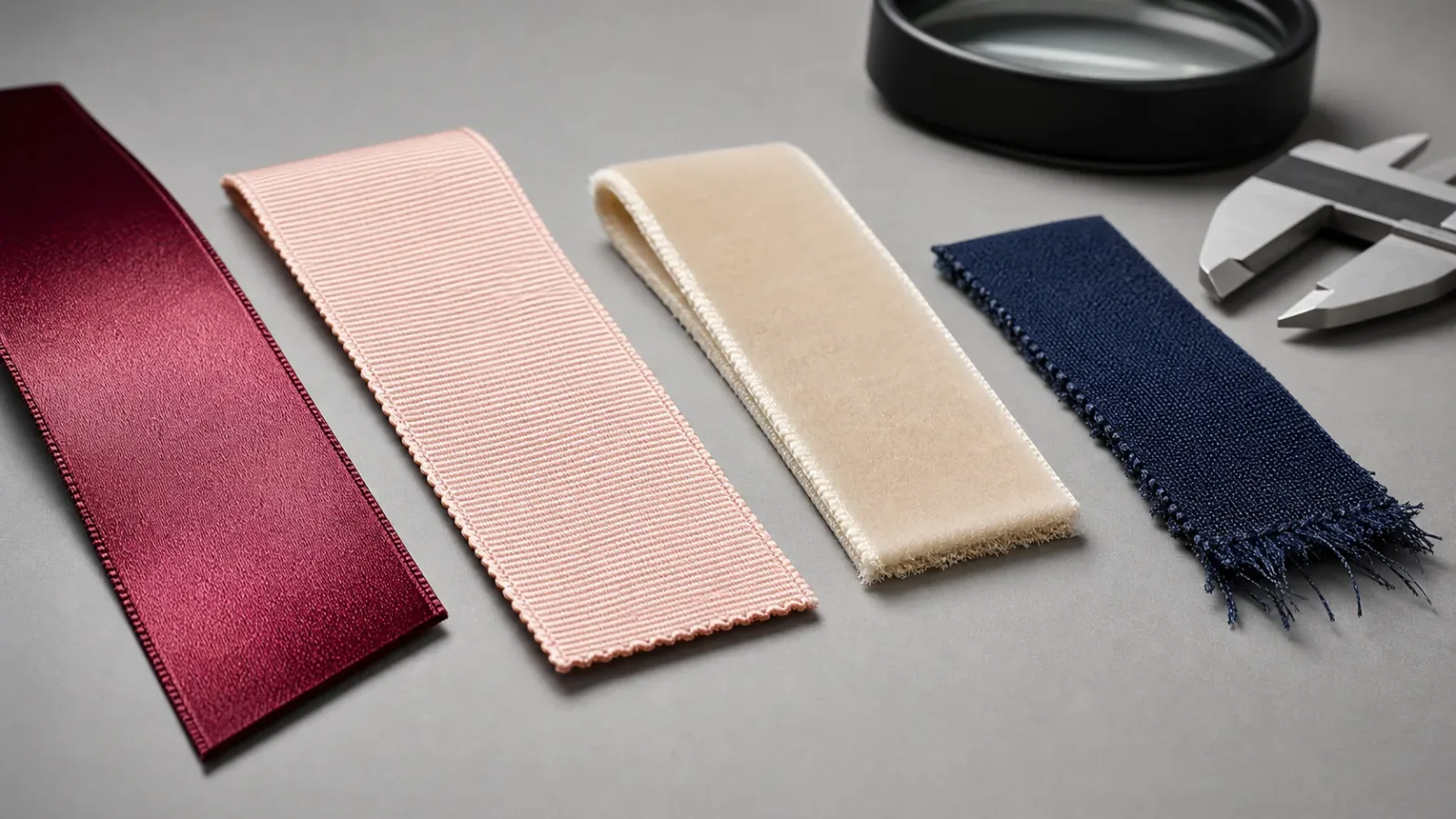
Build the Verification Checklist
At this process checkpoint, you have received the supplier’s initial quote request response. Before moving to sample production, verify the following five areas to ensure the supplier can meet your order requirements.
- Specifications: Confirm the ribbon width, thickness, dye lot consistency, and finish (e.g., matte, glossy) match your product brief. Request a spec sheet with tolerances.
- Cost or minimum order: Validate that the quoted price aligns with your budget and that the minimum order quantity is acceptable for your planned volume. Ask for a breakdown of per-unit cost vs. setup fees.
- Production Risk: Assess the supplier’s ability to handle color matching and defect rates. Request a sample of the exact dye lot to verify color accuracy before bulk production.
- Factory Execution: Review the supplier’s quality control process, including in-line inspection and final packing standards. Confirm they can meet your packaging and labeling requirements.
- quote request/Sample Handoff: Ensure the supplier provides a clear timeline for sample creation and shipping. Agree on communication channels and approval steps for sample sign-off.
Use this checklist to flag any gaps before committing to a sample order. For custom printed ribbon, additional verification of print registration and ink adhesion is recommended. custom printed ribbon.
Compare Quote and Production Assumptions
For organza ribbon supplier, treat the listed items as quote request inputs. Match each buyer input to written supplier confirmation, approval evidence, and the risk that would hold the quote.
- Specification details: width, material, color, print method, and tolerance: A mismatch in spec assumptions causes rework, delays, and rejected goods at inspection. Quote lists the buyer-approved ribbon width; production runs the buyer-confirmed limit due to unconfirmed tolerance. Bulk order fails dimensional check; buyer absorbs return freight and lost shelf time. Attach the approved spec sheet to the PO and require supplier sign-off before production.
- minimum order or order quantity per SKU and per color: Unstated minimum order splits can trigger partial shipments or hidden setup fees. Supplier quotes the quoted quantity total but requires the quoted quantity per color across four shades. Order is short-shipped on two colors; buyer faces stock-out during peak season. Confirm minimum order per SKU, per color, and per print method in writing before PO issue.
- Lead time: production days, sample approval, artwork review, and shipping: A quoted lead time that excludes artwork or sample rounds misaligns delivery commitments. Supplier states 15 business days but starts clock only after sample approval, not after PO. Buyer misses gift and retail packaging ribbon solutions launch window; expedite fees or air freight erode margin. Document each lead-time component and agree on a start-date trigger in the quote.
- Cost driver: unit price breakdown, tooling, artwork, packing, and freight terms: Hidden line items like plate charges or pallet fees inflate total cost beyond the unit price. Quote shows a per-yard price but adds a plate fee and a pallet charge not in the unit price. Budget overruns; buyer cannot reallocate funds without re-approval cycle. Request a full cost breakdown with all one-time and recurring fees itemized by line.
- Quality control: inspection stage, defect threshold, and sample retention: Without a defined QC gate, bulk goods may ship with unapproved color or construction variance. Supplier ships organza with more shading variation than the buyer's spec allows. Entire shipment is downgraded or returned; replacement lead time delays the program. Require an in-process inspection report and a pre-shipment sample for every production lot.
Run the Review Before Approval
At this process checkpoint, you have received the supplier’s initial quote request response. Before moving to sample production, confirm that the supplier has provided written confirmation on all quote request inputs. The output must be a completed checklist that documents alignment on specs, cost or minimum order, production risk, factory execution, and quote request/sample handoff.
Questions to send back to the supplier
- Can you confirm the exact ribbon width, material composition, and dye lot tolerance per our spec sheet?
- What is your per-yard cost at the quoted minimum order, and are there any tiered pricing breaks?
- What is your standard production lead time, and what is your process for rush orders?
- How do you handle defects during production—do you sort inline or rely on final inspection?
- What is your sample approval process, and do you require a signed off sample before bulk production?
When to revise, escalate, or reject
Use the table below as an approval sequence. Each row identifies a requirement and the action to take if the supplier’s response does not meet it.
| Requirement | Supplier Response Must Include | Action if Not Met |
|---|---|---|
| Spec confirmation | Written agreement on width, material, and dye lot tolerance | Revise RFQ and resend for confirmation |
| Cost or MOQ clarity | Per-yard cost and MOQ in writing | Escalate to sourcing manager for renegotiation |
| Production risk mitigation | Defect handling process and quality checkpoints | Reject if no process is provided |
| Sample handoff protocol | Step-by-step sample approval workflow | Reject if unclear or missing |
If any requirement is not met, do not approve the supplier. Revise the quote request, escalate to a senior buyer, or reject the supplier outright. Only proceed to sample production when all checklist items are confirmed in writing.
Move from Review to RFQ or Sample
Before advancing to quote request or sample request, verify that the supplier has confirmed your critical requirement in writing—for example, a dimensional tolerance on ribbon width. Without this written confirmation, proceed to the next gate only after obtaining it.
Inputs to include in the next message
- Specify the exact width tolerance (e.g., the buyer-approved tolerance) and ask the supplier to confirm in their quote request response.
- State the required quantity per color and request written acceptance of that unit.
- Clarify the acceptable dye lot consistency across batches and ask for a guarantee.
- Request a sample production timeline that includes a quality check step for edge fraying and color fastness.
Ownership and sign-off for the next gate
Assign a single buyer or quality engineer to review the supplier’s written confirmations. That person must sign off before any sample order is placed. Use the table below to track each requirement’s status.
| Requirement | Supplier Confirmation Needed | Status |
|---|---|---|
| Width tolerance within the buyer-approved tolerance | Written in RFQ response | Pending |
| Quantity per color | Written acceptance | Pending |
| Dye lot consistency | Guarantee in RFQ | Pending |
| Sample production timeline with QC | Timeline provided | Pending |
Once all statuses are marked “Confirmed,” proceed to request samples. If any item remains pending, do not move forward until the supplier provides the missing written confirmation.
In conclusion
The sourcing choice for an organza ribbon supplier comes down to how thoroughly you compare, verify, and document each requirement before committing to an order. By using this audit checklist, you can systematically check that the supplier’s specifications match your quote request—covering width, color, and material—while also assessing cost and minimum order impact to avoid budget overruns. Quality risk is minimized when you approve a sample that aligns with your signed specification sheet, ensuring that the production run meets your standards. This structured approach allows you to shortlist a supplier with confidence, knowing that every critical checkpoint has been validated.
To request a quote for organza ribbon supplier, use organza ribbon to confirm the final specification, quote assumptions, sample approval, QC evidence, approval risk, and supplier follow-up before bulk order.
Organza Ribbon Supplier Audit FAQ
What should buyers confirm first?
Confirm the supplier’s specification sheet matches your quote request: width, color (Pantone reference), edge finish, and material composition. Verify minimum order is negotiable per material and print method, and that lead time—typically 15–20 business days after specification confirmation—is acceptable. Request a pre-production sample to evaluate color and feel before approving. Document all agreements in writing. Approving the wrong structure or supplier proof can create quality, cost, or delivery problems.
Which proof should be retained for approval and reorders?
Retain the approved sample with a signed specification sheet and color standard (e.g., Pantone chip). Keep records of QC test results for each lot, including width consistency and color fastness. For reorders, reference the same approved sample and specification to ensure match. Store these documents in a shared buyer-supplier file for traceability. Approving the wrong structure or supplier proof can create quality, cost, or delivery problems.
Which warning signs should stop the order?
Stop the order if the supplier cannot provide a sample that matches your specification, refuses to share color standards, or has inconsistent lead time promises. Warning signs include lack of written confirmation on minimum order and production schedule, poor communication on QC processes, or inability to provide third-party testing. Do not proceed without sample approval and documented agreement. Approving the wrong structure or supplier proof can create quality, cost, or delivery problems.
Keep exploring
Recommended buyer guides
 Velvet Ribbon Wholesale Checklist: MOQ, Finish, and Supplier Questions
Evaluate velvet ribbon wholesale options: MOQ, setup fees, unit cost, and packing. Narrow the list before requesting samples…
Explore guide
Velvet Ribbon Wholesale Checklist: MOQ, Finish, and Supplier Questions
Evaluate velvet ribbon wholesale options: MOQ, setup fees, unit cost, and packing. Narrow the list before requesting samples…
Explore guide
 Wholesale Ribbon By The Roll: Roll length and inventory planning
Evaluate Wholesale Ribbon By The Roll options: factory capability, QC proof, lead time, and reorder reliability. Narrow the…
Explore guide
Wholesale Ribbon By The Roll: Roll length and inventory planning
Evaluate Wholesale Ribbon By The Roll options: factory capability, QC proof, lead time, and reorder reliability. Narrow the…
Explore guide
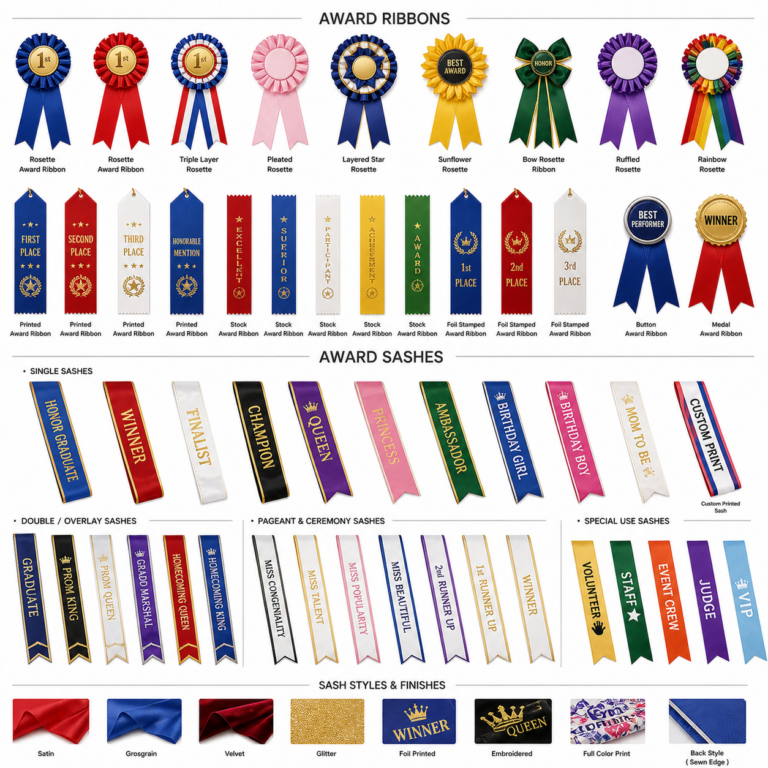 Award Ribbons Wholesale: Bulk award ribbon supplier checks
Shortlist Award Ribbons Wholesale suppliers by factory capability, QC proof, lead time, and reorder reliability. See which options…
Explore guide
Award Ribbons Wholesale: Bulk award ribbon supplier checks
Shortlist Award Ribbons Wholesale suppliers by factory capability, QC proof, lead time, and reorder reliability. See which options…
Explore guide
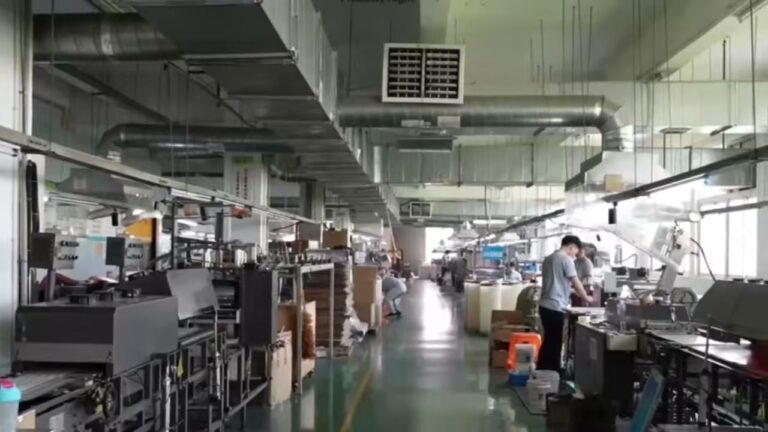 Wholesale Ribbon Manufacturers: Factory vs Trading Company Checklist
Evaluate Wholesale Ribbon Manufacturers options: factory capability, QC proof, lead time, and reorder reliability. Narrow the list before…
Explore guide
Wholesale Ribbon Manufacturers: Factory vs Trading Company Checklist
Evaluate Wholesale Ribbon Manufacturers options: factory capability, QC proof, lead time, and reorder reliability. Narrow the list before…
Explore guide
Leave a comment
Share a sourcing question or feedback on this guide. The Lude team reviews submissions before following up.