


Grosgrain Ribbon Suppliers: Supplier comparison
Shortlist Grosgrain Ribbon Suppliers suppliers by factory capability, QC proof, lead time, and reorder reliability. See which options fit your project
Grosgrain ribbon suppliers need a written specification before the buyer can shortlist Grosgrain Ribbon suppliers using proof, capability, quality, MOQ, and delivery criteria; otherwise suppliers may quote different product and approval assumptions.
This guide connects grosgrain ribbon suppliers to parameters, cost impact, supplier risk, factory process, and procurement advice.
Direct answer: For grosgrain ribbon suppliers, compare matched samples, documented production capability, quality records, quantity rules, and delivery assumptions on the same basis.
How buyers should evaluate grosgrain ribbon suppliers
- Supplier capability: Request a factory capability statement listing looms, print methods, and width range. Supplier provides a written capability sheet with machine count and material types. Supplier cannot name specific ribbon constructions or print techniques in writing. Shortlist only suppliers who submit a signed capability document with the RFQ.
- MOQ or order quantity: Compare per-product MOQ: plain stock, custom printed, and ready-made bows. Supplier publishes separate minimum order by product type and offers custom colour quotes. Supplier quotes a single minimum order for all ribbon types without breakdown. Request a written minimum order schedule per product line before sample approval.
- Quality control: Verify the supplier uses AQL sampling (e.g., ISO 2859-1) during production. Supplier shares a QC checklist and AQL level in the quote or quality manual. Supplier has no documented inspection plan or relies on final visual check only. Ask for a copy of the QC plan and a defect log from the last three orders.
- Verification method: Check that the supplier measures width, color, and construction against your written spec. Supplier provides a pre-production sample and a signed spec sheet before bulk run. Supplier approves artwork verbally and skips a formal sample sign-off step. Insist on a written approval of the production sample before bulk production starts.
- The risk is that Confirm the supplier requires written sign-off for artwork, color, and construction changes. Supplier has a formal approval gate with a checklist and sign-off form. Supplier accepts verbal approvals and proceeds without documented confirmation. Document every approval step in the RFQ and reject any supplier that skips written sign-off.
- Supplier cannot provide a written specification for the grosgrain ribbon width, construction, and color target before quoting. Without a written spec, the supplier may produce ribbon that does not match your required width, weave density, or color, leading to rework and delays. Insist on a written approval of the exact material width, color target, and construction details before any quote or sample is produced. A signed specification sheet listing width, color code, and construction type. Shortlist only suppliers who provide a written spec with their quote.
- Supplier offers a generic minimum order without confirming your exact program requirements. A generic minimum order may not apply to your specific design, color, or width, causing order quantity mismatches and potential cost overruns. Ask the supplier to confirm the minimum order for your exact material type, color, and design program before proceeding. A written minimum order breakdown per design, color, and width. Compare minimum order terms across shortlisted suppliers to align with your program volume.
- Supplier does not provide a production sample that matches your final spec before bulk production. Without a matching sample, the bulk run may deviate from your approved spec, leading to color variation, width inconsistency, or construction defects. Request a production sample that matches your written spec and approve it in writing before bulk production begins. A production sample with a written approval record. Document the sample approval and keep a reference sample for bulk comparison.
- Supplier relies on verbal sign-off for artwork or color approval. Verbal approvals are not traceable and can lead to color drift or artwork errors that are difficult to correct after production. Require written approval for all artwork and color proofs before production. A signed or emailed approval of the artwork and color proof. Set a clear approval gate in your quote request and sample process.
- Supplier cannot provide a clear reorder policy or lead-time commitment. Without a reorder policy, you may face long lead times or minimum reorder quantities that disrupt your supply chain. Ask the supplier to state their reorder minimum order, lead time, and pricing terms in writing. A written reorder policy including minimum order, lead time, and pricing. Include reorder terms in your supplier evaluation criteria.
Factory capability evidence to request
Ask the supplier for a written capability statement that lists their looms, print methods (offset, screen, or digital), and the width range they can run. This document confirms they can produce your exact grosgrain construction. A supplier who cannot provide this in writing likely lacks the equipment or experience to match your spec consistently.
MOQ, sampling, lead-time, and reorder terms to compare
Compare per-product minimum order separately for plain stock ribbon, custom printed ribbon, and ready-made bows. Confirm lead time starts only after specifications are approved. Ask whether reorders use the same minimum order or a reduced minimum. A supplier who publishes distinct terms for each product type shows they understand production planning and can support both initial orders and repeat programs.
Communication, packing, and export-readiness signals
Check that the supplier provides a written packing specification (roll length, core size, carton quantity) and export documentation (packing list, commercial invoice, certificate of origin). A supplier who shares these details upfront is export-ready and reduces customs delays. Poor communication on packing or missing documents signals a supplier who may mishandle your order at the shipping stage.
For the how buyers should evaluate grosgrain ribbon suppliers evidence check, compare the supplier record with ISO 2859-1 sampling inspection standard before accepting the requirement.
Product and specification checks before shortlisting
- Can the supplier provide a spec sheet listing material, width, color, finish, and customization options? A written spec sheet prevents misalignment on construction details before sampling. Supplier provides a detailed spec sheet with tolerances and available customization ranges. Without a spec sheet, you may receive samples that do not match your production requirements. Request a spec sheet and compare it against your quote request before approving any sample.
- Does the supplier have in-house printing, bow-making, and packing capabilities? In-house capabilities reduce lead time and quality control handoffs between subcontractors. Supplier confirms in-house printing, bow-making, and packing with QC checkpoints at each stage. Outsourced steps can introduce color variation, delayed delivery, or inconsistent bow quality. Verify in-house capabilities during the factory audit or video call before shortlisting.
- What inspection method does the supplier use for grosgrain ribbon products before shipment? A defined inspection method ensures defects are caught before bulk shipment. Supplier describes a multi-point inspection including width, color, and edge finish checks. Without documented inspection, you may receive ribbon products with width variation or frayed edges. Ask for a copy of the inspection checklist and agree on acceptable defect rates in the contract.
Material, width, color, finish, and customization range
Before shortlisting, confirm the supplier can match your exact material type, width tolerance, color target, and finish. Ask for a written spec sheet that lists all customization options such as custom printing, dye lots, and edge treatments. This prevents sample mismatches and rework later.
Printing, bow-making, packing, and inspection capability
Verify whether the supplier handles printing, bow-making, and packing in-house or subcontracts them. In-house control typically means faster turnaround and consistent quality. Request a walkthrough of their inspection process for each stage to ensure defects are caught before shipment.
quote request checkpoint
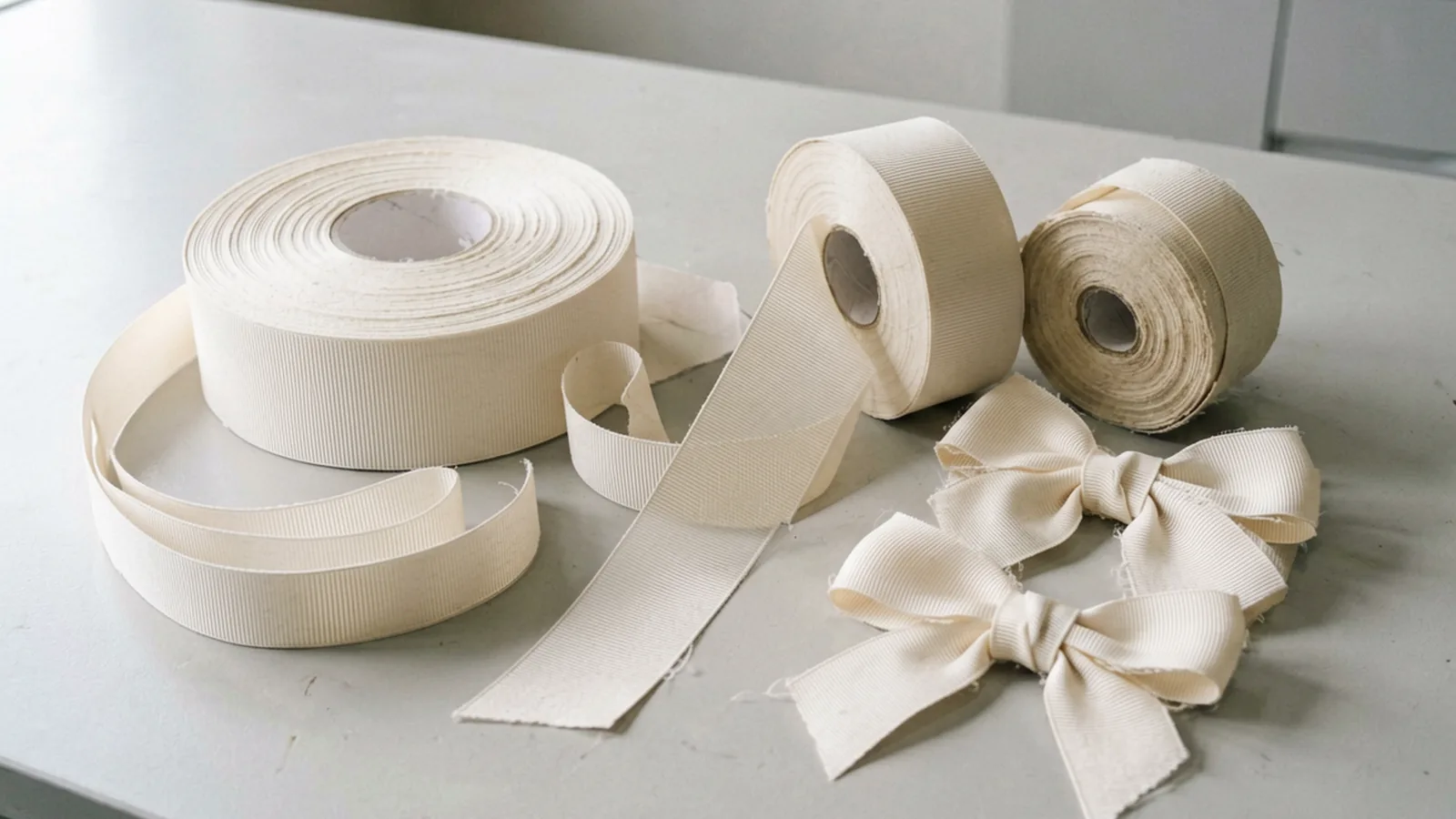
MOQ, cost, sample, and lead-time questions
| Criteria | Baseline option | Confirmed option | Buyer meaning | Risk to avoid | Follow-up |
|---|---|---|---|---|---|
| Specification details | Supplier provides full spec sheet (width tolerance, yarn count, color fastness) before quote | Supplier gives only generic product name and price, no written spec | You compare actual construction parameters, not just ribbon type | Without specs, you approve a sample that cannot be reproduced in bulk | Request a spec sheet for each SKU before RFQ; reject suppliers that cannot provide one |
| Cost driver | Price quoted per yard with material, dye, and finishing line items | Price quoted per roll with no breakdown of material or process cost | You see where cost comes from and can negotiate specific line items | Hidden costs appear at sample approval or reorder stage | Ask for a cost breakdown by material, labor, and finishing before comparing quotes |
| Quality control | Supplier runs in-line inspection during weaving and final QC before packing | Supplier inspects only finished rolls after production is complete | Defects are caught early, reducing reject rates and rework delays | You receive rolls with width variation or color shift that cannot be fixed | Request QC checklist and inspection points; verify during factory audit or video call |
| Approval risk | Supplier requires artwork approval and lab dip sign-off before bulk production | Supplier starts bulk run after only a digital mock-up is reviewed | You confirm color and print accuracy on physical material before committing to full order | Bulk run produces off-color ribbon that must be re-made, delaying your program | Insist on a physical lab dip and strike-off sample; document approval in writing |
| MOQ or order quantity | Supplier offers tiered MOQ by product type (plain stock, custom printed, ready-made bows) | Supplier applies one MOQ across all products regardless of complexity | You can order smaller quantities for stock items and scale custom runs separately | You over-order a custom design that cannot be sold elsewhere, tying up cash | Confirm MOQ per product category in writing; verify if OEM and ODM ribbon development follows the same tiered structure |
| Lead time | Supplier states production lead time in business days after spec and sample approval | Supplier gives a calendar-day estimate that starts when the PO is placed | You can plan your inventory arrival date with a known approval gate | Lead time slips because sample approval or artwork review is not counted in the schedule | Map the full timeline: artwork review, sample approval, production, shipping; get each step in writing |
For specification details, a poor decision can mean without specs, you approve a sample that cannot be reproduced in bulk. Request written proof and compare it with the approved sample or specification. Use the result to decide whether this checkpoint can proceed or must stay on hold.
How to compare quote assumptions across suppliers
Request each supplier's quote assumptions in writing before comparing prices. Ask whether the quote includes material grade, dye type, finishing process, and packaging. A supplier that lists these assumptions lets you verify that you are comparing the same product construction. Without this, a lower price may hide a thinner ribbon or cheaper dye that fails your end-use test.
When low unit price creates quality or delay risk
A low per-yard price often means the supplier uses a lower-grade yarn, skips a finishing step, or runs a faster production line with fewer QC checks. These shortcuts can cause width variation, color bleeding, or delayed delivery when rework is needed. Compare the full cost of quality: inspection time, reject rate, and reorder lead time, not just the unit price.
Quality and communication red flags
- Bulk ribbon shade differs from approved sample by more than one Pantone step. Supplier skipped a production pilot or used a different yarn lot without re-approval. Request a sealed production sample and compare it against the signed-off master under buyer-approved viewing conditions. Document the acceptable delta in a written color-tolerance clause before the bulk run.
- Supplier does not provide a written quality report with each shipment. No in-line inspection protocol or final QC gate exists on the factory floor. Ask for the last three shipment inspection records and a copy of the factory's QC checklist. Require a pre-shipment inspection report from a third-party lab or your own agent.
- Artwork approval is verbal or via informal chat without a sign-off record. Supplier lacks a structured artwork review workflow or revision tracking system. Request a PDF proof with revision date, version number, and a sign-off field for each change. Approve only a hard-copy or time-stamped digital proof before any production cutting.
- Packing and labeling vary between sample and bulk delivery without prior notice. Supplier treats packing as a last-minute warehouse decision, not a spec-controlled step. Confirm packing specs (roll length, inner core, outer carton, label content) in the quote request and sample stage. Add a packing and labeling approval gate to your order confirmation checklist.
Artwork, color, and sample approval gaps
When a supplier rushes artwork approval or relies on verbal sign-off, color drift and print misalignment become common. Always request a sealed production sample under controlled lighting before bulk cutting. For gift and retail packaging ribbon solutions solutions, a single Pantone mismatch can delay a seasonal launch. Document every revision with a dated proof and written acceptance.
Packing, labeling, and repeat-order control risks
Inconsistent packing and labeling create confusion at your warehouse and increase inspection costs. A supplier that changes roll length or carton configuration without notice may also skip critical QC steps. Lock packing specs in the quote request and verify them on the first production sample. For repeat orders, require a packing checklist signed by the warehouse supervisor before shipment.
How to move from shortlist to RFQ
For grosgrain ribbon suppliers, build the quote request around Exact material width, color target, and construction type. Match every listed buyer input to written supplier confirmation, approval evidence, and the risk that would hold the quote.
- Exact material width, color target, and construction type: A mismatch between your spec and the supplier's production setup causes rework, delays, and color rejection. Specify the exact grosgrain width with a 22-pick count and a Pantone 186C red; do not rely on a generic 'red ribbon' label. The supplier may quote a different width or weave, leading to a failed sample and lost lead time. Send a written spec sheet with tolerances and ask the supplier to confirm they can hold those parameters.
- Minimum order quantity per design or color: minimum order directly affects per-yard cost and whether the program fits your budget or timeline. For a custom printed grosgrain ribbon, confirm the minimum order per design; the minimum may exceed your test-run volume. You may receive a quote for a stock minimum order that doesn't cover your custom artwork, triggering a requote and delay. State your target quantity upfront and request a written minimum order breakdown by product type and color.
- Standard production lead time and sample approval gate: Lead time drives your delivery schedule and determines when you must approve the sample to avoid missing your launch date. A supplier quotes a production lead time after spec confirmation; add time for artwork review and sample shipping. Without a written lead-time commitment, the supplier may prioritize other orders, pushing your delivery past your deadline. Ask for a calendar-based production timeline that includes sample approval as a milestone gate.
- Cost drivers: material grade, print method, and packaging: Understanding what drives the price lets you negotiate trade-offs instead of accepting a lump-sum quote. A low per-yard price may mean a lower-grade yarn or a simpler print method that fades after washing. Hidden costs like custom packaging or color-matching fees appear on the final invoice, inflating the total. Request an itemized quote that separates material, printing, packaging, and tooling costs.
- Quality control checkpoints: inline inspection and final sample hold: Without documented QC gates, defects like uneven dye or misaligned print reach your warehouse undetected. Ask if the supplier runs a first-piece inspection at the loom and a final visual check before packing. A full batch may arrive with color variation across rolls, forcing a costly reorder or return. Request a written QC plan and a hold-sample from the production run before bulk shipment.
Quote-ready inputs to send
Before you request a quote, gather the exact material width, color target, construction type, and target quantity. Grosgrain ribbon suppliers need these details to calculate yarn grade, print method, and lead time. A vague inquiry invites a generic quote that misses your program's cost drivers. Attach a spec sheet and ask the supplier to confirm each parameter in writing.
Sample checks before deposit or approval
When the sample arrives, compare it against your written spec: measure width, check color under daylight, and verify the weave count. A mismatch at this stage means the bulk run will repeat the error. Do not approve a sample that deviates from your spec, even if the supplier promises to fix it later. Document your approval in writing, and keep a sealed reference sample for the QC bench. This is the same process Lude Ribbon follows before every bulk production run.
In conclusion
Before you approve any supplier, verify that the written quote matches your exact material width, color target, construction, and packing requirements. Confirm the minimum order per design or color, and document the lead time in business days after spec confirmation. A supplier who cannot break down per-yard cost or refuses a production sample aligned to your final spec introduces unnecessary risk to your program.
Shortlist only those grosgrain ribbon suppliers who provide a clear quote request response, a sample that passes your width and color check, and a written approval process for artwork or color. Document every spec and sign-off step before bulk production begins. This final check ensures your order moves forward with the right partner, on spec, on time, and within your cost and minimum order parameters.
Grosgrain ribbon suppliers FAQ
What should buyers confirm before ordering Grosgrain Ribbon Suppliers?
First confirm the exact material width, color target, construction (single-face, double-face, or jacquard), and packing format with the supplier. A mismatch in any one of these can lead to a rejected shipment. Verify that the supplier’s standard stock includes your required width and color, and document the agreed spec in writing before any order is placed.
How should buyers compare MOQ, lead time, and quote terms?
Shortlist suppliers who provide a written quote that breaks down the per-yard cost, the minimum order quantity, and the production lead time in business days. Compare the minimum order against your program volume—if you need less than the supplier’s standard, ask if a partial or trial quantity is available at a different price. Confirm the lead time starts only after all specs, artwork, and sample approvals are signed off, and factor in additional days for shipping.
What sample, quality, or supplier checks reduce risk?
Always request a production sample that matches your final spec before approving bulk production. Check the sample against your spec sheet for width, color consistency, weave density, and edge finish. Document the sample approval in writing, and ask the supplier to hold a sealed reference sample for the full production run. For custom printed ribbons, verify that the artwork registration and color match are within your tolerance before signing off.
quote request handoff: Send Specs for Review.
Keep exploring
Recommended buyer guides
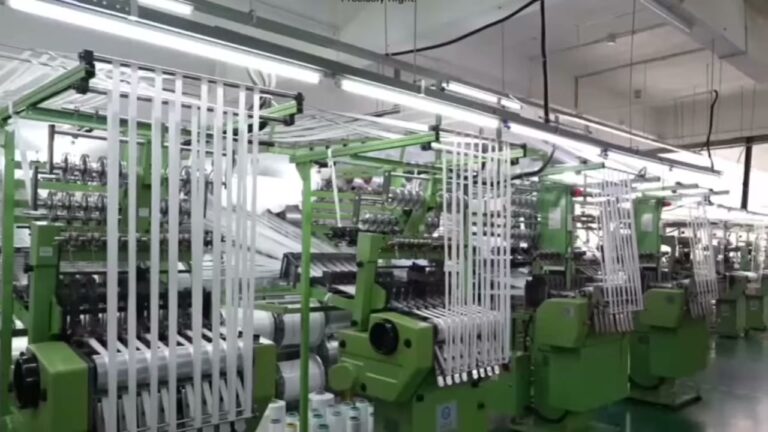 Velvet Ribbon Wholesale Checklist: MOQ, Finish, and Supplier Questions
Evaluate velvet ribbon wholesale options: MOQ, setup fees, unit cost, and packing. Narrow the list before requesting samples…
Explore guide
Velvet Ribbon Wholesale Checklist: MOQ, Finish, and Supplier Questions
Evaluate velvet ribbon wholesale options: MOQ, setup fees, unit cost, and packing. Narrow the list before requesting samples…
Explore guide
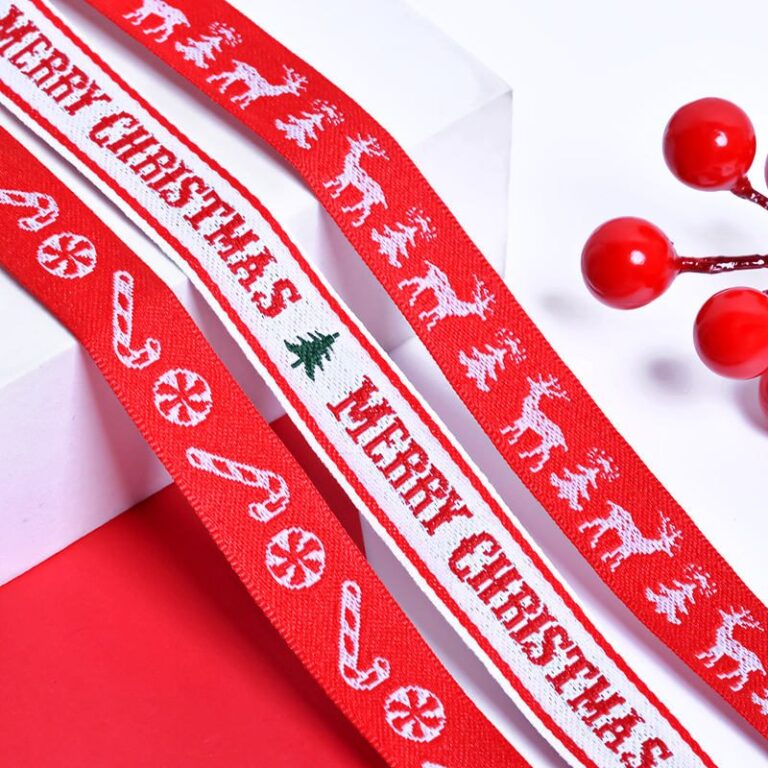 Wholesale Ribbon By The Roll: Roll length and inventory planning
Evaluate Wholesale Ribbon By The Roll options: factory capability, QC proof, lead time, and reorder reliability. Narrow the…
Explore guide
Wholesale Ribbon By The Roll: Roll length and inventory planning
Evaluate Wholesale Ribbon By The Roll options: factory capability, QC proof, lead time, and reorder reliability. Narrow the…
Explore guide
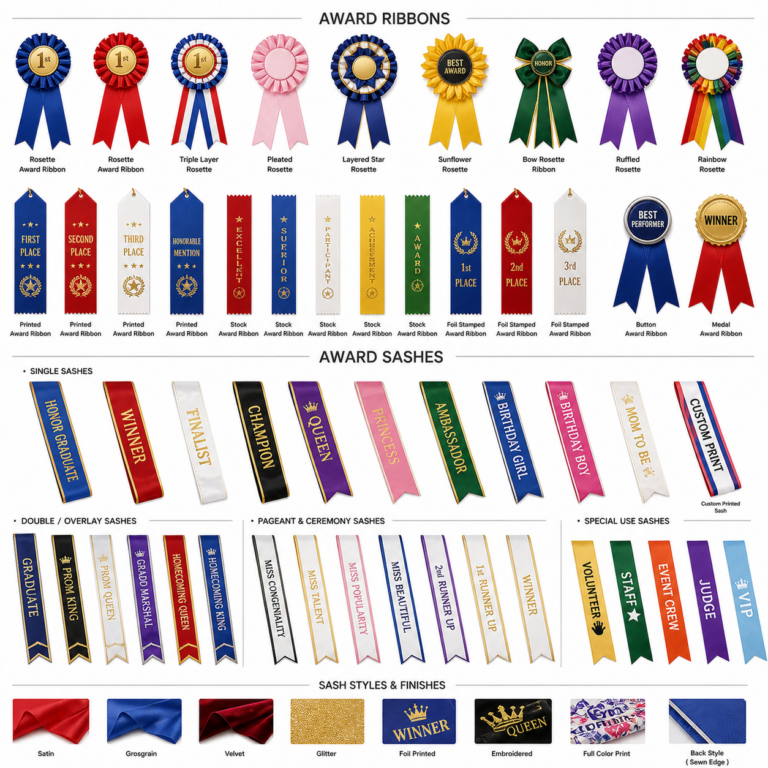 Award Ribbons Wholesale: Bulk award ribbon supplier checks
Shortlist Award Ribbons Wholesale suppliers by factory capability, QC proof, lead time, and reorder reliability. See which options…
Explore guide
Award Ribbons Wholesale: Bulk award ribbon supplier checks
Shortlist Award Ribbons Wholesale suppliers by factory capability, QC proof, lead time, and reorder reliability. See which options…
Explore guide
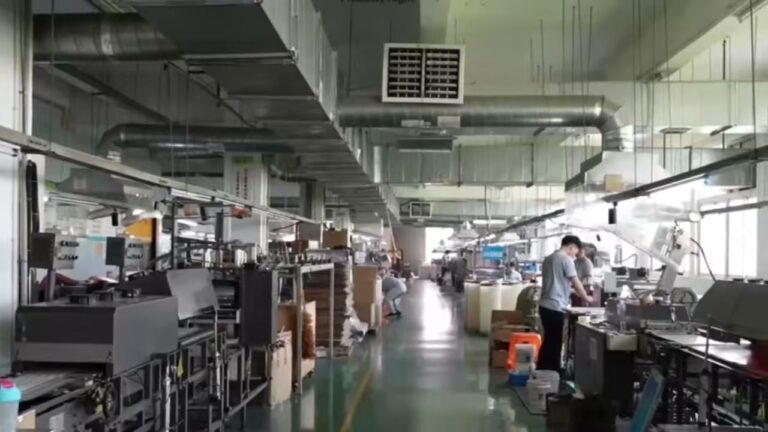 Wholesale Ribbon Manufacturers: Factory vs Trading Company Checklist
Evaluate Wholesale Ribbon Manufacturers options: factory capability, QC proof, lead time, and reorder reliability. Narrow the list before…
Explore guide
Wholesale Ribbon Manufacturers: Factory vs Trading Company Checklist
Evaluate Wholesale Ribbon Manufacturers options: factory capability, QC proof, lead time, and reorder reliability. Narrow the list before…
Explore guide
Leave a comment
Share a sourcing question or feedback on this guide. The Lude team reviews submissions before following up.