


Wholesale Foil Printed Ribbon: Supplier Proof and RFQ Checklist
Foil printed ribbon: what to check on artwork files, print method, color target, and factory capability before placing a custom order
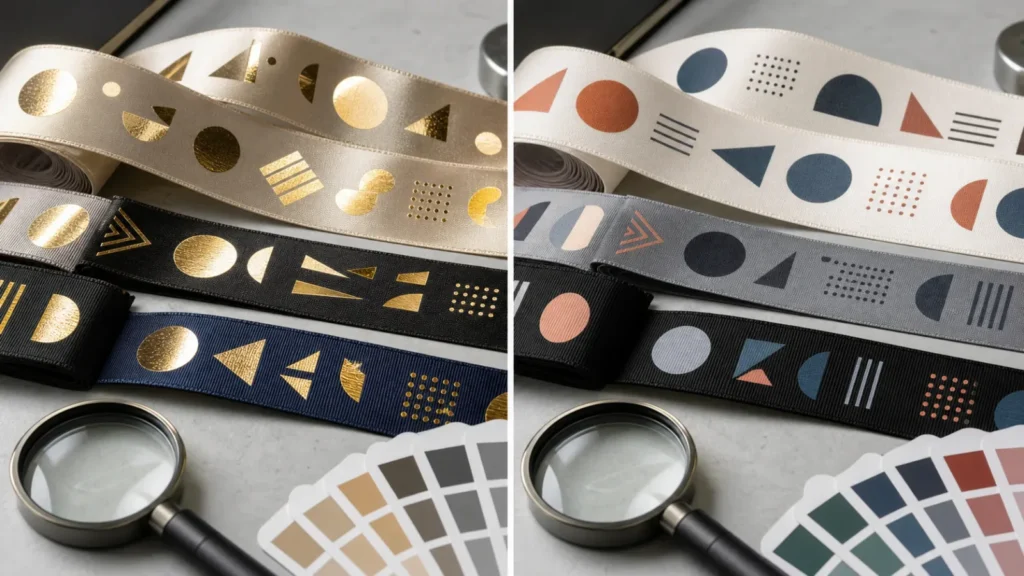
The sourcing record for foil printed ribbon: shortlist scorecard is incomplete until it shortlists suppliers using proof, capability, quality, MOQ, and delivery criteria.
Score foil suppliers on registration consistency across a full roll, not on the quality of a single proof.
Direct answer: For foil printed ribbon: shortlist scorecard, buyers should shortlist foil printed ribbon suppliers using proof, capability, quality, MOQ, and delivery criteria.
Define the Buyer Requirement
Open the shortlist with a foil-ribbon production brief. Record the ribbon substrate and width, base color reference, foil type and color, artwork version, repeat length, print orientation, edge construction, roll or cut-length format, presentation requirement, and delivery date. Each row should show which sample or process record proves the supplier can hold those variables in bulk production.
| Requirement | Factory control | Evidence to verify | Order risk | RFQ follow-up |
|---|---|---|---|---|
| Sample approval | Supplier retains pre-production sample and signed approval record. | Compare bulk against approved sample under same revision number. | Unapproved changes in foil shade or placement. | Request sample and sign-off before production. |
| Material / substrate | Confirm ribbon base composition and weave match spec. | Request material data sheet and burn test. | Substrate variation affects foil adhesion. | Ask RFQ for material origin and grade. |
| Width or size tolerance | Measure width at multiple points per roll. | Use calibrated caliper on 3 samples per batch. | Width deviation causes packaging fit issues. | Specify tolerance in RFQ and inspect incoming. |
| Finish or color control | Verify foil color matches Pantone or custom chip. | Use spectrophotometer or visual comparison under buyer-approved viewing conditions. | Color shift across batches or rolls. | Request color standard and approve first article. |
| Packing format | Confirm roll length, core size, and packaging per unit. | Check packing list and measure roll length. | Incorrect packing causes handling or waste. | Define packing spec in RFQ and verify on delivery. |
Read the table in foil-print sequence: approve substrate and dye lot first, then artwork scale, foil shade, heat and pressure window, registration, repeat spacing, rub resistance, edge quality, winding tension, and final pack-out. Assign an owner and acceptance record to every checkpoint so a good-looking photo cannot replace a traceable strike-off or production sample.
Keep the supplier response, foil strike-off, approved color target, artwork file, repeat reference, roll-format specification, packing instruction, and approval owner under one revision. If production shows incomplete transfer, foil flaking, registration drift, color mismatch, scorched ribbon, edge distortion, or the wrong repeat, stop release and document the corrective proof. Carry the signed matrix into the purchase order, press setup, inline inspection, final roll audit, carton label, and repeat-order file.
Compare the Available Routes
| Option | Best fit | Trade-off | Risk to avoid | Verification | Follow-up |
|---|---|---|---|---|---|
| Current specification | Matches your approved artwork and prior order history. | May carry higher cost if specs are over-engineered. | Sticking with outdated specs can inflate spend. | Recheck width, material, and foil color against the last PO. | Confirm specs with supplier before quoting. |
| Alternative specification | Fits when you need a different width, material, or finish. | New specs may shift lead time and require new samples. | Unverified changes can cause print or color mismatch. | Request a strike-off or sample under your lighting. | Compare cost and lead time against current spec. |
| Custom option | Best for unique branding, custom colors, or bespoke widths. | Longer lead time and higher setup cost per run. | Complex custom work may miss deadlines if not planned. | Confirm custom color matching and print registration. | Get a detailed RFQ with artwork and timeline. |
| Safer fallback | Use when you need a proven, low-risk option quickly. | May limit design flexibility or premium look. | Fallback may not meet brand expectations. | Check stock availability and standard lead time. | Order a sample to validate before bulk. |
For current specification, a poor decision can mean sticking with outdated specs can inflate spend. Ask the supplier to recheck width, material, and foil color against the last po.
For foil custom printed ribbon, preserve the current specification decision under one revision number: keep the supplier response, marked sample, approved specification, quotation, and approval owner together. If the evidence conflicts with the approved record, hold the quote, sample, or production release until the deviation is explained in writing. Once the buyer and designated technical authority have accepted the evidence, carry the signed Compare the Available Routes record into the purchase order, production handoff, shipment release, and later reorder review so every team works from the same baseline.
Review the Required Proof
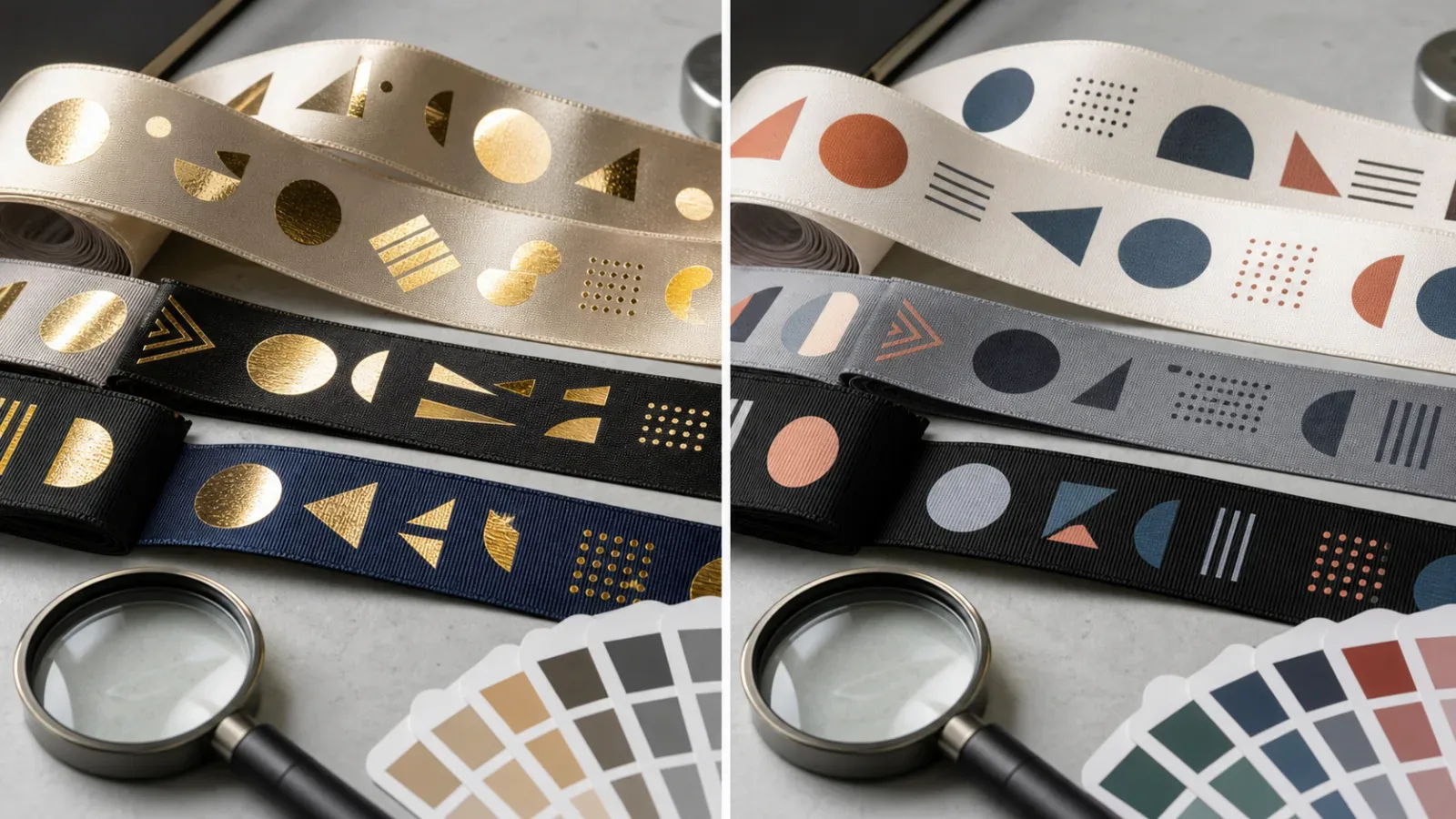
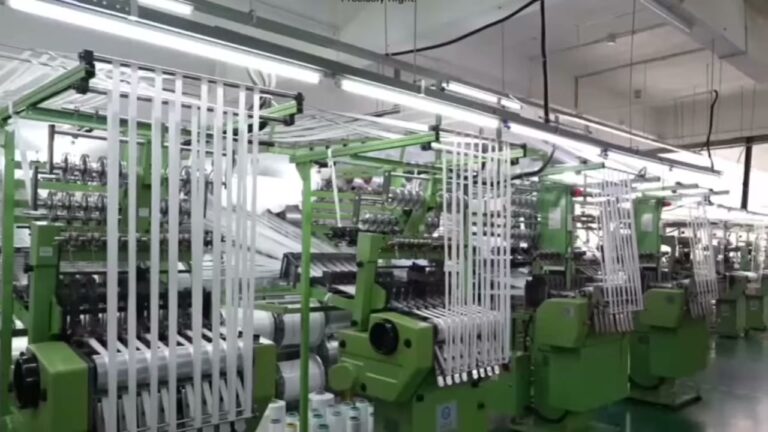
- Supplier capability: Confirm the supplier runs foil stamping in-house and can handle ribbon widths and materials you need. In-house foil stamping with sample room and proof of similar ribbon programs. Supplier outsources foil work, adding lead time and quality variability. Ask for a process video or sample run before shortlisting.
- MOQ or order quantity: Request minimum order per material, width, and print method; confirm if it's negotiable. minimum order stated per spec and flexible for custom ribbon and bow programs. Vague minimum order that changes after artwork approval. Get minimum order in writing for your exact ribbon spec before sample approval.
- Quality control: Check foil adhesion, color match, and edge definition on a marked sample. Supplier provides a marked sample and documents QC checks per batch. No sample or QC record; foil may peel or misalign in bulk. Request a marked sample and a QC checklist for the production run.
- Verification method: Confirm how you'll verify foil print quality: sample approval, photos, or third-party inspection. Supplier offers pre-shipment photos and a clear approval gate before bulk. No verification step; you discover defects after shipment. Set a written approval gate for the marked sample before production.
- Identify who approves the sample and how reorders handle spec changes. Single approval owner and documented reorder spec for OEM and ODM ribbon development. Multiple approvers or no reorder spec, causing delays and mismatches. Document the approval owner and reorder spec before sample sign-off.
Build the Decision Asset
Hold the foil printed ribbon review when evidence for Supplier lacks foil stamping experience on ribbon substrates is unresolved; record the discrepancy, supplier owner, and release condition before approval.
- Supplier lacks foil stamping experience on ribbon substrates: Foil adhesion fails on woven ribbon, causing flaking or cracking during handling. Request samples of similar foil-printed ribbon and verify edge definition. Sample swatches with foil print on ribbon, not paper or film. Shortlist only suppliers who provide ribbon-specific foil samples.
- No documented quality control for foil registration or adhesion: Misregistered foil or poor adhesion leads to rejected batches and rework. Ask for their QC checklist and pass/fail criteria for foil print. Inspection report or video of foil adhesion test. Verify QC process during factory audit or video call.
- Sample approval bypasses written sign-off: Verbal approval causes disputes over color, foil finish, or print placement. Require a signed sample approval form with exact specifications. Signed sample approval sheet with date and authorized signature. Hold production until written approval is received.
- Reorder process lacks reference to approved sample: Production may drift from approved sample, causing inconsistent appearance. Confirm reorder references the original approved sample and spec. Copy of the approved sample reference in the reorder PO. Include approved sample ID in every reorder contract.
Supplier evidence to request
When comparing suppliers for foil printed ribbon, ask for proof of ribbon-specific foil stamping capability. A supplier that only shows paper or film samples may not handle woven ribbon's texture and stretch. Request actual ribbon swatches with foil print, and check for clean edges and adhesion. This evidence separates capable factories from general printers.
Sample approval evidence
Sample approval is your control point before bulk production. Insist on a written sign-off that records the foil color, print placement, and ribbon width. Verbal approval invites disputes and rework. Keep the signed sample and spec together as the reference for production and reorder. This step prevents costly misunderstandings and ensures the final product matches your expectation.
Reorder control records
For reorders, confirm the supplier will reference the original approved sample and specification. Without this, production may drift, causing color or print inconsistencies. Include the approved sample ID in the purchase order and require the supplier to confirm before starting. This control keeps quality stable across batches and protects your brand's presentation, especially for gift and retail packaging ribbon solutions.
Prepare Comparable RFQ Inputs
- What is your foil stamping process and how do you control temperature and pressure during production? Verifies the supplier has a controlled, repeatable process for consistent foil transfer. They describe specific machine settings and in-process checks for foil adhesion. Inconsistent heat or pressure can cause foil flaking or incomplete transfer, leading to rejects. Ask for a process control sheet or QC checklist that they use during foil runs.
- How do you verify foil adhesion and color match on the finished ribbon? Ensures the supplier has a measurable quality check, not just visual inspection. They mention adhesion tests (e.g., tape pull) and color measurement under standard lighting. Without objective checks, defects may slip through and cause costly rework or returns. Request their QC report template and specify the acceptance criteria in your RFQ.
- What is your reorder process for foil printed ribbon, and do you keep the original artwork and tooling? Confirms the supplier can replicate the approved sample on repeat orders without drift. They retain artwork and reference the original approved sample for every reorder. If they don't store tooling or reference samples, reorders may vary in color or foil quality. Ask for a written reorder policy that includes sample reference and tooling retention.
Source check: ISO 2859-1 sampling inspection standard.
In conclusion
The final approval for your foil printed ribbon program should rest on a shortlist that you can defend with documented evidence. Before you request a quote from any candidate, verify that the supplier can reproduce your exact ribbon width, material, and foil color on the specified substrate, and ask for a stamped sample that matches your approved artwork. Compare options by weighing the quoted cost per roll against the minimum order and lead time, and confirm that the factory has a clear process for handling defects or reorders. By checking these points against a written scorecard, you can approve a sample with confidence and move into production knowing your supplier has been validated on the criteria that matter most.
Frequently Asked Questions
How should a b2b buyer compare supplier options?
Compare suppliers by turning your specification into a scoring matrix: ribbon material, width, foil color, print method, and packaging. For each candidate, confirm cost and minimum order against your order schedule, and verify lead time after specifications are confirmed—standard production is 15–20 business days, but complex programs may be quoted longer. Shortlist only suppliers who can document ribbon-specific foil stamping experience and provide a sample for QC approval before bulk production.
Which supplier proof should buyers request for foil printed ribbon?
Request proof of foil stamping capability on the exact ribbon substrate you plan to use, plus a written sample approval that captures foil adhesion, color match, and print registration. Ask for a pre-production sample and, if possible, a pilot run to verify consistency. For reorders, confirm the supplier will reference the original approved sample and re-confirm specifications, as foil quality can drift between batches.
What should buyers lock before approving supplier shortlist scorecard?
Lock your approved sample as the baseline, including a signed-off specification sheet with material, width, foil type, and print placement. Document the agreed cost, minimum order, and lead time in the quote request, and set a QC checkpoint for incoming goods against the sample. Before approving the scorecard, verify the supplier’s process for handling artwork changes and reorder consistency, and confirm they will hold your approved sample for future reference.
quote request handoff: Send Specs for Review.
Keep exploring
Recommended buyer guides
 Velvet Ribbon Wholesale Checklist: MOQ, Finish, and Supplier Questions
Evaluate velvet ribbon wholesale options: MOQ, setup fees, unit cost, and packing. Narrow the list before requesting samples…
Explore guide
Velvet Ribbon Wholesale Checklist: MOQ, Finish, and Supplier Questions
Evaluate velvet ribbon wholesale options: MOQ, setup fees, unit cost, and packing. Narrow the list before requesting samples…
Explore guide
 Wholesale Ribbon By The Roll: Roll length and inventory planning
Evaluate Wholesale Ribbon By The Roll options: factory capability, QC proof, lead time, and reorder reliability. Narrow the…
Explore guide
Wholesale Ribbon By The Roll: Roll length and inventory planning
Evaluate Wholesale Ribbon By The Roll options: factory capability, QC proof, lead time, and reorder reliability. Narrow the…
Explore guide
 Award Ribbons Wholesale: Bulk award ribbon supplier checks
Shortlist Award Ribbons Wholesale suppliers by factory capability, QC proof, lead time, and reorder reliability. See which options…
Explore guide
Award Ribbons Wholesale: Bulk award ribbon supplier checks
Shortlist Award Ribbons Wholesale suppliers by factory capability, QC proof, lead time, and reorder reliability. See which options…
Explore guide
 Wholesale Ribbon Manufacturers: Factory vs Trading Company Checklist
Evaluate Wholesale Ribbon Manufacturers options: factory capability, QC proof, lead time, and reorder reliability. Narrow the list before…
Explore guide
Wholesale Ribbon Manufacturers: Factory vs Trading Company Checklist
Evaluate Wholesale Ribbon Manufacturers options: factory capability, QC proof, lead time, and reorder reliability. Narrow the list before…
Explore guide
Leave a comment
Share a sourcing question or feedback on this guide. The Lude team reviews submissions before following up.