


Wholesale Double Faced Satin Ribbon: Supplier Proof and RFQ Checklist
A buyer's checklist for Double-Faced Satin Ribbon Wholesale — covering sample approval, color tolerance, QC checks, and factory capability from first
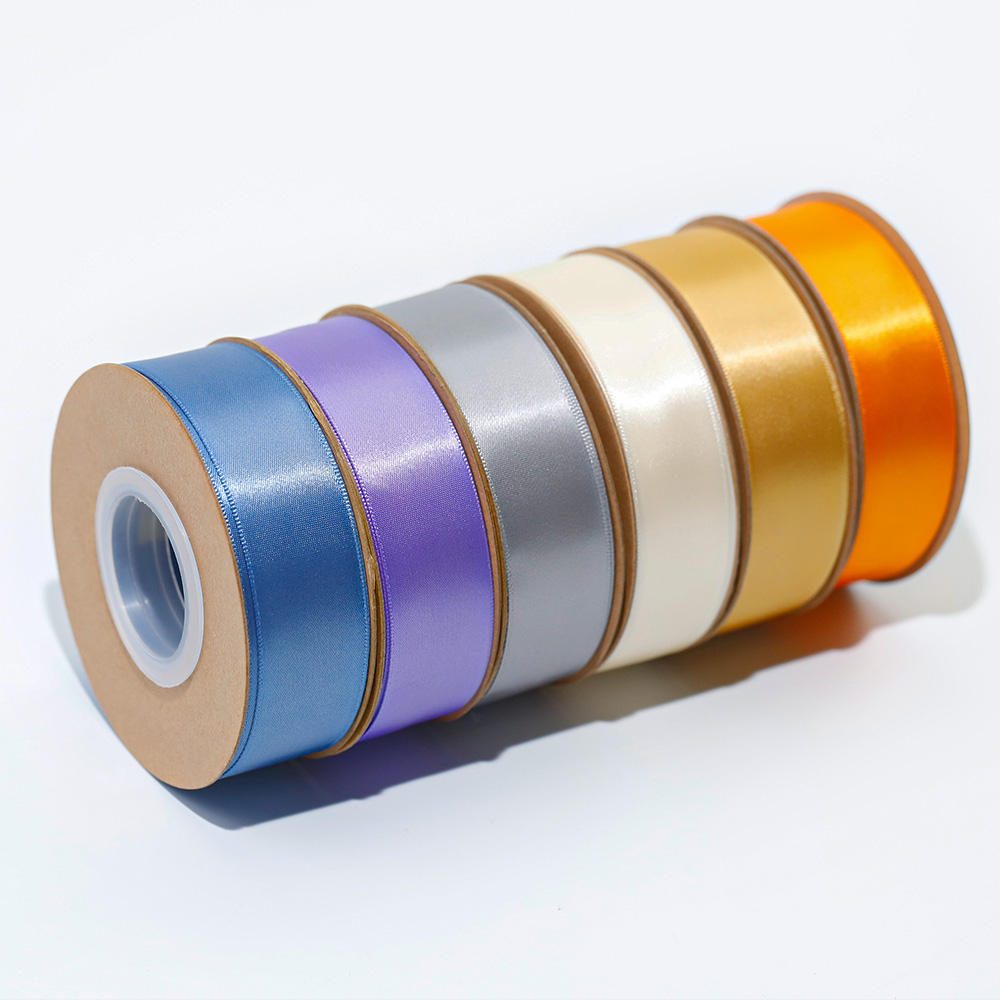
Double faced satin ribbon wholesale needs a written specification before the buyer can shortlist Wholesale Double Faced Satin Ribbon suppliers using proof, capability, quality, MOQ, and delivery criteria; otherwise suppliers may quote different product and approval assumptions.
Double-faced satin costs more because both sides are finished. Confirming you actually need the second face is the cheapest decision in the spec.
Direct answer: For double faced satin ribbon wholesale, buyers should shortlist Wholesale Double Faced Satin Ribbon suppliers using proof, capability, quality, MOQ, and delivery criteria.
What buyers should compare when sourcing double faced satin ribbon wholesale
| Option | Best fit | Trade-off | Risk to avoid | Verification | Follow-up |
|---|---|---|---|---|---|
| Stock colour, standard width | Repeat orders for retail packaging where colour consistency across batches is the priority | Narrower colour range than custom dyeing; width limited to supplier's existing set | Shade drift between production runs if supplier does not retain dye-lot records | Request a dye-lot continuity report for the last three orders of the same colour code | Add a clause in the RFQ requiring retained wet samples from each batch |
| Custom colour, standard width | Brand-matched ribbon for seasonal or promotional packaging where the colour must match a Pantone reference | Longer lead time for colour development; minimum quantity typically higher than stock | Colour approval sample may not match bulk production if the dye formula is not locked | Require a sealed colour standard and a spectrophotometer reading on the approval sample | Confirm the colour-matching tolerance (e.g., buyer-approved color tolerance) in the purchase order |
| Roll format, continuous length | High-volume automated packaging lines that feed ribbon from a roll without stopping | Requires a slitting and rewinding step; waste if the line jams and the roll is damaged | Inconsistent width across the roll length can cause machine misfeeds | Measure width at the start, middle, and end of the roll with a calibrated gauge | Document the acceptable width tolerance (e.g., the buyer-approved tolerance) in the spec sheet |
| Pre-cut lengths, bundled | Hand-tied gift packaging or event favour assembly where uniform piece length saves labour | Higher unit cost due to cutting and bundling labour; less flexible for variable-length uses | Cut lengths may vary if the supplier uses manual guillotines without a stop gauge | Inspect a random sample of the quoted quantity from the bundle for length deviation | Specify the acceptable length tolerance (e.g., the buyer-approved tolerance) and request a cutting log |
For stock colour, standard width, a poor decision can mean shade drift between production runs if supplier does not retain dye-lot records. Request a dye-lot continuity report for the last three orders of the same colour code.
Preserve the stock colour, standard width decision under one revision number: keep the supplier response, marked sample, approved specification, quotation, and approval owner together. If the evidence conflicts with the approved record, hold the quote, sample, or production release until the deviation is explained in writing. Once the buyer and designated technical authority have accepted the evidence, carry the signed approval record into the purchase order, production handoff, shipment release, and later reorder review so every team works from the same baseline.
- Does the supplier offer stock colours or custom colour matching for double faced satin ribbon? Stock colours ship faster and cost less, but custom colour matching ensures brand consistency across packaging and events. Supplier provides a colour-matching service with a sample proof before bulk production. Approving a colour that drifts from your brand standard can cause rework or rejected finished goods. Request a colour-matching sample and approve it in writing before production.
- What roll lengths and pre-cut options are available for wholesale orders? Roll format affects packing, shelf display, and end-use efficiency; pre-cut pieces reduce in-house labour. Supplier lists standard roll lengths and offers custom pre-cut lengths per your packing specification. Ordering the wrong format can lead to excess waste or additional cutting costs at your facility. Confirm roll length and pre-cut requirements in the RFQ, and verify on the sample.
- How does the supplier verify width consistency across production runs? Width tolerance directly impacts how the ribbon feeds into automated tying or packaging equipment. Supplier provides a width tolerance range and a QC check record from the last production run. Inconsistent width can jam machinery or cause uneven bows, leading to customer complaints. Request width measurement records from three consecutive rolls during sample approval.
- What packing and labelling options are offered for wholesale ribbon shipments? Proper packing prevents transit damage, and clear labelling simplifies warehouse receipt and inventory tracking. Supplier offers inner poly bags, outer cartons, and barcode labels per your packing specification. Poor packing can cause crushed rolls or lost inventory, delaying your production schedule. Define packing and labelling requirements in the purchase order and inspect the first shipment.
- Does the supplier maintain reorder records for past ribbon specifications? Accurate reorder records ensure colour, width, and construction match the original approved sample. Supplier can retrieve your previous order details and confirm they match the current specification. Without records, reorders may deviate from the approved sample, causing colour or size mismatches. Ask the supplier to attach the original specification sheet to the reorder confirmation.
Factory capability evidence to request
Ask the supplier for a process flow chart that shows how they control width consistency from greige goods to finished rolls. A factory that documents each slitting pass and records the blade gap can demonstrate repeatable output. Request a sample of their in-process inspection log for the last production run of the same ribbon type.
Communication, packing, and export-readiness signals
A supplier that provides a dedicated account manager and responds to technical questions within one business day is more reliable for repeat orders. Verify that the packing specification includes inner cores, polybag protection, and export-grade cartons with labels that match your SKU codes. Request a packing list template and a photo of the last export shipment to confirm labelling consistency.
Product and specification checks before shortlisting
Shortlist a double-faced satin ribbon supplier against one controlled RFQ revision. The buyer should define the construction, width, face consistency, color reference, edge finish, roll presentation, packing, and approval owner before comparing quotations. Each supplier response must point to a physical sample or a written quality record so a low price cannot hide a different material or inspection assumption.
| Requirement | Factory control | Evidence to verify | Order risk | RFQ follow-up |
|---|---|---|---|---|
| Ribbon construction | Both faces match the approved hand feel, sheen, and weave appearance | Material specification and retained production sample | A substituted construction changes drape, knot shape, or color response | Compare the sample with the end-use application before approval |
| Width control | Measured width remains inside the buyer-approved tolerance | Measurement record from several points on the sample roll | Width drift disrupts packaging fit or automated bow work | Record the method, tolerance, and rejection rule in the specification |
| Color and finish | Both faces match the physical color reference under agreed lighting | Marked color sample with revision, date, and approver | Lot variation becomes visible when bows turn or overlap | Retain the accepted sample for bulk inspection and reorders |
| Edge and roll presentation | Edges remain clean and winding tension does not crease the ribbon | Packing sample plus roll photographs from the quoted configuration | Fraying or crushed rolls create rework at the packing line | Approve the roll and carton presentation before release |
| Inspection handoff | Bulk checks use the same revision and acceptance criteria as the sample | First-article or pre-shipment inspection record | Production can pass a generic QC check while missing the buyer’s requirement | Name the approval owner and keep the signed record with the purchase order |
Ask the supplier to distinguish in-house operations from subcontracted steps and to identify where color, width, edge, winding, and packing are checked. Review OEM and ODM ribbon development before transferring the approved ribbon record into production.
Specification approval record
Keep the quote request revision, marked sample, measurement sheet, packing confirmation, and responsible approver together. If any proof conflicts, hold the quotation or production release until the supplier resolves the difference in writing.
MOQ, cost, sample, and lead-time questions
A comparable quotation must connect the requested ribbon construction to quantity, color count, width, packing, sample approval, and delivery timing. Ask every supplier to return these fields in the same order; otherwise a lower unit price may exclude a sample step, special packing, or a quality checkpoint that another quote includes.
Quote preparation checklist
- minimum order by configuration: ask whether the minimum applies by material, width, color, or the complete order and record any negotiable condition.
- Cost drivers: separate base ribbon, custom printed ribbon color, decoration, slitting, winding, labels, and carton packing so later changes can be repriced consistently.
- Sample route: define whether the quote includes a stock swatch, custom color sample, pre-production sample, or first-article record and state who approves it.
- Production calendar: Lude Ribbon’s standard production window is 15-20 business days after specifications are confirmed; add artwork review, sample approval, shipping, and any program-specific complexity to the quoted schedule.
- Reorder control: identify the retained sample, specification revision, color reference, and inspection record that will govern the next order.
Risk if missing: unmatched quote assumptions can cause an unexpected minimum, omitted sample step, avoidable delay, or a cost dispute after approval.
Do not approve an estimated minimum order or delivery date without its conditions. A safe commercial handoff states what is included, which buyer input is still open, what proof closes it, and which change requires a revised quotation.
Commercial confirmation record
File the supplier’s line-item response with the quote request revision and approved sample. This makes later cost or schedule changes traceable instead of relying on messages that do not identify the controlled specification.
Quality and communication red flags
- Sample approved on appearance alone without measurement: Bulk order may differ in width, color, or edge finish. Measure width, check color under daylight and retail light, inspect edge for fraying. Photo of sample with ruler, revision code, and approval date. Document sample findings and require supplier to confirm same checks in production.
- Unclear artwork revision or no revision code on sample: Outdated artwork may be used in bulk, causing rework or rejection. Require supplier to name exact artwork revision on quote request response and sample record. Artwork file with revision number and supplier confirmation of correct version. Attach artwork revision to quote request packet and approve sample only when revision matches.
- No documented sample record or photo for approval: No baseline for comparing bulk production or reorder consistency. Mark sample with revision, date, and approver; store photo with front, back, and close-up. Sample approval record with photo, revision code, and supplier sign-off. Use sample record as reference for QC inspection during bulk production.
- Vague minimum order or lead time without material and print method breakdown: Quotes may be based on different assumptions, making comparison impossible. Ask supplier to confirm minimum order per material, print method, width, packing, and order schedule. Written minimum order and lead time breakdown per variant in quote request response. Verify lead time of 15–20 business days after spec confirmation; add artwork and sample time.
- Supplier unable to name QC contact or production checkpoint: No accountability for quality issues during bulk run or reorder. Request factory contact responsible for QC follow-up and list of production checks. Supplier QC plan with checkpoint names and responsible person for each stage. Include QC contact in quote request packet and schedule a pre-production check call.
Review gift and retail packaging ribbon solutions before carrying the approved quality and communication red flags requirements into the wider ribbon sourcing decision.
How to move from shortlist to RFQ
Before sampling, the shortlist is ready only when the buyer has assembled a complete quote request packet that includes every specification, artwork, and commercial assumption the supplier needs to produce a comparable quote. The risk of skipping this step is receiving quotes based on different products, making comparison impossible.
Quote-ready inputs to send
- Define the material: double faced satin, width, color reference (Pantone or physical swatch), finish (sheen, dyed vs. printed).
- State the quantity by variant, roll length, core size, and packaging requirement (poly bag, carton, label).
- Attach artwork files, placement instructions, and revision code if printing is involved. Specify the approval method (digital proof, physical strike-off).
- List the target lead time, delivery terms, and any inspection or certification requirement. Ask the supplier to confirm minimum order and setup fees per variant.
Sample checks before deposit or bulk approval
When the sample arrives, do not approve it based on appearance alone. In the sample room, measure the actual width against the tolerance stated in the quote request. Check the color against the approved reference under daylight and retail lighting. Fold the ribbon and inspect the edge for fraying or uneven finish. Tie a bow or attach it to the intended package to confirm drape and knot behavior. Document each finding with a photo and mark the sample with the revision, date, and approver.
Only after the sample passes these checks should you release the deposit or approve bulk production. For a complete view of factory capability, review the Lude Ribbon factory and request a production tour before committing to the order.
In conclusion
Approve a double faced satin ribbon wholesale order only after the written specification, normalized quote, and physical sample point to the same revision. Measure the width, compare colour under the lighting used for approval, inspect the edge, and test drape and knot behaviour. Record each finding with a photo and revision code so any deviation is resolved before bulk production.
The Lude Ribbon factory profile lists more than 300 skilled workers and a 6,000 m² factory. Treat those figures as capability context, then confirm current capacity, sample approval time, and shipping separately for the quoted satin ribbon program.
Carry the signed sample record, packing requirements, and quality checkpoints into the purchase order and reorder file. To approve a sample, visit satin ribbon and confirm the final specification, quote assumptions, sample approval, QC evidence, approval risk, and supplier follow-up before bulk order.
Double faced satin ribbon FAQ
What should buyers confirm before ordering?
Only proceed after the buyer confirms material, width tolerance, print or finish limits, minimum order, setup fees, bulk lead time, packing method,
and QC contact in the quote request and sample approval.
minimum order is negotiable per material, print method, width, packing, and order schedule.
Lead time is 15–20 business days after specification confirmation, plus artwork review and sample approval.
The risk is receiving a product that does not match the intended use.
Verify by measuring the sample and documenting approval with a photo and revision code.
How should buyers compare MOQ, lead time, and quote terms?
Until the buyer assembles a complete quote request packet with every specification, artwork, and commercial assumption, quotes are not comparable. The risk is receiving quotes based on different products. Compare by checking sampling risk, color or artwork change risk, reorder consistency, and shipping assumptions. Verify by documenting the quote input and requiring the supplier to state what is fixed and what can change. Ask how QC will check the sample, color, finish, packing, and bulk order.
What sample, quality, or supplier checks reduce risk?
Only proceed after the buyer measures the sample, checks color under daylight and retail lighting, inspects edges for fraying, and tests drape and knot behavior before approving production. The risk is approving a sample that does not match production quality. Verify by documenting each finding with a photo and marking the sample with revision, date, and approver. Require the supplier to confirm the same checks in bulk production.
Keep exploring
Recommended buyer guides
 Velvet Ribbon Wholesale Checklist: MOQ, Finish, and Supplier Questions
Evaluate velvet ribbon wholesale options: MOQ, setup fees, unit cost, and packing. Narrow the list before requesting samples…
Explore guide
Velvet Ribbon Wholesale Checklist: MOQ, Finish, and Supplier Questions
Evaluate velvet ribbon wholesale options: MOQ, setup fees, unit cost, and packing. Narrow the list before requesting samples…
Explore guide
 Wholesale Ribbon By The Roll: Roll length and inventory planning
Evaluate Wholesale Ribbon By The Roll options: factory capability, QC proof, lead time, and reorder reliability. Narrow the…
Explore guide
Wholesale Ribbon By The Roll: Roll length and inventory planning
Evaluate Wholesale Ribbon By The Roll options: factory capability, QC proof, lead time, and reorder reliability. Narrow the…
Explore guide
 Award Ribbons Wholesale: Bulk award ribbon supplier checks
Shortlist Award Ribbons Wholesale suppliers by factory capability, QC proof, lead time, and reorder reliability. See which options…
Explore guide
Award Ribbons Wholesale: Bulk award ribbon supplier checks
Shortlist Award Ribbons Wholesale suppliers by factory capability, QC proof, lead time, and reorder reliability. See which options…
Explore guide
 Wholesale Ribbon Manufacturers: Factory vs Trading Company Checklist
Evaluate Wholesale Ribbon Manufacturers options: factory capability, QC proof, lead time, and reorder reliability. Narrow the list before…
Explore guide
Wholesale Ribbon Manufacturers: Factory vs Trading Company Checklist
Evaluate Wholesale Ribbon Manufacturers options: factory capability, QC proof, lead time, and reorder reliability. Narrow the list before…
Explore guide
Leave a comment
Share a sourcing question or feedback on this guide. The Lude team reviews submissions before following up.