


Bulk Velvet Ribbon: Bulk velvet order checks
Shortlist Bulk Velvet Ribbon suppliers by factory capability, QC proof, lead time, and reorder reliability. See which options fit your project specs
Bulk velvet ribbon needs a written specification before the buyer can shortlist Bulk Velvet Ribbon suppliers using proof, capability, quality, MOQ, and delivery criteria; otherwise suppliers may quote different product and approval assumptions.
Velvet crushes in transit and recovers unevenly. How it is wound and packed matters as much as how it is woven.
Direct answer: For bulk velvet ribbon, compare matched samples, documented production capability, quality records, quantity rules, and delivery assumptions on the same basis.
What buyers should compare when sourcing velvet ribbon
Compare suppliers against the same written construction, color target, pile specification, roll format, quantity, and required date. A shortlist is credible only when each supplier returns matching samples, production evidence, and written exceptions against those inputs.
- Supplier capability: Verify the supplier runs velvet-specific looms and has a dedicated sample room for pile-height and color approval. Supplier provides a pre-production sample with measured pile height and dye-lot number before bulk. Supplier only shows catalog photos and cannot produce a velvet-specific sample within supplier-confirmed timing. Request a velvet-specific capability sheet and sample-room photo before shortlisting.
- MOQ or order quantity: Confirm minimum per color and per width; velvet dye-lot consistency often requires higher minimums. Supplier states MOQ per color and offers split-dye-lot options to reduce risk. Supplier quotes a single minimum order without color or width breakdown, risking leftover inventory. Ask for minimum order per color and per width in writing; compare against your program volume.
- Quality control: Check for pile-height tolerance, edge-finish inspection, and shade-band approval before bulk. Supplier uses a calibrated pile-height gauge and provides a shade-band for each dye lot. Supplier has no documented QC step for velvet pile or edge fraying in their process. Request a copy of the QC checklist for velvet ribbon and a shade-band from the last production run.
- Verification method: Require a pre-production sample with written approval of pile height, color, and edge finish. Supplier sends a sealed sample with a signed approval sheet and dye-lot reference. Supplier ships bulk without written sample approval, leaving color mismatch unresolved. Document sample approval in a sign-off form before authorizing production.
- Assess reorder consistency: does the supplier keep dye-lot records for future runs? Supplier maintains archived shade-bands and can match color within agreed response time for reorders. Supplier cannot guarantee color match on reorders without a new sample approval cycle. Ask for a reorder policy and archived shade-band availability before placing the first order.
Factory capability evidence to request
Ask for a factory tour video showing velvet looms and the sample room. A supplier that runs velvet-specific equipment can control pile height and edge finish. Without this evidence, you risk inconsistent texture and color across bulk runs. Request a capability sheet listing loom types, dye equipment, and sample turnaround time.
MOQ, sampling, lead-time, and reorder terms to compare
Compare minimum order per color and width across suppliers. Velvet ribbon requires larger minimums due to dye-lot consistency. Confirm sampling lead time and whether the supplier holds stock colors. For reorders, ask if they archive shade-bands to skip a full approval cycle. Standard production runs 15–20 business days after spec confirmation.
Product and specification checks before shortlisting
- Can the supplier produce custom printed ribbon on velvet substrate, and what is the minimum run? Printing on velvet requires different ink and heat settings than satin or grosgrain; not all factories offer it. Supplier shows past velvet print samples and states a per-design minimum of 3,000 yards for custom printed ribbon. Unverified print capability leads to poor adhesion, color bleed, or rejected finished goods. Ask for a print-sample proof on actual velvet substrate before approving the artwork.
- What in-process quality checks does the factory run on bulk velvet ribbon before packing? Velvet pile can crush or shade unevenly during slitting and winding; early detection prevents scrap. Factory describes visual inspection under controlled light, width gauge checks every roll, and shade-band sorting. Without pile and shade checks, finished rolls may show visible streaks or mismatched dye lots. Request a QC checklist or video walkthrough of the velvet inspection station.
- How does the supplier handle color matching and lot-to-lot consistency for dyed velvet ribbon? Velvet absorbs dye differently than flat ribbon; even slight batch variation is visible in folded bows. Supplier uses spectrophotometer readings and keeps physical shade cards for each dye lot. Inconsistent color across production runs forces last-minute re-dye or order cancellation. Confirm that shade-band approval is part of the sample sign-off process before bulk production.
Material, width, color, finish, and customization range
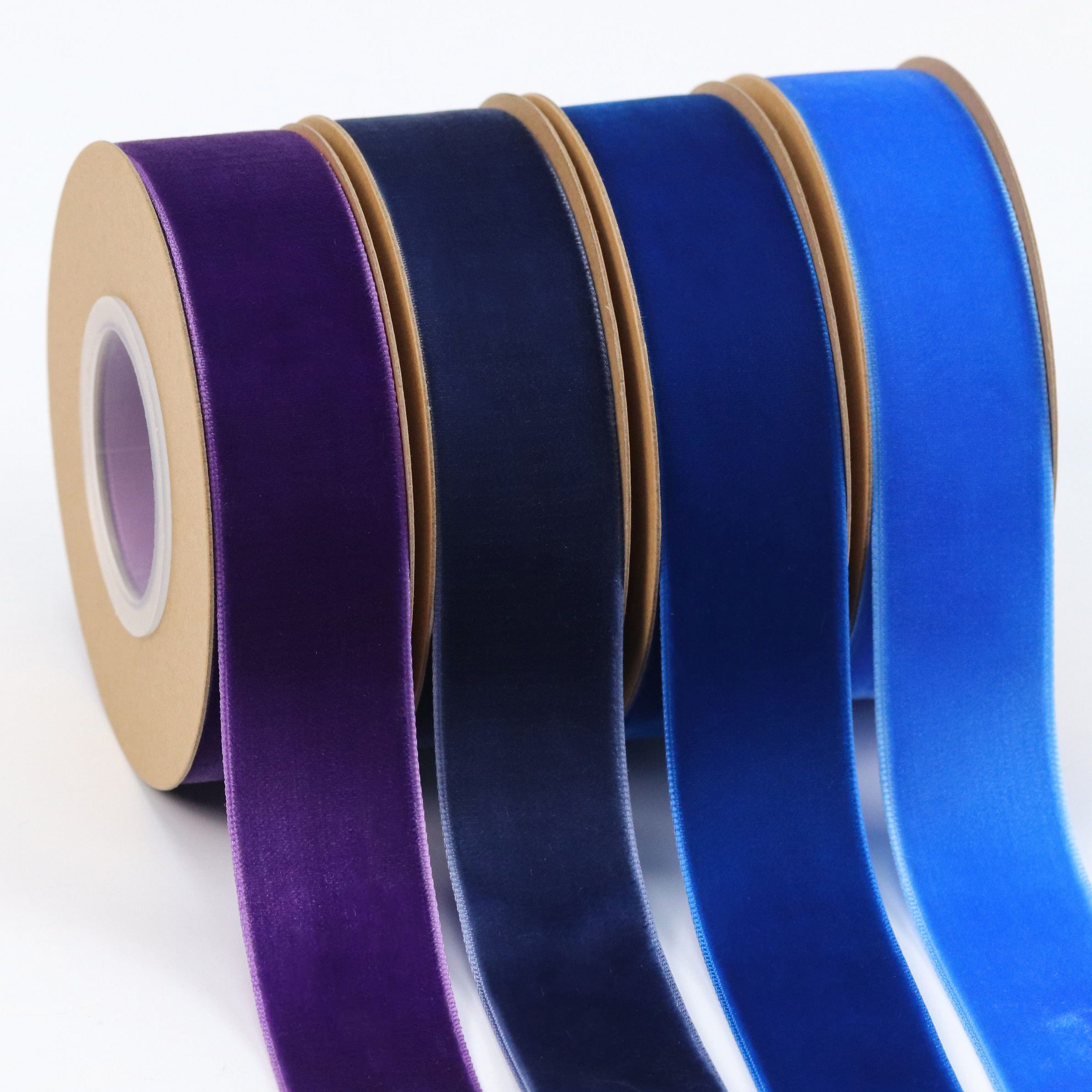
Velvet ribbon is defined by fiber content, pile height, and edge finish. Buyers should verify whether the supplier offers woven-edge or cut-edge velvet and whether custom widths are available. Color matching requires a physical shade card or spectrophotometer reading. Confirm that the supplier can produce custom printed ribbon on velvet without compromising pile texture.
Printing, bow-making, packing, and inspection capability
Printing on velvet requires heat-stable inks or foil stamping to avoid crushing the pile. In-house bow-making ensures consistent loop size and tightness, while proper packing on cores or spools prevents creasing during transit. Inspection should include a light table check for color variation and a pull test on seams or printed edges. Ask the supplier if they run a separate velvet production line to avoid cross-contamination with other ribbon materials.
MOQ, cost, sample, and lead-time questions
| Criteria | Baseline option | Confirmed option | Buyer meaning | Risk to avoid | Follow-up |
|---|---|---|---|---|---|
| Specification details | Standard widths and colors from inventory | Custom width, color, or pile height per program | Stock velvet ribbon uses existing yarn and dye lots; custom requires new yarn purchase and color matching. | Custom specs may extend lead time if yarn must be sourced or dyed. | Confirm whether your width and color are in the supplier's standard range before requesting a custom quote. |
| Cost driver | Material grade and width determine base cost | Custom color matching and pile-height adjustments add surcharges | Standard velvet uses one yarn type; custom may require premium yarn or extra dye lots. | Low unit price on custom velvet may hide thinner pile or shorter fiber life. | Request a cost breakdown by material grade, width, and color count to compare apples-to-apples. |
| Quality control | Visual inspection and width gauge check per roll | Pile-height measurement and color-fastness test on first production sample | Standard QC catches edge fray and width variance; custom QC adds pile density and shade tolerance. | Without pile-height verification, ribbon may crush or fade after first wash. | Ask for a pile-height tolerance range and a color-fastness report before bulk approval. |
| MOQ or order quantity | 1,500 yards per color/width for stock velvet ribbon | 3,000 yards per design for custom printed velvet; custom color quoted per RFQ | Stock MOQ uses existing inventory; custom MOQ covers yarn purchase and setup. | Ordering below MOQ may force a split shipment or higher per-yard cost. | Verify whether your total program quantity can be consolidated into one production run to meet MOQ. |
For specification details, a poor decision can mean custom specs may extend lead time if yarn must be sourced or dyed. Request written proof and compare it with the approved sample or specification.
Preserve the specification details decision under one revision number: keep the supplier response, marked sample, approved specification, quotation, and approval owner together. If the evidence conflicts with the approved record, hold the quote, sample, or production release until the deviation is explained in writing. Once the buyer and designated technical authority have accepted the evidence, carry the signed approval record into the purchase order, production handoff, shipment release, and later reorder review so every team works from the same baseline.
How to compare quote assumptions across suppliers
When reviewing quotes for bulk velvet ribbon, check that each supplier lists the same width, pile height, fiber content, and color count. A low quote may assume a thinner pile or a narrower width than your spec. Ask each supplier to confirm their material grade and dye method in writing, and compare the cost per yard after those variables are locked.
When low unit price creates quality or delay risk
A low unit price on custom velvet ribbon often signals a shorter pile height or a lower-grade yarn that may crush during packaging. It can also mean the supplier skipped the lab dip step, risking a shade mismatch. To avoid delays, request a production sample at the quoted price and verify pile density and color fastness before approving the bulk run. OEM and ODM ribbon development requires this level of specification control.
Quality and communication red flags
- Supplier cannot show a velvet-specific sample approval process: Velvet pile crush and color shift are common; without a structured sign-off, bulk may mismatch the approved standard. Ask for their sample approval workflow, including lighting standard and pile measurement check. A written sample approval procedure or a completed sample sign-off sheet from a recent bulk velvet order. Shortlist only suppliers who provide a velvet-specific sample approval checklist.
- No documented color tolerance or batch-to-batch control method: Velvet dye absorbs differently per fiber lot; without tolerance limits, reorder color drift is likely. Request their color tolerance standard (e.g., buyer-approved color tolerance value) and how they match production to the approved master. A color measurement report from a past bulk run showing the buyer-approved color tolerance range between master and production. Document the agreed tolerance in the RFQ and require a color chip sign-off before bulk production.
- Supplier cannot confirm pile height consistency across production rolls: Uneven pile height changes the hand feel and appearance, especially in gift and retail packaging ribbon solutions. Ask how they measure and control pile height during weaving and finishing. A pile height measurement record from a recent production batch, showing the range across rolls. Include pile height tolerance in the specification sheet and verify on the first production sample.
- No clear packing and labeling standard for the velvet order rolls: Improper packing can crush the pile, and missing labels cause warehouse confusion and reorder errors. Request their standard packing method (roll core size, inner wrap, outer carton) and label format. A packing specification sheet or a photo of a labeled velvet order carton from a past order. Approve the packing and labeling standard in writing before the first production run.
- Supplier has no repeat-order control system for custom velvet ribbon programs: Without a program file, reorders risk color, pile, or width mismatches from the original approval. Ask if they archive the approved master sample, color chip, and spec sheet per program. A sample program file name or record showing archived specs from a previous reorder. Confirm that your program will be filed under a unique program number for future reorders.
Artwork, color, and sample approval gaps
Velvet ribbon absorbs dye differently than satin or grosgrain, so a generic sample process often misses pile crush or color shift. Without a velvet-specific approval gate, bulk production can drift from the approved standard. Buyers should require a written sign-off that includes lighting condition, pile measurement, and a sealed master sample before production starts.
Packing, labeling, and repeat-order control risks
Velvet order rolls need proper core size and inner wrap to protect the pile during shipping. Missing or inconsistent labels create confusion in the warehouse and increase the risk of shipping the wrong product. Without a program file that archives the approved master sample and spec sheet, reorders may fail to match the original color, pile, or width.
How to move from shortlist to RFQ
For bulk velvet ribbon, build the RFQ around Check lead time and production scheduling window. Match every listed buyer input to written supplier confirmation, approval evidence, and the risk that would hold the quote.
- Check lead time and production scheduling window: Velvet ribbon production requires loom setup, dye lot coordination, and finishing. Lead time affects your launch date and inventory holding cost. Supplier states 15–20 business days after spec approval. Confirm if that includes sample approval time or starts after deposit. You miss a retail launch window or incur expedite fees. Production delays cascade into downstream packaging and distribution. Request a calendar-based production schedule with milestone dates for sample, bulk run, and shipment.
- Identify the primary cost driver in the quote: For velvet ribbon, cost is driven by pile density, dye method (piece-dye vs. solution-dye), and edge finish. Knowing the driver lets you negotiate or substitute without sacrificing quality. A low unit price may indicate a shorter pile or a cheaper dye process that fades. Ask: 'What is the cost breakdown per yard for material, dye, and finishing?' You select a quote based on price alone and later discover the ribbon pills, fades, or frays, requiring a costly reorder. Compare cost drivers across shortlisted suppliers and flag any quote that is significantly below market for your spec.
- Document buyer follow-up steps for sample approval: Sample approval is the gate before bulk production. Without a written follow-up plan, you risk delays or mismatched expectations on color, pile, and edge quality. After receiving the sample, check pile height with a caliper, compare color under buyer-approved viewing conditions, and test edge fraying by hand. Document results. Bulk production starts with an unapproved sample, leading to full-lot rejection. You lose time and leverage for correction. Send a sample approval checklist to the supplier and require written sign-off before they proceed to bulk.
Quote-ready inputs to send
Before you request a quote, gather your spec sheet: fiber content, pile height, edge finish, width tolerance, and color target. Attach a physical or digital color standard. State the total yardage per color and design, plus any split-pack or roll-size preferences. Include your target delivery date and shipping method. This package lets the supplier quote accurately and avoid rework later.
Sample checks before deposit or approval
Once you receive a velvet ribbon sample, measure pile height with a caliper and check edge finish for fraying. Compare color under standardized lighting (buyer-approved viewing conditions) against your target. Test dye fastness by rubbing a white cloth across the pile. Document every finding. Do not approve until the sample matches your spec sheet exactly. A signed sample approval protects both sides.
Source check: ISO 2859-1 sampling inspection standard; How to Find a Reliable Milk Velvet Fabric Supplier for Bulk Ord….
In conclusion
The final approval for bulk velvet ribbon comes down to verifying the cost driver that matters most to your program—whether it’s the fiber type (polyester vs. nylon), pile height consistency, or the edge finish that affects waste. Compare each supplier’s price breakdown against these variables, not just the per-yard rate, and document how their minimum order and lead time align with your production schedule. Shortlist only those who can provide a sample that matches your spec sheet and a written confirmation of the cost components tied to your chosen construction.
Before you approve the order, check that the supplier’s quality control includes a pile-height measurement and a dye-lot tolerance report, and verify that the core size and inner wrap protect the ribbon during transit. This handoff from quote request to sample approval ensures you’ve captured the real cost drivers—material grade, width, and color complexity—and that your supplier risk is minimized before production begins.
Velvet ribbon FAQ
What should buyers confirm before ordering Velvet Ribbon?
Only if the supplier provides a written spec sheet that covers fiber content, pile height, edge finish (cut or woven), and color target. Compare these parameters against your intended use—gift packaging, garment trim, or floral decoration—because each application demands different pile density and width tolerance. Verify that the supplier can produce the exact width you need and confirm the minimum order for that width in the quote request, as custom widths may require a separate production setup.
How should buyers compare MOQ, lead time, and quote terms?
Shortlist suppliers by requesting a formal quote that breaks down unit cost per yard, minimum order per color or design, and lead time after spec confirmation. For plain stock velvet ribbon, the minimum order is typically based on existing inventory colors and widths, while custom colors or printed designs require a higher minimum per program. Document the lead time in business days after artwork and sample approval, and compare quotes side by side to see which supplier offers the best balance of cost, minimum order flexibility, and production schedule for your order volume.
What sample, quality, or supplier checks reduce risk?
Request a pre-production sample that matches your color target and pile height specification, then measure the pile height with a caliper and check the edge finish for fraying or uneven cutting. Verify that the sample’s dye absorption is consistent across the roll width, as velvet ribbon can show shade variation. Before approving the bulk order, confirm that the supplier’s quality control includes a visual inspection of each roll and a check of core size and inner wrap to protect the pile during transit. Follow up with a written approval of the sample and a clear quote request that references the approved spec.
quote request handoff: Send Specs for Review.
Keep exploring
Recommended buyer guides
 Velvet Ribbon Wholesale Checklist: MOQ, Finish, and Supplier Questions
Evaluate velvet ribbon wholesale options: MOQ, setup fees, unit cost, and packing. Narrow the list before requesting samples…
Explore guide
Velvet Ribbon Wholesale Checklist: MOQ, Finish, and Supplier Questions
Evaluate velvet ribbon wholesale options: MOQ, setup fees, unit cost, and packing. Narrow the list before requesting samples…
Explore guide
 Wholesale Ribbon By The Roll: Roll length and inventory planning
Evaluate Wholesale Ribbon By The Roll options: factory capability, QC proof, lead time, and reorder reliability. Narrow the…
Explore guide
Wholesale Ribbon By The Roll: Roll length and inventory planning
Evaluate Wholesale Ribbon By The Roll options: factory capability, QC proof, lead time, and reorder reliability. Narrow the…
Explore guide
 Award Ribbons Wholesale: Bulk award ribbon supplier checks
Shortlist Award Ribbons Wholesale suppliers by factory capability, QC proof, lead time, and reorder reliability. See which options…
Explore guide
Award Ribbons Wholesale: Bulk award ribbon supplier checks
Shortlist Award Ribbons Wholesale suppliers by factory capability, QC proof, lead time, and reorder reliability. See which options…
Explore guide
 Wholesale Ribbon Manufacturers: Factory vs Trading Company Checklist
Evaluate Wholesale Ribbon Manufacturers options: factory capability, QC proof, lead time, and reorder reliability. Narrow the list before…
Explore guide
Wholesale Ribbon Manufacturers: Factory vs Trading Company Checklist
Evaluate Wholesale Ribbon Manufacturers options: factory capability, QC proof, lead time, and reorder reliability. Narrow the list before…
Explore guide
Leave a comment
Share a sourcing question or feedback on this guide. The Lude team reviews submissions before following up.