


Bulk Ribbon Wholesale: Bulk order fit and product range
Shortlist Bulk Ribbon Wholesale suppliers by factory capability, QC proof, lead time, and reorder reliability. See which options fit your project specs
Bulk ribbon wholesale needs a written specification before the buyer can shortlist Wholesale Bulk Ribbon suppliers using proof, capability, quality, MOQ, and delivery criteria; otherwise suppliers may quote different product and approval assumptions.
A wholesale ribbon range is limited by how many dye lots you can hold, not by how many colors a factory can produce.
Direct answer: For bulk ribbon wholesale, compare matched samples, documented production capability, quality records, quantity rules, and delivery assumptions on the same basis.
What buyers should compare when sourcing ribbon
- Supplier capability: Verify the supplier's in-house material range covers your ribbon type, width, and construction. Supplier lists plain stock, custom printed, and ready-made bow production lines. Supplier outsources printing or bow assembly, adding lead time and quality variance. Request a line card or factory capability sheet before RFQ.
- MOQ or order quantity: Confirm MOQ per design or SKU, not a blanket minimum across all products. Supplier provides separate MOQs for plain stock, custom printed, and bows. Blanket minimum order hides per-design minimums, causing shortfall charges or delayed runs. Compare minimum order against your program volume per SKU; ask for per-design breakdown.
- Quality control: Check if the supplier uses AQL sampling or full inspection for ribbon width, color, and print registration. Supplier references the agreed sampling plan or in-line inspection during slitting and rewinding. No documented QC process; defects found only at your receiving dock. Request a QC checklist or inspection report from the last bulk run.
- Verification method: Confirm the supplier provides a production sample that matches your approved spec before bulk production. Supplier holds sample until you sign off against original spec sheet and color target. Supplier ships bulk without sample approval, risking color shift or width variance. Set a written sample-approval gate in the purchase order.
- Assess how the supplier handles artwork, color matching, and spec changes after order confirmation. Supplier offers one round of artwork revision and a digital color proof before production. Changes after order confirmation incur rework fees and push lead time beyond 20 business days. Define revision limits and approval deadlines in the RFQ terms.
Factory capability evidence to request
Ask for a factory profile that lists in-house looms, printing presses, slitting, and bow-making equipment. A supplier that owns these processes can control quality and lead time directly. Outsourced steps add handoff risk and delay. Compare the listed equipment against your ribbon type—satin, grosgrain, velvet, or organza—to confirm fit.
MOQ, sampling, lead-time, and reorder terms to compare
Request a written minimum order schedule broken by product type: plain stock, custom printed, and ready-made bows. Confirm whether the minimum order applies per design or per color. Ask for standard production lead time after spec approval and sample sign-off. For reorders, check if the same minimum order applies or if a lower quantity is allowed for repeat runs.
Communication, packing, and export-readiness signals
Evaluate how quickly the supplier responds to spec questions and whether they provide a dedicated account manager. Confirm packing standards: inner poly bags, carton weight limits, and export-ready palletizing. A supplier that offers FOB, CIF, or DDP terms and has experience with your destination port reduces logistics surprises. Request a packing list from a recent export order.
Product and specification checks before shortlisting
- Does the supplier produce custom printed ribbon in-house? Confirms whether the factory owns its printing line or outsources, which affects lead time, color match, and reorder consistency. Supplier states they operate their own printing department with dedicated color-matching equipment. Outsourced printing can cause color drift between runs and longer approval cycles. Request a tour or video of the printing line before shortlisting.
- What material widths and finishes can the supplier run without subcontracting? Determines if the factory can handle your full spec range—satin, grosgrain, velvet, organza—without splitting orders. Supplier lists all standard widths and finishes they produce on their own looms and finishing lines. Narrow capability may force you to split orders across multiple factories, increasing coordination cost. Cross-check your spec sheet against their in-house capability list.
- Does the supplier offer pre-production samples for color and print approval? A sample step before bulk production is the only reliable way to verify color match, print registration, and ribbon hand feel. Supplier provides a written sample approval process with a clear turnaround time. Skipping samples can lead to off-spec bulk goods that are expensive to rework or reject. Ask for their sample request form and approval checklist.
- How does the factory inspect printed ribbon for color consistency across the run? Continuous color control during production prevents shade variation that makes custom printed ribbon look mismatched on the shelf. Supplier uses in-line spectrophotometers or a documented stop-check procedure at defined intervals. Without run-time inspection, you may receive rolls with visible color shifts that fail your quality gate. Request their QC standard for color tolerance and inspection frequency.
- Can the supplier handle bow-making, packing, and labeling to your retail-ready specification? Value-added services like pre-tied bows, polybagging, and barcode labeling affect your downstream labor cost and shelf readiness. Supplier offers a dedicated packing department with custom labeling and assembly options. A factory that only ships bulk rolls forces you to manage finishing and packaging elsewhere. Send your packing spec and ask for a per-unit cost for each value-add step.
Material, width, color, finish, and customization range
Before shortlisting, verify that the supplier's in-house material range covers your exact needs—satin, grosgrain, velvet, organza—and the widths you require. A factory that produces all finishes on its own looms can control color consistency and lead time better than one that subcontracts. Ask for a capability matrix that lists every material, width, and finish they run without outsourcing.
Printing, bow-making, packing, and inspection capability
In-house printing, bow-making, and packing reduce lead time and quality risk. Ask if the supplier runs screen, flexo, or digital printing for custom printed ribbon, and whether they have automated bow-tying and packing lines. Confirm a dedicated QC inspection step—such as a final visual check and measurement audit—before shipment. Subcontracting any of these steps adds handoff delays and variability.

MOQ, cost, sample, and lead-time questions
| Criteria | Baseline option | Confirmed option | Buyer meaning | Risk to avoid | Follow-up |
|---|---|---|---|---|---|
| Specification details | Exact material, width, color system, and construction type are locked before quoting | Specifications are left open or assumed from a product category name | A locked spec sheet prevents rework and requote cycles after the PO is placed | Open specs lead to mismatched color, width tolerance failures, or wrong material for the end use | Document material, width, color system (PMS or thread match), and construction type before requesting any quote |
| Cost driver | Cost is driven by material grade, width, print method, and quantity per design | Cost is driven by a single unit price with no breakdown of inputs | Knowing the cost drivers lets you negotiate on the right variable—material, print, or quantity—not just the final price | A single unit price hides where cost can be reduced or where a supplier is padding margin on a specific input | Request a cost breakdown by material, print method, and quantity tier for each design |
| Quality control | Supplier runs in-process checks on color, width, and print registration during production | Supplier inspects only finished goods before packing | In-process QC catches defects early, reducing the chance of a full-run rejection at final inspection | End-of-line inspection alone can miss systematic issues like color drift or width variation across the run | Ask the supplier to describe their QC checkpoints and whether they hold a first-article inspection before bulk production |
| Approval risk | Artwork, color, and sample are approved in writing before bulk production starts | Production begins on verbal approval or a quick email confirmation | Written approval creates a clear acceptance record and reduces dispute risk over color or print alignment | Verbal approval leaves no audit trail; a color mismatch or print error becomes a costly rework or reject | Require a signed approval form or email confirmation for artwork, color match, and sample sign-off before production |
| MOQ or order quantity | MOQ is per design and per color, with clear yardage or piece minimums | MOQ is a single total yardage across all designs and colors | Per-design MOQ protects the supplier's setup cost and ensures each program is viable; total MOQ can hide unprofitable small runs | A total MOQ may force you to over-order on one design to meet the minimum, increasing inventory risk | Confirm the MOQ per design and per color, and check if split orders across multiple designs count toward the same minimum |
For specification details, a poor decision can mean open specs lead to mismatched color, width tolerance failures, or wrong material for the end use. Request written proof and compare it with the approved sample or specification. Use the result to decide whether this checkpoint can proceed or must stay on hold.
How to compare quote assumptions across suppliers
When you request quotes for bulk ribbon, each supplier may base their pricing on different assumptions about material grade, print method, width tolerance, and quantity per design. To compare fairly, ask every supplier to quote on the same locked specification sheet. Without this, you are comparing apples to oranges, and the lowest unit price may hide a narrower width or thinner material that fails your end-use requirement.
When low unit price creates quality or delay risk
A low unit price often signals that the supplier is using a lower-grade material, reducing print quality, or skipping in-process QC checks. For bulk ribbon, the cost of a rejected run—return shipping, lost time, and emergency reorder—can erase any savings. Always verify the supplier's QC process and ask for a sample from the actual production run, not a pre-production sample, before approving the bulk order. OEM and ODM ribbon development requires this level of diligence to avoid costly surprises.
Quality and communication red flags
- Supplier cannot show a color-matching log for previous bulk ribbon orders. Without a recorded color standard, the first production run may drift from the approved sample, causing rework or rejection. Ask for the factory's color-tolerance protocol and request a written commitment to match your PMS or thread-code target. A signed color-approval sheet from the supplier's last three bulk ribbon wholesale orders. Document the agreed color standard in the quote request and require a pre-production sample against that standard.
- Factory declines to provide a sealed production sample before bulk cutting. Skipping the sealed sample removes the only verifiable checkpoint between artwork approval and finished goods. Insist on a sealed sample that matches the approved artwork, width, and material before any bulk production starts. A dated photo of the sealed sample with a ruler and PMS chip in frame. Hold the production start until the sealed sample is physically received and signed off.
- Packing list and carton markings are not confirmed before the first shipment. Mismatched labels or incorrect carton counts can delay customs clearance and disrupt downstream packing lines. Require a pre-production packing mock-up with label placement, carton dimensions, and inner-pack quantity. A digital proof of the carton marking artwork and a signed packing specification sheet. Approve the packing spec in writing and attach it to the purchase order as a binding document.
- Supplier has no written repeat-order control for gift and retail packaging ribbon solutions solutions. Without a repeat-order file, the next batch may use a different dye lot or material source, creating visible shade variation. Ask the supplier to maintain a repeat-order record that includes the original dye-lot number, width tolerance, and packing spec. A sample repeat-order record from a previous client showing the retained data fields. Include a clause in the contract requiring the supplier to reference the original order's dye-lot and QC log for every reorder.
Artwork, color, and sample approval gaps
A missing color standard or unsigned artwork proof is a common cause of rejected bulk ribbon. Without a sealed production sample, the factory has no fixed target for shade, width, or print registration. Buyers should require a signed color chip and a physical sealed sample before any bulk cutting begins. This single step prevents many approval disputes.
Packing, labeling, and repeat-order control risks
Carton markings and inner-pack quantities are often treated as afterthoughts, yet they directly affect warehouse receiving and retail compliance. A pre-production packing mock-up prevents label mismatches and carton-size surprises. For repeat orders, a retained dye-lot record and QC log ensure color consistency across batches. Both checks should be written into the purchase order as binding requirements.
How to move from shortlist to RFQ
Build the quote request around a full spec sheet: material, width, color target, construction, and packing. Match every listed buyer input to written supplier confirmation, approval evidence, and the risk that would hold the quote.
- Full spec sheet: material, width, color target, construction, and packing. A missing or vague spec forces the supplier to guess, leading to rework and delays. For a grosgrain ribbon order, include thread count, dye method, and core size. You receive a sample that does not match your program's color or width tolerance. Attach the approved spec sheet to the quote request and request written confirmation of each line.
- minimum order per design or SKU, not a blanket minimum. Blanket MOQs hide per-design cost breaks and can lock you into over-ordering. A 3,000-yard printed ribbon minimum order per design means each logo or colorway must hit that threshold. You commit to a single large run and cannot split inventory across programs. List each SKU's target quantity and ask the supplier to confirm minimum order per line item.
- Lead time broken into production, artwork review, and sample approval. A single lead-time figure often excludes the approval gates that cause real delays. Standard production is 15–20 business days after specs are confirmed, plus time for artwork sign-off. You schedule a launch date based on production time alone and miss the shipping window. Request a timeline with milestones: artwork proof, sample ship, bulk start, and estimated delivery.
- Cost driver breakdown: material grade, print method, and packing type. Hidden cost drivers like custom color matching or polybag per roll inflate the final invoice. A PMS-matched satin ribbon costs more than a stock-color grosgrain due to dye setup and waste. You approve a low unit price and later face surcharges for artwork, samples, or rush handling. Ask the supplier to itemize the quote: material, setup, print, packing, and any minimum charge.
- Quality control checkpoints: first-piece approval, in-line inspection, final pack audit. Without documented QC gates, you accept whatever leaves the factory floor. Request a photo of the first production piece against the approved sample before bulk cutting. A color shift or width variance goes unnoticed until the container arrives at your warehouse. Write QC checkpoints into the purchase order and require a pass/fail report at each gate.
Quote-ready inputs to send
Before you send an quote request, gather every spec that affects cost and lead time: material type, width, color system (PMS or thread), construction details, packing format, and target quantity per SKU. A complete input set lets the supplier quote accurately on the first pass and avoids the back-and-forth that delays sample approval.
Sample checks before deposit or approval
Never approve a production sample without verifying it against your original spec sheet. Check width with a caliper, compare color under daylight and store lighting, and confirm the construction (weave, edge finish, core size). A mismatch at this stage means the bulk run will repeat the same error, costing time and rework money.
In conclusion
Before you commit to a bulk ribbon wholesale order, verify that your final specification—material, width, color system, and quantity per design—matches the supplier’s quoted minimum order and lead time. A quick cross-check against your approved production sample and the supplier’s batch tracking documentation can prevent costly rework and returns. This is the moment to confirm that the packing, color fastness, and construction all align with your program requirements.
Shortlist only those suppliers who have demonstrated consistent quality through sample approval and who can document their production process for your quote request. Hand off your confirmed spec and sample approval to the production team, and keep a clear record of every verification step. With these checks in place, you can move forward confidently, knowing that your bulk ribbon order is built on a foundation of precise specifications and reliable supplier practices.
Ribbon FAQ
What should buyers confirm before ordering Ribbon ?
First confirm the exact material, width, color system (PMS or thread match), and finish (cut edge, wire edge, or woven selvedge). For plain stock ribbon, check that the supplier holds your width and color in inventory; for custom printed ribbon, verify that artwork is supplied in vector format and that the colour target is approved on a printed strike-off. Document these specifications in the quote request so that cost, minimum order, and lead time are quoted against the same standard. A supplier that cannot confirm each spec before quoting is a risk for colour mismatch or construction failure in bulk.
How should buyers compare MOQ, lead time, and quote terms?
Shortlist suppliers that quote minimum order per design or SKU, not a blanket minimum. For plain stock ribbon, confirm the minimum order in yards per colour and width; for custom printed ribbon, the minimum order typically applies per design. Lead time should be stated in business days after spec confirmation, artwork approval, and sample sign-off—ask the supplier to break out each stage. Compare unit cost only when the same spec, quantity, and packing method are used; a lower unit price often signals a lower-grade material or shorter width tolerance. Document all terms in writing and request a production sample before committing to the full order.
What sample, quality, or supplier checks reduce risk?
Request a production sample that matches your approved spec—colour, width, construction, and finish—and approve it in writing before bulk production begins. Verify that the sample is cut from the same production lot or dye lot that will be used for the bulk order. Check for consistent width, clean edges, colour fastness (rub and wash), and packaging that matches your requirement. A supplier that cannot provide a sample or rushes the approval step is a high risk for rework and returns. After sample approval, confirm the batch tracking and packing method in the final QC check.
Keep exploring
Recommended buyer guides
 Velvet Ribbon Wholesale Checklist: MOQ, Finish, and Supplier Questions
Evaluate velvet ribbon wholesale options: MOQ, setup fees, unit cost, and packing. Narrow the list before requesting samples…
Explore guide
Velvet Ribbon Wholesale Checklist: MOQ, Finish, and Supplier Questions
Evaluate velvet ribbon wholesale options: MOQ, setup fees, unit cost, and packing. Narrow the list before requesting samples…
Explore guide
 Wholesale Ribbon By The Roll: Roll length and inventory planning
Evaluate Wholesale Ribbon By The Roll options: factory capability, QC proof, lead time, and reorder reliability. Narrow the…
Explore guide
Wholesale Ribbon By The Roll: Roll length and inventory planning
Evaluate Wholesale Ribbon By The Roll options: factory capability, QC proof, lead time, and reorder reliability. Narrow the…
Explore guide
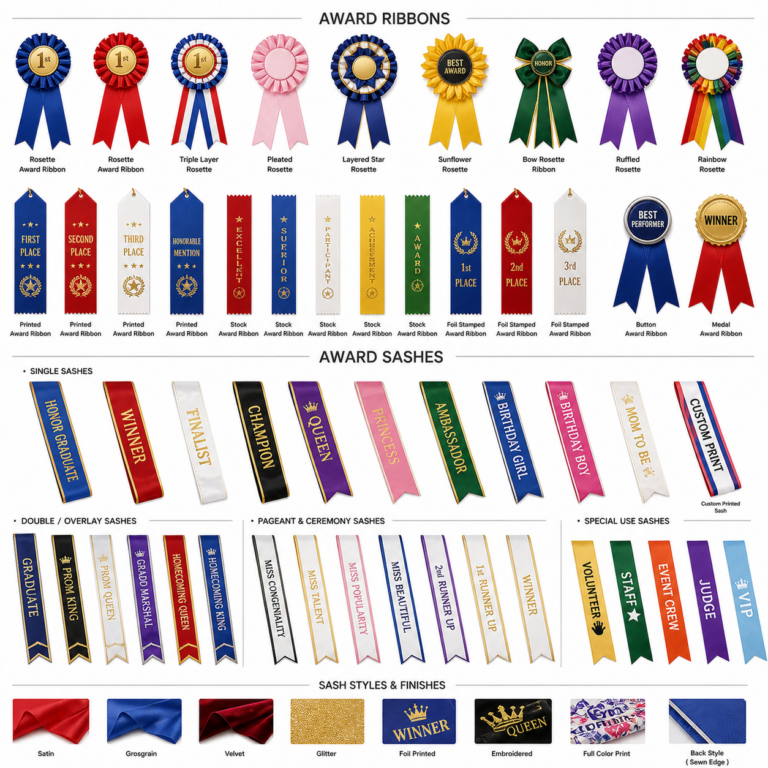 Award Ribbons Wholesale: Bulk award ribbon supplier checks
Shortlist Award Ribbons Wholesale suppliers by factory capability, QC proof, lead time, and reorder reliability. See which options…
Explore guide
Award Ribbons Wholesale: Bulk award ribbon supplier checks
Shortlist Award Ribbons Wholesale suppliers by factory capability, QC proof, lead time, and reorder reliability. See which options…
Explore guide
 Wholesale Ribbon Manufacturers: Factory vs Trading Company Checklist
Evaluate Wholesale Ribbon Manufacturers options: factory capability, QC proof, lead time, and reorder reliability. Narrow the list before…
Explore guide
Wholesale Ribbon Manufacturers: Factory vs Trading Company Checklist
Evaluate Wholesale Ribbon Manufacturers options: factory capability, QC proof, lead time, and reorder reliability. Narrow the list before…
Explore guide
Leave a comment
Share a sourcing question or feedback on this guide. The Lude team reviews submissions before following up.