


Brand Packaging Ribbon: Brand consistency and custom options
Brand packaging ribbon needs a written specification before the buyer can map product choices to real applications, usage scenarios, buyer constraints, and project outcomes; otherwise suppliers may quote different product and approval assumptions. This guide connects brand packaging ribbon to parameters, cost impact, supplier risk, factory process, and procurement advice. Direct answer: Lock construction, colour…
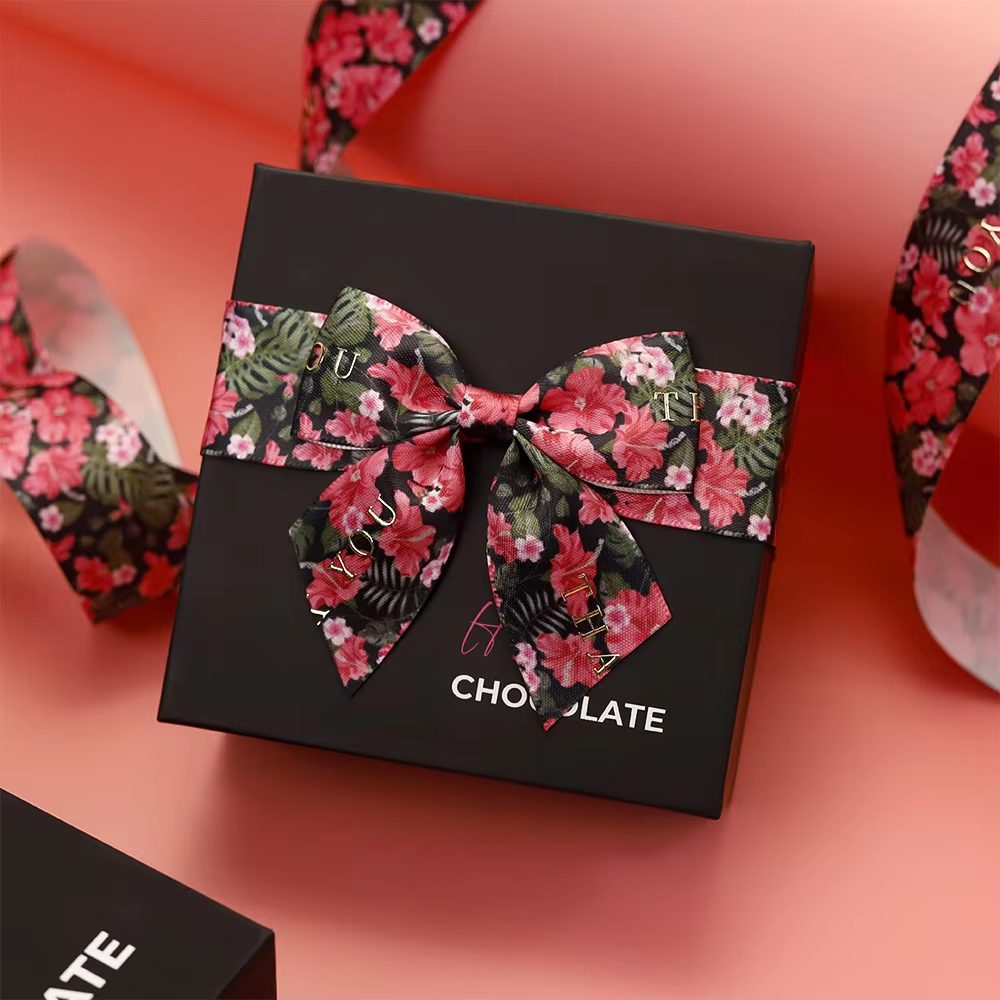
Brand packaging ribbon needs a written specification before the buyer can map product choices to real applications, usage scenarios, buyer constraints, and project outcomes; otherwise suppliers may quote different product and approval assumptions.
This guide connects brand packaging ribbon to parameters, cost impact, supplier risk, factory process, and procurement advice.
Direct answer: Lock construction, colour reference, finish, and quantity basis before comparing options.
Where brand packaging ribbon fits event projects
A brand packaging ribbon earns its place only where the ribbon carries the brand at the moment the pack is opened. Across retail gift sets, cosmetic launches, corporate gifts, and fragrance promotions, the real question is whether one colour and one finish hold across the whole run, or whether later batches drift away from the approved reference.
Use the application fit table below as a filter before a factory is asked to quote, because each use case puts a different demand on colour accuracy, print, and packing.
| Application | Fit condition | approval risk | Spec or proof to check | Next action |
|---|---|---|---|---|
| Retail gift set on shelf | One colour must read identical unit to unit | Tone drift between batches looks like a quality fault | Colour reference and a matched sample across two batches | Approve the colour sample before the gift-set run |
| Cosmetic or fragrance launch | Printed logo stays legible on a narrow tail | A blurred or misplaced print wastes the launch window | Artwork revision and print method shown on the sample | Confirm the print method inside the specification |
| Corporate gift programme | Colour must match the brand guide under office light | A dull finish reads cheap beside the brand panel | Finish name and a physical swatch approved on site | Keep the approved swatch with the order record |
| Seasonal or event promotion | Colour and width fit an existing pack without re-tooling | A custom width that misses the pack delays the launch | Measured width and pack fit on a packed unit | Confirm the width on the RFQ before sampling |
This ribbon packaging compliance guide is a practical reference when a retail customer asks how the trim programme is controlled across markets. The point is not the label on the roll; it is whether the same reference governs every batch that reaches the shelf.
Once the use case is fixed, the material, finish, and format decisions in the next section turn it into a specification a factory can quote.
Material, finish, and format decisions
Material, finish, and format are decided together, because a satin face, a matte grosgrain edge, a velvet pile, and a sheer organza each carry print and colour differently. A supplier that quotes a ribbon without naming construction, width, and finish is pricing an assumption, and that assumption tends to resurface at sample approval or in a reorder that no longer matches the first delivery.
Watch for these red flags in any quotation for a brand packaging programme.
- Construction described only as ribbon. Satin, grosgrain, velvet, organza, and paper behave differently under a logo and in a bow, so ask the factory to name the construction and width in writing. A generic answer hides a substitution that only shows up once a sample sits beside the signed-off reference.
- No colour reference on the quote. A word like brand blue describes a family, not one colour. Send a Pantone number or a physical swatch and record the reference that governs the run, because an unreferenced colour is the fastest route to a rejected lot and a reorder that reads different.
- Custom option quoted without a tolerance. Custom dye, custom width, and custom print all move the price, so ask what variation the quote allows and how a near-miss is handled. A custom option with no stated tolerance leaves the buyer to argue about the result at approval.
- Finish sold in marketing words. A premium finish says nothing about sheen, hand feel, or how the surface takes print. Ask whether the sample is matte, satin, or foil, then inspect it under the light the pack will actually be seen in.
- Supplier cannot explain the material route. A supplier who cannot describe the weaving, dye, or print route behind the sample is a red flag for consistency across a long run. Shortlist on documented process as well as price, because a cheap quote that cannot repeat is the expensive one.
Official packaging and labeling requirements set the frame a retail pack has to sit inside, which is why the ribbon decision cannot be separated from the pack it finishes. The product range and finishing options are listed on Lude Ribbon, so the specification can be compared with what the factory actually runs before the RFQ goes out. Fix construction, colour reference, finish, and format in the request so the quote prices one product rather than four.
RFQ checkpoint
Application and display requirements
Display requirements decide which sourcing route is worth quoting, because a route that looks right in a photograph can fail once it meets a shelf edge, a packing line, or a warehouse. The table below compares the four routes brand owners ask for most often and what each one asks the buyer to check.
| Option | Best fit | approval risk | Verification check | Next action |
|---|---|---|---|---|
| Stock colour ribbon | Programmes that can build the pack around an available colour | A stock tone that drifts between lots breaks the line | Compare the roll against the approved reference lot to lot | Confirm the colour reference and reorder rule on the quote |
| Custom-dyed ribbon | Brand colours that no stock range matches | A dye batch that misses the target and cannot be corrected | Approve a dyed sample under the target lighting | State the colour reference and required tolerance in the RFQ |
| Custom printed ribbon | Packs where the logo or pattern must read on the ribbon | Wrong print method or artwork revision forces a reprint | Check the printed sample against the named artwork revision | Name the print method and revision in the specification |
| Custom width or construction | Packs that no stock width fits without re-tooling | A custom width that misses the pack delays the launch | Measure the finished width and pack fit on a packed unit | Confirm the width and pack fit on the RFQ before sampling |
The pack’s display requirements decide which route is worth quoting. Where the logo has to do the work, the route is described on the custom printed ribbon page, which lists the print methods and artwork inputs the quote will assume. Name the display route on the RFQ and ask which sample the factory will submit for approval.
MOQ, lead time, and sample planning
MOQ, lead time, and sampling are one decision, not three. The quantity rule decides which production route is available, the route decides the sample path, and the sample path decides the date the launch can actually hold. Handle them separately and the schedule slips between the answers.
Prepare these inputs before the quote request goes out.
- Product route and quantity basis. Plain stock ribbon chosen from existing inventory colours and widths starts at 1,500 yards per colour. A custom printed ribbon programme starts at 3,000 yards per design. Ready-made bows start at 1,000 pieces per style. State which basis the price uses, because a roll programme and a finished-bow programme cannot be compared in one column.
- Colour and width status. Custom colours and custom widths are confirmed by quote request, so the request has to say whether the colour comes from stock or needs dyeing. The answer changes both the sample path and the delivery window.
- Artwork readiness. A sample can only be quoted against an approved artwork revision. Name the file and the revision so the sample request and the production order reference the same version.
- Packing unit. Bags or cartons per case, and the units in each, decide freight and warehouse handling. Confirm the packing unit in writing before deposit and compare it with the packed-case sample, then record it on the order so a reorder repeats the same carton.
- Sample and production dates. A custom ribbon sample is produced 7 to 14 business days after confirmed specifications, artwork files, and Pantone numbers are received, and standard ribbon and printed ribbon production runs 15 to 20 business days after specifications and samples are approved. Put both dates on the quote request so the launch date is built from the factory timeline rather than from hope.
Where a colour, width, or printed programme has to be developed from scratch, the route is described under OEM and ODM ribbon development, which sets out how artwork, sample approval, and bulk production connect. The risk of skipping this step is a quote that assumes a route the packer cannot use, or a sample approved after the artwork has already changed. Send quantity basis, colour status, artwork revision, and target date together so the factory can quote a schedule as well as a price.
Buyer checklist before RFQ
A brand packaging ribbon order is approved on evidence, not on a promise. The checklist below turns the usual quality conversation into named check points, the defect each one prevents, and the approval standard that closes it, so the buyer knows what to inspect before bulk and what to keep on file for the reorder.
- Construction and width match the approved sample. The failure mode to catch is a silent substitution that changes drape, print behaviour, or the pack fit. Measure the delivered width and compare the construction against the approved sample, then treat any deviation as a rejection rather than a note.
- Colour against the agreed reference. The risk here is a lot that reads off-tone under retail light. Check the delivered roll against the retained swatch under the same lighting the pack will be seen in, and record the reference that governs the run so a reorder repeats it.
- Print placement and legibility. What can go wrong is a logo that is off-centre, blurred, or the wrong size on a narrow tail. Inspect the printed sample against the named artwork revision and approve the print method before the run, because print problems are cheap to fix at sample and expensive at bulk.
- Custom colour tolerance. The exposure is a dyed batch that sits just outside the range the brand will accept, with no agreed rule to resolve it. Approve a dyed sample under the target lighting and write the tolerance into the order so a near-miss is a known outcome rather than a dispute.
- Finish behaviour under handling. The risk is a foil or metallic finish that scuffs, creases, or dulls once the ribbon is packed. Rub and fold a sample, pack it into the carton the order will use, and inspect it after simulated transit before approving the finish.
- Packing unit and case count. The hidden cost is a carton that changes freight, storage, or line handling after the price is fixed. Confirm bags per carton, rolls per bag, and cartons per pallet in writing, then check the packed-case sample against the stated unit.
- Sampling and approval record. The gap appears when an approval cannot be proved, so the next order is judged against memory. Keep the signed sample, the colour reference, the artwork revision, and the inspection notes together as the acceptance basis for the reorder.
A checklist only helps if it is used before the money is committed. Run it at sample stage, keep the signed sample and the inspection notes with the artwork, and make the approval standard part of the order so a reorder can be measured against it rather than argued about. The brand consistency claim behind a retail programme depends on exactly this evidence, which is what the ribbon packaging compliance guide explains for global retail. A rejected lot costs a launch; a rejected sample costs a week.
For brand packaging ribbon, see MOQ and lead time before comparing quotes.
In conclusion
A brand packaging ribbon decision comes down to four fields: construction and width, the colour reference, the finish and print method, and the quantity basis. Fix those and the quote, the sample, and the reorder all describe the same product. Leave any one of them open and the gap shows up as a drifting lot, a blurred logo, or a packing-line delay.
Where brand consistency and custom options both have to hold, the gift and retail packaging ribbon solutions page maps the routes against retail programmes, and the approval risk of choosing a cheaper supplier route is a lot that cannot be repeated once production has started. Lock the specification early. Send the specification and artwork revision, then confirm the sample and request a quote against one written product.
Brand packaging ribbon FAQ
What should buyers confirm before ordering Brand Packaging Ribbon?
Confirm four things in writing: construction and width, the colour reference that governs the run, the finish and print method, and the packing unit. Add the quantity basis, because a stock ribbon price and a printed ribbon price are built on different minimums and cannot be compared in one column. When those fields are fixed, two suppliers are finally quoting the same product.
How should buyers compare MOQ, lead time, and quote terms?
Compare the basis, not the headline number. Plain stock ribbon chosen from existing inventory colours and widths starts at 1,500 yards per colour. A custom printed ribbon programme starts at 3,000 yards per design. Ready-made bows start at 1,000 pieces per style. The first question is which route the quote assumes. Standard production runs 15 to 20 business days after specifications and samples are approved, and a custom sample takes 7 to 14 business days after confirmed specifications, artwork files, and Pantone numbers are received. Ask whether the quoted schedule starts at the quote request or after sign-off, and ask what the total excludes, because setup, freight, and rush charges are where two quotes really diverge.
What sample, quality, or supplier checks reduce risk?
Judge the sample the way the pack will be used: check colour against the retained swatch, inspect print against the named artwork revision, and pack and handle the sample before approving it. On the supplier side, ask for the material route behind the sample and for the inspection basis that will apply to bulk, then keep the signed sample with those answers. A check before the run costs a week; an unverified run costs the launch.
quote request handoff: Send Specs for Review.
Keep exploring
Recommended buyer guides
 Pre-Tied Bows for Retail Packaging: When They Reduce Labor and Rework
See when pre-tied bows reduce retail packaging labor, improve consistency, and simplify bulk packing, SKU planning, and reorders
Explore guide
Pre-Tied Bows for Retail Packaging: When They Reduce Labor and Rework
See when pre-tied bows reduce retail packaging labor, improve consistency, and simplify bulk packing, SKU planning, and reorders
Explore guide
 Velvet Ribbon Wholesale Checklist: MOQ, Finish, and Supplier Questions
Evaluate velvet ribbon wholesale options: MOQ, setup fees, unit cost, and packing. Narrow the list before requesting samples…
Explore guide
Velvet Ribbon Wholesale Checklist: MOQ, Finish, and Supplier Questions
Evaluate velvet ribbon wholesale options: MOQ, setup fees, unit cost, and packing. Narrow the list before requesting samples…
Explore guide
 Wholesale Custom Ribbon with Logo: Specs, Roll Length, and RFQ Checks
Step-by-step: Custom Ribbon With Logo. Check artwork files, print method, color target, and sample approval to avoid delays,…
Explore guide
Wholesale Custom Ribbon with Logo: Specs, Roll Length, and RFQ Checks
Step-by-step: Custom Ribbon With Logo. Check artwork files, print method, color target, and sample approval to avoid delays,…
Explore guide
 Wholesale Ribbon By The Roll: Roll length and inventory planning
Evaluate Wholesale Ribbon By The Roll options: factory capability, QC proof, lead time, and reorder reliability. Narrow the…
Explore guide
Wholesale Ribbon By The Roll: Roll length and inventory planning
Evaluate Wholesale Ribbon By The Roll options: factory capability, QC proof, lead time, and reorder reliability. Narrow the…
Explore guide
Leave a comment
Share a sourcing question or feedback on this guide. The Lude team reviews submissions before following up.